Location of engine block coolant drain plug on '97 V6

Trevor C.

New member
Hi everyone,

I'm new here and looking forward to contributing to the forums! I hope someone can help me; I cannot for the life of me find the engine block coolant drain plug for my '97 V6. I have read a lot of the other posts and still can't find it. My 4Runner is high mileage and I'd like to remove all of the sediment out of the block.

Thanks! Looking forward to any help you can provide.

Trevor
 
Register to hide this ad
I haven't personally looked for it, but from what I've read it's like a unicorn - some believe it exists, but have yet to find it. Good luck! I'll be following this thread to see if anyone can shed real insight!
 
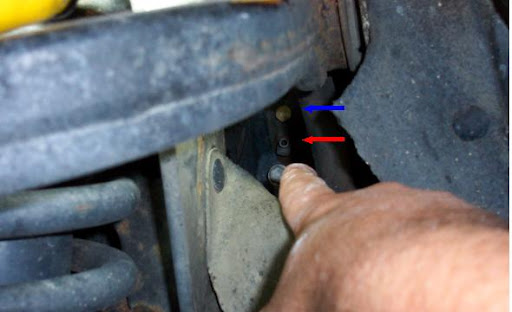
3runnerCoolPlug.jpg


Here's a pic of the lower one--passenger side just forward of the spring. There may be a cover there. There is a plug (blue arrow) that opens a discharge tube (red arrow). I forget who posted it, but thanks to whoever it was. I honestly thought it was myth.
 
Hi everyone,

I've seen this photo before from another post and I can't find it there either. According to the Hayes repair manual on the '97 V6 it is supposed to be a removeable plug located on the drivers side (of course no good picture). Also, do I need to remove the wheel to access this mythical plug?

Thanks!

Trevor
 
Hi everyone,

I've seen this photo before from another post and I can't find it there either. According to the Hayes repair manual on the '97 V6 it is supposed to be a removeable plug located on the drivers side (of course no good picture). Also, do I need to remove the wheel to access this mythical plug?

Thanks!

Trevor


Sounds like you're referring to the freeze plug. You'd only remove that to put in a block heater.
 
I think the "mythical engine coolant plug" only came equiped on the 97.5 model and they only made about 13 of those "special" 4Runners.

In all seriousness, your looking for the radiator drain plug or the ATF plug.
 
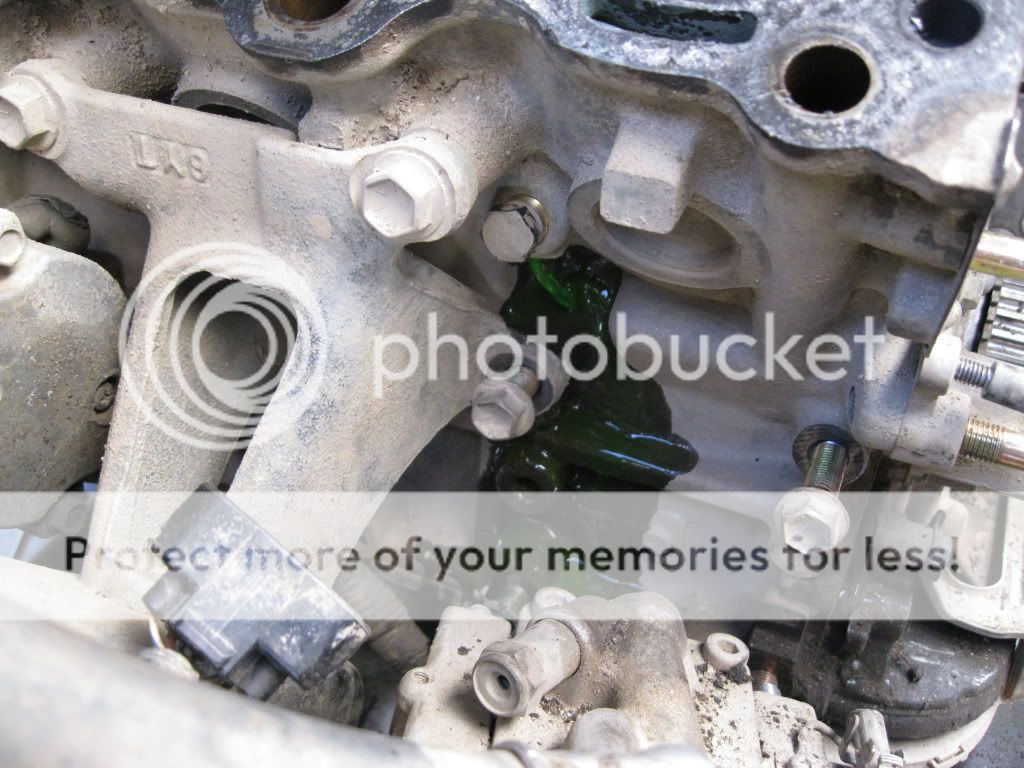
Oh its in there...it is tucked up underneath the exhaust manifold on the passenger side between the top of the AC compressor and the block. It surprised me how high up it was and didnt think it really was the plug until I actually opened it and the coolant drained. Dont feel bad about not finding it...Im in the middle of a head gasket job where draining all the fluid is step two and didnt get to that plug untill the heads were already off. I believe it is a 14mm bolt and drains the passenger side of the block only, the rest of the coolant comes out through the radiator drain plug.
 
Thanks Diagram14! This is exactly what I needed.

I'll look this weekend and when I find it will post pictures of the plugs position. Hopefully it want be such a mystery going forward!
 
I was putting my cam shafts in last night and remembered this post and snapped a couple photos from a different angle than above.

Diagram14

This is a closer shot to see and reference location. That is the motor mount to left of the plug putting the plug on the front side of the mount. Access seems simple in these pictures because my AC compressor is swung away. You loosen the the 14mm bolt and the coolant comes out of the drain tube below it. The manual says there might be a film of rust built up blocking flow once open and to stab it with a screwdriver if thats the case.

Diagram14

A further shot for more general reference.
 
Here's another one. I'm in the middle of a HG/cracked heads job and finally found it after taking everything apart and unscrewing every bolt in the area. Mine didn't have any tube to attach a hose to for draining. It just had a hole in that bolt/drain plug, and it's a 97 SR5

DrainPlug.jpg~original
 
Last edited:
Here's the 2005, 2006, 2007, 2008 coolant instructions with pic.
There's 2 engine block plugs but it says to loosen them, not remove them, which seems to imply that forces air to push the coolant back to the reservoir.

Thoughts?
 

Attachments

The one in the first pic posted by TheDurk drains the passenger side. For the driver's side, don't worry about finding the plug, just take out the thermo.
 
I'm doing a t-stat and coolant flush this weekend, do I need to drain via this plug, or will I be good if I do the following:
- drain coolant from radiator plug and t-stat removal
- install new t-stat/gasket
- fill radiator entirely with distilled water
- run truck with heat on full blast for 2-3 min.
- flush that via radiator plug
- then put in new Toyota red and distilled

Sorry, new to these things, have already done my trans fluid, diff fluid, oil, etc. (thanks to the great instruction on this site) but never done this before.
 
Yup, you'll be fine doing that. I didn't bother with the block drain. Everything *should* come out after you remove the lower rad hose.
 
Yup, you'll be fine doing that. I didn't bother with the block drain. Everything *should* come out after you remove the lower rad hose.

Perfect, thanks for the confirmation. I figured anything that didn't come out with the drain will come out in the distilled flush, just always feel better by double-checking.
 
If you have rear heat lines, it might help to open those at the very top near the firewall. Just pull the hoses off the hard lines. This will allow air to enter the system while draining from the highest point.

Also, when i did this, I used a Lisle coolant filler funnel. Worked great. Just fill slowly, then when the radiator is full, fill the funnel (which is firmly attached to the radiator filler neck) about 1/2 way. Start the engine, and the rest takes care of itself. Basically, it allows the system to burp itself without re-introducing air. Great $25 product!
 
I once saw someone pumping air from his air compressor through the upper radiator hose to flush out the coolant and out through the lower radiator hose. I am thinking of doing that this coming weekend but I am wondering if that's going to harm anything in the engine block. Anyone have thoughts about this?
 
I once saw someone pumping air from his air compressor through the upper radiator hose to flush out the coolant and out through the lower radiator hose. I am thinking of doing that this coming weekend but I am wondering if that's going to harm anything in the engine block. Anyone have thoughts about this?

My only advice would be to use only 15-20 psi maximum if you find a way to seal your compressed air entrance to the system
 

Members online

Forum statistics

Threads
278,315
Messages
3,554,102
Members
248,016
Latest member
Advally Service

Trending content

Back
Top