Manual Hubs

... This internet article isn't fully clear to me, however. First of all, if only the driver's side shaft is connected when one shifts into 4 Wheel does that mean that the passenger side is always in drive? Otherwise, you only have a three wheel drive vehicle.

The ADD disconnects one front axle shaft from the diff to create 2wd mode.
So one side spins free while the other side doesn't, the wheel turns the axle shaft which turns the diff, which turns the front driveshaft. The front driveshaft is disconnected at the t-case in 2wd mode, so a lot of parts are spinning but you're still in 2wd. One advantage of hubs vs ADD, hubs disconnect completely, ADD doesn't. The fact that the stock front (and rear) diffs are open minimizes all that spinning transmitted from that one front wheel throughout the rest.

An as far as being a 3wd vehicle, unless you are locked front and rear, you're really only 2wd when in 4wd, and 1wd in 2wd. :)
 
Another clue is if there is an assembly mounted on the front axle right beside the diff, with a couple of vacuum lines and a few wires. That's the ADD actuator. .

now i found a write up on yota tech. so if i read right you dont have to touch the actuator at all then? Just swap the hubs and it's complete? I'm assuming the ADD still needs to actuate to engage the diff.
 
The ADD disconnects one front axle shaft from the diff to create 2wd mode.
So one side spins free while the other side doesn't,
The front driveshaft is disconnected at the t-case in 2wd mode, so a lot of parts are spinning but you're still in 2wd.
I don't see this as a full explanation. You have to include the fact that when you move the shift lever from 4H to 2H, you also disengage the front axle from the drive line through the mechanics of the transfer case.
 
Last edited:
fourwd1 has forgotten more than most of the rest of us will ever know about these trucks, Swift. When I find myself not agreeing with him, I've found it very useful to back up until I figure out what I've gotten wrong, because I haven't seen him be wrong yet.
 
now i found a write up on yota tech. so if i read right you dont have to touch the actuator at all then? Just swap the hubs and it's complete? I'm assuming the ADD still needs to actuate to engage the diff.

my question still stands :/ I'd like to know if i'm right or wrong haha. I don't want to mess anything up.
 
my question still stands :/ I'd like to know if i'm right or wrong haha. I don't want to mess anything up.

It won't mess anything up. You can convert ADD to Manual with just changing the hubs locking mechanisms. The difference is going to be that once you have converted to Manual hubs, the half shaft will not be spinning thus it wont be turning the front diff or the t-case unless you have manually "locked" the hubs. Once you have locked the hubs the shaft will spin, since the wheels are turning, but it will still be in 2wd cause the t-case is not transferring any power to the front diff and your ADD is not engaged. When you select 4wd, the ADD portion of your truck will engage and power will then transfer from the t-case to the diff (engaged by the ADD) and on to the wheels. Think of ADD as a welded plate on the outside of your hub. The ADD system really doesn't care what is making the shafts engage with the hubs. Welded plate or manual locking hubs; as longs as the connection between the hubs and the shafts is rigid when you shift into 4wd it will work. If you want to mess with the shafts and relays to get rid of all of the ADD at a later date you can. Toyota Tech: Defeating the ADD System - ORN

The Manual Hub locks from a 86-89 1st Gen IFS 4Runner or IFS truck will work. You can find some used Aisins or go with Warn Premium. I would stay away from Mile Marker. I have heard some people have had success but I have heard more that haven't.

When I did my 89 from Auto to Manual, I ended up having to get a wheel hub from a 2nd gen ADD. Once I took off the outer plate (chucked into recycle pile) and replaced wheel bearings and races the Manual Locks bolted right on.
 
Last edited:
I put Aisin hubs off an 88 on my 92. It did not make a difference in the MPG at all. It is a great upgrade though. Do yourself a favor and take them apart and clean everything then re-grease it before you swap them on your vehicle.
 
fourwd1 has forgotten more than most of the rest of us will ever know about these trucks, Swift. When I find myself not agreeing with him, I've found it very useful to back up until I figure out what I've gotten wrong, because I haven't seen him be wrong yet.
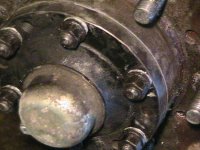
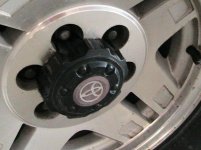
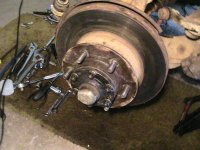
He may know a lot about 4runners, Kid, but he can't communicate it correctly. Here are a couple of photos of the ADD hub and cap. What I understand from 92-SR5's erudite post would be that installing the manual hubs only allows you to keep the main and passenger side drive shafts, front differential and possibly some parts of the transfer case from spinning when in 2 Wheel Drive. I also take it that when you shift from 2H to 4H something in the transfer case moves and connects the drive train to the front parts and wheels. I would think that would be very difficult and cause a wrenching noise if not some damage if your front drive train is already moving which is what has been inferred here as the original ADD design. However, the owner's manual states that you can shift from 2H to 4H if you are traveling at any speed under 50 m.p.h.
 

Attachments

  • ADDhub.jpg
    ADDhub.jpg
    137.9 KB · Views: 1,580
  • ADDhubcap.jpg
    ADDhubcap.jpg
    110.3 KB · Views: 1,393
  • FinishedDisc~Hub.jpg
    FinishedDisc~Hub.jpg
    138.7 KB · Views: 1,654
Last edited:
He may know a lot about 4runners, Kid, but he can't communicate it correctly.
Im sure it's not that he can't communicate. Probably more that there is so much info on this topic that it is not that hard to find. I knew nothing of this subject 4 months ago and I'm sure I'm gonna mess something up here but I will give it a go.

ADD-Hubs are permanently connected to the shafts. The pass shaft is connected to the diff. The driver shaft rides in a coupling. This coupling is connected to the driver half shaft that is connected to the diff. The diff is connected to the t-case thru the forward driveshaft.

ADD 2WD - When moving, the pass wheel turns the pass shaft. Since it is always connected to the diff, the diff turns. Since the diff is connected to the forward shaft, the forward shaft turns. The t-case is already spinning providing mechanical force to the rear wheels. The driver wheel turns the half shaft but remember it is not connected to anything because it is riding in the coupling. Consider this all "free-wheeling." Nothing is providing mechanical force to make the drive train components turn. It is all turning by inertia.

ADD 4WD - The ADD actuates the coupling on the driver half shaft to connect the driver side to the diff. The inertia of the entire system is overcome by the mechanical force of the t-case being moved to 4WD. This mechanical force is transferred from the t-case to the forward shaft, thru the diff and out to the wheels.

Manual Conversion - The freewheeling in this application comes from the coupling installed in the Locking Hubs. This coupling is splined to the CV shafts and allows the hubs/wheels to rotate around them when they are in the "Free" position. Once locked the CV shaft/coupling becomes engaged with the locking hub.

This will not be a huge increase in mileage. It will be less turning parts when in 2WD but the biggest advantage is changing to a simpler form of connection. The ADD springs can cause problems and if you are going to change you might as well keep it simple. It's like changing from power windows to manual windows. You'll prob have less problems down the road.

Once the hub conversion is done the ADD is still used to connect the driver shaft coupling. You can convert all this as well, but most don't do it.

If you have converted ADD to Manual Hubs and you have the hubs "locked" and you are in 2WD, then all that inertia mentioned above is back into play. The hubs are locked to the shaft regardless of whether you have the t-case engaged into 4WD or not. This is the same on an original Manual Hub system. If the hubs are "locked" they are "locked." Inertia will spin anything connected.
 
Last edited:
:AK47:How do you still not get it? It's spelled out for you. If you can't figure it out maybe you shouldn't own a 4wd vehicle or just pay someone to do it for you. It's pretty simple, and I'm not sure anyone can explain it any better. Quit over thinking it.:ybrick:
 
Im sure it's not that he can't communicate. Probably more that there is so much info on this topic that it is not that hard to find. I knew nothing of this subject 4 months ago and I'm sure I'm gonna mess something up here but I will give it a go.

ADD-Hubs are permanently connected to the shafts. The pass shaft is connected to the diff. The driver shaft rides in a coupling. This coupling is connected to the driver half shaft that is connected to the diff. The diff is connected to the t-case thru the forward driveshaft.

ADD 2WD - When moving, the pass wheel turns the pass shaft. Since it is always connected to the diff, the diff turns. Since the diff is connected to the forward shaft, the forward shaft turns. The t-case is already spinning providing mechanical force to the rear wheels. The driver wheel turns the half shaft but remember it is not connected to anything because it is riding in the coupling. Consider this all "free-wheeling." Nothing is providing mechanical force to make the drive train components turn. It is all turning by inertia.

ADD 4WD - The ADD actuates the coupling on the driver half shaft to connect the driver side to the diff. The inertia of the entire system is overcome by the mechanical force of the t-case being moved to 4WD. This mechanical force is transferred from the t-case to the forward shaft, thru the diff and out to the wheels.

Manual Conversion - The thing I think throws a lot of people off here is that you are not installing "Manual Hubs". You are converting ADD Hubs TO Manual Hubs by changing the way you "lock" the hubs to the shafts. Once you remove the ADD cap and install manual locks there is no inertia to turn all the components when the hubs are set to "Free."

This will not be a huge increase in mileage. It will be less turning parts when in 2WD but the biggest advantage is changing to a simpler form of connection. The ADD springs can cause problems and if you are going to change you might as well keep it simple. It's like changing from power windows to manual windows. You'll prob have less problems down the road.

Once the hub conversion is done the ADD is still used to connect the driver shaft coupling. You can convert all this as well, but most don't do it.

If you have converted ADD to Manual Hubs and you have the hubs "locked" and you are in 2WD, then all that inertia mentioned above is back into play. The hubs are locked to the shaft regardless of whether you have the t-case engaged into 4WD or not. This is the same on an original Manual Hub system. If the hubs are "locked" they are "locked." Inertia will spin anything connected.
This is all pretty much how I understand the system to work.

I do have a question on this section of the explanation though,

Manual Conversion - The thing I think throws a lot of people off here is that you are not installing "Manual Hubs". You are converting ADD Hubs TO Manual Hubs by changing the way you "lock" the hubs to the shafts. Once you remove the ADD cap and install manual locks there is no inertia to turn all the components when the hubs are set to "Free."

If I understand this correctly, by installing the manual hubs it means that all that mass that has been moving/turning when using the ADD system in 2WD, the pass shaft, the front diff and the front drive shaft, will cease to move by the force of the pass wheel turning it? Does the conversion actually disengage the axle shaft and all associated components from being turned by the spinning of the wheel? The wheel essentially operates as if being on a spindle on a strut type suspension, freewheeling as it were?

Something tells me that's not the case, that all that mass is still turning by the force of the passenger wheel whether ADD or manual hubs are used and therefore there is no gain in mpg to be obtained as the same draw of energy being caused by having all that mass being turned by the passenger wheel turning is still happening?

If all the above is correct, then the only, in many cases I'm sure the primary, reason to switch to manual hubs would be simplicity and reliability. That all the moving parts in the ADD system are still moving, and drawing energy, no matter whether you're using ADD or manual hubs?

I'm hoping the answer is that, no, when converting to manual hubs all that mass DOES NOT turn anymore in which case it can't help but improve on mpg if only a very small amount, it's physics, if the front pass wheel does not have to turn all that mass anymore(shaft/diff/drive shaft) when in 2WD then less effort is needed from the engine to turn the pass wheel.
 
This is all pretty much how I understand the system to work.

I do have a question on this section of the explanation though,


If I understand this correctly, by installing the manual hubs it means that all that mass that has been moving/turning when using the ADD system in 2WD, the pass shaft, the front diff and the front drive shaft, will cease to move by the force of the pass wheel turning it? Does the conversion actually disengage the axle shaft and all associated components from being turned by the spinning of the wheel? The wheel essentially operates as if being on a spindle on a strut type suspension, freewheeling as it were?

Something tells me that's not the case, that all that mass is still turning by the force of the passenger wheel whether ADD or manual hubs are used and therefore there is no gain in mpg to be obtained as the same draw of energy being caused by having all that mass being turned by the passenger wheel turning is still happening?

If all the above is correct, then the only, in many cases I'm sure the primary, reason to switch to manual hubs would be simplicity and reliability. That all the moving parts in the ADD system are still moving, and drawing energy, no matter whether you're using ADD or manual hubs?

I'm hoping the answer is that, no, when converting to manual hubs all that mass DOES NOT turn anymore in which case it can't help but improve on mpg if only a very small amount, it's physics, if the front pass wheel does not have to turn all that mass anymore(shaft/diff/drive shaft) when in 2WD then less effort is needed from the engine to turn the pass wheel.

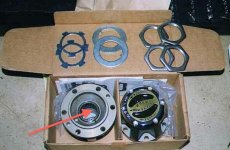
Once manual hubs are installed the only thing in the system that would turn in 2WD are the locking hubs around the coupling that is splined to the CV shaft. There may be a little movement of the CVs but not at the same speed as the wheel is turning. The arrow in the pic below shows the splines that are engaged all the time with the CV ends. When the locking hub is in "Free" this splined coupling is not "Locked" to the rotating hub. The locking hub/wheel are simply rotating around it.
 

Attachments

  • Screen shot 2012-05-18 at 7.02.58 PM.jpg
    Screen shot 2012-05-18 at 7.02.58 PM.jpg
    39.2 KB · Views: 687
Last edited:
Once manual hubs are installed the only thing in the system that would turn in 2WD would be the couplings in the locking mechanisms. They are not "Locked" in so they simply rotate around not turning the shafts. There may be a little movement but not at the same speed as the wheel is turning. The arrow in the pic below shows the splines that move. When the locking hub is in "Free" this splined coupling is not "Locked" to the rotating hub. It is simply rotating inside.

Okay, excellent. So all that mass, axle shaft, diff, drive line does not move(being forcefully turned by the wheel) as it does in an ADD system, that's the part I've been struggling with, and now I know the answer! Thank You!

And just to be clear, we're talking about 89-95 4Runners with ADD 4WD systems?
 
Okay, excellent. So all that mass, axle shaft, diff, drive line does not move(being forcefully turned by the wheel) as it does in an ADD system, that's the part I've been struggling with, and now I know the answer! Thank You!

And just to be clear, we're talking about 89-95 4Runners with ADD 4WD systems?

ADD is ADD regardless of what year you are talking. They all work the same.

If you are asking about using 86-89 Manual Hubs on an 89-95 ADD, I will leave the year stuff to the experts. I took what I needed to a yard and just match it all up. I don't have all that info stockpiled yet but I think 89 only came with Manual or Auto hubs. ADD came out in the 4Runner in 90 I think.

Fourwd1 please help. I am getting lost...........
 
I'm hoping the answer is that, no, when converting to manual hubs all that mass DOES NOT turn anymore in which case it can't help but improve on mpg if only a very small amount, it's physics, if the front pass wheel does not have to turn all that mass anymore(shaft/diff/drive shaft) when in 2WD then less effort is needed from the engine to turn the pass wheel.

You've got it. With ADD, the front CV shafts are permanently fixed to the wheels. When you convert to manual hubs, turning the dial on the hub locks or unlocks the shafts from the wheel. Because there's no input to the driveshaft until you shift to 4wd, and no input from the wheels until you lock the hubs, the CVs, driveshaft, and diff internals all sit idle.
 
Personally, I have used this thread to determine that I would not change the hubs with ADD which is what I have. There just doesn't seem to be any advantage to it unless you do more work to the drive train. The argument that you have less chance of your system freezing up seems rather lame to me. When the parts are moving all the time and are lubricated properly, you have less of a chance of them getting clogged or freezing up. Left idle there's much more of a chance. The same goes for grit, sand, mud and rust. With locking hubs you don't have the option of changing into 4 wheel drive on the fly. Not only that you have to get out of the vehicle and change into 4 wheel drive. I have extensive winter driving experience on mountain roads. I'll never forget one experience with a bud in Co. going from Sawpit to Telluride. It had started to snow hard and he had to get out on a narrow road in freezing temps and unlock the hubs while I sat in the warm cab of a Jeep.
 
Last edited:
Personally, I have used this thread to determine that I would not change the hubs with ADD which is what I have. There just doesn't seem to be any advantage to it unless you do more work to the drive train. The argument that you have less chance of your system freezing up seems rather lame to me. When the parts are moving all the time and are lubricated properly, you have less of a chance of them getting clogged or freezing up. Left idle there's much more of a chance. The same goes for grit, sand, mud and rust. With locking hubs you don't have the option of changing into 4 wheel drive on the fly. Not only that you have to get out of the vehicle and change into 4 wheel drive. I have extensive winter driving experience on mountain roads. I'll never forget one experience with a bud in Co. going from Sawpit to Telluride. It had started to snow hard and he had to get out on a narrow road in freezing temps and unlock the hubs while I sat in the warm cab of a Jeep.

If you don't have the foresight to know when you might need 4wd and lock your hubs in ahead of time, and you're too precious to spend 30 seconds in the snow if you forget, then you definitely should keep your ADD.
 
If you don't have the foresight to know when you might need 4wd and lock your hubs in ahead of time, and you're too precious to spend 30 seconds in the snow if you forget, then you definitely should keep your ADD.
Now that reads as a personal attack from some guy who doesn't have a Saturday night date.
 
swiftrunner, stop being a ****. You've dismissed what fourwd1 has said, and he knows more than you do i would bet. also you've been very sharp with kid. People here are nice and helpful, don't be rude in return.
 

Members online

No members online now.

Forum statistics

Threads
278,309
Messages
3,554,071
Members
248,016
Latest member
Advally Service

Trending content

Back
Top