I have driven across the U.S, from coast to coast, dozens of times. Once you cross the Mississippi River, there is not much to see until you reach the Rockies. If you go drive further north, into the Dakotas, it can be quite beautiful.
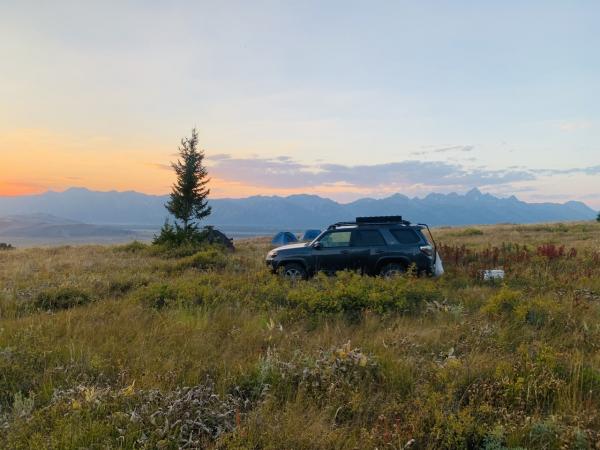
Some camping advice. Most all of the National Forests and Bureau of Land Management have free camping. Yes, there are semi-set-up camping sites (fire-pits, sometimes water, and pit toilets) and those are camping for a small fee. Personally, I much prefer choosing my own, totally free, spot to camp rugged style. Just ask at any ranger station. Depending upon where you camp, there is likely to be strict rules about any fires. If taking water from any stream or lake, BOIL THE WATER FOR 5 MINUTES BEFOR DRINKING IT.
In the Natl parks, just be aware that you may NOT, repeat NOT camp anywhere you choose. Camp grounds in NATL PARKS, often require making a reservation months and months IN ADVANCE. Even sleeping in your car, off the side of the road is prohibited.
I strongly advise doing your homework BEFORE leaving home. Look at all of the Natl Forests near where you want to go. Just remember, the distances in the west are much, much greater than in the east. You may easily find yourself an hour or two from a National Park to a place where you can find camping.
If lucky, you could stumble across a "bear jam". Traffic can be backed up as the tourists ogle a Grizzly bear or Bison, on the roadway. KEEP YOUR DISTANCE FROM THESE WILD ANIMALS. Every so often a stupid tourist gets too close to a Bison and is fatally wounded.
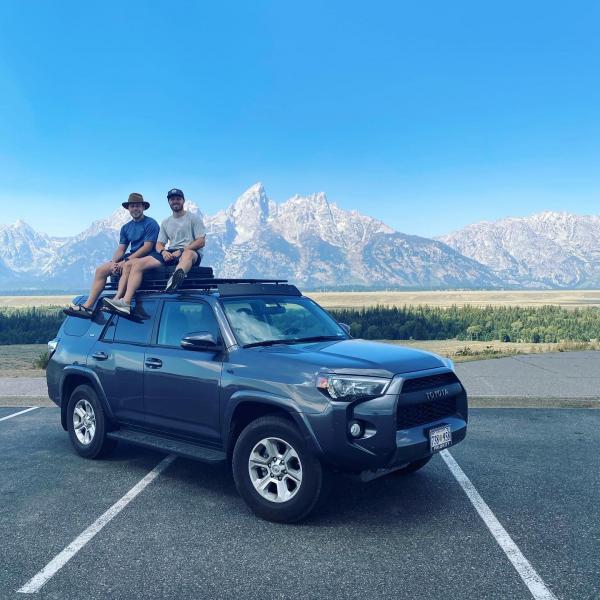
In The Grand Teton Natl Park take a look at Bridger-Teton Natl Forest: semi close camping there.
In Yellowstone Natl Park your best bet is to drive west to the town of West Yellowstone (outside the park)and ask about camping in Caribou-Targhee Natl Forest
Think long and hard about what you may need to take with you. All of the possible camping needs (the nights can be quite cold at altitude). Take your tool box in case of a breakdown.