bob3dsf
New member
Hey,
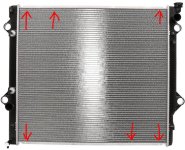
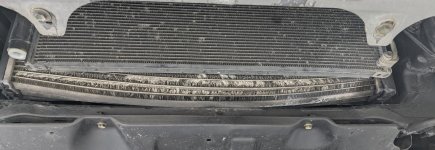
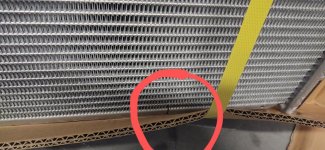
Just received my new radiator to swap into the rig. I noticed it has 2 "cuts" in the top and bottom aluminum frame. They don't look hacked in. They are equidistant from the sides, but each from the opposite side, so they are offset as you're looking at it from the front. And, they don't effect the fluid channels. It's a Denso I ordered from rock auto. I had read of people finding this before on parts ordered. A little searching found some info that they are not defects or damage, but relief cuts to allow for expansion and contraction with heating and cooling. Is this really a thing? It does make sense. My OEM doesn't have them as far as I can tell, and maybe it was the expansion and contraction that finally let to it's failure. It's got 264k on it, but I've been hunting a coolant leak and finally found it in the radiator when I pulled back the fan shroud, where it's been hiding for a while. Thx for any opinions.
**UPDATE** If you don't have dedicated radiator hose pliers, you might want to take out the old radiator with the lower hose attached, but disconnect at the thermostat housing (this is on a V6). Then transfer your hose to the new radiator so you can get the clamp on correctly. I tried to attach that stupid hose to the lower connection and I couldn't get the hose seated like I wanted, or get the clamp slid back on. I had to take it all back out and pull the lower hose off the thermostat. And those cuts aren't damage. They are totally fine
Just received my new radiator to swap into the rig. I noticed it has 2 "cuts" in the top and bottom aluminum frame. They don't look hacked in. They are equidistant from the sides, but each from the opposite side, so they are offset as you're looking at it from the front. And, they don't effect the fluid channels. It's a Denso I ordered from rock auto. I had read of people finding this before on parts ordered. A little searching found some info that they are not defects or damage, but relief cuts to allow for expansion and contraction with heating and cooling. Is this really a thing? It does make sense. My OEM doesn't have them as far as I can tell, and maybe it was the expansion and contraction that finally let to it's failure. It's got 264k on it, but I've been hunting a coolant leak and finally found it in the radiator when I pulled back the fan shroud, where it's been hiding for a while. Thx for any opinions.
**UPDATE** If you don't have dedicated radiator hose pliers, you might want to take out the old radiator with the lower hose attached, but disconnect at the thermostat housing (this is on a V6). Then transfer your hose to the new radiator so you can get the clamp on correctly. I tried to attach that stupid hose to the lower connection and I couldn't get the hose seated like I wanted, or get the clamp slid back on. I had to take it all back out and pull the lower hose off the thermostat. And those cuts aren't damage. They are totally fine
Attachments
Last edited: