Octane. and how it effects your truck.

Pretty much every automotive engine made since the late 70's has had a knock sensor.......

Since the late 70s LOL.That is funny. Think you got your decades way off. Ford put the first knock sensors in the mustang GT in 05.. It's been pretty common on most platforms since the late 90s but the processing was never fast enough to work at high RPM....

WFO9 is correct. I remember my 1985 Toyota Supra was one of the first mass produced cars to get a knock from the factory, and I remember it being quite high tech for the time (monitored by a super powerful 8bit microprocessor no less LOL)! Most everybody, until the 1990s when OBDII became norm were running without one, and even then there were still exceptions.
 
Last edited:
...The rated HP for the 1grFE is done on 93. I can't remember the 87 numbers, but I have seen them published before. I'm sure someone remembers what it is for sure. I think it was 258 hp and 270tq.

The rated hp has to be with the manufacturer recommended fuel - otherwise the manufacturer would risk customers claiming false advertising.

The 1GE-FR engine (with Dual VVT-i) is rated at 270hp/278 lb-ft with 87 octane fuel and 285hp/289 lb-ft with 91 octane fuel.

https://en.wikipedia.org/wiki/Toyota_GR_engine#1GR-FE
 
One other thing to note on this discussion of octane ratings and knock, is that different regions and stations will have different quality of gasoline. Not all 87 octane rated gasoline is created equal just as not all 91/93 octane rated gasolines are. I'm sure there are exceptions and grey areas to both sides of the debate. I wonder for the shop discussed in the original post what the state of their fuel is in that region (ie. quality, ethanol blended or not, % detergents etc...)? It could help explain the level of timing pulled on their test cars.

Personally, I feel the higher the octane the better. And for naturally aspirated engines the less the ethanol (zero being optimal) the better.

Interesting topic though :-)
 
The rated hp has to be with the manufacturer recommended fuel - otherwise the manufacturer would risk customers claiming false advertising.

The 1GE-FR engine (with Dual VVT-i) is rated at 270hp/278 lb-ft with 87 octane fuel and 285hp/289 lb-ft with 91 octane fuel.

https://en.wikipedia.org/wiki/Toyota_GR_engine#1GR-FE

Sweet! Means the 4Runner is an air intake, headers and exhaust away from the esteemed 300hp club LOL :thumb3: :zoom: :guitar2:
 
The rated hp has to be with the manufacturer recommended fuel - otherwise the manufacturer would risk customers claiming false advertising.

The 1GE-FR engine (with Dual VVT-i) is rated at 270hp/278 lb-ft with 87 octane fuel and 285hp/289 lb-ft with 91 octane fuel.

https://en.wikipedia.org/wiki/Toyota_GR_engine#1GR-FE

Yeah I just saw that in Wikipedia when I was studying up on the 1GR-FE. That's actually a pretty healthy boost in HP/TQ for something as simple as an octane change. Now, given that it's Wikipedia, I'd like to know the source, but if it is true then it would seem the engine is designed to run a higher octane.
 
Of course, when you look, it says "citation needed" for those numbers, so TBD on them being true.
 
So at altitude (5400+), would it better to run 87 or 91?
Typically, the higher you go.. the less it matters. The flame front is naturally more controlled and less sensitive to aggressive timing with lower dynamic compression.

There is a very slight possibility the ECU keeps trying to run more aggressive timing at altitude until it knocks, but If I had to guess a 1grfe at 5k+ on 87 would probably have very few (if any) knock events. That would completely change at sea level.

But.. I'm honestly just giving you an educated guess. We need some data... which I have asked for, but nothing yet.
 
So at altitude (5400+), would it better to run 87 or 91?

Generally, lower (85 is what you'll see for sale more often than 87).

Higher octane prevents early ignition and detonation, but at higher altitudes there is less oxygen (lower air pressure) which gives more resistance to ignition, so the lower octane gas balances out.

You'll still see a decrease in performance, but that's what you get.

*Not sure what you'd want to do if pulling a heavy load at altitude though... ?
 
Of course, when you look, it says "citation needed" for those numbers, so TBD on them being true.

yea, you can't trust that or really any factory numbers. There is no verification process. It's sort of a marketing number that they come up with based on how likely they are to get called out on it. I'm pretty sure the 278 number was on high octane and they had a 260 or 250 number from other countries with the same motor and lower octane fuel. But I have not verified this. Just what I remember from years ago. Does not really matter though as it is all relative. You get a bit more power on high octane and the ECU is always trying to get to that level of power in some form or fashion. A octane switch would be more ideal for the enthusiast type owner, but they obviously have to design for the least common denominator.
 
Last edited:
One other thing to note on this discussion of octane ratings and knock, is that different regions and stations will have different quality of gasoline. Not all 87 octane rated gasoline is created equal just as not all 91/93 octane rated gasolines are. I'm sure there are exceptions and grey areas to both sides of the debate. I wonder for the shop discussed in the original post what the state of their fuel is in that region (ie. quality, ethanol blended or not, % detergents etc...)? It could help explain the level of timing pulled on their test cars.

Personally, I feel the higher the octane the better. And for naturally aspirated engines the less the ethanol (zero being optimal) the better.

Interesting topic though :-)

Yes, they are formulated differently by region, but the results should almost always be the same. The testing standards are very strict for octane ratings. You can't fudge it.

The shop I got the FAQ from. DAP tuning is located in North Texas.

The ethanol blends will naturally run a bit leaner... but most engines should account for that with 02 feedback and fuel trims.

An interesting point of the 1grfe is that it has WB 02s from the factory. So it can run in closed loop operation at all times. It's unclear to me if it does this or not and if there are any WOT fuel trim cells. Still researching all of this and plan to eventually get to the bottom of it. There is just very little information out floating around.. so it is a slow process of observing logs and finding those rare few who know anything about it.
 
Last edited:
It's one of those things where if you never see it.. or hear it.. you don't think about it. But when you actually start analyzing the data it is a bit shocking to see how much these engines see knock.. Then when you see how much of a difference good gas makes (people who tune them for a living...) They tend to feel strongly about it.

I'm not saying they won't run on 97 for a long time without any issue.. Just surprising how much knock is built into the factory tune on 87 (at near sea level.. totally different up at altitude). It really does struggle on low octane under heavy loads... even in stock form. You have to understand how the decay strategies work to have an opinion. I don't completely get it yet, but someone who does.. has a strong opinion about it. So I posted it up as food for thought.

There should be nothing to worry about.. but I see a lot of 5th gen guys over maintain their trucks.. but feel cheap gas is the way to go. Not saying it is wrong, just something to think about.

You are stating an opinion from someone whose job it is to make more power. My whole professional world for the past 28 years has been to engineer systems for reliability and durability while performing to spec. There are always tradeoffs when designing for performance versus designing for reliability and durability.

I very seldom use the word "never" but in this case I can: You will never get more reliability and durability by increasing power or torque. That includes 20 more hp by going to a higher octane fuel, running a supercharger, turbo or anything else. There are better ways but as consumers we don't want to run skinny tires or lighten up the load by removing seats and interior lol.
 
You are stating an opinion from someone whose job it is to make more power. My whole professional world for the past 28 years has been to engineer systems for reliability and durability while performing to spec. There are always tradeoffs when designing for performance versus designing for reliability and durability.

I very seldom use the word "never" but in this case I can: You will never get more reliability and durability by increasing power or torque. That includes 20 more hp by going to a higher octane fuel, running a supercharger, turbo or anything else. There are better ways but as consumers we don't want to run skinny tires or lighten up the load by removing seats and interior lol.

Yep it is just one opinion. Take it your own way. I said that at the beginning. But I did think it was a useful perspective based on experience analyzing the performance of modern Toyota engines.

Yes, I have a supercharger, but that is not part of this discussion. It only led me to the topic because I have been analyzing logs from stock 4runners and trying to understand more than the surface level user experience with these engines.

I'm in research mode, so when things pop up of interest... I'll share them here. No other motive to talk anyone in to anything.
 
Last edited:
You are stating an opinion from someone whose job it is to make more power. My whole professional world for the past 28 years has been to engineer systems for reliability and durability while performing to spec. There are always tradeoffs when designing for performance versus designing for reliability and durability.

I very seldom use the word "never" but in this case I can: You will never get more reliability and durability by increasing power or torque. That includes 20 more hp by going to a higher octane fuel, running a supercharger, turbo or anything else. There are better ways but as consumers we don't want to run skinny tires or lighten up the load by removing seats and interior lol.

True. And since I'll never use this motor to 100% of its life, I'd happily trade a 25% increase in hp/tq for a 25% reduction in its life. If only it were that easy ...
 
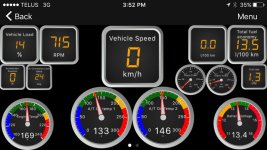
Hey guys. I have a Wifi OBD2 dongle on my truck with the OBD Fusion app. I downloaded the Toyota PIDs for it and I have found a thing called Knock correction learn value.

Is this the information you guys need to settle this debate? I am almost certain it is the actual timing the computer decides to use depending on the knock sensor data.

I have seen it as low as 13 degrees and as high as 25 varying with the temperature and load on the truck. And I can definately tell the difference in power.

knock.jpg
 

Attachments

  • knock.jpg
    knock.jpg
    63.9 KB · Views: 990
Yep it is just one opinion. Take it your own way. I said that at the beginning. But I did think it was a useful perspective based on experience analyzing the performance of modern Toyota engines.

I'm in research mode, so when things pop up of interest... I'll share them here. No other motive to talk anyone in to anything.

Opinion - yes, then that's fair. I know you added an EDIT at the end of your first post but perhaps editing your initial post would be better. I bolded the text that will likely be taken as fact - as I'm sure you know many members will quickly glance at a thread for anything useful.


Just thought i would share this.. take it for what it is worth. I've been digging into logs lately and surprised by how much knock most of these engines see in stock form on crap gas. They more or less learn their way around it by reducing timing and power, but if you tow or push it hard with a heavy load... I can't imagine not running premium whenever possible. You won't feel a big difference, but your motor sure will.

Your truck won't blow up on 87... but this is from someone who focuses on tuning Tundras for a living....and he gets a lot of questions about fuel.


EDIT:PLEASE don't read too much into this post. I'm not saying your motor will blow up on 87 or won't last 100+ k running it. Just food for thought and an opinion from somone who tunes Toyota trucks. It's just one data point, but worth something IMHO.


As long as you're clearly stating what's opinionated, then feel free to post how you feel about certain topics. You'll get flamed for posting unsubstantiated "FACTS". In either case, thanks for sharing your findings.
 
Opinion - yes, then that's fair. I know you added an EDIT at the end of your first post but perhaps editing your initial post would be better. I bolded the text that will likely be taken as fact - as I'm sure you know many members will quickly glance at a thread for anything useful.

As long as you're clearly stating what's opinionated, then feel free to post how you feel about certain topics. You'll get flamed for posting unsubstantiated "FACTS". In either case, thanks for sharing your findings.

Let me bold that with all the words for you.

Just thought i would share this.. take it for what it is worth. I've been digging into logs lately and surprised by how much knock most of these engines see in stock form on crap gas. They more or less learn their way around it by reducing timing and power, but if you tow or push it hard with a heavy load... I can't imagine not running premium whenever possible. You won't feel a big difference, but your motor sure will.

Your truck won't blow up on 87... but this is from someone who focuses on tuning Tundras for a living....and he gets a lot of questions about fuel.

I'm not saying it is fact.. Just opinion like everything else here, but at least it has some type of of basis in reality.
 
Let me bold that with all the words for you.

They more or less learn their way around it by reducing timing and power, but if you tow or push it hard with a heavy load... I can't imagine not running premium whenever possible. You won't feel a big difference, but your motor sure will.

Your truck won't blow up on 87... but this is from someone who focuses on tuning Tundras for a living....and he gets a lot of questions about fuel.

I'm not saying it is fact.. Just opinion like everything else here, but at least it has some type of of basis in reality.

My whole point is that you posted AS IF it were a fact.

Again....as in my previous post - if you edited your ORIGINAL post to CLEARLY state you're making an opinionated statement, you'd get a lot less push-back on this thread. Anyway, enjoy your vehicle. :nicethread::peace:
 
I think that the question here is weather higher octane fuel means less knock or ping occurring in the engine. I think that is unlikely to be the case. The system should advance timing until the knock sensor tells it to back off and then back it off slightly. It likely continues to do this cycle repeatedly over and over constantly testing the limit of timing advance. The result is that whether you're burning 91 octane fuel or 87 octane fuel you get the same advance in the cycle. The difference is the knock happens at a different timing advance number with 87 or 91 fuel. The knock happens the same amount in both just at different levels of timing. For this reason I don't think that higher or lower octane fuel would make any meaningful difference in the longevity of the motor. It is fairly easy to make the case that higher octane fuel should have the ability to run more advanced timing and produce more power.

I did run the 2016 T4R on 93 octane a few tanks and I did see more power but absolutely no increase in MPG.. the engine did not down shift as much compared to 87 gas.. I drive the same route all the time same hills and speed.

so when I did the MPG checks and using the vehicle MPG indicator no reason to pay extra cash for less downshifting on slight hill grades just not worth it.. I communicated with others about this and they also did this test same results.no MPG gain but slight HP increase.

the PCM today controls air fuel ratio and emissions so using 100 octane should not help much unless you can program the PCM ...software changes IF you know what your doing can create more power with a higher octane . limit on how much HP increase is all about the engine design ..

the engine is a pump so ramming more air/fuel in the engine can only handle a certain amount then that's it , your at the limit of its ability to output the max HP..

more cylinders more power more ability of the engine to pump HP output.

these should have a 12 cylinder engine option ...never will you have any power issues then ...

with that 12 cylinder option the tranny and drive train will need more strength. probably snap those tiny axles off ..
 
My whole point is that you posted AS IF it were a fact.

Again....as in my previous post - if you edited your ORIGINAL post to CLEARLY state you're making an opinionated statement, you'd get a lot less push-back on this thread. Anyway, enjoy your vehicle. :nicethread::peace:
No worries... Can't make everyone happy. I just hope people can read and come to their own conclusions... based on data.. There is still so much unknown. My requests for help with data logging... have gone completely unanswered so far.. but I'm sure a few more will eventually step up and I'm slowly making progress towards a better understanding of the mysteries of the 1grfe.
 

Members online

No members online now.

Forum statistics

Threads
278,316
Messages
3,554,120
Members
248,016
Latest member
Advally Service

Trending content

Back
Top