
You are using an out of date browser. It may not display this or other websites correctly.
You should upgrade or use an alternative browser.
You should upgrade or use an alternative browser.
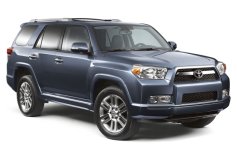
Official picture of 2010 4runner!
- Thread starter blkexp98
- Start date
T
ToyTech99
Guest
So a V6 replaced a v8, and a 4cyl replaced a V6 - that would logically conclude that there was no V6, which isn't the case. I can't believe I had to come back here to post that.
.
I can't believe that you don't understand this simple concept, so I'll break it down for you in more understandable terms:
First, to conclude that the V6 didn't exist because it replaced a V8 and/or was replaced by a 4 cylinder is not logical at all. If you can't understand that basic premise, then there's nothing else I can do to help you.
But either way, Toyota offered two engine choices on the 4th gen:
1- V6 (less power, more economical in terms of price and fuel consumption)
2- V8 (more power, less economical in terms of price and fuel consumption)
Now in the 5th gen, Toyota is again offering two engine choices:
1- 4 cylinder (less power, more economical in terms of price and fuel consumption)
2- V6 (more power, less economical in terms of price and fuel consumption)
Now if you really had the logical mind that you claim to have, you'd easily be able to conclude that the 4 cylinder did not replace the V8. Even Mr. Spock would understand that the new more powerful V6 in the 5th gen is the replacement for the older V8 in the 4th gen. And that logically follows the fact that the new 4 cylinder in the 5th gen fills the slot that the old V6 left behind.
Last edited:
T
ToyTech99
Guest
Same thing I am confused..Why can't Toyota just have the V8 as an option or maybe a feeler that sometime it will be available. I am not convinced that they faced out the V8. Its better to have many chooses for different buyers and different purpose for their vehicle...and thats basic in business.
It's also basic in business to do market research to determine demand. Maybe Toyota's research has shown that the demand for V8 4Runners is not high enough to offset the additional cost of offering the V8. So instead they decided to make the V6 more powerful and act as a substitute for the V8 to satisfy more buyers overall.
But still, that doesn't mean Toyota won't offer the V8 some time down the road, if they believe it will be a profitable decision. Business decisions almost always come down to one thing.... Money! If Toyota feels there's money to be made by bringing back the V8, then they'll definitely do it!
T
ToyTech99
Guest
You may find that thousands of race engineers from all over the world would say you were mistaken here. Power delivery has everything to do with traction and that is where the v8 shines. Quit while you are behind.
A vehicle that produces a lot of low end torque (think V8) is much more likely to break traction than an otherwise identical vehicle with a lower torque engine (think V6). There's simply no debating this simple fact.
It doesn't matter if you are trying to pull a heavy boat up a slippery dock ramp, driving in the snow, or simply trying to light up your tires on flat level blacktop. In all three scenarios, a vehicle with more low end torque will always break traction first compared to an identical vehicle with less low end torque.
This is pretty basic knowledge that doesn't require an engineer to figure it out! LOL.
So you can argue all day long that a V8 4Runner would be able to maintain traction better than a V6 4Runner pulling that boat up a slippery dock ramp, but you'd be dead wrong. The ONLY advantage the V8 4Runner would have is if the boat/trailer weighed more than the V6 engine could handle, but still within the limitations of the V8 engine. And that would have nothing to do with traction, but rather the power required to pull the boat regardless of available traction.
Last edited:
T
ToyTech99
Guest
Where is the noched front like in the first picture? Hopefully they have a rugged option that steers clear of the metro sexual vibe most of The Toyota line has gone towards. Please tell me you can get the new 4r without carpet and leather.
I'm sure there will be cloth seats available or at least something similar to the seats offered on the '09 Trail. But when is the last time a 4Runner was even offered without carpet? Seriously?
Carbon Blue
New member
Thats not true. I have towed a boat for seven years. The low end grunt helps give you traction while on a slippery boat dock just as much as the gearing you mentioned. A 4-banger has no chance in pulling a 6000 pound boat out of the water. You clearly have never owned a V8 vehicle due to your ignorance on the purpose of a V8 and you clearly have never tried pulling a 6000 pound boat/trailer up out of the water. Any other member on this board who pulls a boat can vouch for this.
man I really hope your joking, Having a v8 offers more low end torque but does NOTHING for traction. If we are talking about an AWD equipped vehicle then thats a different story.
So in all the talk about v8 vs v6 do we know if the 10 4Runner has lost some weight? If it has lost lets say 250 lbs it might make a difference in this.
Also what are the exact numbers for the v6 anyway? The main loss with the V8 is going to be the torque which leads to a loss in towing capability. However, I don't think that towing is the focus with the 4runner but offroading...
Also what are the exact numbers for the v6 anyway? The main loss with the V8 is going to be the torque which leads to a loss in towing capability. However, I don't think that towing is the focus with the 4runner but offroading...

jmc8387
New member
Traction is the wrong word. I am saying it is much easier to pull a 6500 lb boat out of the water and up the ramp with a low end torque producing V8 motor. V6/4 cylinder motors will have to work much, much harder at higher RPM's to get the same results. Thats all...nothing more.
Last edited:
T
ToyTech99
Guest
Traction is the wrong word. I am saying it is much easier to pull a 6500 lb boat out of the water and up the ramp with a low end torque producing V8 motor. V6/4 cylinder motors will have to work much, much harder at higher RPM's to get the same results. Thats all...nothing more.
No argument there at all... I agree with you completely. But that's not what you said earlier, which is why the whole debate started in the first place.
But also keep in mind the gearing. Pulling a 6,000 lb boat up a dock ramp would be child's play for either the V6 or V8 4Runner, especially if you take advantage of gearing. In low gear, both of these motors can pull stumps out of the ground. Torque multiplication is a beautiful thing.
new runner
check it out...
http://www.autoblog.com/2009/09/10/more-next-gen-toyota-4runner-shots-hit-the-interwebs/
check it out...
http://www.autoblog.com/2009/09/10/more-next-gen-toyota-4runner-shots-hit-the-interwebs/
Attachments

Thanks, but did you happen to notice the source credited at the end of that article ?


GregGimbert
New member
A vehicle that produces a lot of low end torque (think V8) is much more likely to break traction than an otherwise identical vehicle with a lower torque engine (think V6). There's simply no debating this simple fact.
It doesn't matter if you are trying to pull a heavy boat up a slippery dock ramp, driving in the snow, or simply trying to light up your tires on flat level blacktop. In all three scenarios, a vehicle with more low end torque will always break traction first compared to an identical vehicle with less low end torque.
This is pretty basic knowledge that doesn't require an engineer to figure it out! LOL.
So you can argue all day long that a V8 4Runner would be able to maintain traction better than a V6 4Runner pulling that boat up a slippery dock ramp, but you'd be dead wrong. The ONLY advantage the V8 4Runner would have is if the boat/trailer weighed more than the V6 engine could handle, but still within the limitations of the V8 engine. And that would have nothing to do with traction, but rather the power required to pull the boat regardless of available traction.
Ok Stein,
No shit the v8 has more power and can break the wheels free more easily. It is about power delivery. A v6 can produce just as much power as a v8 given tuning options but the range at which it delivers the power is much narrower and the revs much higher. Therefore the v6s power would be more "explosive" and less controllable than the v8, which was my point about the v8 and torque. Your argument that since the wheels break free in the v6 on a boat ramp too and therefore the v8 is a waste demonstrates how little you actually know about overall vehicle dynamics, you do however understand the 4th grade concept of traction somewhat. The your additional incessant arguing over which engine got replaced, the v8 or the v6, for the new 4 banger is just, well again, 4th grade. Most rational people would quit while they were behind but since you have the anonymity of the internet I suspect you will continue, alone in your point.

KellyJ
New member
A vehicle that produces a lot of low end torque (think V8) is much more likely to break traction than an otherwise identical vehicle with a lower torque engine (think V6). There's simply no debating this simple fact.
It doesn't matter if you are trying to pull a heavy boat up a slippery dock ramp, driving in the snow, or simply trying to light up your tires on flat level blacktop. In all three scenarios, a vehicle with more low end torque will always break traction first compared to an identical vehicle with less low end torque.
This is pretty basic knowledge that doesn't require an engineer to figure it out! LOL.
So you can argue all day long that a V8 4Runner would be able to maintain traction better than a V6 4Runner pulling that boat up a slippery dock ramp, but you'd be dead wrong. The ONLY advantage the V8 4Runner would have is if the boat/trailer weighed more than the V6 engine could handle, but still within the limitations of the V8 engine. And that would have nothing to do with traction, but rather the power required to pull the boat regardless of available traction.
Did you know that most larger engines produce their peak torque at lower RPM's than say, the standard V6 engine? This means you have to "gas" them less to achieve maximum pulling power when compared to a smaller engine with a higher RPM torque peak. When it comes to smaller engines, you may have to rev them a bit higher to achieve the same pulling effect, but liek you said, with low range you'd be able to take advantage of the same towing benefits. If there was no demand for larger engines for greater towing ability, there wouldn't be any V8's or V10's to choose from. If your theory held any water, we'd only be seeing I4's and V6's in full size trucks and SUV's. And who's gonna wanna tow their boat with a four banger?
So Gay
T
ToyTech99
Guest
Ok Stein,
No shit the v8 has more power and can break the wheels free more easily. It is about power delivery. A v6 can produce just as much power as a v8 given tuning options but the range at which it delivers the power is much narrower and the revs much higher. Therefore the v6s power would be more "explosive" and less controllable than the v8, which was my point about the v8 and torque. Your argument that since the wheels break free in the v6 on a boat ramp too and therefore the v8 is a waste demonstrates how little you actually know about overall vehicle dynamics, you do however understand the 4th grade concept of traction somewhat. The your additional incessant arguing over which engine got replaced, the v8 or the v6, for the new 4 banger is just, well again, 4th grade. Most rational people would quit while they were behind but since you have the anonymity of the internet I suspect you will continue, alone in your point.
Okay, Gimp
Again, you're completely clueless and don't even realize it. The V6's power is more "explosive" and less controllable? Hahahahaha, good try but completely and totally wrong. Don't look now genius, but the low end torque of a V8 is more "explosive" than less torque produced at a higher RPM, as evident in a V6 with less power/torque than the V8.
BTW, since you obviously have a problem with reading comprehension, I never said that the V8 is a waste because the V6 can break it's tire loose too. In fact, I never even suggested such nonsense. I simply said the traction in a scenario like pulling a boat up a ramp is irrelevant whether a 4Runner has a V6 or a V8. You're the idiot who's claiming that somehow the V8 magically can apply it's power for better traction than the V6 is capable of doing. That's quite possibly the stupidest thing I've heard on this forum and there's no way that even YOU can believe something so silly. So keep arguing with yourself because I know better.
Last edited:
T
ToyTech99
Guest
Did you know that most larger engines produce their peak torque at lower RPM's than say, the standard V6 engine? This means you have to "gas" them less to achieve maximum pulling power when compared to a smaller engine with a higher RPM torque peak. When it comes to smaller engines, you may have to rev them a bit higher to achieve the same pulling effect, but liek you said, with low range you'd be able to take advantage of the same towing benefits. If there was no demand for larger engines for greater towing ability, there wouldn't be any V8's or V10's to choose from. If your theory held any water, we'd only be seeing I4's and V6's in full size trucks and SUV's. And who's gonna wanna tow their boat with a four banger?
So Gay
Wow, I'm so glad you cleared that up, KellyJ. But that has absolutely nothing to do with the discussion. See, my theory is not in any way against bigger tow engines. Not in the least, in fact. We're not talking about overall towing ability, we're talking about pulling a boat up a slippery ramp and how the engine size or configuration has nothing to do with applying traction. I don't care if you have an I4, V6, V8, V10 or whatever, it will not help apply traction. In fact, engines with higher torque are more likely to break traction easier & faster than engines with lower torque. So as long as any given motor itself has enough torque/power to pull the boat up the ramp, there's simply no advantage for a larger engine in our slippery boat ramp scenario.
BTW, the demand for larger engines stems from the fact that people use their vehicles to actually tow their boats (or other things) from one location to another. But again, this discussion was about traction and engine sizes. But thanks for putting your 1/2 cent in.

T
ToyTech99
Guest
When off-roading, a slow, long, steady throttle will help keep you from spinning your tires. Why wouldn't that same logic apply to a slippery boat ramp?
That's exactly the point. It doesn't matter which engine is in a 4Runner. The traction will be applied in the same manner. Some of the elitists here incorrectly believe that the V8 can somehow magically apply it's traction better than the V6. The ironic part of the discussion is that the higher torque of the V8 actually makes it MORE difficult to avoid breaking that traction in the first place.
KellyJ
New member
Wow, I'm so glad you cleared that up, KellyJ. But that has absolutely nothing to do with the discussion. See, my theory is not in any way against bigger tow engines. Not in the least, in fact. We're not talking about overall towing ability, we're talking about pulling a boat up a slippery ramp and how the engine size or configuration has nothing to do with applying traction. What? A heavier (or larger) engine will help a vehicle put the power down more effectively in said situation I don't care if you have an I4, V6, V8, V10 or whatever, it will not help apply traction. Thank you Captain Obvious...In fact, engines with higher torque are more likely to break traction easier & faster than engines with lower torque. So as long as any given motor itself has enough torque/power to pull the boat up the ramp, there's simply no advantage for a larger engine in our slippery boat ramp scenario.Yeah, unless the given motor DOESN'T had enough "torque/power" to pull the boat up the ramp. This is a moot point and I don't see any validity in this statement.
BTW, the demand for larger engines stems from the fact that people use their vehicles to actually tow their boats (or other things) from one location to another. Or maybe it stemmed from people wanting to tow heavier things? Ever consider this? You simply won't be able to tow 10,000 lb+ loads, regardless of the amounts of torque multiplication, that many trucks do today if you had a small engine. That seems pretty simple to me. But again, this discussion was about traction and engine sizes. But thanks for putting your 1/2 cent in.
See my comments in red.
Similar threads


- Replies
- 2
- Views
- 732
- Replies
- 6
- Views
- 3K

- Replies
- 3
- Views
- 4K


