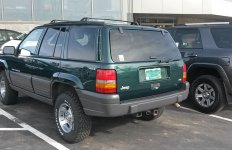
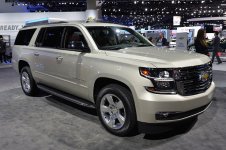
It's all about the odds man. Example: If you drive a motorcycle that weighs 500 lbs, you are at the bottom and 99.99% of the vehicles out there will come out of the wreck in better shape. If you drive an average vehicle of 3400 lbs, then it's 50-50 who gets the short end of the stick in an accident. If you drive an 18 wheeler that weighs 75K, you are in the 90+% range of being the one walking away.
It does not seem like much of a difference between the 4Runner and an average vehicle but 1200 lbs matters a lot when moving at 55 mph. What will happen if a 5K vehicle hits a 3K vehicle head on at 55 mph? It will have the same results as if the 5K vehicle was going slower and the 3K vehicle going much faster. Again, do the math. It's scary. With that said practicality comes into play also. My wife drives a CRV around town. Any road trip we take the 4Runner. Why? The CRV is much more practical for her.
My whole rant, if there is one, is the blindness of normal people to this issue. The IIHS crashes cars and gives a rating. The problem with their testing is crashing into a static wall, which gives you the results of hitting a vehicle the same size and mass of your vehicle. While that puts all vehicles on a level playing field as far as ratings go, that is not a real world application. The real world would be to crash all vehicles into a mass that they most likely will encounter in an accident. What would happen if they did that though is small vehicles would suffer horribly and not get a good rating. In addition, the NHSTA wants people to be as efficient as possible so driving small vehicles is the way to go. It is a conundrum. But for someone (had it happen just the other day) tell me that their Honda Fit was just as safe in an accident as my 4Runner because it got a five star crash rating is just laughable. I had to explain to her that sure, if you hit a Fit sized car or lighter, your vehicle is safe. If you hit a 4Runner, um no. And then I had to explain physics. And math...