People who do long commutes in their T4r?

d531619c094721e9c797ab822fab79a2.jpg


Safety is an illusion when comparing new vehicles. If you're comparing your 1960 car to a new one, sure. But driving a 4runner, pickup, whatever, it doesn't matter. You'll be lucky to be alive no matter what you wreck in.

Saving resale is ridiculous no matter the car. I think the best resale you can get is on a Huffy.

So get the beater and save the money. Enjoy the 4runner elsewhere and not destroying the it in the commute.
 
Here’s another vote for having a separate commuter car. I latch onto my wife’s cars when she’s ready to trade, and use them for commuting and other in-town driving (they’re still like new and have low miles when I get them). I commute into downtown Denver, and driving (and parking) a larger vehicle there is a real PITA. And I put a lot of miles on them (upwards of 20,000 miles per year). The cars ride and handle a lot better in town, especially given the bombed-out streets around downtown. Getting nearly twice the MPG is a big plus too.

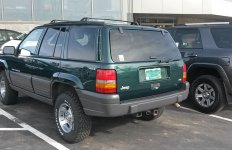
We’ve done it this way ever since we bought our ’98 Grand Cherokee, and only used the Jeep for vacations and trips involving 4WD roads. As a result, the old Jeep still looks and drives nearly like new. The downside is that I’m having a hard time letting it go. Our new 4Runner will lead a similar life, so you may want to check back with me in 19 years if you’re looking for a clean old one.

Here's the old Jeep next to our new 4Runner at the dealership. I bet you'd like it if it was a 3rd generation 4Runner. :hiding:
 

Attachments

  • jeep-at-stevinson.jpg
    jeep-at-stevinson.jpg
    115.8 KB · Views: 375
Obsessing over resale to the point of buying a second car just to commute in is something I can't fathom. If you wanted to have a commuter car then keep a GT500 for weekends I would get it a bit but I don't know what is happening here.

OP, are you are worried about putting miles on your 4Runner to the point of buying a second car to travel said miles?

No I don't think so. Just something that popped into my head. I don't plan on doing it, like you said it is kind of redundant and will just be more headaches for me. I use my T4R for 90% highway driving anyways, so it is in mint shape.

Most of my co-workers drive expensive gm/ford/ram trucks that they're scared to put miles on because... well that's a whole other thread.
 
d531619c094721e9c797ab822fab79a2.jpg


Safety is an illusion when comparing new vehicles. If you're comparing your 1960 car to a new one, sure. But driving a 4runner, pickup, whatever, it doesn't matter. You'll be lucky to be alive no matter what you wreck in.

Saving resale is ridiculous no matter the car. I think the best resale you can get is on a Huffy.

So get the beater and save the money. Enjoy the 4runner elsewhere and not destroying the it in the commute.

Really? The average GVW of a motor vehicle operated on the highway is 3400 lbs. The 4Runner has a GVW around 4700 lbs. If you are going to quote some crash test data don't bother. They crash their vehicles into a static barrier, which is the exact same thing as hitting a vehicle of the same mass head on. Let's say they are testing a 3600 lb vehicle at 35 mph. It passes the test with 5 stars. What would happen if, instead of crashing into a static barrier at 35 mph, they crashed it head on into a vehicle weighing 5000 lb? Do the math. It is not pretty. If everything else is equal (safety features, etc) mass will always win.
 
Death traps? Generally cars are safer than SUVs/trucks.
You just seem to have an illogical approach here

Realistically, highway miles are easy miles on a vehicle. 300k highway miles is probably better than 80k city miles. Personally I would keep the miles off the runner, keep it nice and buy a $5k 2010 civic or corolla. They're not that bad at all and it'll be cheaper to drive. If something breaks then F it. Well it for a grand and get something else or fix it and drive it longer.

Sent from my SM-G935T using Tapatalk

https://www.cars.com/articles/2015/...river-death-rate-small-cars-have-the-highest/
 
Really? The average GVW of a motor vehicle operated on the highway is 3400 lbs. The 4Runner has a GVW around 4700 lbs. If you are going to quote some crash test data don't bother. They crash their vehicles into a static barrier, which is the exact same thing as hitting a vehicle of the same mass head on. Let's say they are testing a 3600 lb vehicle at 35 mph. It passes the test with 5 stars. What would happen if, instead of crashing into a static barrier at 35 mph, they crashed it head on into a vehicle weighing 5000 lb? Do the math. It is not pretty. If everything else is equal (safety features, etc) mass will always win.
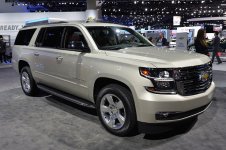
True, but if you look closely at the crumpled mass in the picture, you'll see that it's a 2015 Chevy Suburban, which has a base curb weight of 5,700 lbs. and a GVW of 7,500 lbs. The base curb weight of the 4Runner is 4,700 lbs., the GVW is somewhere just north of 6,000 lbs. Maybe we should all be driving Peterbilts. :lookout:
 

Attachments

  • 2015-chevrolet-suburban.jpg
    2015-chevrolet-suburban.jpg
    109.7 KB · Views: 349
True, but if you look closely at the crumpled mass in the picture, you'll see that it's a 2015 Chevy Suburban, which has a base curb weight of 5,700 lbs. and a GVW of 7,500 lbs. The base curb weight of the 4Runner is 4,700 lbs., the GVW is somewhere just north of 6,000 lbs. Maybe we should all be driving Peterbilts. :lookout:

It's all about the odds man. Example: If you drive a motorcycle that weighs 500 lbs, you are at the bottom and 99.99% of the vehicles out there will come out of the wreck in better shape. If you drive an average vehicle of 3400 lbs, then it's 50-50 who gets the short end of the stick in an accident. If you drive an 18 wheeler that weighs 75K, you are in the 90+% range of being the one walking away.

It does not seem like much of a difference between the 4Runner and an average vehicle but 1200 lbs matters a lot when moving at 55 mph. What will happen if a 5K vehicle hits a 3K vehicle head on at 55 mph? It will have the same results as if the 5K vehicle was going slower and the 3K vehicle going much faster. Again, do the math. It's scary. With that said practicality comes into play also. My wife drives a CRV around town. Any road trip we take the 4Runner. Why? The CRV is much more practical for her.

My whole rant, if there is one, is the blindness of normal people to this issue. The IIHS crashes cars and gives a rating. The problem with their testing is crashing into a static wall, which gives you the results of hitting a vehicle the same size and mass of your vehicle. While that puts all vehicles on a level playing field as far as ratings go, that is not a real world application. The real world would be to crash all vehicles into a mass that they most likely will encounter in an accident. What would happen if they did that though is small vehicles would suffer horribly and not get a good rating. In addition, the NHSTA wants people to be as efficient as possible so driving small vehicles is the way to go. It is a conundrum. But for someone (had it happen just the other day) tell me that their Honda Fit was just as safe in an accident as my 4Runner because it got a five star crash rating is just laughable. I had to explain to her that sure, if you hit a Fit sized car or lighter, your vehicle is safe. If you hit a 4Runner, um no. And then I had to explain physics. And math...

 
It's all about the odds man. Example: If you drive a motorcycle that weighs 500 lbs, you are at the bottom and 99.99% of the vehicles out there will come out of the wreck in better shape. If you drive an average vehicle of 3400 lbs, then it's 50-50 who gets the short end of the stick in an accident. If you drive an 18 wheeler that weighs 75K, you are in the 90+% range of being the one walking away.


It does not seem like much of a difference between the 4Runner and an average vehicle but 1200 lbs matters a lot when moving at 55 mph. What will happen if a 5K vehicle hits a 3K vehicle head on at 55 mph? It will have the same results as if the 5K vehicle was going slower and the 3K vehicle going much faster. Again, do the math. It's scary. With that said practicality comes into play also. My wife drives a CRV around town. Any road trip we take the 4Runner. Why? The CRV is much more practical for her.


My whole rant, if there is one, is the blindness of normal people to this issue. The IIHS crashes cars and gives a rating. The problem with their testing is crashing into a static wall, which gives you the results of hitting a vehicle the same size and mass of your vehicle. While that puts all vehicles on a level playing field as far as ratings go, that is not a real world application. The real world would be to crash all vehicles into a mass that they most likely will encounter in an accident. What would happen if they did that though is small vehicles would suffer horribly and not get a good rating. In addition, the NHSTA wants people to be as efficient as possible so driving small vehicles is the way to go. It is a conundrum. But for someone (had it happen just the other day) tell me that their Honda Fit was just as safe in an accident as my 4Runner because it got a five star crash rating is just laughable. I had to explain to her that sure, if you hit a Fit sized car or lighter, your vehicle is safe. If you hit a 4Runner, um no. And then I had to explain physics. And math...


Redo your calculation in a crash with an 80k pound semi. It makes no lick of difference whether the vehicle is 3k or 4.5k. Either way, the chances of you walking away are slim. Like you said, it comes down to chance, and there are plenty of semis on the road to crash with.

We drive what we want because it's what we like to drive, not because of safety. If safety were based on weight alone, we'd be driving semis and nobody would ever drive a motorcycle. But yet, we're still all in a 4runner, so that must mean we're either crazy or driving for pleasure. My vote is on crazy, but most likely it's pleasure. So if the OP wants to drive for pleasure on his daily, then by all means. It just doesn't sound like he's worried about that on this commute.
 
Redo your calculation in a crash with an 80k pound semi. It makes no lick of difference whether the vehicle is 3k or 4.5k. Either way, the chances of you walking away are slim. Like you said, it comes down to chance, and there are plenty of semis on the road to crash with.

We drive what we want because it's what we like to drive, not because of safety. If safety were based on weight alone, we'd be driving semis and nobody would ever drive a motorcycle. But yet, we're still all in a 4runner, so that must mean we're either crazy or driving for pleasure. My vote is on crazy, but most likely it's pleasure. So if the OP wants to drive for pleasure on his daily, then by all means. It just doesn't sound like he's worried about that on this commute.
You apparently did not read my post. It's all about the odds.
 
It's all about the odds man. Example: If you drive a motorcycle that weighs 500 lbs, you are at the bottom and 99.99% of the vehicles out there will come out of the wreck in better shape. If you drive an average vehicle of 3400 lbs, then it's 50-50 who gets the short end of the stick in an accident. If you drive an 18 wheeler that weighs 75K, you are in the 90+% range of being the one walking away.

It does not seem like much of a difference between the 4Runner and an average vehicle but 1200 lbs matters a lot when moving at 55 mph. What will happen if a 5K vehicle hits a 3K vehicle head on at 55 mph? It will have the same results as if the 5K vehicle was going slower and the 3K vehicle going much faster. Again, do the math. It's scary. With that said practicality comes into play also. My wife drives a CRV around town. Any road trip we take the 4Runner. Why? The CRV is much more practical for her.

My whole rant, if there is one, is the blindness of normal people to this issue. The IIHS crashes cars and gives a rating. The problem with their testing is crashing into a static wall, which gives you the results of hitting a vehicle the same size and mass of your vehicle. While that puts all vehicles on a level playing field as far as ratings go, that is not a real world application. The real world would be to crash all vehicles into a mass that they most likely will encounter in an accident. What would happen if they did that though is small vehicles would suffer horribly and not get a good rating. In addition, the NHSTA wants people to be as efficient as possible so driving small vehicles is the way to go. It is a conundrum. But for someone (had it happen just the other day) tell me that their Honda Fit was just as safe in an accident as my 4Runner because it got a five star crash rating is just laughable. I had to explain to her that sure, if you hit a Fit sized car or lighter, your vehicle is safe. If you hit a 4Runner, um no. And then I had to explain physics. And math...
Agreed. That’s why I gave up riding motorcycles in the 80’s.

Same thing for my wife too. She drives an Audi A4; it’s practical for her and handles very nicely. And, having ridden with her, I think she’d be much more likely to be involved in an accident if she were to drive our 4Runner in traffic. I use her old one for commuting, and feel that I’m much more likely to avoid an accident in it versus the 4Runner in Denver traffic. Of course, I do worry about one of us being clobbered by someone in a bigger vehicle, especially with all the F250's and similar vehicles running around here.

I’ve always said the same thing about the crash tests, but I guess it’s a matter of how much risk we’re willing to take. At least I no longer ride a motorcycle.
 
i had a Acura TLX i traded in towards the 4runner...I travel extensively...

Acura was way more ideal for this, however, i started to have intense hamstring pain and switched back to an SUV. Choose the 4runner over the Honda Pilot.

Pain has subsided (largely)...
 
My new job has me commuting about 50 miles each way.
The 4Runner is taking it like a champ...
although I am considering a motorcycle to lighten up the gas bill during
warmer weather.
 
One of the reasons I got my 3rd gen was as a "commuter" vehicle. I don't really care about resale value, but my newer vehicle has a lot of mods as a off road and camping vehicle, and I hated to see it waste it's best years hauling me back and forth over the same road.

I don't think I'd want to own anything smaller than a 3rd gen, it's comfortable enough but still on the cramped side for me being over 6ft tall. A car is just a torture device to me, I loathe them.

I think the 3rd gen makes a great commuter for my 70 miles a day. It's high miles and is nice but not so nice I'm overly concerned about it. It's reputation means if all goes well regardless of having 240k already on the clock, it has many many more miles ahead of it so at this point I could care less how many miles I'm putting on it. And it's a fun vehicle, I like it, and enjoy driving it. This spring weather has been great with all 6 windows open it is the next best thing to an open top vehicle.
 

Members online

No members online now.

Forum statistics

Threads
278,317
Messages
3,554,129
Members
248,016
Latest member
Advally Service

Trending content

Back
Top