Possible entry points for rodents getting into 4th gen passenger compartment?

Counterpoint08

New member
I recently had the experience of opening my 4Runner after it sat in my driveway for only 4 days and found rodent poo pellets (most likely mice) in various places in my interior and it or they pissed on my center console and chewed up about a 3rd of my cabin air filter which also had poo pellets in what was left of it. They were also in my engine compartment and I found several places in the engine compartment where they were stashing bits of leaves and berries and more of those damn pellets. Fortunately they have not chewed up any wiring or done any permanent damage at this point. I put snap traps in the engine compartment and they both triggered (bait gone) but I didn't actually catch them. That's ok because the peanut butter bait I used also contained poison I mixed in.
Having read through the other forum posts on this topic, I realize that beneath the cowl vents is a large opening above the cabin air filter and that they most likely gained entry into the passenger compartment when they chewed through the filter. I also realize that we can utilize some 1/4" wire mesh to cover the opening.
Question 1) How do you think they are gaining access to this opening above the cabin air filter? Are they squeezing through the cowl vent openings at the base of the windshield or is there more than one way in there?
Question 2) Does anyone know of all the possible places on the vehicle where mice might gain access to the passenger compartment? My cabin air filter is new and clean still, but the other day I found a couple more pellets in the interior. It is possible that I missed them when I cleaned it out but I don't think so. If anyone has any ideas both for possible entry points and also how to seal them up I would appreciate it! Thanks...
 
Register to hide this ad
The only place I know of that rodents can really get in is through the cabin filter opening. Maybe it's possible you missed an actual mouse while cleaning the interior. I would get that mesh cover on ASAP then see what happens. Also, put some traps inside.
 
These threads might give you some tips ...

http://www.toyota-4runner.org/4th-gen-t4rs/167226-animal-my-air-filter.html

http://www.toyota-4runner.org/4th-g...d-my-cabin-air-filter-u-gotta-kidding-me.html

I had an issue with some sort of small creature making their home in this cabin air filter area. Went to change the cabin air filter, and there was all sorts of nesting material in there.

The advice that I got from my Toyota mechanic to help prevent this is when you are parked and about to turn off the engine, be sure to have your "recirculate air" button engaged (instead of "fresh air" coming in from the outside). This will close off an entry point for your mouse or other critters from climbing in.
 
Last edited:
I've become somewhat of an "expert" since I moved up to Bend, Oregon in regards to rodent intrusion. I'm doing about 1~2 "Rodent Cars" a month lately.

The main way they are getting in is from the fresh air vent to the HVAC system (located above the CAF). They get in there by squeezing under the cowl or crawling through openings in the body sheet metal. Some openings are accessible from the fenders (they can easily crawl their way on top of the fender liners and access these gaps and then get to the fresh air opening.

[MENTION=26691]Bossman[/MENTION] mentioned use recirculate as often as possible as they'd have to chew through that thick plastic door first before they could get into the cabin.

So here's to give you an idea how I approach rodent vehicles at work (as they often end up being turned over to insurance to deal with).

Vehicle comes in with Owner concerned of foul smell/possible rodent issue:

  • Pull Cabin Air Filter and Inspect
  • Found Rodent Nest/Evidence of Droppings but CAF has not been eaten through
  1. Recommend Install Rodent Screen, Clean Debris, Install New CAF
  • Found Rodent Nest/Evidence of Droppings, CAF Eaten Through, Possibly Deceased Rodent in CAF or Blower Motor
  1. Move to Further Inspection

  • Pull Blower Motor & Document All Findings (i.e. Photographs, ect)
  • Find Evidence of Nesting Material, Rodent Droppings, Deceased Rodent
  1. Inspect Evaporator Core With Mirror or Bore Scope
  • Found Evidence of Nesting, Rodent Droppings/Staining, Deceased Rodent in Evaporator Core
  • Recommend Removal of HVAC Assembly For Inspection (Or if initial findings are severe enough, recommend HVAC Assembly and Blower Motor Housing outright)
  • Replace HVAC Housing Assembly, wipe down any transferred parts with bleach, install rodent screen, install charcoal cabin air filter, use product like FrigiFresh to eliminate residual smell

Post Note-

It's not working the way I'd like it to... But that's basically the idea. Honestly I'd take as many pictures of the CAF and blower motor (I do recommend you drop it) and use a mirror or borescope to inspect the evaporator core and take pictures. You may find that you have more damage in the HVAC system, it's like about $4~6k to replace the HVAC Assembly & Blower Motor Housing (that's basically everything right there) plus anywhere from 8~12hrs of labor to remove and replace that assembly.

You can try and clean the HVAC assembly, but from experience it doesn't work well; the nooks and crannies and the fact the plastic seems to "absorb" the smell just will never get it "clean again" or worse the bleach impregnates the plastic and makes it worse.
 
Last edited:
You really don't want to use poison for them. If they ingest that and die behind the dash, you have going to have a stinky ride for 2weeks.
Use an snap trap to kill them instantly. Instead of using peanut butter or cheese, use bacon. Cook it in the microwave until it is almost done, but not crispy. Use some light weight sewing thread or fishing line to tie it to the trap so they cant pull it off.
Probably will catch one the first night. Then all you have to do is throw it away. No mess and no stinky to deal with.

good luck
 
Thanks to everyone for your replies/suggestions.
[MENTION=66389]BlackWorksInc[/MENTION] you mentioned that the rodents can also fit between gaps in the body panels. Did you mean that they are simply coming into my engine compartment and then crawling up the firewall to access the cowl vents (and thus gain access to the opening above the CAF) or is there another way to get access to this opening above the CAF that doesn't require going through the cowl vents? What about the insulated pad that is on the firewall -are there any openings in the firewall behind that pad or is it just covering a solid firewall?
 
Thanks to everyone for your replies/suggestions.
[MENTION=66389]BlackWorksInc[/MENTION] you mentioned that the rodents can also fit between gaps in the body panels. Did you mean that they are simply coming into my engine compartment and then crawling up the firewall to access the cowl vents (and thus gain access to the opening above the CAF) or is there another way to get access to this opening above the CAF that doesn't require going through the cowl vents? What about the insulated pad that is on the firewall -are there any openings in the firewall behind that pad or is it just covering a solid firewall?

They are crawling/squeezing through holes in the body itself. If you took the fenders off the vehicle you'd see that the body is not solid sheetmetal, it's got lots of holes and gaps they can run through on their way under the plastic windshield cowl.

There technically is one more area large enough for them to get into the vehicle (the two one-way flaps at the rear of the vehicle), but honestly I have never really seen them bother to try and eat through those vents since the cowl is a no-brainer for them.

62607d1335184375-internal-snorkel-mod-4th-gen-img_0902.jpg
 
Thanks [MENTION=66389]BlackWorksInc[/MENTION]. Your response makes me want to ask you two additional questions for the sake of completeness and clarification.
First, are you saying that all those body holes are still leading them only to the opening above the CAF?
Second, forgive my ignorance, but what are the "one-way flaps" for in the back you mentioned, and where are they located so that I can possibly check on their condition? Thanks again.
 
Thanks [MENTION=66389]BlackWorksInc[/MENTION]. Your response makes me want to ask you two additional questions for the sake of completeness and clarification.
First, are you saying that all those body holes are still leading them only to the opening above the CAF?
Second, forgive my ignorance, but what are the "one-way flaps" for in the back you mentioned, and where are they located so that I can possibly check on their condition? Thanks again.

The holes don't only lead to the cowl, but between all the openings the mice can crawl their way under the cowl very easily. None of the holes though lead INTO the vehicle except for the opening for the HVAC system above the CAF. The Holes are mainly there to reduce weight, allow some components to pass through, and provide specifically designed crumple zones.

These are what I am talking about in terms of the vents:

db_Rear_3Q1.jpg


They are located under the bumper skin and... I actually don't know exactly what they are for, but my best assumption is the are a "one-way" flap valve to help reduce pressure build up in the vehicle when driving.
 
Thanks for all your help [MENTION=66389]BlackWorksInc[/MENTION]. The pictures are great and I had no idea those vents existed. This is exactly the kind of information I was looking for.
 
Well I thought I would update this thread with something that might be helpful to anyone dealing with rodents. First, I could find no other sign of rodents getting in my 4Runner aside from the CAF opening as others mentioned.
About two days after I first posted this thread I was talking to my neighbor who has lived here for 25 years, parks his car in the driveway like me and has never had a rodent problem in his vehicle (although he has had them in his attic, backyard and drowned in his pool).
It turns out he has a very unusual habit: He cleans his engine compartment with Lemon Pledge once a week. Every week. For 25 years.

I did some research and it turns out that mice and some types of rats don't like citrus smells. Also, if you've ever used Lemon Pledge, you know the silicon-based oil is very slippery, which may make it harder or unpleasant for them to climb around in there.
For the past month I have been cleaning everything in my engine compartment except the hoses (and of course being careful not to get anything on the serpentine belt or pulleys) once a week-just like my neighbor, and I have had ZERO problems with rodents since. Just something you might want to try. Report back on here if it works for you!
 
Cars have become rolling buffets for adults and kids.

All the food, crumbs and wrappers are acting as magnets for rodents.

Doesn't help that apparently everyone has switched to a soy-based insulation for wiring in the last 6 years or so (at least that's what I was told and something I read), so that's just baiting those nibblers even more...
 
Yes, and I read on the forum somewhere that Toyota uses a peanut-oil based lubricant in the AC system? Not sure if that is true or not, but that's just not helpful at all!

Also, for the record, my neighbor's vehicle is a 2012 Toyota Sienna, so he should have the same soy-based wiring insulation and other assorted flavors that our engines offer to rodents - the Lemon Pledge has worked for him so it's worth a try. You gotta do it every week!
 
When I owned my LC100, I found that mice like to cozy up for the winter under the intake manifold and chew on the wiring harness on top of the block. Take a peek in there periodically if you own a V8.
 
Rodents in '02 4runner?

I've become somewhat of an "expert" since I moved up to Bend, Oregon in regards to rodent intrusion. I'm doing about 1~2 "Rodent Cars" a month lately.

Hi, Also in Bend, Oregon. I've had damage done to my 4th gen 4runner. I first installed a screen under the cabin air filter. Then, after reading one of your earlier posts, I removed the cowl and installed a screen on the fresh air intake.
I'll know in time how it worked.

I recently got a 3rd gen 4runner. Since I live out of town in pack rat paradise, I wanted to do the same metal screen install. I removed the cowl on the 02 and found no access to any visible fresh air intake. There's also no cabin air filter over the blower motor. What do you guys do to keep them out of a 3rd gen?
Bill, outside of Bend
 
I've become somewhat of an "expert" since I moved up to Bend, Oregon in regards to rodent intrusion. I'm doing about 1~2 "Rodent Cars" a month lately.

Hi, Also in Bend, Oregon. I've had damage done to my 4th gen 4runner. I first installed a screen under the cabin air filter. Then, after reading one of your earlier posts, I removed the cowl and installed a screen on the fresh air intake.
I'll know in time how it worked.

I recently got a 3rd gen 4runner. Since I live out of town in pack rat paradise, I wanted to do the same metal screen install. I removed the cowl on the 02 and found no access to any visible fresh air intake. There's also no cabin air filter over the blower motor. What do you guys do to keep them out of a 3rd gen?
Bill, outside of Bend

I'm sure many here would like to help you...BUT...this is the 4th Gen forum, so most if not all of us don't have a 3rd Gen, I would suggest posting your question in the 3rd Gen forum section.
 
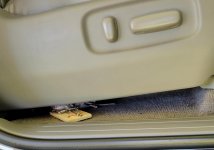
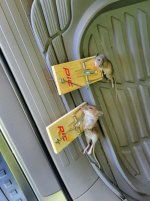
Being dealing with this myself and haven't been able to figure out how they are getting in. They can squeeze through openings we wouldn't think possible. I discovered my issue when I opened the glove box and all the napkins inside were chewed up and a large amount of padding or sound dampening material was also in there. I have not been able to discover where this material came from. I set 2 traps on each floor board mat with peanut butter as the bait. I modify the lever the trigger rod catches on so it takes the slightest movement to set them off. 12 hours later I have a dead mouse on the drivers mat and I didn't see the trap on the passenger mat where the second trap was set, up at the front. Only when I opened the passenger door did I see where the second trap was located. It was so far under the front seat that is was almost on the back floor mat. It was a big fat sucker too but how did it get so far under the seat? It's impossible that it was kicking or made any movement at all to get it so far back. The mouse was DOA as soon as the trap was sprung, how it ended up almost 2 ft away as well as it being under a seat is beyond me? Did four of his buddies try carrying him out like medics do on a stretcher, aka mouse trap? This has really messed with my head trying to figure it out. I have thick wire grid screen blocking all passages that I could find. I haven't found any pellets that would mean they have been living in my 4Runner for awhile. I have set traps under the car by the front tire and usually find one dead the next morning. I'm going to get some Lemon Pledge because it's only a matter of time before they start chewing on important and expensive things!!!!!
NCH
 

Attachments

  • mices 1.jpg
    mices 1.jpg
    141.5 KB · Views: 396
  • Mices 2.jpg
    Mices 2.jpg
    132.7 KB · Views: 455
Being dealing with this myself and haven't been able to figure out how they are getting in. They can squeeze through openings we wouldn't think possible. I discovered my issue when I opened the glove box and all the napkins inside were chewed up and a large amount of padding or sound dampening material was also in there. I have not been able to discover where this material came from. I set 2 traps on each floor board mat with peanut butter as the bait. I modify the lever the trigger rod catches on so it takes the slightest movement to set them off. 12 hours later I have a dead mouse on the drivers mat and I didn't see the trap on the passenger mat where the second trap was set, up at the front. Only when I opened the passenger door did I see where the second trap was located. It was so far under the front seat that is was almost on the back floor mat. It was a big fat sucker too but how did it get so far under the seat? It's impossible that it was kicking or made any movement at all to get it so far back. The mouse was DOA as soon as the trap was sprung, how it ended up almost 2 ft away as well as it being under a seat is beyond me? Did four of his buddies try carrying him out like medics do on a stretcher, aka mouse trap? This has really messed with my head trying to figure it out. I have thick wire grid screen blocking all passages that I could find. I haven't found any pellets that would mean they have been living in my 4Runner for awhile. I have set traps under the car by the front tire and usually find one dead the next morning. I'm going to get some Lemon Pledge because it's only a matter of time before they start chewing on important and expensive things!!!!!
NCH

I have mice around my home and I have traps everywhere, you would be surprised how long a mouse can live after springing a trap, even if it looks like it killed them instantly, I have sat and watched as some have sprung the traps, I seen mice that got hit right behind the head resulting in a broken neck and some getting hit on the head resulting in a crushed skull and they still crawled several inches to sometimes a foot or more before stopping for good.

It's just adrenaline keeping them going, now if a broken neck or crushed skull causes spinal cord damage and them to be parallelized then they won't move, but otherwise they almost always move a little bit.
 

Members online

Forum statistics

Threads
278,316
Messages
3,554,111
Members
248,016
Latest member
Advally Service

Trending content

Back
Top