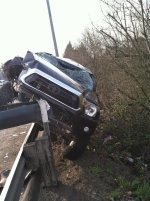
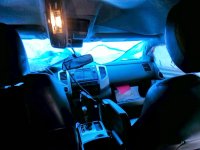
Questions for the engineers, fabricators and emergency responders

StreetCreeper

New member
More and more while driving, I see stupid people, distracted people...and people who just don't give a damn — driving along beside me.

I've been driving since the early 90s' and even spent about 10 years as a class A driver hauling everything from egg-yokes to jet fuel. Drivers are definitely getting worse.


Almost daily I have to honk at someone in front of me while at a stoplight, because the light has turned green and they are too distracted by their phone to notice.

I also see people veering off the road or into opposing lanes because they hold their phones down low (so the cops don't see them texting) and fail to notice the road change direction slightly.

I think this may have been the case with someone in my area who recently died in a head-on collision while messing with their phone. They also happened to kill the other driver and critically injure their passenger.

This all brings me to my thoughts on 4runners and accidents. These trucks seem pretty tough, but after looking at many junkyard runners, I see a lot with rollover damage and collapsed roofs.


I assume, being a high center of gravity vehicle, they are prone to rollover more. I'll also assume that these rollovers occur while attempting to avoid collisions.

With all the crazy and distracted drivers today, having a split second to make an emergency maneuver so as to avoid a head-on crash (like the one I mentioned above) will likely result in an increased chance of rollover.

Obviously this is dependent onf varying factors, but still, it's more likely than not if you are trying to avoid a header at 65-70 mph.

So I wonder, if we are to avoid a collision with our quick reaction time — only to rollover, how can we try to mitigate any damage/injury from a rollover?

What about a low-profile full roll-cage? Is this practical? Would ingress/egress be hampered by this?

What about after a rollover or even a collision? Would this hinder escaping the vehicle quickly? What about hindering rescue personnel?

Would the increased weight and HCofG make a rollover more likely than ever, or otherwise increase the severity of a rollover?

Do the material and fabrication cost simply out-weigh potential benefits? I wonder this because I don't see any manufacturers doing this on production vehicles.

However, I see race vehicles and serious off-road vehicles with them so maybe it's just an issue of money?

Any thoughts?
 
Last edited:
Register to hide this ad
A first gen roll bar is a good option here. the second thing is stronger bumpers. i dont yield or try to swerve out of the way, if someone has cut me off, I stay my course. id rather use their car as my impact zone than roll over trying to swerve out of the way. one of the problems when we lift our trucks is that the roll center stays low but the center of gravity increases.

A while ago I was watching an episode of dirt every day and he was putting a lift on a jeep. instead of an extended panhard bar or panhard drop they installed a lift bracket on the axle. after doing a bit of research i decided I would make one for my truck and see how it worked. my truck handled corners amazingly after the upgrade. before the upgrade on a specific street that was curved I could go at about 35mph before the vtrac would cut the engine power to try and stabilize my truck. after the upgrade I went around the same curve and it didnt come on at all. on hard corners I could spin one tire, but after the lift there was a lot more grip and I couldnt spin them at all.

so why did the panhard lift make such a difference? ideally the center of roll and center of gravity should be at the same height. when the roll center is too low body roll occurs. when the roll center is too high the bottom of the body would actually lean outwards like a swing. when the roll center and center of gravity are at the same height both the inside and outside tire recieve the same amount of load from the unsprung weight in a turn. and bceause there is less body roll the vehicle is more stable and there is less load transition during quick sharp manuevers.

so on my truck which is lifted about 4.5" I made a bracket that moved it up exactly 4.5", so the roll center is raised by about half that and now my tires are centered and there is less left to right movement of the axle which improves ride quality.
 
Ouch those pictures are scary. When I lifted my rig higher was not top priority for me. Mainly because I have a smaller tire. Thus I have mild lift which helps my center of gravity. When I bought my icon lift I had heard there was less body roll. Honestly I was amazed at how little body roll I have now. My rig sits 2-3" higher then stock but feels more 'sporty' with less body roll. Also I have an arb bumper which in a crash buckles with the rig instead of driving into it. There are ways you can lessen the chance of a rollover but most increase the chance with the suspension systems they choose.
 
A full rollcage made out of say 4130 chromoly tubing, and properly tied into the body frame mounts, could certainly be fabricated, and make the 4Runner safer in a crash, without hindering access to safety personnel.

The reason it's not done regularly, is cost. Interior aesthetics would likely be an issue for much of the car buying public, too.
 
I think the biggest thing is to be a very defensive driver. I'm always expecting that idiot up ahead to pull out in front of me, slam on the brakes, swerve into my lane, etc. Always expect the worst from everyone around you and don't trust anyone when driving. This goes a long way when driving. I look both ways and slowly pull away from a light that just turned green to make sure no one is going to run it. If someone is flying up to a red light I wait until they stop to go.

As far as the truck is concerned the reason you see so many rollovers is like you said, high center of gravity and a short track width, these trucks are narrow. One of the reasons I'm adding wheel spacers to mine after I lifted it.

I don't think there is anything you can really practically do for a roll cage or anything, but like DFarms said, steel bumpers help because you will win the collision, and people are kinda intimidated by them haha.

Both of those pics you posted show rollovers, but the good thing is neither of those roofs were smashed low enough to kill the person inside assuming they were wearing a seat belt. It's not like the roof is level with the hood or anything. I'm sure they were sore/injured, but I'd be willing to bet they all survived.

Driving is inherently dangerous, but the way you drive can make it much less dangerous for you and your family.
 
A roll bar is not going to hinder first responders from getting you out in a bad wreck. The Jaws of Life was the original extrication tool and was developed by the Hurst company to get drivers out of race cars after dealing with difficulties encountered with hand tools. Hurst still makes extrication tools to this day.

As a firefighter, I've worked many bad wrecks. Our extrication tools are designed to cut through virtually anything. Keep in mind that any extrication is pretty intricate and takes time.

As Unner said, driving is dangerous and more idiots seem to get out and drive every day. Do your best to be safe and be aware of others on the road.
 
I think the biggest thing is to be a very defensive driver. I'm always expecting that idiot up ahead to pull out in front of me, slam on the brakes, swerve into my lane, etc. Always expect the worst from everyone around you and don't trust anyone when driving. This goes a long way when driving. I look both ways and slowly pull away from a light that just turned green to make sure no one is going to run it. If someone is flying up to a red light I wait until they stop to go.

^The most basic advice I give anyone when it comes to driving. The green light tells you when to go, but only you can determine if it's safe to go.
 
The problem with the roll cage idea is what it does to interior space. Having a bar come down the A pillar in front of the dash, and a bar going across the top of the dash are a pain in the behind. Then if its going to stop the roof from caving in, you need to diagonal brace it, no problem if you never carry passengers. But seriously the cage eats up interior space, and welding it in with full interior is problematic, not to mention impossible to paint properly. Then there is the problem of tying to the frame, the floor would do very little to support the cage in a roll over. Exo cages are mostly useless in a roll over, although I guess they could help a little, especially in a slow roll.

Kind of amazing how easily an SUV will roll once the motion is started, I've witness it a few times both on the trail and on the street. I had my shop for 14 years in clear view of an intersection that just had left turn accidents all the time. Mostly I heard them then looked up too late, but once in a while I was able to hear tires screech and look in time to see the ol' Montero go right over, or the Expedition, or the Mercedes, etc. Never did see a 3rd gen go, but I ain't dead yet.

:playball:
 
The problem with the roll cage idea is what it does to interior space. Having a bar come down the A pillar in front of the dash, and a bar going across the top of the dash are a pain in the behind. Then if its going to stop the roof from caving in, you need to diagonal brace it, no problem if you never carry passengers. But seriously the cage eats up interior space, and welding it in with full interior is problematic, not to mention impossible to paint properly. Then there is the problem of tying to the frame, the floor would do very little to support the cage in a roll over. Exo cages are mostly useless in a roll over, although I guess they could help a little, especially in a slow roll.

Kind of amazing how easily an SUV will roll once the motion is started, I've witness it a few times both on the trail and on the street. I had my shop for 14 years in clear view of an intersection that just had left turn accidents all the time. Mostly I heard them then looked up too late, but once in a while I was able to hear tires screech and look in time to see the ol' Montero go right over, or the Expedition, or the Mercedes, etc. Never did see a 3rd gen go, but I ain't dead yet.

[emoji14]layball:
You've got that right!

I was thinking about it and I do believe the only way you could do it would make someone a lot of money. You would need to toss the frame in its entirety and go 4130 from the ground up. Then perched atop the 50k you dropped on a frame you bolt the good ol body.

I know law enforcement might not spot everything.....but they're not walking around with seeing eye dogs either. You would get quite a few tickets.

It would be amazing to see though and would have many advantages. Completely custom suspension tuned to your needs, increased frame rigidity, eased frame straightening, and simple body replacement lol.
 
If you ever want to get a LOT better at defensive driving and trying to predict what all the idiots around you are going to do while plugged in and oblivious on their phones, just go ride a motorcycle daily for a few years. You learn REALLY fast where bad lane positioning is and when you are invisible. You also learn really quick to watch several cars ahead to see what is going on, and to look THROUGH other people's car windows/windshields to see oncoming traffic/etc so you can avoid issues. (are you in the right lane with someone in the left lane in front of you, with an oncoming traffic vehicle waiting to turn left across your lane? YOU ARE INVISIBLE.) Even while being insanely cautious riding, wearing FULL gear every single day in day-glo "please don't kill me" yellow, I still had people almost t-bone me or pull out in front. Gold/silver buicks and minivans are the worst. Why? Old people and distracted moms staring at their babies in the rearview mirror. All you can do to stay safe is NEVER drive impaired (alcohol, sleep, pissed off, etc), and literally act like everyone else on the road is intentionally trying to kill you. I sold my bike last year, but that was a driving education like none other.
 
A roll cage doesn't help safety at all unless the driver is wearing a 5 pt harness and helmet. If your a-pillar partially collapses and you knock your head on your headliner or a pillar trim, you will likely get a concussion.

If you roll over and hit your head on a piece of DOM tubing a few times, you'll probably have a cracked skull and brain damage or worse. You can add padding, and it does help, but a well built roll cage is a much more formidable bludgeon than factory sheet metal, even through padding.

So unless you want to throw on your crash helmet every time you go to the grocery store.... actually come to think of it, that's probably not a bad idea either :o
 
Last edited:
A roll cage doesn't help safety at all unless the driver is wearing a 5 pt harness and helmet. If your a-pillar partially collapses and you knock your head on your headliner or a pillar trim, you will likely get a concussion.

If you roll over and hit your head on a piece of DOM tubing a few times, you'll probably have a cracked skull and brain damage or worse. You can add padding, and it does help, but a well built roll cage is a much more formidable bludgeon than factory sheet metal, even through padding.

So unless you want to throw on your crash helmet every time you go to the grocery store.... actually come to think of it, that's probably not a bad idea either :o

My new Mantra!
 
I have preached for years that a vehicle could be made that would cost less than the average vehicle and prevent 99% of fatalities caused by accidents. Wanna know how?
1. Full roll cage
2. 5 point harness
3. Helmets
4. HANS device

Lol nobody would buy because of "inconveniencing" the passengers but that would be much safer than any airbag system and much cheaper as well. If you truly want safety then mod one to the above specs. You will walk away from most any crash with the exceptions being high F=MA crashes.

The reason you see a bunch of roll overs in a junk yard is that is what it takes to total a vehicle. The normal crashes - front and side impact - are not there because they were fixed and on the road again. You are only seeing the worst at the junkyard.
 
A first gen roll bar is a good option here. the second thing is stronger bumpers. i dont yield or try to swerve out of the way, if someone has cut me off, I stay my course. id rather use their car as my impact zone than roll over trying to swerve out of the way. one of the problems when we lift our trucks is that the roll center stays low but the center of gravity increases.

A while ago I was watching an episode of dirt every day and he was putting a lift on a jeep. instead of an extended panhard bar or panhard drop they installed a lift bracket on the axle. after doing a bit of research i decided I would make one for my truck and see how it worked. my truck handled corners amazingly after the upgrade. before the upgrade on a specific street that was curved I could go at about 35mph before the vtrac would cut the engine power to try and stabilize my truck. after the upgrade I went around the same curve and it didnt come on at all. on hard corners I could spin one tire, but after the lift there was a lot more grip and I couldnt spin them at all.

so why did the panhard lift make such a difference? ideally the center of roll and center of gravity should be at the same height. when the roll center is too low body roll occurs. when the roll center is too high the bottom of the body would actually lean outwards like a swing. when the roll center and center of gravity are at the same height both the inside and outside tire recieve the same amount of load from the unsprung weight in a turn. and bceause there is less body roll the vehicle is more stable and there is less load transition during quick sharp manuevers.

so on my truck which is lifted about 4.5" I made a bracket that moved it up exactly 4.5", so the roll center is raised by about half that and now my tires are centered and there is less left to right movement of the axle which improves ride quality.

If the roll bar better tied into the frame it would decently protect the cargo area towards the back in a rollover, not really the front passenger or driver.


If the center of gravity (COG) and roll center (RC) were the same height, there would be no point in having sway bars. So why don't engineers design cars & trucks like this for production? Let's take a look at vehicle dynamics in regards to COG & RC.

The COG is the invisible point (or for purposes of this discussion, line traveling from the front through the rear of the vehicle) that represents the center of mass. If the vehicle were floating in space or in a free fall this would be the axis that it would naturally spin around. Back on the ground...RC is a designed limitation that's built into the chassis/suspension. This is the axis that the vehicle is forced to spin (roll) around.

There are 3 possible positions that the RC can be positioned: below the COG, at the COG, or above the COG. When the RC is at the COG there is theoretically no body sway in a turn. Essentially you make a hard turn and the suspension does not budge. Sounds great right? Well the other side to the coin is that jacking forces in the turn have increased. That means there's a greater force on the inner wheels of a turn that pushes them upward. The weight gets pushed to the outer wheels. If cars rolled off the dealer lots like this I could imagine we'd see many more rollovers. So what is an engineer to do?

When you look at the most engineered vehicles on the planet, formula 1 race cars, we get a glimpse into how they keep their cars planted in a turn. As it turns out, it's not uncommon for their RC to be below the ground! They keep their RC below the COG and compensate with higher spring rates, as do many race cars.

Now it would be impractical for us to compensate with higher spring rates on our street driven vehicles as this would significantly reduce ride quality. So instead, we use swaybars and live with some body roll.

There is a happy medium for the RC on these trucks and I've got a feeling that they're not that far from it.

My experience: a couple weeks ago, some nut decided to cut me off on the highway when they shot over a lane from an on-ramp. I was doing 65 and he had to be going about 40. This impact would've certainly totaled both vehicles, so I made an emergency maneuver and jerked the wheel left somewhere between 90-180 degrees! For reference, I'm lifted 3-4" with a rtt that weighs nearly 120 pounds and on a stock phb. Surprisingly the truck performed exactly how I wanted it to, recovering beautifully in the next lane. It malmost made me wonder what people were doing to roll them.
 
White_n_slow hit the nail on the head! Came here to post exactly that. I built a lot of rally cars in my day and roll cages are great, but they require the additional safety gear to work correctly. Not only that but simple cages without door bars and pillar gussets are not nearly as effective as a full cage. Once you put a full cage in however getting into/out of the vehicle becomes a lot more difficult. Interior space behind the driver/passenger goes bye bye when you start bracing the cage correctly.
Additionally, many states do not allow fully caged vehicles on the road, specifically ones with door bars. The design of a good door bar is two bent tubes, meeting at the center, and gusseted together per FIA rules. This design is not easy to get through quickly even with good extrication tools. Yes they will cut DOM, but it is not a fast and simple process. Although, if you built your cage right you should never need them!
 
If you ever want to get a LOT better at defensive driving and trying to predict what all the idiots around you are going to do while plugged in and oblivious on their phones, just go ride a motorcycle daily for a few years. You learn REALLY fast where bad lane positioning is and when you are invisible. You also learn really quick to watch several cars ahead to see what is going on, and to look THROUGH other people's car windows/windshields to see oncoming traffic/etc so you can avoid issues. (are you in the right lane with someone in the left lane in front of you, with an oncoming traffic vehicle waiting to turn left across your lane? YOU ARE INVISIBLE.) Even while being insanely cautious riding, wearing FULL gear every single day in day-glo "please don't kill me" yellow, I still had people almost t-bone me or pull out in front. Gold/silver buicks and minivans are the worst. Why? Old people and distracted moms staring at their babies in the rearview mirror. All you can do to stay safe is NEVER drive impaired (alcohol, sleep, pissed off, etc), and literally act like everyone else on the road is intentionally trying to kill you. I sold my bike last year, but that was a driving education like none other.

As a life-long Motorcyclist, this is absolutely true. People are engrossed in texting, and sending pics of their large fries to their BFF, or otherwise distracted by inane things while driving. People: Put down your f**king phones, and pay attention to your driving!
 
Last edited:
Extremely defensive driving is probably the best advice.

Here in S. FL we have a real mess of idiots on the roads. First you have people too old to be behind the wheel, and then we have coked up tourists who don't know where they're going, and then we have a lot of immigrants from places with much less traffic, lower speed limits (think island nations) who don't have a great grasp of the language all the road signs are written in. :nono:

On top of that, you have all of the aforementioned individuals using their cell phones. I go back and forth between West Palm and Miami a lot, and it's like navigating a mine field. I'd love to have a motorcycle, but everyone I know who rides one here for any length of time has been knocked down, usually by some 115 year old with one foot on the brake and the other in the grave. :yell:

Collision avoidance and survivability is one area where newer vehicles really do a lot better than something that's 15 years old. You can compare the ABS system in the 3rd gen to the current crop and the difference is night and day. I complain about the weight of new vehicles all the time, but the added safety equipment accounts for a significant portion of the gain, and it does work.

It would be interesting to see how a 3rd gen would be rated if it were held to current crash test standards.
 
Here is a picture of my old Tacoma that I flipped 4 times with my 4 yr old son in the car. Not distracted during the driving, but people's inability to merge was the result of this. We walked away with minor scratches (took my son in and had him x-ray and looked at head to toe, but he was 100%). I actually was thinking this same with with my new 4runner I purchased and since it's modified it has me slightly worried. I will be putting a roll cage inside but I do know from others after market bumpers tend to provide a little more rigidiness =D
photo 2.jpg
20140325_132053.jpg

I'm very conservative in how I drive and put lots of space between myself and others (even did that before that happened) but unfortunately sometimes things happen..
 

Attachments

  • photo 2.jpg
    photo 2.jpg
    137.2 KB · Views: 241
  • 20140325_132053.jpg
    20140325_132053.jpg
    123.2 KB · Views: 240
If the roll bar better tied into the frame it would decently protect the cargo area towards the back in a rollover, not really the front passenger or driver.


If the center of gravity (COG) and roll center (RC) were the same height, there would be no point in having sway bars. So why don't engineers design cars & trucks like this for production? Let's take a look at vehicle dynamics in regards to COG & RC.

The COG is the invisible point (or for purposes of this discussion, line traveling from the front through the rear of the vehicle) that represents the center of mass. If the vehicle were floating in space or in a free fall this would be the axis that it would naturally spin around. Back on the ground...RC is a designed limitation that's built into the chassis/suspension. This is the axis that the vehicle is forced to spin (roll) around.

There are 3 possible positions that the RC can be positioned: below the COG, at the COG, or above the COG. When the RC is at the COG there is theoretically no body sway in a turn. Essentially you make a hard turn and the suspension does not budge. Sounds great right? Well the other side to the coin is that jacking forces in the turn have increased. That means there's a greater force on the inner wheels of a turn that pushes them upward. The weight gets pushed to the outer wheels. If cars rolled off the dealer lots like this I could imagine we'd see many more rollovers. So what is an engineer to do?

When you look at the most engineered vehicles on the planet, formula 1 race cars, we get a glimpse into how they keep their cars planted in a turn. As it turns out, it's not uncommon for their RC to be below the ground! They keep their RC below the COG and compensate with higher spring rates, as do many race cars.

Now it would be impractical for us to compensate with higher spring rates on our street driven vehicles as this would significantly reduce ride quality. So instead, we use swaybars and live with some body roll.

There is a happy medium for the RC on these trucks and I've got a feeling that they're not that far from it.

My experience: a couple weeks ago, some nut decided to cut me off on the highway when they shot over a lane from an on-ramp. I was doing 65 and he had to be going about 40. This impact would've certainly totaled both vehicles, so I made an emergency maneuver and jerked the wheel left somewhere between 90-180 degrees! For reference, I'm lifted 3-4" with a rtt that weighs nearly 120 pounds and on a stock phb. Surprisingly the truck performed exactly how I wanted it to, recovering beautifully in the next lane. It malmost made me wonder what people were doing to roll them.

interesting, so would you suggest running a panhard lift, drop or a hybrid? having driven both a drop bracketed truck and mine with a lift bracket, the lift bracket was certainly more stable and predictable in a corner.
 
interesting, so would you suggest running a panhard lift, drop or a hybrid? having driven both a drop bracketed truck and mine with a lift bracket, the lift bracket was certainly more stable and predictable in a corner.

That's a tough call. Race cars are more concerned about keeping traction around corners, whereas lifted trucks should be more concerned with the rollover aspect regarding RC placement. It comes down to trading off steering predictability (which helps to instill driver confidence) for higher rollover risk. Losing traction is one thing, but rolling over is certainly worse.

Regarding a couple inches of lift for the phb, the difference may be so minute that the increase in predictability may make the driver a little better cognizant of the truck's capabilities & limitations (making for a "better" driver) more so than the corresponding increase in rollover risk. However, the closer you lift the RC to the COG, the threshold to roll the truck becomes more fine (giving less indication before starting to lift one side in a sharp turn) and decreases (becomes easier to achieve).

I'm all for increasing driver confidence, vehicle predictability and safety. I really can't justify a right vs wrong way with this one. When I have time (maybe not for a while :(), I might try out adjustable phb mounting holes on both ends and play with it a little to see if I have a preference. But my untested vote goes towards better steering predictability for now for the little adjustment that we can get.
 

Members online

No members online now.

Forum statistics

Threads
278,316
Messages
3,554,120
Members
248,016
Latest member
Advally Service

Trending content

Back
Top