reasonable cost for break pads replacement?

nicolachel

New member
The dealership told me that there's less than 2mm left on the rear pads and I need to replace them asap.

I'm trying to buy the pads myself and have a local dealer do the job but the labor cost quoted were from $280 to $330 ish (just for the labor) which seems very high.

Is this kind of pricing the norm or indeed too high? Should I take it to a 3rd party shop offering more reasonable price or since it is the break, that it's better to stick to the dealer?

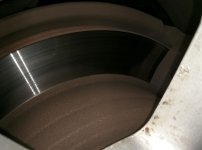
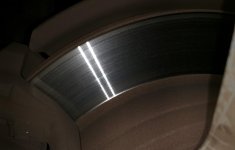
Also some mentioned that the rotor could also need replacement, I'm not sure how to tell but took a picture, could someone help take a look and give some recommendation on whether should I replace the rotor at the same time?

Thanks a lot!
 

Attachments

  • rotor.jpg
    rotor.jpg
    111.6 KB · Views: 1,722
  • right_rotor2.jpg
    right_rotor2.jpg
    127.9 KB · Views: 1,658
Last edited:
Register to hide this ad
The dealership told me that there's less than 2mm left on the rear pads and I need to replace them asap.

I'm trying to buy the pads myself and have a local dealer do the job but the labor cost quoted were from $280 to $330 ish (just for the labor) which seems very high.

Is this kind of pricing the norm or indeed too high? Should I take it to a 3rd party shop offering more reasonable price or since it is the break, that it's better to stick to the dealer?

Also some mentioned that the rotor could also need replacement, I'm not sure how to tell but took a picture, could someone help take a look and give some recommendation on whether should I replace the rotor at the same time?

Thanks a lot!
it all depends on whether you're doing 4 tires or just 2 when you quoted the price for the brakes I know I paid 148 for my fronts to be done and by the looks of the picture you posted your rotor looks fine that much I do know as long as both sides look like the side showing
 
Last edited:
Just so you know, the minimum pad thickness is 1mm (.039"), so at 2mm you're still technically OK, but they need to be replaced soon. New thickness is 10mm, so you've used up most of the pads.

That rotor looks in good shape - if I was replacing the pads myself, I wouldn't touch the rotor as it's not really necessary, but you probably won't find any shop anywhere that will replace the pads without insisting on resurfacing the rotor as well. It's kind SOP for brake jobs. For sure someone should measure the rotor thickness and make sure it still meets service specs. Minimum thickness is 16mm (.636")

Replacing the pads themselves is a 20 minute job per side including removing the wheel, but by the time you add resurfacing you may be looking at a few hundred dollars for the job. If you don't really know much about brakes it's probably worth spending the money to have a quality job done. I would search out an independent shop - there's nothing about the job that requires special dealer-only skills or tools.
 
Any reason you didn't want to do it yourself?

Sent from my LG-H830 using Tapatalk

I actually don't have a garage or the tools and have never done anything break related before.

Given that the breaks better work when I need them to I'd rather not start on such a project (and risk messing things up).
 
it all depends on whether you're doing 4 tires or just 2 when you quoted the price for the brakes I know I paid 148 for my fronts to be done and by the looks of the picture you posted your rotor looks fine that much I do know as long as both sides look like the side showing

Thanks!

Just the rear ones for now as the dealer said the front ones still have 4~5mm left, should I do all 4 at the same time?

The other (right) side looks similar to me and I posted a photo as well.
 
Just so you know, the minimum pad thickness is 1mm (.039"), so at 2mm you're still technically OK, but they need to be replaced soon. New thickness is 10mm, so you've used up most of the pads.

That rotor looks in good shape - if I was replacing the pads myself, I wouldn't touch the rotor as it's not really necessary, but you probably won't find any shop anywhere that will replace the pads without insisting on resurfacing the rotor as well. It's kind SOP for brake jobs. For sure someone should measure the rotor thickness and make sure it still meets service specs. Minimum thickness is 16mm (.636")

Replacing the pads themselves is a 20 minute job per side including removing the wheel, but by the time you add resurfacing you may be looking at a few hundred dollars for the job. If you don't really know much about brakes it's probably worth spending the money to have a quality job done. I would search out an independent shop - there's nothing about the job that requires special dealer-only skills or tools.
Resurfacing is $30 per at oreillys...

Sent from my LG-H830 using Tapatalk
 
Just so you know, the minimum pad thickness is 1mm (.039"), so at 2mm you're still technically OK, but they need to be replaced soon. New thickness is 10mm, so you've used up most of the pads.

That rotor looks in good shape - if I was replacing the pads myself, I wouldn't touch the rotor as it's not really necessary, but you probably won't find any shop anywhere that will replace the pads without insisting on resurfacing the rotor as well. It's kind SOP for brake jobs. For sure someone should measure the rotor thickness and make sure it still meets service specs. Minimum thickness is 16mm (.636")

Replacing the pads themselves is a 20 minute job per side including removing the wheel, but by the time you add resurfacing you may be looking at a few hundred dollars for the job. If you don't really know much about brakes it's probably worth spending the money to have a quality job done. I would search out an independent shop - there's nothing about the job that requires special dealer-only skills or tools.

Thanks a lot! I'll try to see if possible to talk the dealers into not doing anything into the rotor.

Any shop (national chain I guess since in different state) you'd recommend?
 
Thanks a lot! I'll try to see if possible to talk the dealers into not doing anything into the rotor.

Any shop (national chain I guess since in different state) you'd recommend?

nicolachel- The quicker you find a small shop that does quality work, the better / and not a rip-off chain either.
- many dealerships & franchises prey on the ill informed, and take your hard earned $$
- a $300 brake pad quote quickly turns into a +$1,000 full job

You don't need to turn a wrench to save big coin, but one has to do the leg work & earn some basic repair knowledge first.
- don't just sit in a waiting room, talking to the service adviser / unless your OK with being repeatedly overcharged

I get allowed in the shops I pick, get under vehicle & talk with head mechanic...so need to build a trusted relationship.
- heck a few weeks ago, I helped the owner of the shop install a muffler on a mini van, after hours
- I was operating the Oxy-Acy torches to heat up a pipe that needed angled...turned into a fun task & someone needed help
- the shop owner and I have become close friends
PS - It was even this shop owner with dealer licence, that found my 2000 4Runner SR5 (a year ago)...another added bonus.

-----------------------------------------------------------------------------------------------------------------------------------------------

Disc brakes are a 2 hour job, and that includes changing:
- install 2 rotors
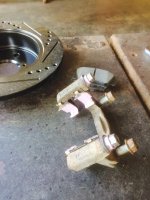
- servicing caliper pins / de-rusting & lub...and checking calipers for sticking
- install ceramic pads, on 2 axles
Resurfacing rotors in my opinion, is an unnecessary up-charge / cheaper to just replace with new.

^^ My trusted mechanic charged me $140 labor, to do my rear brakes / he used ceramic-lub on the caliper pins & got one caliper un-seized.
- finding a good mechanic, is worth their weight in gold
I supplied all the premium parts, so total spend for parts plus labor was under $300/axle.

More reading:
http://www.toyota-4runner.org/4th-gen-t4rs/221604-rotors-brake-pads-recommendations-4.html

Local NAPA/UAP would have been $700 CDN incl. HST...:shrug:..in 4 premium rotors & life time pads.

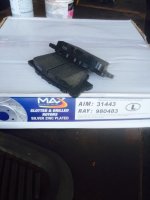
Now for my wife's 2008 RAV4 Limited v6 brake kit - this time, I chose a brake kit company, out of Toronto, Canada area / MaxBrakes . com
- totally impressed with them / they also ship to the States
- rear rotors fit like a glove and I broke them in hard (for 10-15 miles) to get rid of coating & initial chatter
- stopping distance is noticeably improved / and alloy rims stay clean, with their ceramic pads
4 wheel kit was like $270 CDN, shipped to my door / next day delivery.
- my go to brake company now / superior product, shipped right out of Ontario
I was most impressed in having a choice in Cast Iron grades (G-3500), and rotors are indeed thick / huge $$ savings over Toyota or NAPA/UAP.

ELITE xDS Series, T4R Gen4: Brake Rotors - ELITE xDS Series
Cross-Drilled and Slotted Disc Brake Rotors
- Manufactured from G-3500 Grade Grey Iron
- Meets or Exceeds OEM Standards
- ELITE Anti-Rust Coating
- 100% Guaranteed Fitment* - 1 Year Manufacturer's Warranty*
 

Attachments

  • MaxBrakes1.jpg
    MaxBrakes1.jpg
    43.8 KB · Views: 1,780
  • MaxBrakes2.jpg
    MaxBrakes2.jpg
    39.5 KB · Views: 1,634
  • MaxBrakes3.jpg
    MaxBrakes3.jpg
    29.4 KB · Views: 1,634
Last edited:
nicolachel- The quicker you find a small shop that does quality work, the better / and not a rip-off chain either.
- many dealerships & franchises prey on the ill informed, and take your hard earned $$

This ^^^.
In my book, the more critical the item is to my safety, the more I would rather do it myself. Classic example why.

And do not listen to those up-selling you. They're called Stealership for good reason.
I would not let those people touch your rotors. They look good to me, although like mentioned farther above, check thickness of rotor if still up to spec.

You might also want to now that it's rather easy to replace disc brake pads. If you don't want to do it, but want to use OEM parts, shop online.

www.toyotapartsdeal.com (formerly Toyota Parts Zone) is highly-recommended

Check this and verify if for your truck... https://www.toyotapartsdeal.com/oem...on=front-disc-brake-caliper-dust-cover,,04465
 
Last edited:
nicolachel- The quicker you find a small shop that does quality work, the better / and not a rip-off chain either.
- many dealerships & franchises prey on the ill informed, and take your hard earned $$
- a $300 brake pad quote quickly turns into a +$1,000 full job

You don't need to turn a wrench to save big coin, but one has to do the leg work & earn some basic repair knowledge first.
- don't just sit in a waiting room, talking to the service adviser / unless your OK with being repeatedly overcharged
I get allowed in the shops I pick, get under vehicle & talk with head mechanic...so need to build a trusted relationship.

------------------------------------------------------------------------------------------------------------------------------------

Disc brakes are a 2 hour job, and that includes changing:
- install 2 rotors
- servicing caliper pins / de-rusting & lub...and checking calipers for sticking
- install ceramic pads, on 2 axles
Resurfacing rotors in my opinion, is an unnecessary up-charge / cheaper to just replace with new.

^^ My trusted mechanic charged me $140 labor, to do my rear brakes / he used ceramic-lub on the caliper pins & got one caliper un-seized.
- finding a good mechanic, is worth their weight in gold
I supplied all the premium parts, so total spend for parts plus labor was under $300/axle.

More reading:
http://www.toyota-4runner.org/4th-gen-t4rs/221604-rotors-brake-pads-recommendations-4.html

Local NAPA/UAP would have been $700 CDN incl. HST...:shrug:..in 4 premium rotors & life time pads.

Now for my wife's 2008 RAV4 Limited v6 brake kit - this time, I chose a brake kit company, out of Toronto, Canada area / MaxBrakes . com
- totally impressed with them / they also ship to the States
- rear rotors fit like a glove and I broke them in hard (for 10-15 miles) to get rid of coating & initial chatter
- stopping distance is noticeably improved / and alloy rims stay clean, with their ceramic pads
4 wheel kit was like $270 CDN, shipped to my door / next day delivery.
- my go to brake company now / superior product, shipped right out of Ontario
I was most impressed in having a choice in Cast Iron grades (G-3500), and rotors are indeed thick / huge $$ savings over Toyota or NAPA/UAP.

ELITE xDS Series, T4R Gen4: Brake Rotors - ELITE xDS Series
Cross-Drilled and Slotted Disc Brake Rotors
- Manufactured from G-3500 Grade Grey Iron
- Meets or Exceeds OEM Standards
- ELITE Anti-Rust Coating
- 100% Guaranteed Fitment* - 1 Year Manufacturer's Warranty*

Thanks for the info on the ELITE xDS Series kits, for $124 to $130 plus free shipping (depending on front rotor size) for the front and rear rotors with ceramic pads is a great deal!!

Normally these kits sell for $260+/- but are on sale now, act fast before they go off sale!!
 
Thanks for the info on the ELITE xDS Series kits, for $124 to $130 plus free shipping
(depending on front rotor size) for the front and rear rotors with ceramic pads is a great deal!!

Normally these kits sell for $260+/- but are on sale now, act fast before they go off sale!!

:clap2: ^^^ The ELITE xDS Series kits from MaxBrakes in IMO, is top quality in the aftermarket world.
- we bought wife's 2008 RAV4 Limited v6, off a local doctor (nice SUV advertised on kijiji)
- Toyota dealer charged the surgeon $460 for just installing front pads / for safety check
- who knows, they probably turned the rotors / I've changed pads very successfully, without touching rotors before

I always refuse to have used rotors resurfaced / if they are warped, I want them junked (warps often return).
- only had rotors turned once, 40 years ago / one panic stop a week later, I had to take the shoulder of road, to avoid an accident
Resurfacing - NO THKS !!

After a full year of driving, the rear brakes needed done.
- I always order the full front & rear brake kit / often cheaper than buying front & rear separate
- so we used half a brake kit this time / they broke in very nice, after 10-15 miles of hard usage / gave strong stops
- in a few more years, when the front brakes start to squeal / already got the parts on hand (stored at home)
- and while the RAV4 was on the hoist, head mechanic & I verified the front rotors were the correct size
 
Last edited:
:clap2: ^^^ The ELITE xDS Series kits from MaxBrakes in IMO, is top quality in the aftermarket world.
- we bought wife's 2008 RAV4 Limited v6, off a local doctor (nice SUV advertised on kijiji)
- Toyota dealer charged the surgeon $460 for just installing front pads / for safety check
- who knows, they probably turned the rotors / I've changed pads very successfully, without touching rotors before

I always refuse to have used rotors resurfaced / if they are warped, I want them junked (warps often return).
- only had rotors turned once, 40 years ago / one panic stop a week later, I had to take the shoulder of road, to avoid an accident
Resurfacing - NO THKS !!

After a full year of driving, the rear brakes needed done.
- I always order the full front & rear brake kit / often cheaper than buying front & rear separate
- so we used half a brake kit this time / they broke in very nice, after 10-15 miles of hard usage / gave strong stops
- in a few more years, when the front brakes start to squeal / already got the parts on hand (stored at home)
- and while the RAV4 was on the hoist, head mechanic & I verified the front rotors were the correct size

All my pads were replaced just before I purchased the 4Runner in November, but I will be ordering the ELITE xDS Series kits now while they are on sale and store them until needed, there's just no way I can pass with such a good price!
 
A couple of thoughts on this. To be honest the vehicle was the 3rd gen 4Runner but it probably still applies here. I did the brakes around 60K with OEM pads and switched rotors to a well known third party and did their recommended break in. A year later they were warped but I still had the Toyota rotors. Had them resurfaced and got another 60K out of them. I would not switch rotors unless you have a valid reason. It seems the factory rotors are very long life. As an aside I learned on my Honda that a lot of perceived warping was not the case. It was a build up of residue on the pads/rotors. About every 3-4 months it would shake like the rotors were warped. Went out into country and did a half dozen really hard slam ons from 70-10 mph (essentially the same as breaking in new rotors) and the shaking disappeared. No idea if Toyota has same issue but I am sure going to try it before replacing anything again
 
A couple of thoughts on this. To be honest the vehicle was the 3rd gen 4Runner but it probably still applies here. I did the brakes around 60K with OEM pads and switched rotors to a well known third party and did their recommended break in. A year later they were warped but I still had the Toyota rotors. Had them resurfaced and got another 60K out of them. I would not switch rotors unless you have a valid reason. It seems the factory rotors are very long life. As an aside I learned on my Honda that a lot of perceived warping was not the case. It was a build up of residue on the pads/rotors. About every 3-4 months it would shake like the rotors were warped. Went out into country and did a half dozen really hard slam ons from 70-10 mph (essentially the same as breaking in new rotors) and the shaking disappeared. No idea if Toyota has same issue but I am sure going to try it before replacing anything again

While this maybe true that aftermarket rotors will warp after a while, at 1/4 the price or more of OEM I will still be getting the afore mentioned rotors and pads kit for my 4 Runner to have on hand.

I also will be keeping the OEM rotors for future use.
 
When I replaced son's BRAKES on 05 I ordered from autoanything Centric rotors & hawk BRAKE pads ! Not had 1 problem , however on my 11 just had them turned to clean them up for new pads ! Midas , Discount , somewhere with a standard warranty on parts & labor !
 
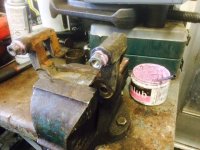
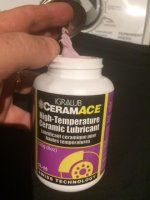
FYI: Brake Lube - ceramic/synthetic technology, is the new kid on the block.

The following is a top performer, in restoring brake caliper pin & overall brake function.

/Larry

----------------------------------------------------------------------------------------------------------------

IGRALUB LUBRICANTS
Igralub Lubricants | Autosphere


CermacAce, CarbonLub and BSS are new products for brake installation and maintenance. (Photo: Jil McIntosh)
It’s tempting to think that one brake lube product is the same as the next, but not all formulations are the same.

Three products new to the Canadian marketplace—CeramAce, CaronLub, and BSS Brake Silencer Spray—provide superior results due to their formulas, according to their Canadian distributor Kang Rich International. The new products were on display at the AAPEX aftermarket show in Las Vegas.

BSS Brake Silencer Spray has solid lubricant fractions that press into the metal surfaces when the brakes are activated, filling any minute depressions and increasing braking power by almost nine percent, while extending the life of the rotor and pad. It prevents squealing, dissipates heat, and is temperature-resistant from -100C to plus 1300C. It also helps to prevent the formation of brake dust.

CeramAce is a high-temperature fitting and release anti-seize paste containing more than 30 percent solid ceramic base.

Waterproof and resistant to salt water, acids and alkalis, the paste protects against corrosion and does not get gummy.

CarbonLub is an anti-seize paste for extreme high-heat and high-pressure applications, providing long-term protection against corrosion and seizure with its anti-oxidation properties. It’s specially formulated for heavy-duty applications including trucks, semis, trailers, and construction equipment, and parts can be easily dismantled even after years of use.

All of the products are Swiss formulations, and are made in Switzerland and Canada. For information on suppliers, visit
Kang Rich International Corporation |.

-----------------------------------------------------------------------------------------------------------------------

How to Test Brake Caliper Guide Pins
Diagnosing Brake Caliper Guide Pin Problems - How to Test Brake Caliper Guide Pins | HowStuffWorks

If you're having issues with your brakes, the culprit could be the guide pins, but a careful inspection is the only way to know for sure.

Problems to look for include caliper pins that are corroded, or ones that aren't properly lubricated. Also, the pins could be stuck in the rotor or they won't go in all the way after the pads have been replaced.

----------------------------------------------------------------------------------

Brake Caliper Service
Brake Caliper Service | Know Your Parts

----------------------------------------------------------------------------------

Stop the ‘Warped’ Rotors Myth and Service Brakes the Right Way
ABS: Why Winter Is Hard On Your ABS Brake System

Myths take hold *because either
A) they seem completely logical or
B) they are so often repeated that they just become common knowledge. The warped rotor myth is a little bit of both. A rotor that contributed to a pulsation condition certainly appears “warped.” Plus, everyone says it — even technicians that know the rotor isn’t *really warped will say it as shorthand.

Rotors are cast in extreme heat — three to five times greater than the most aggressive braking situation. Physically “warping” a rotor would require a similar application of extreme heat, which is impossible.

Obviously rotors aren’t invincible. They can crack, break and develop irregularities that lead to pulsation, but all of those problems start to develop in other ways that need a technician’s touch.

Starting today, remove “warped rotor” from your vocabulary. Instead, you should be both looking for and educating your customers about these terms:

Lateral runout

Runout is a measurement of the difference between the high and low spots in the hub and on the rotor.
On each revolution of the wheel, as the high spot of the rotor scrapes unevenly with the hub or applies friction unevenly with the pad, the results for the rotor’s face are just that — uneven.

Root causes of runout include:
• Runout from the hub mounting face;
• Runout from the wheel bearing;
• Sloppy resurfacing/machining procedures;
• A buildup of rust and corrosion between the rotor, hub and wheel;
• Uneven torque on the lug nuts;
• Wheel loading distortions; and
• Variations in manufacturing tolerances.

Other vehicle components can exacerbate the problems with runout. For example, if a vehicle’s floating or sliding calipers aren’t sliding as they should, that will prevent the caliper housing from moving, and any runout can cause pulsation. The caliper piston will move in and out as the rotor rotates resulting in fluid movement and pedal pulsation.

Fixed-caliper vehicles are sensitive to runout induced pedal pulsations as well. Fixed calipers have pistons on both sides of the rotor due to the stationary caliper housing. Excessive runout will cause piston movement and can result in pedal pulsation.

New: Over the past 30 years, factory runout specification have fallen from as high as .015″ to .000″ (or no detectable runout) for some vehicles. These tightening of the tolerances is due to changes in suspension design, friction formulations and caliper designs. When runout moves beyond specification set by the manufacturer, the uneven application against the pad will lead to disc thickness variation.

Disc Thickness Variation

This is the real culprit behind most of your “warped rotor” claims. A normal braking event requires a brake pad to be applied squarely against the rotor. Each time this happens, a tiny layer of friction is removed from the pad and is deposited on the face of the rotor.

A rotor with runout beyond the specs cannot receive that even application of friction, which means it starts to receive an uneven deposit of friction on its surface. Disc thickness variation is just that — the rotor is now thicker in some spots thanks to the extra layers of friction, which all started because of lateral runout. The DTV is the thickest area minus the thinnest area of the rotor.

The thickness variation is subtle, but all of these details add up. When the thick part of the rotor is forcing itself through the caliper, the torque of the brake and the pressure in the caliper rise. When the thin spot passes through, the torque drops and pressure drops. Very small amounts of DTV can create a significant problem. More late-model vehicles are built with a thickness variation of less than 0.00078”. Thickness variations in excess of 15 microns (0.00059”) can easily generate driver complaints.

Factors to take into account:
• The suspension. Unibody vehicles with strut suspensions are more sensitive than those with a separate frame and body.
• Wheel bearings. Unitized bearings, in particular, are preloaded and have zero play, which means there is no wiggle room for runout. Any high and low spots will scrape the brake pads with every revolution of the rotor — braking and non-braking.
• Calipers. Some have lower running clearance and higher initial mounted lateral runout.
• Abrasive lining materials.

The rotor can also show friction variation around its circumference. Any spot that has more slip or stick to it relative to the rest of the rotor will result in different levels of torque. Variations in friction will generally be the result of corrosive or contamination effects. There will most likely also be DTV, but the friction variation is possible without DTV. Friction variations can occur when a vehicle has sat undriven for extended periods of time.
measuring runout and dtvCold brake roughness

Cold brake roughness

Cold brake roughness manifests in a similar feel of pedal pulsation or steering wheel vibration, and in severe cases, there will be speed-related surges in deceleration felt during normal driving and light braking. This phenomenon is caused by lateral runout that exists when the rotors are initially mounted on the car. Over time, this gradually turns into disc thickness variation due to inconsistencies in the lining only touching the higher spots of the rotor during off-brake driving.

The problem with myths is that are convenient. Assuming you need to wear a hat in winter to avoid catching a cold because your grandmother told you that a thousand times is much easier than actually researching the science behind it. Just put a hat on and hope for the best.

That mentality is troublesome when it comes to servicing brakes — saying a rotor is warped easily puts the blame on an ineffective part that needs to be replaced when that isn’t the case. Understanding that a warped rotor is a myth is to understand that there are other causes for the braking condition and additional work is needed to do the job right. This may seem like a matter of semantics, but mischaracterizing the root problems of pulsation just perpetuates the myth.

 

Attachments

  • BrakeLubCeram.jpg
    BrakeLubCeram.jpg
    28.1 KB · Views: 263
Last edited:

Members online

Forum statistics

Threads
278,309
Messages
3,554,068
Members
248,016
Latest member
Advally Service

Trending content

Back
Top