Recommended 1st Aid Kits

Lots of good feedback here that should be taken seriously, so I'm not trying to beat down a point others have made (but just giving more food for thought).

What to carry and how to use medical should be treated in a similar approach to carrying firearms for personal defense - Don't limit your training or preparedness to just yourself. Always prepare for the lowest common denominator in your party as your life might just depend on it.

Although YOU might be an EMT, the people you roll with probably are not. If YOU get hurt and are unable to self-treat, you'll have to rely on others less skilled than you to help out. It only takes roughly 6 minutes to bleed out if you strike something vital, so forget about a hospital if you're out in the sticks. What you carry and how it's employed can be the difference between impressing chicks with your fresh scars and taking a dirt nap.

That's why I recommended the 'see and do' picture book for treating common ailments (and escalating into full on CPR/Shock trauma treatments). At the very least, anyone with a 4th grade education can 'read, see and do' the steps outlined in the book in the event of an emergency.

As another tip, whenever I'm rolling with newcomers or long standing friends, we always point out where the medical is and a brief description of what we're carrying so everyone has an idea of what to use when help is needed. You'd be surprised how many people forget to carry even the most basic of first aid.
 
Whatever you get, add one of these in there and you'll be good to go.

05168MT.jpg
 
+1 for the Combat Gauze.


If you have a FoodSaver, you can piece together smaller 'kit within a kit' systems. I did this a lot for ALS jump bags I would build for one of the fire departments I used to work for.


Here's a simple IFAK for hemorrhage control:


1 - RATS Medical tourniquet

1 - QuikClot Combat Gauze bandage

1 - 4" wide elastic wrap

1 - 5x9 trauma dressing

1 - Vaseline gauze dressing

1 - roll 2" medical tape

2pr - nitrile gloves (stuffed into core of 2" tape)


If you were in a more austere environment, I would recommend keeping the TQ on your person, but we aren't in combat or on SWAT insertions, we're 4-wheelin' and overlanding.


The FoodSaver works for more than just first aid kits. I use mine for all kinds of stuff.


Cheers,

Jared
 
Last edited:
The best first aid kit is the one you know how to use.


That's the key thing, in my opinion (former Navy Corpsman). You can have the flashiest kit around but if you don't know what everything is or what it is best used for, it's nearly worthless. I say nearly as if you're traveling with anyone else, those other people may have the knowledge to make best use of the kit.

That said.....

https://www.amazon.com/dp/B01KVINLS8?psc=1

This one is nice as the stuff is well-organized and clearly labeled. It contains many of the basics, with a few foo-foo items. Also contains trauma shears vs pos scissors, and has an emergency blanket (never underestimate hypothermia). I'd add a SAM splint to round it out. If you really want to go high-speed, add in a QuikClot bandage or two. I'd also add in a small LED headlamp. In my experience, things never happen at convenient times.

Main thing is when crap hits the fan, you're not digging around hunting for an item. You open. You see.


A smaller, personal kit.... in case that above seems like overkill....

https://www.amazon.com/dp/B01HGSLB6K?psc=1

https://www.amazon.com/dp/B00UO2FSGA?psc=1


Again, the main thing is knowing how to use what you have. I can work wonders with duct tape.... but that same roll of duct tape might not look like a solution to the next person.

Edit: [MENTION=154211]backcountrymedic[/MENTION] - I do something similar with ziplocks. Not quite as fancy and pretty (I do like what you did... appeals to my "organization" quirks), but the upside was, when I cracked them open, I could reseal.
 
Last edited:
Ifak

You are probably going to wind up with two kits. One for the boo-boo catagory (chapstick, bandaids, sunscreen, DEET, tape, gauze, etc) The other one ( TQ -like the SOF-T wide, SWAT or RATS, Celox, gloves, Israel bandage, N95 mask, marker, chem light, scissors) for tramatic blood loss. The boo-boo box can be in the back but put the bleed out kit up front where you can get to it immediately. It's no good if you can't reach it. Like many others have said, get some training otherwise you're relying on someone else to be able to use your equipment. You can assemble all this yourself, just depends how much time you want to invest.
Take a look at Dark Angel Medical Kits also.
 
You are probably going to wind up with two kits. One for the boo-boo catagory (chapstick, bandaids, sunscreen, DEET, tape, gauze, etc) The other one ( TQ -like the SOF-T wide, SWAT or RATS, Celox, gloves, Israel bandage, N95 mask, marker, chem light, scissors) for tramatic blood loss. The boo-boo box can be in the back but put the bleed out kit up front where you can get to it immediately. It's no good if you can't reach it. Like many others have said, get some training otherwise you're relying on someone else to be able to use your equipment. You can assemble all this yourself, just depends how much time you want to invest.
Take a look at Dark Angel Medical Kits also.

Second the Dark Angel stuff!

I follow the "one is none, two is one" philosophy when it comes to things that can keep you alive.

I have a small kit (started out as an Adventure kit in a pouch.) I have a pouch that has all the band-aids, aspirins, motrins, etc - all the minor day to day stuff.

Then I have one that starts getting a bit more serious, with nitrile gloves, antiseptic wipes, 4x4 gauze pads <- these are by far the most useful item for me, betadine, bandages, sam splint, CPR mask, etc.

Then I have two trauma kits, one is an AFIK that fits in a BDU pocket - traumadex, tourniquet, chest seal, 4 x4 pads, serious wound management items.

Then I have a larger kit that has everything in the AFIK and more, with additional splints, burn gels and pads, hyperthermia / shock blanket, etc. These are in addition to a basic kit I keep in the truck at all times.

My working theory is what would be the worst case scenario....a vehicle going off the side of a canyon with 4 or 5 people in it.

Others include hunting accidents where that would be a single person shot or cut badly.

I'm always working on the assumption that more than one person will be hurt and need enough supplies to stabilize them until they can get proper care.

I also have an aviation band radio and can call out on the emergency channel if I have to. I'd rather face the the FAA / FCC for misuse of a radio than have someone die. (calls on 121.5 get noticed quickly)
 
Don't bother with the drug store first aid kits as they have some basics but usually you'll find things like the wet naps are dried out and the kits don't tend to be very big or don't have much more than gauze and bandaids. Super glue can seal lots of wounds. For larger ones, gauze and duct tape. Pack a main kit with the basic things like band-aids and all sorts of goodies for the vehicle including things like extra tourniquets, thermal blankets, extra water, airway opening devices, and smelling salts. Important things for personal first aid kits (known as IFAKs, or Individual First Aid Kit) would be some sort of 1-hand single-person applicable tourniquet, wipes/syringe/alcohol (to clean wounds), super glue, duct tape, gauze, shears or a good knife, and some sort of communications device to get help if you can't exfil quickly.

Also, reading books and taking classes to gain emergency medical knowledge is vastly important. The equipment won't necessarily make you better if you don't know how to use it properly.

Remember these 2 things, at least 1 first aid kit PER person in the group. When treating someone, use THEIR first aid kit. This way, if you get injured, you still have yours to treat yourself if you're not near someone else with an intact kit.

1. Stop/control the bleeding - clamp your hand over the spurting artery
2. Open the airway - remove the obstruction, begin cpr (or breaths if heartbeat but no breathing)
3. Protect the wound - field dressing/bandage/etc.
4. Treat for shock - blood loss causes shock. keep the legs elevated and the victim warm.
 
Last edited:
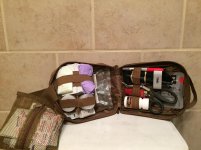
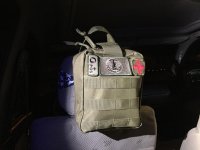
Many, many great points are being made throughout this thread, from having actual training on how to use a certain item to actually being prepared if such an event were ever to arise. I have personally pieced together an IFAK for my 4Runner, and while it might not be all-in-one, I do believe that it's a good start. I still need to add some other items to it. It's attched to my headrest by a strap and can be ripped away immediately if need be at any given moment. As of right now, I currently have in it:
  • Ever Ready Titanium Bonded Bandage Shears
  • NAR Compressed Gauze 2 Pack by North American Rescue
  • North American Rescue Hyfin Vent Chest Seal, 2 Count
  • Bayer Aspirin 325mg 50 tablets
  • Bic lighter
  • Recon Medical Gen 2 Combat Application Tourniquet (CAT) with gloves attached
  • 1 Red Sharpie, 1 Black Sharpie
  • Bandages in various sizes
  • Other gauze patches/pads
  • Alcohol prep pads
  • Steri strips
  • 3 Maxi pads
  • Second set of gloves
  • Medical tape
  • Swiss Army Knife
  • Folding knife with serrated blade
 

Attachments

  • first aid 1.jpg
    first aid 1.jpg
    134.4 KB · Views: 429
  • first aid 2.jpg
    first aid 2.jpg
    138 KB · Views: 440
Can anyone recommend an all-in-one 1st Aid Kit to keep in the back of my truck. I'm relocating and driving to Alaska from Chicago so I'm looking for something pretty comprehensive.

Preferably something that's on amazon.

Thanks!


If you're looking for something for scrapes, splinters, and rashes, a simple household first aid kit will do.

If it were up to me, I'd say put some money aside and enroll in a BLS/First Aid class. Looking for something more? EMT-Basic certification. These will give you baseline knowledge you can use which is far superior to simply owning a kit.

The problem I see pretty often is when people rely on having a big, expensive, 'tactical' first aid/medical kit with all the high tech gizmos and devices, but have absolutely no idea on the why, when, and how to use that gear. Not saying this applies to you personally, just an observation about people.

*Edit* just realized this is an older thread hah but info still applies
 
Last edited:
mymedic.com I was an EMT for years and this is one of best i have found anywhere. Nice thing is you can choose from basic to advanced and even add more.
 
Solatac

Price wise Solatac is in the mix and it is from a former armed forces medic. I like that I am supporting veterans and think he has really solid products.

Solatac
 
I'll completely concur with this. I've been a NOLS Wilderness Medicine instructor for 19 years, and a paramedic for 16. A first aid kit is only as good as the training behind it. Your best resource is education. A basic first aid kit and bleeding control kit can go a long way, but it's more important to know how to use what resources you have.

I concur as well. I will go a little farther though and say that most all of the first aid kits you can buy are junk. Most have too few of what you need and too much of what you don't. Additionally, some come with total junk equipment.

I suggest to use what is tried & true. The same stuff we carry on the ambulances, what we use in the ER, and what combat medics carry. Lots of companies out there sell the latest and greatest "tacti-cool" medical toys, that are just worthless. RATS tourniquets are an example of this. They are not used by the military, hospitals, or EMS services. CAT tourniquets are your best, safest bet. You also need lots of 4x4s, and most off the shelf first aid kits come with less than 5.

Build a kit, in a purpose built bag or case, and keep it easily accessible. Open it regularly and be familiar with what is in it and know how to use EVERYTHING in there.

As for those who have said they will just keep a first aid book with their kit and use it when the need arises, that is a recipe for disaster. Read the book BEFORE you need the skills and info in there. Speaking of skills, you have to practice them first as well. In my EMT classes, we hammer skills, over and over again. Then test on them to pass the class. Even then, most new EMTs skill vapor lock the first few times you have to do these things in real life. You can expect a much higher chance of vapor lock for the lay person who has just read about the skills in a book.

I am not trying to be mean or rude, just honest and blunt.

I buy my supplies from the following places:
Emergency Medical Products | Emergency Medical Supplies & Equipment
Emergency Medical Supplies & Equipment | Bound Tree
OLAES(R) Modular Trauma Bandage, Medical Dressing for Combat
Products With A Mission | North American Rescue

3 tourniquets, 60 4x4s, 3 rolls of coban, 6 rolls of roller gauze, 6 cravats, 3 sam splints, a box of gloves, and 3 condor medical bags and you have enough to make 3 good kits to keep in you and your spouse's vehicle and one for at home.

Most of the sites linked earlier in this thread appear to stock their bags with supplies from bound tree and buy EMP and use condor bags...and pretty ladies to model them. You can build better for less. The unit dose OTC meds and creams usually expire well before you use them and they're much more expensive to purchase that way. Buy a tube of cream small bottles of the meds from the dollar store and a package of pill bags. Put a tube of cream in each bag and divide the pills up in the pill bags (label them with the drug name, dose, exp date, and lot #) and you're set. change them out yearly (especially if kept in the vehicle).

I have gone through probably 6 different personal bag setups over my career. I have removed most all of my ALS equipment from them and just carry the aforementioned equipment. I still have an ALS bag that I take sometimes, but will only use it on friends and family.

I'll step off of my soap box now.
 
A few people mentioned to piece your own. I agree (now). I was looking at many kits, and there was so many things in them that seemed useless to me or extra.

So I asked my friend who did mountain rescue, fought forest fires, and is a hardcore mother f-er in countless ways. This dude has seen some serious shit.

He listed out what was in his kit. I got the "ingredients" and fit it into a dopp kitt bag. Here you are:

Duct tape and dura tape
Tweezers
Fold-able Scissors
Knife
Glow sticks
Whistle
Waterproof matches
Gauze, pads, alcohol wipes
Band-Aids and butterflies
Tourniquet
Aluminum foil (to sanitize water)
Sutures for lacerations
Lighters
Wet ones
Pain reliever
Antibiotics
Sting relief
Latex gloves
Repair needle kit for sewing
Steel braided wire
Rubber band
Shoe string
Mole skin
Magnesium fire starter
Gloves

Carry All in a plastic bags for waterproofing. You can judge it, but this was his thing. This dude literally used duct tape to hold together a huge gash in his flesh while he hiked out miles for help once.

I wish i took more notes on this stuff, and thank you for this post as I realize i need to ask him for a refresh!
 
Last edited:

Members online

Forum statistics

Threads
278,312
Messages
3,554,089
Members
248,016
Latest member
Advally Service

Trending content

Back
Top