Rookie recovery gear recommendations?

bigair96

New member
Tried doing a search and didn't find what I was looking for.....

-for very basic offroading, what recovery gear do you recommend having at a minimum?

-any kits you recommend (company, link, info?) Or just better to buy piece by piece?

Thanks!
 
Register to hide this ad
Basic Kit
2 shackles
Snatch strap
High lift jack and base plate
Tarpaulin or blanket to lay on under truck
Mechanic gloves
Tow strap
Folding handle shovel
Air compressor and speed bleeders
 
Last edited:
I agree with the above. A set of Maxtrax would be good, too.

Maxtrax, a second tow strap, a snatch block, 2 more shackles, and a winch are the only other things I have other than what's already written. I've never gotten into anything these haven't gotten me out of. Knock on wood..
 
Forget MaxTrax.

If you want traction mats, go with Xbulls or Treds. For the amount you may use them for "very basic off-roading", no sense in paying many hundreds for something you'll likely never use in your situation. Let all the rich YouTubers support them...

The Xbulls are great for US$70 or so, cheap insurance and for the price a very tough, well-made product. Personally I took a chance and bought a pair of Treds mounts from Kartek (top shelf business) thinking they might fit the Xbulls but they didn't. Dremel'ed 7 or 8mm out of the lateral sides of the holes on the Xbulls to accommodate the slightly wider uprights on the Treds mounts. Mounted traction mats for ~CA$200. Pretty ideal as far as I can tell...

You'll likely save money if you buy separate pieces for a recovery "kit" rather than an off-the-shelf package, I did anyway.

Nobody has mentioned a tow hitch receptacle/pin/shackle so get one of those setups.

SOG makes a really nice little folding shovel that's tough and the size of a paperback book when folded, cheap too. Or you can buy the kit with a hatchet and hand saw as well.

I got one recovery damper also just to have on hand to assist with someone's winch line if ever applicable.

30' 3" tow strap and at least a 6' tree-saver strap for your snatch block too.

I have an axe and two Silky saws in my kit too, a Bigboy and a Katanaboy. Don't want to carry a chainsaw and associated fuel/gear.

Good luck and have fun!
 
Last edited:
MAXSA is the brand I have. $150 on Amazon, which I don't think is too bad. You definitely get what you pay for with these types of items. There are a few companies and you have to pick your poison I guess. Some are hard plastic, some reinforced, different plastics, etc. Mine have been used multiple times by different vehicles and look the same as when I got them. I have buddies with cheaper ones that have cracked and/or lost the traction nubs due to tire spin. Either way, a similar item is a good idea IMHO.
 
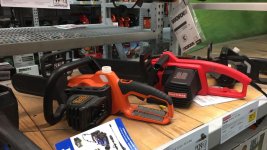
Anyone try a small battery powered or 120V chainsaw like these? Thinking about picking one up for some light trail work since I don’t want to beat the body of my ‘17 up.
 

Attachments

  • 0C556374-9E62-405E-8A83-318EC5C4B436.jpg
    0C556374-9E62-405E-8A83-318EC5C4B436.jpg
    136.9 KB · Views: 1,026
+1 for Xbulls

52B197B7-E4CC-421A-A95A-DB926ADD9147.jpg

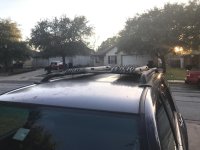
I keep my X-Bulls zip tied to my stock roof rack. If I actually need to use them I simply cut the zip ties, use the Xbulls and through them in the cargo area until I zip tie them back up again. Simple budget off-road.

Harbor Freight is a great place to start picking up some basic recovery gear. They will have most of what you need. Other than what’s been mentioned above, the next most important thing to have is knowledge and experience. Start by watching some YouTube “off-road recovery fail” videos. Don’t do what they do... Find a group of experienced off-roaders in your area who are willing to show you some recovery basics. Here in TX there is a guy who puts on “off-road” classes. I went to one and was very impressed. At the very least watch some YouTube videos on correct and safe off-road recovery.
 

Attachments

  • 52B197B7-E4CC-421A-A95A-DB926ADD9147.jpg
    52B197B7-E4CC-421A-A95A-DB926ADD9147.jpg
    132.9 KB · Views: 1,013
I agree with the YouTube education. I learned a lot from them. About as much as I did, if not more than going to an Overland Expo. And in much less time. Nothing wrong with dry runs either- practicing/using the equipment/techniques on trails when not stuck.
 
Probably the next thing you should ask is what specifications are recommended for these items LOL.

Things like breaking force, internal/external dimensions, even stitching methods on snatch straps are important.

I use to sell recovery equipment when I owned Overland Warehouse. There is lots of good gear and good prices, lots of name brand stuff overpriced, and lots of shitty stuff at cheap prices. And when your rig and you life are important, buying the "right" stuff is important.

I would tell you to search Toyota120.com for posts we made on various kits, but if you break it down to:
1. Basic stuff for everyday off-roading with a few friends
2. Basic stuff for everyday off-roading solo
3. More stuff for off-roading requiring a winch

then you'll be able to grow your setup as your experience grows.
 
Last edited:
Basic Kit
2 shackles
Snatch strap
High lift jack and base plate
Tarpaulin or blanket to lay on under truck
Mechanic gloves
Tow strap
Folding handle shovel

Good recommendation right there.

PLEASE learn how to use the HiLift the correct way! It's one of my favorite tools and the one I've seen hurt a lot of people who didn't know how to use it. We could easily spend an hour or two teaching this to students. It's a jack, a spreader, a come-along, a vise, take the handle off and you have a cheater-bar....etc. It will change a tire, knock the bead off a tire, you'll use it to jack and stack, and even cast a truck off an obstacle! Carry some grade-8 chain and a static strap and learn to use it as a come-along. Cut yourself a piece of plywood and stick a rope loop through it and you've got a base. If you don't want to do that use a floor mat. Keep the stanchion, springs and pins lubed and you'll end up willing it to your great grandchildren!

I'd have a short tree strap, a tow strap, and a dynamic strap of some kind. We had to tow a truck though the woods with a snatch rope and it's like towing something with a rubber band!

 
Good recommendation right there.

PLEASE learn how to use the HiLift the correct way! It's one of my favorite tools and the one I've seen hurt a lot of people who didn't know how to use it. We could easily spend an hour or two teaching this to students. It's a jack, a spreader, a come-along, a vise, take the handle off and you have a cheater-bar....etc. It will change a tire, knock the bead off a tire, you'll use it to jack and stack, and even cast a truck off an obstacle! Carry some grade-8 chain and a static strap and learn to use it as a come-along. Cut yourself a piece of plywood and stick a rope loop through it and you've got a base. If you don't want to do that use a floor mat. Keep the stanchion, springs and pins lubed and you'll end up willing it to your great grandchildren!

I'd have a short tree strap, a tow strap, and a dynamic strap of some kind. We had to tow a truck though the woods with a snatch rope and it's like towing something with a rubber band!

This x2

Too many beginners hurt themselves or their vehicles by not learning to use what they have correctly. Watching a Ronny Dahl video on YouTube before you go wheeling is not enough to go out and think you know how to winch or set up a HiLift correctly.

My $.02 is to not only get the gear, but go out and use it. Practice hooking up, learn what a snatch strap feels like when you’re recovering another vehicle. Bring a friend along and use the equipment. Go slowly and get to know your gear. Be mindful of where you are when you start the recovery. Look around and make sure no one is in the danger zone. Make a day out of it and critique yourself afterward.

Recovery can be fun and rewarding when you’re succesful and no one gets hurt.
 
Never wheel alone. Ever.
Cheap air compressor. Do learn how to use a hilift. When first starting out I was smacked by the handle (my fault). It really hurts. Sometimes kills. Check your local weather. Download the offline navigation maps to your phone.
 
Never wheel alone. Ever.
Cheap air compressor. Do learn how to use a hilift. When first starting out I was smacked by the handle (my fault). It really hurts. Sometimes kills. Check your local weather. Download the offline navigation maps to your phone.

X2 on the high lift. Great tool, and can be used in many ways.

but be carful the handle is a spring loaded, as soon as you let it go it will slap you up side the head,
 
Anyone try a small battery powered or 120V chainsaw like these? Thinking about picking one up for some light trail work since I don’t want to beat the body of my ‘17 up.

A small, battery powered saw like that will help if you have a limited amount of small diameter deadfall to cut back. Personally, I'd go with the solution that J.F Sebastion made, which is also the same saw equipment I own. Using the Silky Katanaboy saw, I can have a 6" diameter tree cut in almost the same time it would take to cut using a cold chainsaw. I do a lot of deadfall clearing for mountain bike trails and I'll guarantee that at the end of the day the handsaws are safer, take up less space in a pack, have less accessories to carry, wont throw a chain, and aren't regulated by national forest certifications.

The only accessories that I also keep for the saws are:
2 or 3 wedges
a 3 or 5 lb mallet for driving the wedges
1st aid kit.
 
Oh yeah...There's a pic of a multi-tool being used as a toggle in a chain sinnet in the article - Don't do that. Use a piece of wood or even a rolled up magazine...
 
Never wheel alone. Ever.
Cheap air compressor. Do learn how to use a hilift. When first starting out I was smacked by the handle (my fault). It really hurts. Sometimes kills. Check your local weather. Download the offline navigation maps to your phone.

I agree with a lot of this. Wheeling alone isn't ideal, but sometimes necessary. There are many things you can do to protect yourself and or increase chances for recovery.

Since this is about recovery gear recommendations… part of my kit includes radio communications equipment. Owning a ham radio and knowing how to use it can literally safe your life when cellular doesn’t work.

Part of my more advanced load out is:
iOS device with Motion X GPS with offline maps.
Standalone Garmin GPS device
Yaesu VX-7R handheld radio
Kenwood TM-V71a mobile radio with repeater capability

That said… wheeling alone, which I have done on a solo road trip, is pretty unnerving. You will change how you move across land, avoiding challenges and questionable obstacles will become a survival method. I didn’t drive over something complicated if I didn’t have to. If I was with friends, I would have been pushing myself and my truck.

Even with all my recovery gear, I felt under -prepared. A satellite phone at times would have been necessary for coms, especially when you are in new areas where you don’t have tested and established radio repeaters to use. I won’t do another trip like that without renting one.
 
Anyone try a small battery powered or 120V chainsaw like these? Thinking about picking one up for some light trail work since I don’t want to beat the body of my ‘17 up.

One time I went out on a trail, very easy Forest Road behind my campsite. Went in and coming back there was a tree in the middle of the road! First I thought I was lost, then I was thankful that the tree fell after I drove by it.
But at that point I thought about getting a chainsaw!
 

Members online

Forum statistics

Threads
278,316
Messages
3,554,105
Members
248,016
Latest member
Advally Service

Trending content

Back
Top