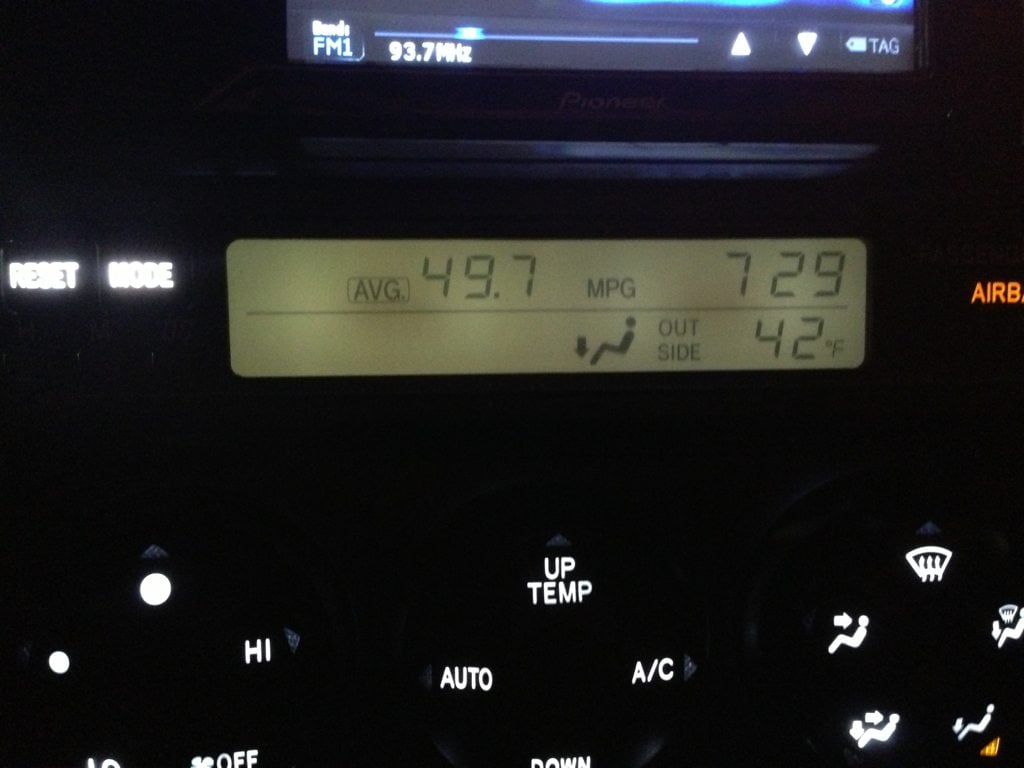
Seafoam'd the 4Runner

Just finished reading this entire thread, and I’m both intrigued, and a bit scared at the same time. I have around 130k on my v8 so I’m not sure if I might dislodge too much as some have pointed out, doing more harm than good with regard to tolerances. I’ve heard of this stuff for years, but always thought of it as one of those “snake oil” type products that do nothing more than loosen the money and suck it from your wallet. My truck runs very well now, so I’m definitely scared to “fix” something that isn’t broken...

This on both counts. To point one, is there real evidence (scientifically authenticated) that it does any good? To point two, is the potential reward worth the risk of fouling up a perfectly good truck? My personal take is no and no.

I'm in the same boat as why fix something that isn't broken and especially using something that isn't a positive proven product by all who have ever use it.

That being said I see no problem by adding some to the fuel to help clean fuel injectors.
 
Just finished reading this entire thread, and I’m both intrigued, and a bit scared at the same time. I have around 130k on my v8 so I’m not sure if I might dislodge too much as some have pointed out, doing more harm than good with regard to tolerances. I’ve heard of this stuff for years, but always thought of it as one of those “snake oil” type products that do nothing more than loosen the money and suck it from your wallet. My truck runs very well now, so I’m definitely scared to “fix” something that isn’t broken...


I was curious about the same thing when I had my V8. I dropped a can in at 190k miles and it still rand perfectly when I got rid of it. Didn’t notice any REAL significance when it came to performance gain or acceleration response, but it did pur like a kitten
 
Fake news!

I can't believe the results!

ypujaga6.jpg

Fake news! Its the Russians!
 
I have always been a big Seafoam proponent, having seen firsthand how it could cleanup motorcycle carbs versus "carb cleaners". used in 4 runner occasionally. then a very smart relative that loves racing etc cars and motorcycles, tuning his own curves, all that - pitched Techron over Seafoam.
I used it twice, about 2 weeks apart in the T4R with over 170K on it, highly concentrated with only about 2 gallons of gas total in the tank. I am seeing a solid 1mpg gain. I drive carefully to get good mileage [2wd], and my old average was about 18.4. My new average is 19.5. Before, I only hit 20mpg once or twice in 2 years. Lately I have hit 20 5 times. I hand-calculate this: the meter on the T4R dash is bogus - pointless except to make someone feel good.

but with my wife driving, :biggrin1:, 16.
c
 
just to add to this thread.. seafoam is a good product & not snake oil, however it is not magic & wont perform miracles. i have tested it for cleaning carbon on valves of heads removed from the engine & piston tops, it will quickly desolve a pretty thick layer of carbon build up compared to other chemicals like paint thinner, lacquer thinner, carb cleaner, brake cleaner etc. it does work for cleaning injectors/carbs when added to fuel but again not a miracle in a can.

as for the guys that said it blew head gaskets etc... i question their mechanical knowledge or ability, when adding it through the vac ports with engine running you have to be very carefull how much you introduce to the engine & how fast its done... adding any liquid to a cylinder has a big risk of hydro-locking the cylinder & breaking something or blowing out a head gasket in marginal condition, since most of the engines that people seafoam are high miles, who knows what the gaskets are like.

you are supposed to slowly add it to the vac port & not let the engine rpm drop too much, indicating too much raw liquid going into the cylinders. the idea is to just saturate/wet the valves & tops of pistons, not soak them with too much liquid. then after lettin it sit for ~15 minutes & starting the engine drive it with medium-heavy load on the engine & the rpms will blow out some of the broken down carbon & it will clean the internals somewhat. repaeat the process after a few tank fulls & maybe add some to the tank to help clean injectors etc. you likely wont see a big MPG improvement or fix any major problems, but if done right it will clean carbon deposits to a certain extent.

same for oil, it cleans sludge & dirt very well, just add it to clean oil on a higher mileage engine & watch how dirty the oil becomes in a short time. best bet is to add the right amount to the oil about 50-100 miles before a oil/filter change.

seafoam is a good product in general & will not blow head gaskets or cause any other damage... if done the right way.
 
Last edited:

Members online

Forum statistics

Threads
278,309
Messages
3,554,066
Members
248,016
Latest member
Advally Service

Trending content

Back
Top