Single Deep Cycle install, another battery thread!!

Let me start off by saying I in no way really know what I'm talking about as facts. I'm just speaking from experience I have seen.

1) I don't think the voltage is as important as the amps being pushed.

2)To clarify what I was seeing was that after a three + hour ride home I connected the charger and according to the LED indicators the battery was not recharging. I do leave the charger hooked up overnight in my garage to fully charge the battery.

3)I agree the CTEK probably doesn't produce enough juice to be considered a High-output charger. I referenced the manual to show that it states to disconnect. I would rather be safe than sorry when dealing with a higher priced piece of equipment like a refrigerator.

4)My understanding, I could be wrong, is that our 5th gen trucks have a system that regulates the alternator to a point that if the system believes the battery is fully charged it reduces the output of the alternator. Therefore not producing the amps needed to charge an AGM deep cycle battery fully. No matter how much time you spend running the alternator.

5) That's what I was stating. In order to fully charge the battery fully it needs to be hooked up to a charger. In my case I have one battery. Like the OP I'm using it as my starter also.


Sent from my iPhone using Tapatalk

1) Voltage is very important, it's the way the charge actually works, the current is simply the amount of energy that could be put through the wire or is put through the wire. Voltage and resistance will determine how much current flows. When your battery is low, it's voltage is low and the battery will charge because the voltage differential of the charging system is higher than the battery voltage, as the battery get's charged up, it's voltage rises, and eventually the charge will slow and stop. Amp's are never pushed, it's the load(discharged battery) that requests the amps/current from the source. The load will request as much as it needs, it's then up to the system to be able to supply what the load wants. If the battery is low, and you have a hundred amps to throw at it, it will accept the 100amps, if the charger is only 7amp then the max the battery will get is 7amps.

2) sounds like your battery was charged as much as it could be at that point with the stock charging system.

3) yes, its not a high output charger, a high output charger can actually jump start your car from it's charge(like the big ones they roll out at the auto shop)

4) yes, the alternator/voltage regulator is not made for AGM batteries so you will never get full charge simply because the voltage will not go to 14.8.


So, for me, I don't know if installing a AGM as the main is the best idea here, but if the voltage boosters work out properly, then it should work fine I suppose.
 
3)I agree the CTEK probably doesn't produce enough juice to be considered a High-output charger. I referenced the manual to show that it states to disconnect. I would rather be safe than sorry when dealing with a higher priced piece of equipment like a refrigerator.

From reading your manual,, and few other things... I -think- the reason they are saying that is because a high rate charger is basically considered 40Amps or more. So I believe the fuses are 40Amp as well. They are probably worried that someone will connect a heavy duty charger up and stress it beyond it's limits.

I don't think the CTEK will be a problem at all. I agree on the other though. I think some are placing a diode in the circuit before the regulator you mentioned. So the regulator thinks it's getting say 1.5 volt less than the rest of the system is really getting. So it keeps charging... So instead of 13.2 it would run to 14.7 before it shuts things down as an example. That would then charge the AGM.
 
I can't speak for them, but I'm letting other people test out the voltage booster. I can't think of any reason why it would cause problems, but for all I know some ECU is sensitive about voltage or something and I'll let someone else find it if it is.

Even with the booster though I've seen 14.1-14.2V results which still isn't quite high enough for me. Plus with an on board charger I can park long term and not worry about the fridge shutting off or stressing the battery.

Sent from my SM-G930V using Tapatalk

Ahh, got it. I don't know anything about these boosters as well, my guess they just fool the system into raising the voltage coming from the voltage regulator.

my setup, will probably just stick with a cheap lead acid battery for main, and a lead acid deep cycle battery for secondary, and a voltage sensing solenoid to charge the two when the car is running. Simple, effective and cheap. I really don't see the benefit of these expensive AGM batteries.
 
So the other thing I was thinking.

If you charge your AGM battery at home using the wall charger and top it off. Then you get in your rig and drive out to your favorite camping site, well it would seem to me that during the start of that drive, your battery would be fully charged, however your alternator is only going to put out the lower voltage, so basically your battery will start draining the minute you start the engine (to supply current to the electronics, radio, etc) and by the time you get to your camp spot, my guess is the battery will be at the same voltage level it would have been at from the last time you returned home.

So to me, charging from the wall charger to top off the battery would be worthless unless you are using the battery right there without starting the vehicle otherwise all that extra capacity will be drained out before you get to use it.

Having the AGM as the main without some type of booster system is really pointless to me.
 
So the other thing I was thinking.

If you charge your AGM battery at home using the wall charger and top it off. Then you get in your rig and drive out to your favorite camping site, well it would seem to me that during the start of that drive, your battery would be fully charged, however your alternator is only going to put out the lower voltage, so basically your battery will start draining the minute you start the engine (to supply current to the electronics, radio, etc) and by the time you get to your camp spot, my guess is the battery will be at the same voltage level it would have been at from the last time you returned home.

So to me, charging from the wall charger to top off the battery would be worthless unless you are using the battery right there without starting the vehicle otherwise all that extra capacity will be drained out before you get to use it.

Having the AGM as the main without some type of booster system is really pointless to me.
The wall charger is to prevent sulfation, not for range. With just regular charging and the fridge set to high I get 2.5 days of fridge run time. With the fridge set to medium I get 3.5. Every now and then I charge to prevent sulfation, or if it's just going to be parked for a few days, to make sure the fridge stays cold.

My battery was the most cost effective dual purpose battery I found, I didn't see any good normal flooded lead acid dual purpose batteries that are comparable.


Sent from my SM-G930V using Tapatalk
 
Last edited:
My 2 Cent:

Our alternator as it was explained to me is not going to provide your deep cycle battery with enough AMPs, or voltage to fully charge. The computer only senses the voltage available. I can't remember the specifics but if your computer senses that your battery is at 12+ volts it stops the alternator from sending current out. Therefore your Deep Cycle battery is rendered almost useless as it's not receiving the correct amps to truly charge the deep cycle part of the battery.

I too have the X2 Battery but went with the Group 31F so have slightly larger capacity without having to re-do the main wiring harness.

<a href="http://s43.photobucket.com/user/perrythompson/media/4Runner/2017-04-28%2014.00.01.jpg.html" target="_blank"><img src="http://i43.photobucket.com/albums/e370/perrythompson/4Runner/2017-04-28%2014.00.01.jpg" border="0" alt=" photo 2017-04-28 14.00.01.jpg"/></a>

I also installed the a Cllena - USB/Voltmeter/ON-Off Switch/ARB Female plug and ran it with the ARB refrigerator wiring kit(8AWG). I use the On/Off switch to power the Voltmeter and the USB. The Female ARB plug is powered all the time. Although I don't run my refrigerator 24/7.

<a href="http://s43.photobucket.com/user/perrythompson/media/4Runner/2017-03-23%2020.08.40.jpg.html" target="_blank"><img src="http://i43.photobucket.com/albums/e370/perrythompson/4Runner/2017-03-23%2020.08.40.jpg" border="0" alt=" photo 2017-03-23 20.08.40.jpg"/></a>


I also purchased the CTEK 7002 charger that does as 8 step charge for the AGM batteries. As you can see from the picture after a long weekend with use of the refrigerator and other electrical charges from the USB the truck did start but the 3+ hour drive home did not charge the battery fully back up.

<a href="http://s43.photobucket.com/user/perrythompson/media/4Runner/2017-05-17%2014.55.00.jpg.html" target="_blank"><img src="http://i43.photobucket.com/albums/e370/perrythompson/4Runner/2017-05-17%2014.55.00.jpg" border="0" alt=" photo 2017-05-17 14.55.00.jpg"/></a>


My suggestion is if you are running a deep cycle to get your self a good charger and hook it up. If you are running your refrigerator 24/7 just to do it I wouldn't suggest that either. It doesn't take long to cool these fridges down. If you need it turn it on. If not leave it off. Your battery will thank you. Also if you are using a charger to "Top Off" your battery you need to unplug the refrigerator completely because it's too sensitive for the push of the charger.

Here is a gratuitous shot of my rear end.
<a href="http://s43.photobucket.com/user/perrythompson/media/4Runner/2017-03-26%2015.55.07.jpg.html" target="_blank"><img src="http://i43.photobucket.com/albums/e370/perrythompson/4Runner/2017-03-26%2015.55.07.jpg" border="0" alt=" photo 2017-03-26 15.55.07.jpg"/></a>

<a href="http://s43.photobucket.com/user/perrythompson/media/4Runner/2017-04-21%2020.48.16-2.jpg.html" target="_blank"><img src="http://i43.photobucket.com/albums/e370/perrythompson/4Runner/2017-04-21%2020.48.16-2.jpg" border="0" alt=" photo 2017-04-21 20.48.16-2.jpg"/></a>

That's a great post. I think I'm going to install the same. Couple questions though.

I see how it comes with a standard 12v outlet. Did you simply remove that and install the ARB outlet in its place?

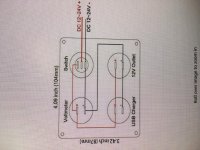
Also - can you provide more info on how you wired it? I attached a picture how they show below.

It seems as if you ran one set of wires directly for the ARB plug, and then another set specifically for the switch, voltmeter, and USB charger? With the power requirements for the ARB outlet it seems like it'd be better to run that separately.
 

Attachments

  • IMG_2612.jpg
    IMG_2612.jpg
    129.3 KB · Views: 1,000
That's a great post. I think I'm going to install the same. Couple questions though.


I see how it comes with a standard 12v outlet. Did you simply remove that and install the ARB outlet in its place?


Also - can you provide more info on how you wired it? I attached a picture how they show below.


It seems as if you ran one set of wires directly for the ARB plug, and then another set specifically for the switch, voltmeter, and USB charger? With the power requirements for the ARB outlet it seems like it'd be better to run that separately.


Sent from my iPhone using Tapatalk
 
That's a great post. I think I'm going to install the same. Couple questions though.


I see how it comes with a standard 12v outlet. Did you simply remove that and install the ARB outlet in its place?


Also - can you provide more info on how you wired it? I attached a picture how they show below.


It seems as if you ran one set of wires directly for the ARB plug, and then another set specifically for the switch, voltmeter, and USB charger? With the power requirements for the ARB outlet it seems like it'd be better to run that separately.


I did remove the standard 12v and used the ARB female socket that screws in.

I wish I could upload a pic from my phone but this Tapatalk is not cooperating.

Basically I used the 8awg from the ARB wiring kit and ran it directly to the plug. Then I jumped off the plug to the switch, from the switch I jumped to the volt meter then jumped to the USB.

I know that probably doesn't help but from my phone that's the best explanation I can give.

All the connections run off the ARB refrigerator wiring harness. The switch when in the open position activates the USB and the Volt meter. When the switch is off the Volt meter and the USB are inactive.

Hope that helps. If not I can post picture later.


Sent from my iPhone using Tapatalk
 
I can't speak for them, but I'm letting other people test out the voltage booster. I can't think of any reason why it would cause problems, but for all I know some ECU is sensitive about voltage or something and I'll let someone else find it if it is.

Even with the booster though I've seen 14.1-14.2V results which still isn't quite high enough for me. Plus with an on board charger I can park long term and not worry about the fridge shutting off or stressing the battery.

Sent from my SM-G930V using Tapatalk

Thanks for letting them...:ranger:
 
I did remove the standard 12v and used the ARB female socket that screws in.

I wish I could upload a pic from my phone but this Tapatalk is not cooperating.

Basically I used the 8awg from the ARB wiring kit and ran it directly to the plug. Then I jumped off the plug to the switch, from the switch I jumped to the volt meter then jumped to the USB.

I know that probably doesn't help but from my phone that's the best explanation I can give.

All the connections run off the ARB refrigerator wiring harness. The switch when in the open position activates the USB and the Volt meter. When the switch is off the Volt meter and the USB are inactive.

Hope that helps. If not I can post picture later.


Sent from my iPhone using Tapatalk

That is about as good of an explanation you can get without a picture lol. It also answers most of my question. The only thing I'm unsure of, is does the ARB socket have 3 connection points, two positive 1 negative, like the switch, or how do you do the first jump from the arb socket to the switch? Hope that makes sense.

I like what you've done a lot. Very practical and it looks clean and I'm about ready to pull the trigger, just want to make sure I do it right.
 
[MENTION=164485]Trixx[/MENTION],

If the ARB only has two terminals, you just keep running the RED +12. IOW, instead of it stopping, just keep it going to the switch center contact.

Then run from there to the meter and USB.

ETA: you see that screen shot of that wiring diagram just a couple posts up?

Disconnect the +USB(Red wire from Outlet to USB) and connect it to the SWITCH - CENTER. ( now outlet + to switch center )

Disconnect the +12V switch center and move it to OUTLET + ( there will two red wires on OUTLET RED + now. ( +12Vin and the one going to Switch center that you did in step above )

IF the ARB is a switched outlet, which I doubt, you would connect it just like that switch. But if the ARB socket is switched and you unplugged it, then the rest of the circuit would not work. So it's most likely just a two terminal outlet.

Also where that picture shows 12-24VDC - that will not be a -12VDC it will be GROUND... I mean I assume you are running a regular 12V system.
 
Last edited:
Well Ive had the truck sitting for the longest time since the install parked it Saturday at 7pm and only ran to the store yesterday not even 5min drive then moved it around the yard to install roof basket and say over night and all day today until tonight at 1130 when I checked it and the volt meter read 11.5. I plugged a small battery charger to it in hopes that it will be good in the am and I believe it will. Now realistically I will never let it sit for more than 24 straight hrs while on trail or camping so I should be fine not to mention we have had very hot and humid days the past week. I am however a little disappointed because I really wanted to get at least 2 straight days out of this set up with only running my fridge. So now I will be buying a solar panel so that I can mount it up top for extra piece of mind. My question is, will I be ok with getting a 100watt or should I go bigger? I plan on always having the solar panel hooked up

Sent from my SAMSUNG-SM-G890A using Tapatalk
 
Sorry to resurrect an old thread ...

but this seemed like the most relevant one I found, after a search. I am about to replace my stock Panny with a Northstar X2 Group 24 AGM. I understand it should just drop in.

Additionally, I will be getting the ArcLightLed voltage booster switch. I plan on getting the ARB Zero 73 quart fridge, and probably just the ARB wired loom/socket for simplicity. Will also get this to monitor voltage: Amazon.com: Battery Monitor ANCEL BM300 Bluetooth Voltmeter for All 12 Volts Solar Power Systems/RVs/Motorcycles/Boats/Cars/Trucks with Automotive Charging Cranking System Test with Alarm: Automotive


Is there anything else I might need to run the fridge safely off the new single Group 24 AGM battery? I don't have any other accessories, like lights, winch, onboard air, etc.

Appreciate the help.
 
Last edited:

Members online

Forum statistics

Threads
278,307
Messages
3,554,053
Members
248,016
Latest member
Advally Service

Trending content

Back
Top