
You are using an out of date browser. It may not display this or other websites correctly.
You should upgrade or use an alternative browser.
You should upgrade or use an alternative browser.
Stuck in snow much?
- Thread starter bpowa
- Start date


Lolrax
New member
All this talk of tires and nobody is talking about winter tires. The best way to deal with this type of situation is with snow on snow contact and the reason Blizzaks, Nokians, etc are so effective is because the snow clings to them. Nothing has better traction in snow than more snow, like rolling a snowball!
Last edited:

gm350reratliff
New member
[MENTION=100766]bpowa[/MENTION] - What's your tire pressure set at? Try setting it around 25-28 ish, maybe lower if you don't have far to go or drive on the highway.
I've ran Hankook AT's, KO2's, and now ST Maxx and my 4th gen is pretty damn good in the snow. The worst it did was with the OEM dunlops but even with those it was still pretty good.
Like others have posted, new, good tires will really help.
I've ran Hankook AT's, KO2's, and now ST Maxx and my 4th gen is pretty damn good in the snow. The worst it did was with the OEM dunlops but even with those it was still pretty good.
Like others have posted, new, good tires will really help.

YotaDriver
New member
It has about 65K miles and served me very well.
The only reason you'd get blasted on a Jeep forum is for taking a rig with bald tires into the snow and then wondering why you got stuck and questioning the off-road capabilities of your truck...essentially the same reason you're being blasted here.
:flamethrwoer2:

The only reason you'd get blasted on a Jeep forum is for taking a rig with bald tires into the snow and then wondering why you got stuck and questioning the off-road capabilities of your truck...essentially the same reason you're being blasted here.
:flamethrwoer2:
my state law is 2/32 tread.. im above that. I road motorcycles in rain and snow and the tires come in 7/32 new. Im sure I rode in4/32 in the hard rain in CA. Maybe you should take your truck in the snow and test for yourself. Go over 12" of fresh snow and report back. I mentioned before that this forum use to be filled with good non trash talking people, when asked for advice. Not so much anymore.
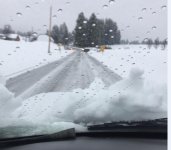
update. Conditions were right to be stuck. I found out when I got home the 2" of snow was solid ice. The deicer worked and its slowly moved out on 4low.
My tires are set at 30. all around for winter. 35-37 the rest of the year.
my state law is 2/32 tread.. im above that. I road motorcycles in rain and snow and the tires come in 7/32 new. Im sure I rode in4/32 in the hard rain in CA. Maybe you should take your truck in the snow and test for yourself. Go over 12" of fresh snow and report back. I mentioned before that this forum use to be filled with good non trash talking people, when asked for advice. Not so much anymore.
I don't think people are trash talking you so much as just telling you the facts. 2/32 may be the legal limit in sunny California, but that's a tire integrity limit, not a traction limit. It's not going to get the job done in moderate/deep snow, anywhere. You said in your first post this was your first time in snow. Listen to the folks who have been driving in snow successfully for 50 years. "We know a thing or two because we've seen a thing or two."

Please everyone also recognize that there is a world of difference in snow traction depending on temperature and packing. Loose or lightly packed snow below +10 degF is quite sticky, and seldom represents any kind of a traction problem. Hard packed snow at 32 degF is slicker than snot, and approaches glare ice in terms of traction issues.
This variation can also explain much of the anecdotal conflicting information about performance of various tires. The same tire that performs well in cold dry snow may do poorly two days later when the weather warms up, and vice versa.
my state law is 2/32 tread.. im above that. I road motorcycles in rain and snow and the tires come in 7/32 new. Im sure I rode in4/32 in the hard rain in CA. Maybe you should take your truck in the snow and test for yourself. Go over 12" of fresh snow and report back. I mentioned before that this forum use to be filled with good non trash talking people, when asked for advice. Not so much anymore.
update. Conditions were right to be stuck. I found out when I got home the 2" of snow was solid ice. The deicer worked and its slowly moved out on 4low.
My tires are set at 30. all around for winter. 35-37 the rest of the year.
You're above it, but not by much. 3-4 32nds is not enough for snow driving. I live in a snowbelt, and my Firestone AT used to be unstoppable. Now that they are worn to around 5 32nds I can definitely tell a difference.
Don't know if it's been discussed, but driving habits can make a difference. Did you approach the 12" of snow, slow, in 4HI? The center diff should have been locked in that much snow, maybe even 4LO depending on the terrain. If you get stuck, then switch to 4Lo or lock the diff, you won't be able to get out as easily as you lose your momentum.
On ice, nothing except a studded tire will do much good.

Yukon4Runner
New member
Yeah, these guys aren't getting that a different rubber composition is used in snow tires that is designed to have better traction at lower temperatures.
All this talk of tires and nobody is talking about winter tires. The best way to deal with this type of situation is with snow on snow contact and the reason Blizzaks, Nokians, etc are so effective is because the snow clings to them. Nothing has better traction in snow than more snow, like rolling a snowball!
All this talk of tires and nobody is talking about winter tires. The best way to deal with this type of situation is with snow on snow contact and the reason Blizzaks, Nokians, etc are so effective is because the snow clings to them. Nothing has better traction in snow than more snow, like rolling a snowball!
nah,
Having lived in Tahoe for 10 years, I can tell you that blizzaks and all other "snow" tires are marginal at BEST and completely unsafe if there is ice and you are on a hill. The only real solution is to get carbide studded tires, no studs = no going home. And before someone says: "but, but, but, those are illegal!!" Yeah, yeah, I know that those tires are illegal in some places during certain months but I would still run them in the winter. Its not like cops are going to be able to catch you or pull you over if you have them and they don't...:becky:
Lolrax
New member
nah,
Having lived in Tahoe for 10 years, I can tell you that blizzaks and all other "snow" tires are marginal at BEST and completely unsafe if there is ice and you are on a hill.
So, living in Tahoe for 10 years allows you to say something that is completely wrong? Nothing unsafe about them on ice and on hills, that is what they were created for.
So, living in Tahoe for 10 years allows you to say something that is completely wrong? Nothing unsafe about them on ice and on hills, that is what they were created for.
you are completely wrong. Have you ever tried to drive up an icy hill in Tahoe without studded tires? You have not because it is impossible to do so with any type of "snow tire" that does not have carbide studs.
Lolrax
New member
you are completely wrong. Have you ever tried to drive up an icy hill in Tahoe without studded tires? You have not because it is impossible to do so with any type of "snow tire" that does not have carbide studs.
Not sure if Tahoe is the pinnacle of winter conditions to be honest but I have driven up plenty of hills in Canada and Northern Alberta and it is definitely not impossible, its actually no sweat on Blizzaks so terms like "impossible" seem far fetched to me.
Not sure if Tahoe is the pinnacle of winter conditions to be honest but I have driven up plenty of hills in Canada and Northern Alberta and it is definitely not impossible, its actually no sweat on Blizzaks so terms like "impossible" seem far fetched to me.
It is the pinnacle of dangerous road conditions. I'm certain of that. You are probably right that if the road was covered in snow that you could drive up it no sweat with blizzaks. However, what if the "road" was a SOLID 1 mile sheet of ice on a 40 degree angle with no guardrail and no sand. It is not even possible to walk on roads like that. I remember letting my dog out of the back of my truck once and he slid all the way down to the bottom of the hill while running toward the truck like he was in a cartoon. As kids we used to slide down this huge hill on our shoes like we were on skiis. I have never seen a car make it up to the hill to our neighborhood without studs.
I don't know where you found the snow but CA's heavy snow and near freezing temps can be slick and hard to get moving in (as mentioned above). I had Revo's and felt they lost their great traction with low tread (besides got very noisy). Conditions and tires conspired to ruin your day
Yukon4Runner
New member
Lol OK, mandatory stud tires for everyone when it drops below freezing!
It is the pinnacle of dangerous road conditions. I'm certain of that. You are probably right that if the road was covered in snow that you could drive up it no sweat with blizzaks. However, what if the "road" was a SOLID 1 mile sheet of ice on a 40 degree angle with no guardrail and no sand. It is not even possible to walk on roads like that. I remember letting my dog out of the back of my truck once and he slid all the way down to the bottom of the hill while running toward the truck like he was in a cartoon. As kids we used to slide down this huge hill on our shoes like we were on skiis. I have never seen a car make it up to the hill to our neighborhood without studs.
Driving to work on my less than adequate tires were nerve wracking this morning. Passed by a 4 car pile up. the road is completely iced.
Im not sure if tires had anything to do with it.. I chugged along fine for the most part.
Again. New tires are coming in spring. I rather not get into details but I have to budget for large expenses. Tires were planned since fall. I never lived in the snow so to me 4/32 was still a decent tread.
Im not sure if tires had anything to do with it.. I chugged along fine for the most part.
Again. New tires are coming in spring. I rather not get into details but I have to budget for large expenses. Tires were planned since fall. I never lived in the snow so to me 4/32 was still a decent tread.
Attachments
Studless snow tires can still grip ice. For example, Blizzaks have "Bite particles for impressive traction on ice", plus sipes and special rubber compounds that wick water off the surface of the ice (the opposite of how ice skates work). Think of the bite particles like sand but in the tire instead of on the road. The sipes also provide additional edges to bite the ice if there is any texture or grit trapped in it. Studs are probably still better on ice, but studless snow tires are better on every other winter surface (including dry) and still better than all season tires on ice. Slick ice is not too common if road maintenance crews are doing their jobs, and I avoid driving in really icy conditions as much as I can because all it takes is a few people doing it wrong to make it dangerous for everyone.
Winter tires have to do so much. It's not as simple as just holding snow to grip snow. For example on slush they need to push the slush out or you'll hydroplane (slush-o-plane?). Same in water which you might find near melting snow piles in the winter. The also need to grip dry pavement when it's cold. And there are about a million different kinds of snow conditions depending on the temperature and how packed down or traveled it is and what shape it was when it fell out of the sky.
40 degrees would be hard to drive on on pavement, let alone ice. It's really steep! You probably won't find more than 20% grade even on most very steep roads, and that's only 11-12 degrees.
It's unfortunate the tires are so expensive. I can't justify the cost of winter tires because I always have the option to stay home if things get really bad, and I haven't had any major problems with all season tires as long as they have plenty of tread. In my last car, a 2WD sedan, I was sliding all over on about 4/32 of tread before I got new tires. On new tires it was fine and I never got stuck. But winter tires pay for themselves if they help you avoid an accident. I think most people have to budget for new tires, and no one wants to replace tires while there's still life left in them even if they aren't good for winter anymore.
Winter tires have to do so much. It's not as simple as just holding snow to grip snow. For example on slush they need to push the slush out or you'll hydroplane (slush-o-plane?). Same in water which you might find near melting snow piles in the winter. The also need to grip dry pavement when it's cold. And there are about a million different kinds of snow conditions depending on the temperature and how packed down or traveled it is and what shape it was when it fell out of the sky.
40 degrees would be hard to drive on on pavement, let alone ice. It's really steep! You probably won't find more than 20% grade even on most very steep roads, and that's only 11-12 degrees.
It's unfortunate the tires are so expensive. I can't justify the cost of winter tires because I always have the option to stay home if things get really bad, and I haven't had any major problems with all season tires as long as they have plenty of tread. In my last car, a 2WD sedan, I was sliding all over on about 4/32 of tread before I got new tires. On new tires it was fine and I never got stuck. But winter tires pay for themselves if they help you avoid an accident. I think most people have to budget for new tires, and no one wants to replace tires while there's still life left in them even if they aren't good for winter anymore.
Yukon4Runner
New member
Alright.
You decided to research proper winter tires after you got stuck in the snow.
Hopefully, if you're getting yourself into deep snow with an infant in the car, you will research the proper winter gear to have available inside your vehicle to survive extended sub zero temps before a life threatening event occurs.
If your plan starts with a cell phone, then you are not prepared.
You decided to research proper winter tires after you got stuck in the snow.
Hopefully, if you're getting yourself into deep snow with an infant in the car, you will research the proper winter gear to have available inside your vehicle to survive extended sub zero temps before a life threatening event occurs.
If your plan starts with a cell phone, then you are not prepared.
Driving to work on my less than adequate tires were nerve wracking this morning. Passed by a 4 car pile up. the road is completely iced.
Im not sure if tires had anything to do with it.. I chugged along fine for the most part.
Again. New tires are coming in spring. I rather not get into details but I have to budget for large expenses. Tires were planned since fall. I never lived in the snow so to me 4/32 was still a decent tread.
If you're going to push through a bad winter with worn tires at least get a set of chains, cheap insurance. Cheaper than a tow at least, or worse.
Similar threads


- Replies
- 4
- Views
- 3K

- Replies
- 0
- Views
- 7K


