Target Air Fuel Ratio for ScanGauge in my 97.

19963.4lsr5

New member
Target AF Ratio for B1S1 for my 97 with the 3.4. It works.

TXD 686AF10106
RXF 044145060000
RXD 2808
MTH 05B900800000
Name A/F


Edit: I just corrected the TXD and RXF to show the 06 memory location instead of the 05.

Sent from my iPhone using Tapatalk


Sent from my iPhone using Tapatalk
 
Last edited:
Register to hide this ad
Just so you all know. Running an engine temp colder than 191f will not achieve the 14.7:1 air fuel ratio. It has to be 191 or higher.

I blocked 6” of my rad and I am still running 186-191 this time of year in PA. I’d like to get it to 195. I wonder if flipping the thermostat the wrong way will do it.


Sent from my iPhone using Tapatalk
 
Just so you all know. Running an engine temp colder than 191f will not achieve the 14.7:1 air fuel ratio. It has to be 191 or higher.

I blocked 6” of my rad and I am still running 186-191 this time of year in PA. I’d like to get it to 195. I wonder if flipping the thermostat the wrong way will do it.


Sent from my iPhone using Tapatalk

Everything I've read has said that it's not very accurate to try and get afr readings off the stock O2 sensor. Not sure what you are meaning that you cant get 14.7 unless you are higher that 191 temp, I have an aftermarket afr gauge and welded bung in the exhaust and bounces around 14.7 ratio well under 191 temp. Am I missing something here? I run a super charger and with a cooler thermostat. Normal operating temps for me is 181. Are you basing your findings on your scan gauge readings?
 
Last edited:
Just so you all know. Running an engine temp colder than 191f will not achieve the 14.7:1 air fuel ratio. It has to be 191 or higher.

I blocked 6” of my rad and I am still running 186-191 this time of year in PA. I’d like to get it to 195. I wonder if flipping the thermostat the wrong way will do it.


Sent from my iPhone using Tapatalk
I would say you would gain a few degrees by putting the jiggler at 12 o'clock instead of 6. Good to know that 191 up required for 14.7: 1 ratio.


Your thermostat isn't stick open is it?

Sent from my SM-J337V using Tapatalk
 
Everything I've read has said that it's not very accurate to try and get afr readings off the stock O2 sensor. Not sure what you are meaning that you cant get 14.7 unless you are higher that 191 temp, I have an aftermarket afr gauge and welded bung in the exhaust and bounces around 14.7 ratio well under 191 temp. Am I missing something here? I run a super charger and with a cooler thermostat. Normal operating temps for me is 181. Are you basing your findings on your scan gauge readings?


It’s the target AF ratio not the actual.


Sent from my iPhone using Tapatalk
 
I would say you would gain a few degrees by putting the jiggler at 12 o'clock instead of 6. Good to know that 191 up required for 14.7: 1 ratio.


Your thermostat isn't stick open is it?

Sent from my SM-J337V using Tapatalk


I get up to temp in around 2-3 miles when it’s in the low 30’s outside.


Sent from my iPhone using Tapatalk
 
It’s the target AF ratio not the actual.


Sent from my iPhone using Tapatalk

I still a bit confused by your post. I'm not sure the purpose of saying that you cant achieve 14.7:1 unless you are over 191 degrees. I know very little about afr, but have been forced to get a better understanding because of the supercharger. I'm just trying to grasp your statement since my afr gauge does not show that at all. Are you saying that your afr is not 14.7:1 ratio under 191 engine temp? If so, where are you getting this reading?
 
I still a bit confused by your post. I'm not sure the purpose of saying that you cant achieve 14.7:1 unless you are over 191 degrees. I know very little about afr, but have been forced to get a better understanding because of the supercharger. I'm just trying to grasp your statement since my afr gauge does not show that at all. Are you saying that your afr is not 14.7:1 ratio under 191 engine temp? If so, where are you getting this reading?


I’m getting the reading from the above PID settings VIA my ScanGauge.

When the engine cold starts it’s target air fuel ratio is really rich. In the weather I’m having it starts out around 7 to 8. It slowly ramps up the target AFR as the engine warms up around 1 min into this the engine goes closed loop and starts using the front O2 sensor to achieve the target AFR. The warmer the engine the higher the target. It uses the O2 sensor and the LTFT and STFT to achieve the target AFR. When the engine hits 191f the target AFR is at 14.7. 188f engine temp is around 14.4 AFR as an example.

I don’t know your year buy my 97 would have the target AFR around 14.0 at 181. I can verify that in the morning by watching the engine temp and AFR target at the same time.


Sent from my iPhone using Tapatalk
 
Last edited:
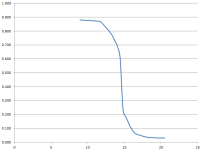
Prior to I beleive 1999 Toyota used narrowband o2 sensors in all the 4runners. These sensors don't understand afr they only read on a 0 to 1v scale that is either rich or lean. I have an AEM afr gauge installed in my truck and I hit 14.7 afr almost immediately after startup and it hovers there untill my tune takes over in boost. Not really understanding the purpose of having a "target afr" reading on the scangauge. Also attached a graph showing how narrowband o2s read
 

Attachments

  • NarrowAFR2.png
    NarrowAFR2.png
    8.6 KB · Views: 1,017
I’m getting the reading from the above PID settings VIA my ScanGauge.

When the engine cold starts it’s target air fuel ratio is really rich. In the weather I’m having it starts out around 7 to 8. It slowly ramps up the target AFR as the engine warms up around 1 min into this the engine goes closed loop and starts using the front O2 sensor to achieve the target AFR. The warmer the engine the higher the target. It uses the O2 sensor and the LTFT and STFT to achieve the target AFR. When the engine hits 191f the target AFR is at 14.7. 188f engine temp is around 14.4 AFR as an example.

I don’t know your year buy my 97 would have the target AFR around 14.0 at 181. I can verify that in the morning by watching the engine temp and AFR target at the same time.


Sent from my iPhone using Tapatalk


I appreciate the explanation. As per my afr gauge, mine also runs rich at first, but bounces around 14.7 fairly quick which is normal. I dont think you are getting an accurate reading with the scan gauge. Mine is also a 97. To make the engine run hotter so that you can achieve stoich seems a little extreme in this case. I dont believe you are getting an accurate reading. Even my afr bounces around quite a bit at idle/cruising within a seconds time it can change 2 or 3 times from 14.5 to 14.9 range with some 14.7, 14.8 in the mix. I have my doubts that what you are seeing is really 14.0 on the scan gauge at 181 degrees.

I think it's a bit of a stretch to say that you cant achieve stoich unless your temps are over 191. I mean no disrespect, imo I just think you are making assumptions on data that isnt true. I mean it wouldnt be hard for the ECU to regulate the afr for a 10 degree variance in engine temp. It does it at quite a bit lower temperatures just fine based off my wideband O2 sensor that I installed.
 
Prior to I beleive 1999 Toyota used narrowband o2 sensors in all the 4runners. These sensors don't understand afr they only read on a 0 to 1v scale that is either rich or lean. I have an AEM afr gauge installed in my truck and I hit 14.7 afr almost immediately after startup and it hovers there untill my tune takes over in boost. Not really understanding the purpose of having a "target afr" reading on the scangauge. Also attached a graph showing how narrowband o2s read

I've even heard the 99+ runners that have a wideband O2 sensor are not reliable either. Everything I read came to the same conclusion, you need to install an aftermarket wideband sensor to get any accurate reading.
 
I've even heard the 99+ runners that have a wideband O2 sensor are not reliable either. Everything I read came to the same conclusion, you need to install an aftermarket wideband sensor to get any accurate reading.


Yes, it is not ever to be used as an actual sensor. I was just curious if the parameter was available like on my Saturn, And if it behaved like it. That’s why I kept calling it target.


Sent from my iPhone using Tapatalk
 
Prior to I beleive 1999 Toyota used narrowband o2 sensors in all the 4runners. These sensors don't understand afr they only read on a 0 to 1v scale that is either rich or lean. I have an AEM afr gauge installed in my truck and I hit 14.7 afr almost immediately after startup and it hovers there untill my tune takes over in boost. Not really understanding the purpose of having a "target afr" reading on the scangauge. Also attached a graph showing how narrowband o2s read


I found it and put it on the ScanGauge to see if it behaved like my saturns. Stoch on a 0-1v Sensor is .50v. But it’s not near as accurate as a wide band and you need a a way to average the high and low swing to see what the AF Ratio is.

Tuning with a narrow band in the 90’s before wide band sensors and displays became available I shot for .4v to .5v in cruise mode and .92v at wide open throttle.


Sent from my iPhone using Tapatalk
 
Last edited:
See people keep telling me the front 02 in the early years isnt the A/F sensor but yet it is. Granted I get that it reads voltages and calculates the A/F. However, if they goto crap your milage does as well. So basically are acting as A/F sensors just not wide band.

Sent from my SM-J337V using Tapatalk
 
I doubt the engine would even run at 7.2 AFR


When it’s 37 degrees it does. It’s in enrichment mode.

Try starting a vehicle with a carburetor without setting the choke and pumping the gas pedal once or twice and see how well it starts and stays running.


Sent from my iPhone using Tapatalk
 
See people keep telling me the front 02 in the early years isnt the A/F sensor but yet it is. Granted I get that it reads voltages and calculates the A/F. However, if they goto crap your milage does as well. So basically are acting as A/F sensors just not wide band.

Sent from my SM-J337V using Tapatalk


You are absolutely correct. It uses the front narrow band sensor to determine the actual AF ratio and then tweaks the long and short fuel trims to get to whatever it is shooting for. As soon as you see closed loop for the fuel system it’s using it.

When the sensor fails it reverts to open loop and runs on fixed parameters to determine injector pulse width based on TPS, MAF, RPM, ECT, IAT. It try’s to run around 12:1 AFR to prevent a lean condition and be drivable.

On a carbrated vehicle or motorcycle the O2 doesn’t swing rich and lean so it’s much easier to use. (Just not as accurate) go wide open throttle and watch your front sensor voltage. It will instantly stop swinging high low and settle in between .88v and .95v because it goes open loop. If your engine and fuel system is ok anyway. It shoots for 12:1 at WOT in open loop but know way to know if it made it. I will watch my LTFT to make sure it’s near 0 and I’ll also do a WOT acceleration watching the voltage of the front sensor to make sure my pump and filter are flowing properly.

Fuel injection swings rich and lean on purpose. One of them is to provide oxygen to the catalyst in the converter to burn the unburned hydrocarbons. The catalyst absorbs it and then gives it off. With out it you would need air injection at all times like the old days when engines had belt driven “smog” pumps pumping air into the exhaust manifold and into the CAT around halfway back the honeycomb.


Sent from my iPhone using Tapatalk

 
You are absolutely correct. It uses the front narrow band sensor to determine the actual AF ratio and then tweaks the long and short fuel trims to get to whatever it is shooting for. As soon as you see closed loop for the fuel system it’s using it.

When the sensor fails it reverts to open loop and runs on fixed parameters to determine injector pulse width based on TPS, MAF, RPM, ECT, IAT. It try’s to run around 12:1 AFR to prevent a lean condition and be drivable.

On a carbrated vehicle or motorcycle the O2 doesn’t swing rich and lean so it’s much easier to use. (Just not as accurate) go wide open throttle and watch your front sensor voltage. It will instantly stop swinging high low and settle in between .88v and .95v because it goes open loop. If your engine and fuel system is ok anyway. It shoots for 12:1 at WOT in open loop but know way to know if it made it. I will watch my LTFT to make sure it’s near 0 and I’ll also do a WOT acceleration watching the voltage of the front sensor to make sure my pump and filter are flowing properly.

Fuel injection swings rich and lean on purpose. One of them is to provide oxygen to the catalyst in the converter to burn the unburned hydrocarbons. The catalyst absorbs it and then gives it off. With out it you would need air injection at all times like the old days when engines had belt driven “smog” pumps pumping air into the exhaust manifold and into the CAT around halfway back the honeycomb.


Sent from my iPhone using Tapatalk
Thanks for sharing. Makes complete sense. As the electrical system sensors are used to monitor all the systems. We would be able to determine proper function of the fuel system. Dirty air filter, provided the electrical sensors are functioning properly. However, the scan tools will show us bad sensors by the error codes. :)

Sent from my SM-J337V using Tapatalk
 

Members online

Forum statistics

Threads
278,317
Messages
3,554,129
Members
248,016
Latest member
Advally Service

Trending content

Back
Top