Timing chain stretch: '07 4Runner

This is probably a stupid question. The tensioner keeps the chain tight. Old oil causes the tensioner to stick? Would running some motor flush in the oil free up the coked surfaces? Or would that have no impact on timing? I normally add 1/2 qt of MMO with each oil change to clean the engine. When I took off the valve covers last month it was perfectly clean.

For reference, I had these readings at idle before making changes
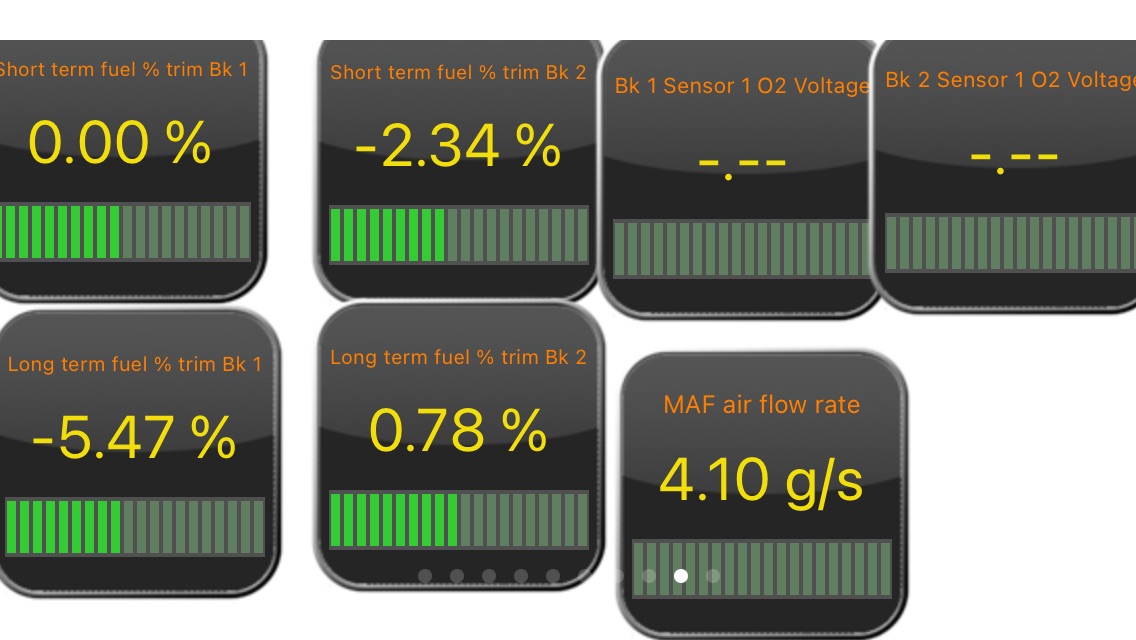
371652d1604416702-best-guess-these-ltft-readings-fuel-trims-5aa61cd5-75fe-48bf-aacf-89fac257f175-jpeg


Then I changes plenum gaskets and fuel injectors #2,4,6 and got these numbers.
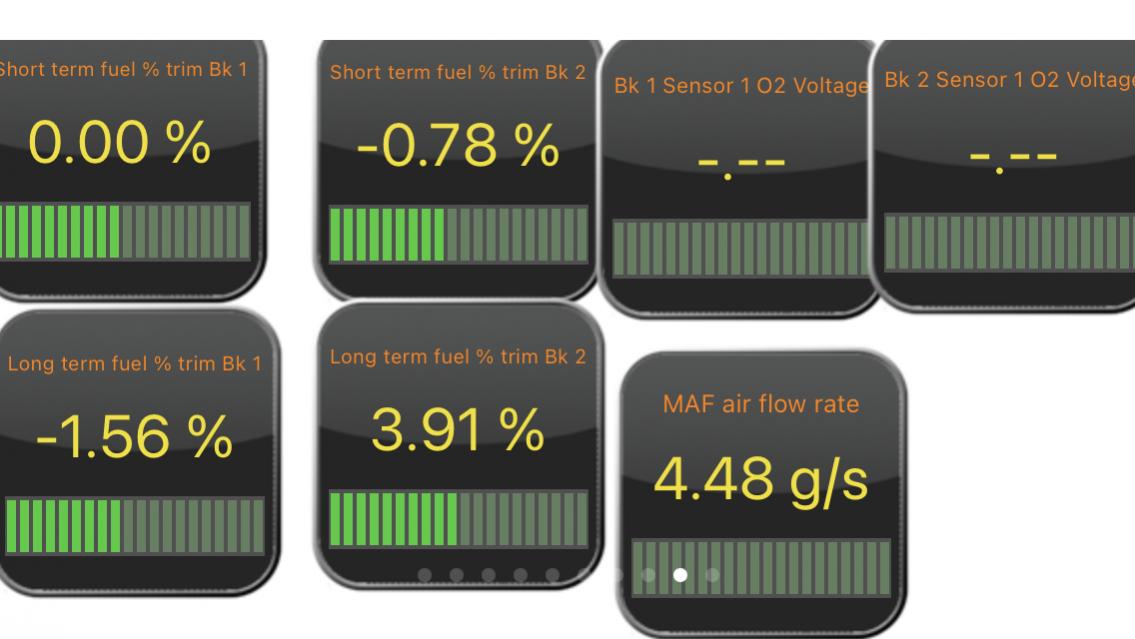
372580d1606224549-best-guess-these-ltft-readings-fuel-trims-c149501e-2bc2-47ac-be81-85dafb91e19b-jpg


Last week I changed fuel injectors #1,3,5 and now the LTFTs are balanced while cruising and at idle. Under moderate acceleration I there can be some divergence tho. It seems like the LTFT bank 1 runs slightly positive to bank 2 under accel. Im wondering if a weak fuel pump could be the cause. 223k miles on factory pump. Bank 1 gets fuel after bank 2. Could low rail pressure cause an imbalance?
 
Last edited:
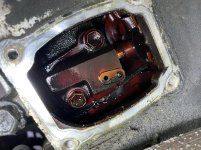
Hi all! I love this thread but dread having to use it. ^^; For those of you with experience, would you mind peaking at my tensioner, please? I’ve been getting code P0016 for a few months now, and attached is a pic of the tensioner. Do I have a stretched chain?...

Unfortunately, yes, your chain is stretched.
 
Hi all! I love this thread but dread having to use it. ^^; For those of you with experience, would you mind peaking at my tensioner, please? I’ve been getting code P0016 for a few months now, and attached is a pic of the tensioner. Do I have a stretched chain? How long can I put this off? I probably won’t have time for a big job like this until May...

The extended length of the tensioner piston indicates an elongated "stretched" timing chain. It's worn out. The sludge evident in the pic also indicates poor oil change maintenance.

I deferred my replacement for 20K miles while I used a variety of oils known for high detergent loads, e.g. Pennzoil High Mileage, Shell Rotella T6, etc. and on short ~2500mi oil change intervals. Also added a dose of Marvel Mystery Oil around 200 miles before oil change on a few occasions. My goal was to minimize the sludge in my engine before the new chain.

Nobody can say accurately how long you can safely run the engine in this condition, but here's what I found: I measured tensioner length when I bought the truck, and again after the 20K mile cleanup, and the tensioner was at the same exact length when I opened up the engine to do the replacement...no further elongation had occurred while I was running good oil and changing it frequently.

Good luck, ask questions as needed when you bust a move on the replacement.
 
This is probably a stupid question. The tensioner keeps the chain tight. Old oil causes the tensioner to stick? Would running some motor flush in the oil free up the coked surfaces? Or would that have no impact on timing? I normally add 1/2 qt of MMO with each oil change to clean the engine. When I took off the valve covers last month it was perfectly clean.

No, the tensioner doesn't stick. It uses a ratchet mechanism so it can only extend outward, not retract inward (unless you manually release the ratchet).

The contaminated oil causes excessive wear on the timing chain pins & bushings, which causes the chain to elongate or "stretch". As it does, the tensioner piston extends to take up the slack. Therefore, an over-extended tensioner piston is a reliable indicator of chain elongation.

Last week I changed fuel injectors #1,3,5 and now the LTFTs are balanced while cruising and at idle. Under moderate acceleration I there can be some divergence tho. It seems like the LTFT bank 1 runs slightly positive to bank 2 under accel. Im wondering if a weak fuel pump could be the cause. 223k miles on factory pump. Bank 1 gets fuel after bank 2. Could low rail pressure cause an imbalance?

Best I've seen LTFTs balance is to within +/- 0.78% (where 0.78 is the increment reported by the ECM). The exhaust system isn't tuned for balanced airflow on these trucks, it's a Y-input single outlet, and the exhaust manifold runners aren't equal length. (edit: therefore the backpressure and scavenging characteristics are not equal across all 6 cylinders). And the ECM only has a single volumetric efficiency table (fuel map) which informs injector delivery on both banks. You'll never get perfectly balanced LTFTs under all RPM and load conditions.

I agree your initial LTFT imbalances were significant and replacing the injectors (assuming the new ones aren't aftermarket knockoffs) was a good move. I usually first try a few tanks of gas with Red Line SI-1 fuel system cleaner before replacing injectors...because a.) I'm lazy, and b.) new factory injectors are expensive. The majority of cases result in restoration of reasonable LTFT balance without swapping injectors.
 
Last edited:
Hi all! I love this thread but dread having to use it. ^^; For those of you with experience, would you mind peaking at my tensioner, please? I’ve been getting code P0016 for a few months now, and attached is a pic of the tensioner. Do I have a stretched chain? How long can I put this off? I probably won’t have time for a big job like this until May...

ef4691c63d6c25e160a13b71c12568213ca39596.jpeg

As others have said...yes the timing chain is stretched, the telltale sign here is the tensioner's piston/plunger discoloration, you can see the section that has a dark varnish/sludge buildup on it and then the less discolored section, the section with the varnish/sludge coloration is the area that was from when the timing chain wasn't stretched, the cleaner section is from when the chain has stretched.

If you can go with all OEM parts when replacing, and yes replace the tensioner as well all wearable parts involved with the timing chain, you don't want to do this twice because you didn't replace a part that should of been replace, the job is too labor intensive to not do it right!
 
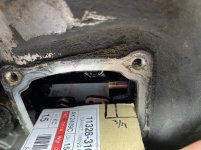
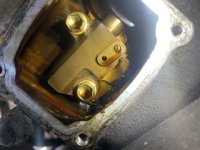
I’m hoping to get some input to either verify or debunk what I assume is a worn timing chain. After I purchased my 4Runner early last year I noticed signs of sludge and after doing my valve cover gaskets I confirmed that the previous owner/s did not have a consistent oil change regimen. This past weekend I decided to take a look in the tensioner inspection plate. I’ve searched high and low in the factory service manual, and searched exhaustingly on here and on google for a measurement of what the tensioner should be extended. No luck. I have seen in one thread 1/2” is normal and past that the chain is worn. Can anyone confirm that?

I did my best to take a measurement and take a photo. For context on the photo and measurements, the left line is 3/4”, the second line to the right is 1/2”. I could not get them exactly lined up but to me it seems this is out of spec. I have not received any DTC yet but I assume the VVT is compensating to keep things where they need to be. My tensioner looks very similar to the most recent photo posted.

Thanks in advance to anyone has input.
 

Attachments

  • A93F8429-937C-4182-8713-6E6DD23BCBC9.jpg
    A93F8429-937C-4182-8713-6E6DD23BCBC9.jpg
    137.6 KB · Views: 1,076
  • BB674B2C-66EC-425E-8D64-7DF9410FC969.jpg
    BB674B2C-66EC-425E-8D64-7DF9410FC969.jpg
    131.9 KB · Views: 935
i wonder how mine looked like at 150000 miles, never had a problem. i want to know if using synthetic prevented the stretch. i think it's important to have that brief history. i bought my truck new (0 miles) and changed the oil myself every 10000 miles using a amsoil synthetic oil. what's your mileage? in my opinion, if you don't have the dtc code yet, you are still good. to the op, did you measure how stretched it was in the peek area before and after? this should tell us if we are close to replacing the chain.

I’m hoping to get some input to either verify or debunk what I assume is a worn timing chain. After I purchased my 4Runner early last year I noticed signs of sludge and after doing my valve cover gaskets I confirmed that the previous owner/s did not have a consistent oil change regimen. This past weekend I decided to take a look in the tensioner inspection plate. I’ve searched high and low in the factory service manual, and searched exhaustingly on here and on google for a measurement of what the tensioner should be extended. No luck. I have seen in one thread 1/2” is normal and past that the chain is worn. Can anyone confirm that?

I did my best to take a measurement and take a photo. For context on the photo and measurements, the left line is 3/4”, the second line to the right is 1/2”. I could not get them exactly lined up but to me it seems this is out of spec. I have not received any DTC yet but I assume the VVT is compensating to keep things where they need to be. My tensioner looks very similar to the most recent photo posted.

Thanks in advance to anyone has input.
 
i wonder how mine looked like at 150000 miles, never had a problem. i want to know if using synthetic prevented the stretch. i think it's important to have that brief history. i bought my truck new (0 miles) and changed the oil myself every 10000 miles using a amsoil synthetic oil. what's your mileage? in my opinion, if you don't have the dtc code yet, you are still good. to the op, did you measure how stretched it was in the peek area before and after? this should tell us if we are close to replacing the chain.

Currently my mileage is 226,000. I would be interested if anyone has a measurement for how far the tensioner is extended on a new timing set.

Based on what I have had to replace or fix from previous neglect, I would assume it is only a matter of time until I do get this DTC. Also after my oil analysis came back showing small traces of coolant in the oil, I’m sure I will be doing head gaskets and what better time to do all things involving the timing chain.
 
Currently my mileage is 226,000. I would be interested if anyone has a measurement for how far the tensioner is extended on a new timing set.

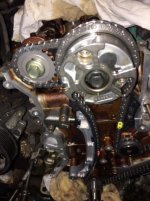
Here's a pic of mine during reassembly with new Toyota parts.

If you look at yours, the section with the uniformly colored sludge nearest the guiderail was the factory extended length. It accumulated sludge across the surface at that extended length, until the chain began elongating.
 

Attachments

  • 4Runner_bank1.jpg
    4Runner_bank1.jpg
    49.6 KB · Views: 1,048
I have seen in one thread 1/2” is normal and past that the chain is worn. Can anyone confirm that?

That's about right. You can see the sludge and varnish variation across the tensioner piston's extended length, that tells the story of the chain's ongoing wear. The thickest and darkest sludge at the end was the portion exposed when the chain was in spec. As the chain wore and elongated, the piston extended one ratchet tooth at a time and exposed new shiny sections of the piston to sludge bath and started discoloring it. The process continued and repeated.

You can minimize further chain wear by using motor high in molybdenum disulfide additive (also known as moly, MoDTC, etc) and changing it more frequently, like 3000 miles. Pennzoil High Mileage, Valvoline Extended Protection both have high concentrations of moly additive.

Rationale:
Moly is an extreme pressure antiwear additive and there is strong evidence that it reduces wear in timing chain pins & bushings.

Changing more frequently gets the abrasive soot (dissolved sludge) out of the engine.
 
[MENTION=172281]waypoint[/MENTION]
Thank you for the information and the picture. After changing the valve cover gaskets and peaking at the tensioner, I saw the variations on the piston of the tensioner and I knew I needed to look at the tensioner behind the inspection plate. What you are saying totally lines up with the information I have read so far, thank you again for taking a look and chiming in.

As stated before, I do not currently have a DTC so I can approach this slowly and gather the parts and seals to get the job done spring of next year.

I have considered the switch to Valvoline engine oil based on what I have learned about it so far. I was not aware of it having higher moly content. I have heard they do a lot of torture testing and have really focused on chain wear lately. Currently I am using Mobil1 truck & suv 5W-30. Allegedly it has a higher additive package but I do not know if it has any added moly. I will have to look more into Valvoline and compare it to what I am currently using.
 
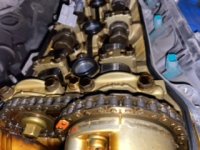
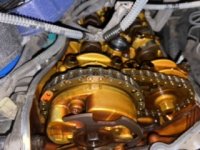
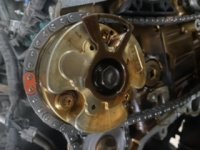
Hey guys sorry to revive a old thread again. I’m getting a p0016, p0335, p0340. I’ve been reading a lot on here and other forums trying to decide what to do. I pulled the inspection cover on the tensioner and it doesn’t seem to be extended as far as some of the ones I’ve seen on here. I went ahead and pulled the valve covers to check out the timing and it looks pretty damn close to me also. Let me know what you guys think. It would be much appreciated.
 

Attachments

  • 903BD0A5-966A-4AFC-A684-D1E0FA90BA9B.jpeg
    903BD0A5-966A-4AFC-A684-D1E0FA90BA9B.jpeg
    36.9 KB · Views: 728
  • F446D7D8-C94D-4A57-97D8-93FFF7F0D5AF.jpeg
    F446D7D8-C94D-4A57-97D8-93FFF7F0D5AF.jpeg
    37.8 KB · Views: 700
  • 98128C67-0FC5-4251-9C08-A3B94D95F795.jpeg
    98128C67-0FC5-4251-9C08-A3B94D95F795.jpeg
    31.8 KB · Views: 723
Hey guys sorry to revive a old thread again. I’m getting a p0016, p0335, p0340.

You've got something else wrong, based on the combination of DTCs and your tensioner piston extended length being normal. Timing mark alignment looks correct also.

P0335 is crank position sensor signal not present either while cranking or running, below is the trouble area list from the shop manual:

DTC No. P0335 DTC Detection Conditions
• No CKP sensor signal to ECM while cranking (1 trip
detection logic)
• No CKP sensor signal to ECM at engine speed of
600 rpm or more (1 trip detection logic)
Trouble Areas:
• Open or short in CKP sensor circuit
• CKP sensor
• Sensor plate (CKP sensor plate)
• ECM

And P0340 is Bank 1 camshaft position sensor signal not present or low voltage, trouble list from the shop manual:
Detection Conditions:
• Input voltage to ECM remains 0.3 V or less, or 4.7V or higher for more than 5 seconds, when 2 or more seconds have elapsed after turning the
ignition switch ON (2 trip detection logic)
• No VVT sensor signal to ECM during cranking (1 trip detection logic)
Trouble Areas:
• Open or short in VVT sensor circuit
• VVT sensor
• Camshaft timing pulley
• Jumped tooth of timing chain
• ECM

So this seems to point to an electronic problem, either wiring or the ECM. Wiring diagram doesn't show any shared wiring between the cam position sensors and crank position sensor, all are direct to the ECM. However, they might be routed in common harness space so physical damage could impact both circuits.

I'd examine the wiring for signs of rodent damage, chafing/abrasion, or other damage.

No sure on Toyota's software diagnostic strategy but it's a fair guess that the crank position sensor issue is at the root given it provides the reference position used to measure camshaft position accuracy. So I'd start with the crank position sensor issue ruling out the Trouble Areas listed above.

edit: I've had a crank position sensor on mine fail at ~260K miles, intermittent signal loss during extreme cold temps until the engine (and sensor) warmed up...the engine stalled each time this happened. New Toyota sensor fixed it, after I ruled out the ECM with a salvage yard ECM. I really, really didn't want to replace that crank sensor as it's a PITA to access.
 
Last edited:
I think I found the problem. The part that the camshaft position censor reads is broke.
 

Attachments

  • FF1A09F1-661A-4480-9455-A40A4CBD3DB4.jpeg
    FF1A09F1-661A-4480-9455-A40A4CBD3DB4.jpeg
    28.6 KB · Views: 660

Members online

Forum statistics

Threads
278,307
Messages
3,554,056
Members
248,016
Latest member
Advally Service

Trending content

Back
Top