Tire pressure sensor in spare

crankycodger

New member
I'm trying to avoid having a few pounds of pressure in the spare in my 2016 Limited cause the warning light stay on, and I have no intention of routinely dropping the spare to air it up every time this happens.

Can the TPMS sensor in the spare be safely removed, and if so, would this accomplish what I want to do? Or, would doing so just throw the whole TPMS system in a tizzy trying to locate the missing sensor and keep the light on anyway, or worse, cause it to blink?

Seems to me that Toyota didn't think this one through. I consider the system to be virtually worthless anyway, given that it doesn't specify which tire is low and it's exact pressure like most other manufacturers TPMS systems do. How much more could it have cost for Toyota to have put in a decent system?
 
Register to hide this ad
i have a 16 limited, have never aired up the spare, and havent had this issue. Are you sure that's the culprit?
 
Are you sure there's a sensor in your spare? Now, the LE could be different, but the 4R ECU only monitors 4 sensors, so I can't imagine why there'd even be one in the spare.
 
'12 Trail here. My spare doesn't even have a TPMS sensor in it. Take a peak at the spare and you'll notice the rubber valve stem vs the aluminum valve stem on the other wheels.
 
Are you sure there's a sensor in your spare? Now, the LE could be different, but the 4R ECU only monitors 4 sensors, so I can't imagine why there'd even be one in the spare.

The newer Limited have 5 sensors and 5 matching wheels. I'm not sure when it changed I'm guessing 2014.
 
Yep...my 16 LE has a sensor in the spare but I've only had to drop once in about a year and a half to make the annoying light go away. I am in FL so not a big delta in temps so should have less flux than most in tire pressure.
 
My 14 Limited does not have a sensor on the spare but maybe the 15s do. Just put 36-38 psi. It will take a while for the pressure to naturally bleed off and set of the low tire light.
 
I'm trying to avoid having a few pounds of pressure in the spare in my 2016 Limited cause the warning light stay on, and I have no intention of routinely dropping the spare to air it up every time this happens.

Can the TPMS sensor in the spare be safely removed, and if so, would this accomplish what I want to do? Or, would doing so just throw the whole TPMS system in a tizzy trying to locate the missing sensor and keep the light on anyway, or worse, cause it to blink?

Seems to me that Toyota didn't think this one through. I consider the system to be virtually worthless anyway, given that it doesn't specify which tire is low and it's exact pressure like most other manufacturers TPMS systems do. How much more could it have cost for Toyota to have put in a decent system?

You seem to be implying that low pressure in your spare turns on the TPMS warning. Is this correct?

I have always read that our ECU only monitors 4 TPMS'. Is this different for the LE?

Two more questions:

1) Why on earth would you NOT want to monitor the spare?
2) If your spare is losing pressure, and it annoys you to the point of removing the TPMS, why not just FIX THE DAMNED SPARE? It should not lose air.
 

Attachments

  • Tire Rotations.jpeg
    Tire Rotations.jpeg
    84.7 KB · Views: 5,483
Last edited:
I had a 2004 LTD until a couple of months ago when I traded it in for a 2017. I had problems with all 5 wheels losing pressure. The dealer told me there was corrosion on the rims because the Mavis guys didn't clean the rims well enough the last time I got new tires there. So, the dealer cleaned them, and I never had a problem with them again.

Well, not with the primarys, anyway. I always had a problem with my spare. I finally had the dealer look at that, and they said the valve was bad. And since it was part of the TPMS sensor, too, it would cost a ton to replace it. I never did that, because after they checked the valve out, it never leaked air again. So I don't know if they did something to the valve stem or not, but I don't know what to believe about all this now.
 
You seem to be implying that low pressure in your spare turns on the TPMS warning. Is this correct?

I have always read that our ECU only monitors 4 TPMS'. Is this different for the LE?

Two more questions:

1) Why on earth would you NOT want to monitor the spare?
2) If your spare is losing pressure, and it annoys you to the point of removing the TPMS, why not just FIX THE DAMNED SPARE? It should not lose air.

1) If you have a "meaty" spare and need to reduce the tire pressure in order for it to fit.
2) Not sure about this one.
 
You seem to be implying that low pressure in your spare turns on the TPMS warning. Is this correct?

I have always read that our ECU only monitors 4 TPMS'. Is this different for the LE?

Two more questions:

1) Why on earth would you NOT want to monitor the spare?
2) If your spare is losing pressure, and it annoys you to the point of removing the TPMS, why not just FIX THE DAMNED SPARE? It should not lose air.

To answer your questions as best I can:

My understanding is that the dash light comes on when the ECU detects a six PSI difference between any two (or more) tires. The other four tires are correctly and accurately filled, and the warning light isn't blinking so obviously the problem is the spare.

I don't even know what an LE is, but I do have a Limited. Evidently the Limited must be different, but in any event the spare is definitely monitored.

Not that it's relevant to my questions, but I have no aversion to monitoring the spare. I do have an aversion to having to routinely drop it to adjust the pressure. It's a PITA to start with, and I don't have the necessary physical ability to get under the truck and be putzing around with it. That's why I carry a cellphone. If I were 20, 30 or even 40 or maybe even 50, it'd be different.

It's not uncommon for unused but otherwise normal tires to lose pressure over time.

Hope this helps.
 
Last edited:
The LE (Limited Edition) is a Limited :)

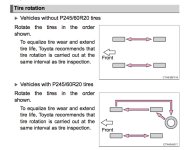
If your spare is not part of your rotation, I have read about people simply having the TPMS removed, put into a sealed pvc tube with a schrader valve on it, and toss it in the back. Light comes on hit the schrader with some air. Sounds a lot easier than dropping the spare to fill it to me. In fact, I have heard of folks removing all of their TPMS sensors and dropping them in a pressured tube.
 
To answer your questions as best I can:

My understanding is that the dash light comes on when the ECU detects a six PSI difference between any two (or more) tires. The other four tires are correctly and accurately filled, and the warning light isn't blinking so obviously the problem is the spare.

I don't even know what an LE is, but I do have a Limited. Evidently the Limited must be different, but in any event the spare is definitely monitored.

Not that it's relevant to my questions, but I have no aversion to monitoring the spare. I do have an aversion to having to routinely drop it to adjust the pressure. It's a PITA to start with, and I don't have the necessary physical ability to get under the truck and be putzing around with it. That's why I carry a cellphone. If I were 20, 30 or even 40 or maybe even 50, it'd be different.

It's not uncommon for unused but otherwise normal tires to lose pressure over time.

Hope this helps.
take it in to a tire shop. have them drop the spare, and flip it around, so the valve stem is facing down. it will be much easier to service.
 
take it in to a tire shop. have them drop the spare, and flip it around, so the valve stem is facing down. it will be much easier to service.

I tried this on mine, and it didn't work ... shape of the wheel IIRC. Maybe an LE would be different.
 
Overly inflated

I don't even know what an LE is, but I do have a Limited. Evidently the Limited must be different

Sorry if I contributed to any confusion by abbreviating the Limited Edition as LE. Its quite common on this forum to do so for other models as well. Such as calling the Trail Edition a “TE”.

Prior to my use of it [MENTION=51186]philsey[/MENTION] as well as [MENTION=144540]derryck[/MENTION] both used it so I figured it was understood already.

I’m not aware of any list of common abbreviations specific to the T4R with their meaning(s). But perhaps there is and I just haven’t come across it yet. If anyone knows of one please let me know.

When I’ve removed my spare to check its pressure it was considerably overly inflated. So assuming that it hasn’t any leaks perhaps this is how regular routine pressure checks could be minimized. As you said tires do lose pressure over time, so eventually you’d still want to occasionally pull the spare to check that it’s ready to use. Of course you’ll have to remember to reduce the pressure in the spare tire before driving on it.
 
Last edited:
I’m wondering how often you have to inflate your spare. I mean typically you shouldn’t have to fill up your spare more than once a year and it’s typically when winter starts. The spare shouldn’t be losing air any faster than that. If you’re filling your spare up about every 2-4 months you have a problem that needs to be fixed as was previously suggested.
 
Last edited:
I tried this on mine, and it didn't work ... shape of the wheel IIRC. Maybe an LE would be different.

interesting. I haven't encountered a wheel yet that couldn't be flipped over, but, I am not surprised if it cant be.


another option would be to take the tire down, have it checked very closely for leaks, and repair as needed. then have it purged of all air, and refilled with nitrogen. you should see a lot less pressure variation with temperature swings. this should prevent the light from coming back on for a much longer time.
 
Of course the justification for having TPMS in the spare is that if you ever need to use it you don't want it to be flat. I once had to wait hours by the side of the road because a spare had only a fraction of the correct pressure for the load the truck was carrying.
 

Members online

Forum statistics

Threads
278,310
Messages
3,554,079
Members
248,016
Latest member
Advally Service

Trending content

Back
Top