
You are using an out of date browser. It may not display this or other websites correctly.
You should upgrade or use an alternative browser.
You should upgrade or use an alternative browser.
Toyota Upcoming Redesign Timeline
- Thread starter NoDak
- Start date


CO-Cygnus
New member
i bet the next generation 4Runner maintains BOF and is built at the Tacoma plant in texas on the tacoma platform
Rear drum brakes for 6th Gen Confirmed.

Hellamatic
New member
I hope they dont hose the landcruiser.... it is getting way to soccer mom looking
Just be thankful you have it available at all, haha. Us poor flappy headed Canadians have to do without.

DesertCanyons
New member
Jeep solid front axle
:sadwave: I'm going to have to stop guessing about what my 1995 Jeep has. I've owned it for almost twenty years and I still get its features wrong. Yes, solid front axle on a unibody frame. Maybe that's why I've liked taking it off road so much. It's still very capable.
With the thin unibody construction, one time it was a little tough repairing the transfer case skid plate anchor where the mechanic sheared off the welded nut inside the frame. I had to improvise to weld another anchor on the thin frame. I put the parts together and my mechanic had it welded. Nut welded to heavy washer and washer welded to frame. There was no way to get a bolt back inside the frame so it lowered the skid plate by 1/2". He was otherwise a good mechanic and good guy so we fixed it together. :brushteeth:
is it 2wd by chance? ive owned/played around with two, a 96 and a 02. both were 4wd and solid front axle from the factory. and worked on many others that were the same, but as i was saying unibody=/= no offroad. as long as the running gear remains the same or very similar the difference in offroad performance will be negligible. now do i want unibody, no not really but if thats what it takes to keep the solid rear axle and truck based running gear then sure ill take it.
:sadwave: I'm going to have to stop guessing about what my 1995 Jeep has. I've owned it for almost twenty years and I still get its features wrong. Yes, solid front axle on a unibody frame. Maybe that's why I've liked taking it off road so much. It's still very capable.
With the thin unibody construction, one time it was a little tough repairing the transfer case skid plate anchor where the mechanic sheared off the welded nut inside the frame. I had to improvise to weld another anchor on the thin frame. I put the parts together and my mechanic had it welded. Nut welded to heavy washer and washer welded to frame. There was no way to get a bolt back inside the frame so it lowered the skid plate by 1/2". He was otherwise a good mechanic and good guy so we fixed it together. :brushteeth:

phillyd2
Senior Member
I agree with you. We have discussed this ad nauseam and based on current sales it seems highly unlikely the 4Runner will exit our market, and based on the Highlander being in the lineup it seems unlikely they would replace the 4Runner with another unibody SUV. They will likely standardize the frame as you mentioned and discontinue the GX, which may open the door for more options on the limited and higher end trims again since the glass ceiling of Lexus won't exist.
Other than sheet metal and plastic it already is standardized.
Based on some comments here I don't think you guys really understand what the 4R is and how dominate these platforms are around the world.
BMW will get rid of the 3 series before Toyota gets rid of the LC and ts baby brother. And that's not happening either.
DanHumphrey
New member
IMO... Toyota doesn't have a NEED to continue the 4Runner. Sad, but true. The majority of purchasers are not like many of us.... they just like it because it's pretty or has lots of room or has 4WD or just because they can afford it.... not because they are seeking a vehicle to modify for off road use.
I do not plan on relinquishing my 4Runner anytime soon. If we need something "nicer" for road trips that gets better gas mileage, that's fine. But my beast will stay tucked in the garage for the foreseeable future.
I love my Toyota.
That is all.
I don't even care about going offroad, but the 4R is one of very few vehicles that can hold my girlfriend's bike inside, vertically, with the ground clearance to get over all the junk that seems to constantly be on Texas roads. I'd be fine if it were unibody, frankly, but the Highlander isn't tall enough inside. Neither is the Rav4, CR-V, XC60, XC90, Cherokee, or anything else I've looked at.
Bah.

03_4x4Runner
Senior Member
I don't even care about going offroad, but the 4R is one of very few vehicles that can hold my girlfriend's bike inside, vertically, with the ground clearance to get over all the junk that seems to constantly be on Texas roads. I'd be fine if it were unibody, frankly, but the Highlander isn't tall enough inside. Neither is the Rav4, CR-V, XC60, XC90, Cherokee, or anything else I've looked at.
Bah.
You need a minivan!

4RnR Grl
New member
I never intended to take it off road. I wanted something to haul my dogs to shows, that had 4WD. I needed the flat rear cargo door (not sloped like the Highlander) and the 42 inches of space between the wheel wells. The 4Runner was the only one that fit this bill without going to a full size SUV. Sold.I don't even care about going offroad, but the 4R is one of very few vehicles that can hold my girlfriend's bike inside, vertically, with the ground clearance to get over all the junk that seems to constantly be on Texas roads. I'd be fine if it were unibody, frankly, but the Highlander isn't tall enough inside. Neither is the Rav4, CR-V, XC60, XC90, Cherokee, or anything else I've looked at.
Bah.

NoDak
Senior Member

Attachments

Kennyr44
New member
I drive a 2007 Pathfinder & still barf up a bit in the back of my mouth every single time I see one of the sleek Pathfinder redesigns driving around. I really, really hope that the upcoming 4Runner redesign won't be similar to the abomination that Nissan created and falsely labeled as a Pathfinder. I think if anyone could do it right, it would be Toyota. Still, I don't exactly have a lot of faith in anything they come up with that will be unibody, if that even happens.
The only reason I joined this site is because my next vehicle will either be a current model 4Runner or the redesign. In my book, there are no other options on the market.
On a trip in Florida they were out of rental cars and put us in a new Pathfinder. Total mommy mobile minivan. My wife and I hated every inch of it and had 6 days to try and find a way to like it. I dont have a problem with the shorter suv's but the long unibody ones feel and look and drive like minivans. Been there done that when I had small kids.
DanHumphrey
New member
You need a minivan!
#1: No
#2: Won't fit in garage
#3: There's a lot of crap on the roads here I want clearance for. That and some ugly "parking lots" I've had to deal with. Nope, want bigger ground clearance.
DanHumphrey
New member
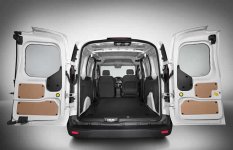
no he needs this, transit connect
.
Horrible vehicles, don't hit the ground clearance... and possibly even uglier than a minivan. Nope, it'll be a 4R.

Rob71
New member
Horrible vehicles, don't hit the ground clearance... and possibly even uglier than a minivan. Nope, it'll be a 4R.
Transit connect is good if you repair AC or a handyman :drummer:

jwkilgore
New member
Semantics with a touch of narcissism. Lots of people in the USA tend to think they are "the world", so when they say it's the end of the Land Cruiser or 4Runner they usually mean the end in the USA.Other than sheet metal and plastic it already is standardized.
Based on some comments here I don't think you guys really understand what the 4R is and how dominate these platforms are around the world.
BMW will get rid of the 3 series before Toyota gets rid of the LC and ts baby brother. And that's not happening either.
No, production of the Land Cruiser won't be ending any time soon... but that doesn't mean they'll ship them to the USA.
The Land Cruiser Prado is ToMoCo's global mid-sized BOF SUF line, and it includes a wide variety of trim from basic to full luxury. The Prado line worldwide = 4Runner (Basic to mid level) + GX 470 (Luxury) in the USA. The Prado is available in every ToMoCo market except North America. If you hear an official announcement about the end of the Prado, then you can start worrying about stopping production of the 4Runner.
If the GX is truly ending and being replaced with the CUV TX (an upsized RX, just as the Highlander is a larger Rav4), then I see two possibilities for the 4Runner:
- One, they merge the Highlander and 4Runner families and totally eliminate all mid-sized BOF SUV's in the USA. This is a real possibility, and is basically what the rumors are saying about the GX->TX, but I doubt it unless plans were in place long ago. With the elimination of all other BOF SUV's on the market, BOF 4Runner sales will soar if they keep building them.
- Two, they expand the 4Runner line. The 4Runner becomes North America's equivalent to the global market's LC Prado in the same way the Tacoma is North America's equivalent to the global market's Hilux. This could mean the GX gets rebranded as the high-end 4Runner (V8 in the 6th gen??)
I'm leaning toward the second option.
Last edited:
DanHumphrey
New member
Semantics with a touch of narcissism. Lots of people in the USA tend to think they are "the world", so when they say it's the end of the Land Cruiser or 4Runner they usually mean the end in the USA.
No, production of the Land Cruiser won't be ending any time soon... but that doesn't mean they'll ship them to the USA.
The Land Cruiser Prado is ToMoCo's global mid-sized BOF SUF line, and it includes a wide variety of trim from basic to full luxury. The Prado line worldwide = 4Runner (Basic to mid level) + GX 470 (Luxury) in the USA. The Prado is available in every ToMoCo market except North America. If you hear an official announcement about the end of the Prado, then you can start worrying about stopping production of the 4Runner.
If the GX is truly ending and being replaced with the CUV TX (an upsized RX, just as the Highlander is a larger Rav4), then I see two possibilities for the 4Runner:
- One, they merge the Highlander and 4Runner families and totally eliminate all mid-sized BOF SUV's in the USA. This is a real possibility, and is basically what the rumors are saying about the GX->TX, but I doubt it unless plans were in place long ago. With the elimination of all other BOF SUV's on the market, BOF 4Runner sales will soar if they keep building them.
- Two, they expand the 4Runner line. The 4Runner becomes North America's equivalent to the global market's LC Prado in the same way the Tacoma is North America's equivalent to the global market's Hilux. This could mean the GX gets rebranded as the high-end 4Runner (V8 in the 6th gen??)
I'm leaning toward the second option.
It's not narcissism, nor that we (or at least I) think US = world, but for the purpose of discussion of the US auto market, the ROW doesn't matter. If I want a 4R, it does us no good that they exist in the ROW if the US-market doesn't have them. It's not like we can just have them shipped.

Swarty
New member
Exactly...
Exactly!
Toyota sells 5 RWD/4WD BOF vehicles on the IMV and J150 platforms. One of them is a truck, one of them a minivan and the other 3 are SUVs. Most of them are made in Taiwan but the only BOF SUV sold in the US is the J150 platform and it is assembled in Japan, in 2012 they produced 420k of them... The US bought less than 20% of these in terms of 4runner, landcruiser and FJ... We are less than 5% of the total Toyota BOF SUV market. We don't drive the 4runner design other than cosmetic design for the US market. They already make it so as long as they can afford to ship it over they will.
Semantics with a touch of narcissism. Lots of people in the USA tend to think they are "the world", so when they say it's the end of the Land Cruiser or 4Runner they usually mean the end in the USA.
Exactly!
Toyota sells 5 RWD/4WD BOF vehicles on the IMV and J150 platforms. One of them is a truck, one of them a minivan and the other 3 are SUVs. Most of them are made in Taiwan but the only BOF SUV sold in the US is the J150 platform and it is assembled in Japan, in 2012 they produced 420k of them... The US bought less than 20% of these in terms of 4runner, landcruiser and FJ... We are less than 5% of the total Toyota BOF SUV market. We don't drive the 4runner design other than cosmetic design for the US market. They already make it so as long as they can afford to ship it over they will.

mnofpeace
Member
i didnt plan on going off road either...though i have since i bought mynez...i wanted it for the snows of the northeast and mid atlantic, because its actually tough without being LC pricey, because it is one of the few vehicles with a REAL transfer case and not some viscus clutched out ECU controlled AWD thingy, and because its a truck. i hate cars, i have for a long time, and i wanted a solid rear axle driving body on frame pickup truck like SUV...and since there arent any others...i landed on the 4rnnr and the GX...
:violin:
so argue all we want about if it will continue or not...i, like many of you, are very very very glad we already have ours...:juggle:
:violin:
so argue all we want about if it will continue or not...i, like many of you, are very very very glad we already have ours...:juggle:

BlackWorksInc
New member
Except almost every Unibody Jeep (Chry-crap can call it whatever they want, it's still a Unibody regardless) owner I know is having issues with the Unibodies cracking and warping. The only guys I know that aren't having to weld their unibodies back up after decent wheeling are those that have either built Exo-Cages or built dedicated roll cages and reinforcement structures that you would never see on a mass production vehicle due to crash rating issues and such.I could see the 4Runner going to unibody, but otherwise "designed" for offroad with an elevated body, approach angles, all the 4WD bells & whistles, styling, etc.
People here say that if the 4Runner went unibody, it would be the same as a Highlander, but that is simply not true. Toyota can keep all the same offroad goodies and add more, while maintaining an aggressive and masculine appearance that is very separated from the Highlander. While the Highlander is built for comfort and refinement, I'd expect the 4Runner to still be purposely utilitarian and somewhat truck-like.... but with unibody.
The purists of course will protest, but eventually there will be no other option, and the vast majority of 4Runner drivers will find that the 6th gen unibody will be able to do everything they do now, probably better, while towing the same, and in more comfort and with increased safety & efficiency. And that in itself will pick up even more 4Runner drivers.
I could see a unibody design that retains the same or very similar running gear including the solid rear axle. i mean look at the jeep XJ Cherokee, or the grand Cherokee till 2004. both models were unibody designs with solid axles front and rear, and both get hardcore guys that beat the piss out of them on 1tons. just because there is a possibility of the next gen runner going unibody doesnt mean its the end of our offroad mods. we may just have to get used to adding stiffening to the structure.
Except almost every Unibody Jeep (Chry-crap can call it whatever they want, it's still a Unibody regardless) owner I know is having issues with the Unibodies cracking and warping. The only guys I know that aren't having to weld their unibodies back up after decent wheeling are those that have either built Exo-Cages or built dedicated roll cages and reinforcement structures that you would never see on a mass production vehicle due to crash rating issues and such.
At that point you might as well buy a Highlander or any other crossover and do the same, because that's what it comes down to really...
~
It's a safe bet that the 6th Gen will carry over the J150 Frame (as far as I know there is no new Prado Platform planned before/on 2017) just like the 3rd Gen Tacoma did. At this point the 4Runner will basically take much of it's cues from the Tacoma and besides being a slightly updated J150 Frame (the body mounts behind the front wheels will be beefier and wider like the 3rd Gen Tacoma) it will be a new body on the same frame much like the 4th Gen to the 5th Gen was. Still an improvement, but in terms of the general platform a relatively small one (which actually will work out will I suppose as both the 4th & 5th gens are hitting a good amount of aftermarket support that will theoretically need only minor adjustment to work with the new generation vehicle.)
The theory that the 4Runner will adopt the GX as a "Premium Trim" is an interesting idea; but ultimately it rings more of wishful thinking than probable reality. The main reason these vehicles are getting axed/downsized/moved onto weaker platforms (at least from a off-road/work capability standpoint) is due to fuel mileage, emissions, and safety standards. Toyota is moving towards smaller engines, with forced induction in the near future and as a result they are trimming the "fat" so to speak from their line-up. The Sequoia may not live much longer after 2016, it will depend more on sales I imagine as many families are opting for Siennas or Highlanders vs. the big gas guzzler. I imagine that's partially why the TRD Supercharger program was dropped, many people weren't spending the money on very expensive kit that further reduced their gas mileage; there's also the fact that Toyota has had some issues with their engines not handling the additional boost well in a stock format. That's something that could easily be fixed by changing out just the connecting rods (they tend to be very thin and light to reduce rotational mass, decrease weight, and increase fuel economy ultimately... are we seeing a theme here?), but that would add an additionally expensive cost and labor to a relatively simple "bolt-on" kit.
The Tundra and Tacoma will obviously stay for a long while, Toyota has put a lot of money and effort to be in the "Full-Sized" truck game and it would be foolish to try and pull out. But I imagine that you'll see an all new Aluminum Body in the next gen if Ford's gambit pays off in the long run; possibly a V8 with D4-S as I imagine they need to really bring up that thirsty mpg rating.
The Tacoma is their bread and butter in the Truck segment (so much so that their competitors are finally trying to fight back) and while it has a slightly softer side, it is to the US what the Hilux is to the rest of the world. I would imagine though that to simplify production and development, they may try to consolidate the Prado & Hilux Platforms at some point in the future to better maintain a BoF presence if they decide to go that route. Though at this point the more rugged Hilux is also sold at a cost point, so if they could line their pieces up to make a global platform convergence like that easy and profitable I imagine they would have done so years ago; but as pressure to decrease BoF vehicles increases it may be the route they go.
Diesel options for both the Tacoma and Tundra will depend mainly on market demand, emissions regulations, and profitability. Toyota has made it clear that they believe converting their existing diesel platforms to meet US requirements would be too costly with little profit return. If GM's little Canyon & Colorado sell extremely well in the Diesel trim, Toyota will likely change their mind; additionally it seems their latest batch of diesels shouldn't require as much modification to make work in the US. So there's that hope I suppose?
In the end, the 6th Gen 4Runner will be a BoF vehicle mainly based upon much of the existing technology showcased in the 3rd Gen Tacoma. It does seem that for all intents and purposes Toyota is keeping the rough Prado platform dimensionally the same for over 12 years. I am not entirely sure if that's because the J120/J150 frames are "just right" and need only minor tweaking or because Toyota wants to stretch the platform a little longer so that when the Hilux Needs a new frame they can combine the two into a singular global platform. Where the 4Runner goes after the 6th gen, well time will tel. Supposedly due largely on new technology and development methods the development process for a new vehicle is somewhere in the 30~36month range (down from 4yrs) as long as the rough design is well received at public shows (if it's not, some changes may be made to make it more appealing), this is down from the older 4~5yr period. I imagine that if they are also designing a new drivetrain from scratch that period might be a bit longer than 36months (one source said that it was as short as 18months for Toyota, but I am not entirely sure I believe that...) The point being here that the 6th gen will basically be the proverbial frog in the pot, given a few few into it's release I'm sure Toyota will have decided if they are going for a 7th gen or if it will be scrapped.
We could go on and on speculating, but I think the above synopsis is probably closer to what will happen as it matches up with Toyota's current goals and previous history. Though it's all speculation so they could make a complete 180 tomorrow.
I do think that they should make an effort to retain a BoF vehicle line, an obvious choice would be to converge the Hilux, Prado, and 4Runner platforms into one Global BoF "Land Cruiser Jr." Platform. This would relieve resources in development and production as they would have 4 vehicles that share a lot of common components, drivetrains and features could be adjusted for various markets easily (i.e. the Hilux & Prado may have a more "stripped down" feature list and engine choices for a lower price point in less economically developed areas that have lower emissions standards, while the Tacoma & 4Runner continue to cater to the "Upscale" North American market). If they really wanted to take the commonality further they could just rebadge the new "Global LCJr" platform in much the same way the 4Runner and Hilux Surf were exact duplicates with different names, that would mean 2 less platforms to have to develop fully vs. simply adjusting 2 existing platforms to meet global needs. It would be a logical way to trim down costs and resource drains from retaining a BoF platform Globally & in the North American market, as well as continue to rake in profits by holding out in the "rugged, capable, BoF" market segment that is quickly dwindling.
Last edited:
phillyd2
Senior Member
Semantics with a touch of narcissism. Lots of people in the USA tend to think they are "the world", so when they say it's the end of the Land Cruiser or 4Runner they usually mean the end in the USA.
No, production of the Land Cruiser won't be ending any time soon... but that doesn't mean they'll ship them to the USA.
The Land Cruiser Prado is ToMoCo's global mid-sized BOF SUF line, and it includes a wide variety of trim from basic to full luxury. The Prado line worldwide = 4Runner (Basic to mid level) + GX 470 (Luxury) in the USA. The Prado is available in every ToMoCo market except North America. If you hear an official announcement about the end of the Prado, then you can start worrying about stopping production of the 4Runner.
If the GX is truly ending and being replaced with the CUV TX (an upsized RX, just as the Highlander is a larger Rav4), then I see two possibilities for the 4Runner:
- One, they merge the Highlander and 4Runner families and totally eliminate all mid-sized BOF SUV's in the USA. This is a real possibility, and is basically what the rumors are saying about the GX->TX, but I doubt it unless plans were in place long ago. With the elimination of all other BOF SUV's on the market, BOF 4Runner sales will soar if they keep building them.
- Two, they expand the 4Runner line. The 4Runner becomes North America's equivalent to the global market's LC Prado in the same way the Tacoma is North America's equivalent to the global market's Hilux. This could mean the GX gets rebranded as the high-end 4Runner (V8 in the 6th gen??)
I'm leaning toward the second option.
It will be Three: continue the 4R with whatever tweaks / updates they come up with no real expansion and no new GX. Also no V8 or D. Best case will be a different transmission.

barryhiram
New member
You need a minivan!
Sienna with attitude!
Attachments

Similar threads


- Replies
- 0
- Views
- 3K
- Replies
- 34
- Views
- 21K


