Trd replacement air intake tube

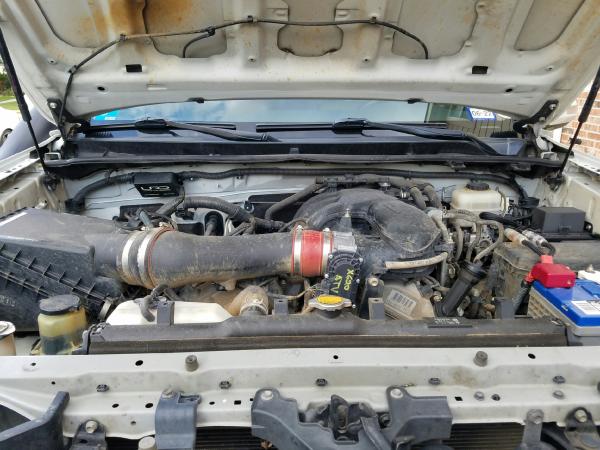
With a blower, engine cover is no longer needed and the intake baffles are eliminated. Magnuson supplies plugs with hose fittings on them to run the OEM hoses back to the intake tube.


Sent from my iPhone using Tapatalk
 
akkording-albums-engine-mods-picture60773-a.jpeg
 
With the stock airbox you will need a HPS 3.75" to 4.5" 4-ply silicon reducer coupler. A TRD CAI tube PTR03-89100-AA installed upside down and the TRD coupler and clamp hardware kit PTR03-89100-AB. You will require longer hoses sourced from the autoparts store as well. Aftermarket filter of your choice, I went with the dry aFe air filter.

I recommend a URD maf calibrator and maxbore.com trottle body bore job for the heck of it from the savings from not buying a complete TRD CAI kit.
 
4Runner Intake Tube

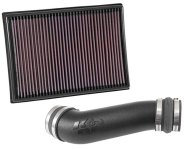
K&N sells a tube and filter kit K&N 57-9034. It's a tube only and a panel filter for the stock housing. Not sure if you can just get the tube.
 
Hello. Expanding upon the comment of trdgmn

... I wanted to lose the two windpipe growths (baffles, resonators, anti-resonators). But, I am just not appreciative of the TRD CAI bling. I wanted a plain vanilla pipe that retained a low-key appearance.

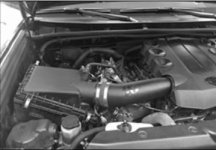
I just ordered the K&N 57-9034. It cost way more than it is worth. It was, however, the only stand-alone tube I could find. It mates up to the stock air box, and maintains the stock MAS position. It comes with an oiled K&N filter, which I will sell to recoup a few dollars.

I plan to pair it up with the TRD “intake flow accelerator” which replaces the plumbing between the air box and the fender. PN PTR03-34079.

 

Attachments

  • 57-9034 KnNa.jpg
    57-9034 KnNa.jpg
    54.5 KB · Views: 1,121
  • 57-9034 KnNb.jpg
    57-9034 KnNb.jpg
    17.7 KB · Views: 1,154
Last edited:
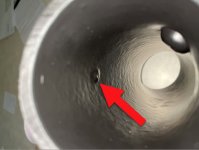
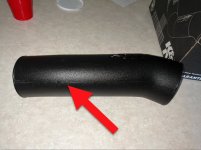
I received the tube today. Inspection revealed a "wart" on the inside. That wart lines up with a seam on the outside. It leaks ...substantially. K&N is sending a replacement.
 

Attachments

  • tube1.jpg
    tube1.jpg
    30.2 KB · Views: 1,101
  • tube2.jpg
    tube2.jpg
    45 KB · Views: 1,107
Hello. Expanding upon the comment of trdgmn

... I wanted to lose the two windpipe growths (baffles, resonators, anti-resonators). But, I am just not appreciative of the TRD CAI bling. I wanted a plain vanilla pipe that retained a low-key appearance.

I just ordered the K&N 57-9034. It cost way more than it is worth. It was, however, the only stand-alone tube I could find. It mates up to the stock air box, and maintains the stock MAS position. It comes with an oiled K&N filter, which I will sell to recoup a few dollars.

I plan to pair it up with the TRD “intake flow accelerator” which replaces the plumbing between the air box and the fender. PN PTR03-34079.

I'm tempted to order. I would also sell the filter they include.
 
Was looking into the k&n intake tube Because I had one on my trd Camry which was made out of metal. When I searched for the 4runner intake I was disappointed to see all the negative reviews for it on Amazon. Apparently the tube is made out of plastic and the fittings for the vacuum hoses break off easily. I’m curious to see if it’s just user error or if the quality is really that bad.
 
I'm confused why you'd want to remove the baffles. The increased air volume between the filter and throttle body should result in less pressure drop upstream of the throttle body during instant throttle openings - meaning there should be better throttle response with the resonators, not worse.

The throttle body is 65mm, so I'm not sure how it would make any difference either way in practice, but just on theory of air flow and pressure propagation through the system, I'm not sure what the idea is here.

Is there some other reason that the baffles are assumed to restrict air flow?

EDIT:

I read up on this a bit and it seems as though there are multiple benefits of the resonators. I had not considered the helmholtz benefits. This is a copy/paste from a comment on physics stack exchange. I think it is concise and seems to match intuitively what I would have expected. Supposedly the author is from Alpha Romeo - so take it for what it's worth.

"It reduces the resonance frequency through the induction tube reducing a natural rushing roar on road cars.

It provides a small reservoir of air to be used at immediate throttle response until above atmospheric pressure is increased in the induction tube reducing the initial delay in the response time.

It aids in engine braking when the throttle body closes, without it, the built up pressure would slightly force the butterfly to stay open longer. The resonator allows the laminar flow to reverse and reduce almost immediately by allowing the the flow to escape into a negative pressure chamber and then stored when full throttle is required straight after zero throttle input.

Sound reduction via often achieved by introducing carbon filtration and small inlet holes inside the resonator itself.

Because of the natural ability to initially respond to the need of increasing and reducing atmospheric pressure. It allows the plenum chamber respond to the cycle of opening and closing rapidly on a four stroke cycle more efficiently reducing back pressure in the combustion chamber."
 
Last edited:
I'm confused why you'd want to remove the baffles. The increased air volume between the filter and throttle body should result in less pressure drop upstream of the throttle body during instant throttle openings - meaning there should be better throttle response with the resonators, not worse.

The throttle body is 65mm, so I'm not sure how it would make any difference either way in practice, but just on theory of air flow and pressure propagation through the system, I'm not sure what the idea is here.

Is there some other reason that the baffles are assumed to restrict air flow?

I want more intake noise (but not full intake noise plus derpifornia problems) and a cleaner engine bay. I'm not looking for power or MPG increases because I know they don't exist with most bolt ons. I'd go with HPS if they made a intake tube for Runner.
 
I want more intake noise (but not full intake noise plus derpifornia problems) and a cleaner engine bay. I'm not looking for power or MPG increases because I know they don't exist with most bolt ons. I'd go with HPS if they made a intake tube for Runner.


Or... plug them internally and use them as a hidden storage box? :) - Now I'm thinking that it might be a perfect spot to warm up a burrito on the trail.
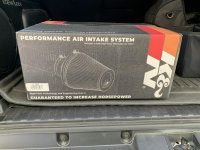
 
Or... plug them internally and use them as a hidden storage box? :) - Now I'm thinking that it might be a perfect spot to warm up a burrito on the trail.

I'd worry about a plug falling out or in. I'll probably hate it and get an intake that does nothing but probably just wait until I supercharge like I did with my Tacoma.

Mmmmm burritos.
 
I can already feel the power just by having the box in the back. My Toyos are done for.
 

Attachments

  • 1E1FE4A0-8C91-43E4-A8A6-F2CF4B719D46.jpg
    1E1FE4A0-8C91-43E4-A8A6-F2CF4B719D46.jpg
    134.6 KB · Views: 514
I'm confused why you'd want to remove the baffles. The increased air volume between the filter and throttle body should result in less pressure drop upstream of the throttle body during instant throttle openings - meaning there should be better throttle response with the resonators, not worse.

The throttle body is 65mm, so I'm not sure how it would make any difference either way in practice, but just on theory of air flow and pressure propagation through the system, I'm not sure what the idea is here.

Is there some other reason that the baffles are assumed to restrict air flow?

EDIT:

I read up on this a bit and it seems as though there are multiple benefits of the resonators. I had not considered the helmholtz benefits. This is a copy/paste from a comment on physics stack exchange. I think it is concise and seems to match intuitively what I would have expected. Supposedly the author is from Alpha Romeo - so take it for what it's worth.

"It reduces the resonance frequency through the induction tube reducing a natural rushing roar on road cars.

It provides a small reservoir of air to be used at immediate throttle response until above atmospheric pressure is increased in the induction tube reducing the initial delay in the response time.

It aids in engine braking when the throttle body closes, without it, the built up pressure would slightly force the butterfly to stay open longer. The resonator allows the laminar flow to reverse and reduce almost immediately by allowing the the flow to escape into a negative pressure chamber and then stored when full throttle is required straight after zero throttle input.

Sound reduction via often achieved by introducing carbon filtration and small inlet holes inside the resonator itself.

Because of the natural ability to initially respond to the need of increasing and reducing atmospheric pressure. It allows the plenum chamber respond to the cycle of opening and closing rapidly on a four stroke cycle more efficiently reducing back pressure in the combustion chamber."


Bingo. Removing the resonator will actually result in tip-in response and torque. Neither of which this rig can afford to lose imo. I had one of the trd intakes on my old 2015 tep and removed it for this reason. I want more intake noise too. I think the good old ‘big out the bottom of the airbox truck might be something I try. Of course then I will probably increase intake air temps. Turns out the engineers know what they are doing :)


Sent from my iPhone using Tapatalk
 
I never got around to installing my TRD CAI, and now I have to sell the 4Runner since my body can't handle the step-in height and lower back anymore. I'll be posting it in the for sale section soon.
 

Members online

Forum statistics

Threads
278,312
Messages
3,554,089
Members
248,016
Latest member
Advally Service

Trending content

Back
Top