
You are using an out of date browser. It may not display this or other websites correctly.
You should upgrade or use an alternative browser.
You should upgrade or use an alternative browser.
Upper Grille Lights???
- Thread starter Jrunr
- Start date

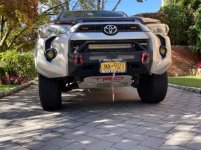
LOL.....yeah no thanks. I prefer not to use a dremel in my installs... Besides, he could have use DD SSC2 w/ backlighting in the middle and he wouldn't have to cut a thing. Anyways, point is not to chop up behind the grill, otherwise OP would be running a ONX6 lightbar to melt retinas.
Melting retinas! lol.
Lighting up the night will suffice. Lol
Anyways, point is not to chop up behind the grill, otherwise OP would be running a ONX6 lightbar to melt retinas.
Speaking of which, has anyone figured out how to Mount these in the upper grill yet? Lol

mynameistory
New member
Speaking of which, has anyone figured out how to Mount these in the upper grill yet? Lol

Hahaha. Yes but, as I have previously explained, I am deployed to the Middle East so I don’t have access to my T4R to physically work on at the moment… which means I have to live vicariously through you first the time being. Lol
*loved that meme though. 100% perfect! I may have literally “LOL’d”
honda250xtitan
New member
Speaking of which, has anyone figured out how to Mount these in the upper grill yet? Lol
send me one and i'll get a setup figured out.:gun6:
send me one and i'll get a setup figured out.:gun6:
It’s the perfect business plan! Lol
Seriously though, in your honest opinion, do you think it’s something worth truly pursuing?
I know there are so many pre-fabricated solutions so there is always going to be something available… but I get stuck on the fact that 1 10” ONX6+ generates more output that a 20” S8 bar….
LOL.....yeah no thanks. I prefer not to use a dremel in my installs... Besides, he could have use DD SSC2 w/ backlighting in the middle and he wouldn't have to cut a thing. Anyways, point is not to chop up behind the grill, otherwise OP would be running a ONX6 lightbar to melt retinas.
Well, I couldn't get ahold of the guy to ask any questions, but if you look at post #6 here: Behind grille light bar complete kits
It is definitely possible to get that ONX6+ in the upper grill!! :rockon::rockon:

mrblah
Senior Member
Well, I couldn't get ahold of the guy to ask any questions, but if you look at post #6 here: Behind grille light bar complete kits
It is definitely possible to get that ONX6+ in the upper grill!! :rockon::rockon:
that is an old post. He mounted a dual row light bar, by chopping the bracket off. The original poster (guy in the picture) also never actually shows you the back of his grill (if i remember correctly).
Way back when I tried to do the same thing, and is why i ended up with a thin single row LED light bar.
Like i mentioned before, if you are willing to chop stuff, you can fit whatever you want back there.
Just adding this option FWIW. Not too sure if it was posted already...
Stealth Grille Light kit for 5th Gen 4Runner (2014-2021) - Fugitive Offroad
Stealth Grille Light kit for 5th Gen 4Runner (2014-2021) - Fugitive Offroad
Is it safe to assume that no one has used or seen these lights in action?
Vision X 4Runner Grille LED Lighting Kit (2014-2021) — 4Runner Lifestyle
With as much as I see them on the different websites, it kinda surprises me…
Vision X 4Runner Grille LED Lighting Kit (2014-2021) — 4Runner Lifestyle
With as much as I see them on the different websites, it kinda surprises me…
honda250xtitan
New member
Just adding this option FWIW. Not too sure if it was posted already...
Stealth Grille Light kit for 5th Gen 4Runner (2014-2021) - Fugitive Offroad
friends dont let friends install raptard lights.
friends dont let friends install raptard lights.
Hahahaha!!!! :hail:
mynameistory
New member
Just adding this option FWIW. Not too sure if it was posted already...
Stealth Grille Light kit for 5th Gen 4Runner (2014-2021) - Fugitive Offroad
Yeah those are turn signals at best. Not something that will push light down the road.
Is it safe to assume that no one has used or seen these lights in action?
Vision X 4Runner Grille LED Lighting Kit (2014-2021) — 4Runner Lifestyle
With as much as I see them on the different websites, it kinda surprises me…
Yeah I've seen those, but only online. I'm willing to bet that they're somewhere in between Diode and BD in terms of light output. However, VisionX is just an American importer /markupper of generic Chinese junk, so I'd be willing to bet the quality and durability is not great.
Yeah those are turn signals at best. Not something that will push light down the road.
Yeah I've seen those, but only online. I'm willing to bet that they're somewhere in between Diode and BD in terms of light output.
You know, I’m surprised people back the Diode light bars when it appears (on paper) that their output is SIGNIFICANTLY less than the offerings from Baja, Rigid, etc… I saw a pic of an 18” bar in the upper grill and thought is looked pretty awesome, but the Baja bar puts out 4 times the lumens!

Too Stroked
Member
You know, I’m surprised people back the Diode light bars when it appears (on paper) that their output is SIGNIFICANTLY less than the offerings from Baja, Rigid, etc… I saw a pic of an 18” bar in the upper grill and thought is looked pretty awesome, but the Baja bar puts out 4 times the lumens!
One thing you want to remember with advertised Lumen output numbers is that most of them are total BS. The reason is that almost everyone quotes what are in effect "theoretical maximum" numbers. That means they take the maximum output from a perfect chip in perfect conditions and multiply it by the number of chips (diodes) in a product. In the real world that most of us live in, "perfect" rarely happens.
The other thing one needs to look at is how those Lumens are put to work. A given product may legitimately have a pretty decent output as measured in Lumens, but the optics suck and the light is simply blown all over the place as opposed to where you need / want it.
As for Rigid products, remember, they're significantly more expensive that everyone else due to generally superior engineering, design and manufacturing practices. You do get what you pay for.
mynameistory
New member
You know, I’m surprised people back the Diode light bars when it appears (on paper) that their output is SIGNIFICANTLY less than the offerings from Baja, Rigid, etc… I saw a pic of an 18” bar in the upper grill and thought is looked pretty awesome, but the Baja bar puts out 4 times the lumens!
One thing you want to remember with advertised Lumen output numbers is that most of them are total BS. The reason is that almost everyone quotes what are in effect "theoretical maximum" numbers. That means they take the maximum output from a perfect chip in perfect conditions and multiply it by the number of chips (diodes) in a product. In the real world that most of us live in, "perfect" rarely happens.
The other thing one needs to look at is how those Lumens are put to work. A given product may legitimately have a pretty decent output as measured in Lumens, but the optics suck and the light is simply blown all over the place as opposed to where you need / want it.
As for Rigid products, remember, they're significantly more expensive that everyone else due to generally superior engineering, design and manufacturing practices. You do get what you pay for.
Ah yes, the old lumens count. As Too Stroked points out, raw lumens are just a theoretical, best-case measurement of the total light leaving a source. How that light is controlled and optimized is the result of the optics in use. Consider that a highly engineered light bar, with great optics and thermal management, has a raw rating of 10,000 lumens. If you take everything else away, remove the optics and heatsinking, so that all you're left with is naked chips on a board- you still have 10,000 lumens.
Diode has chosen total infernal reflection optics (cast polycarbonate) which loses a bit of intensity due to filtering light through a thick, solid medium. However, it has a ton of efficiency because nearly all of the light coming out of each chip is carefully reflected off of a controlled, angled surface. So even if they don't have the highest lumen count, nearly all of those lumens are directed into a specific pattern (instead of being lost to glare). This is why they make excellent candidates for street legal patterns like SAE J583 fog lights and J581 auxiliary high beams. These standards have specific pattern and intensity requirements to comply to.
Baja Designs controls their lights using very deep reflectors and forward facing diodes. This has less internal losses but more "spilled light" which can be desirable for off-road use cases. This is why they do not make great candidates for street legal lighting, and they do not advertise as such (except for their SAE squadron fog, which is nerfed to the point of being dimmer than factory halogens).
KC HiLites has huge reflectors and rear-facing diodes in their gravity series. This is how they make excellently controlled lighting with huge intensities, despite using only 20 watts of power for each 6 inch lamp. They have SAE J581 driving lights too.
Most Chineseum lights you can buy will have lots of chips and a high lumen count as well. But often they have dirt-cheap shallow reflectors or lenses, which don't control the light well at all. They work okay as near range floodlights, but compare them side by side with a reputable company's lights and you'll see the difference right away.
Here's a video by Diode explaining lumens, lux, and candela. Lumens, Lux, and Candela EXPLAINED | Diode Dynamics - YouTube
Famously, Baja Designs will tell you that lumens aren't everything too. I've been pestering them to publish more information, and they did respond (about a year ago) that they're working on more thorough spec sheets with candela, etc. So far nothing yet. They tend to do things their way, which is by making podium in many off-road races.
I really wish the diode dynamics light bars use the same technology as their SS3 pods. But you can’t take an amber light, and put a clear lens on it, and still get the 4000 K that you would from one of their in light pods… To me, that almost seems like it would be an ideal set up in the upper grill…. The 6000-6500k just seems a bit too blue for my aging eyes…
honda250xtitan
New member
Yeah those are turn signals at best. Not something that will push light down the road.
Yeah I've seen those, but only online. I'm willing to bet that they're somewhere in between Diode and BD in terms of light output. However, VisionX is just an American importer /markupper of generic Chinese junk, so I'd be willing to bet the quality and durability is not great.
sheesh i never knew that, theyve been around forever it seems. glad i didnt spring for the light cannons.
Too Stroked
Member
I really wish the diode dynamics light bars use the same technology as their SS3 pods. But you can’t take an amber light, and put a clear lens on it, and still get the 4000 K that you would from one of their in light pods… To me, that almost seems like it would be an ideal set up in the upper grill…. The 6000-6500k just seems a bit too blue for my aging eyes…
The Stage light bars do use TIR technology. I believe the issue you're mentioning is more of an emitter (LED) color temperature issue. The current clear LED bars use different color temperature emitters than the SS3 pods. You could always buy the new SS5s in selective yellow and do a clear lens swap to get 4000k, then mount them in the lower grill. I know several folks that are doing that as soon as their SS5s arrive. Hint: I might be one of them.
