
You are using an out of date browser. It may not display this or other websites correctly.
You should upgrade or use an alternative browser.
You should upgrade or use an alternative browser.
V6 oil change tip - plastic Coke bottle
- Thread starter Gecko123
- Start date


I haven't found any oil filters besides the OE that don't drain as you remove them.
.
And that's the main reason I use OEM Toyota filters. If aftermarket filters drain as you remove them, that pretty much says that either they don't have an anti-drainback valve, or if they do have one, it doesn't work very well.
It's important for the filter to stay full of oil when the engine is off on the V6 4Runner because the oil filter is mounted upside down.
Another point---- When I install a new oil filter, I fill it with clean oil before I spin it on. And when I turn it upside down to install it, no oil comes out at all, not even a drop.

TechWrench
Senior Member
And that's the main reason I use OEM Toyota filters. If aftermarket filters drain as you remove them, that pretty much says that either they don't have an anti-drainback valve, or if they do have one, it doesn't work very well.
It's important for the filter to stay full of oil when the engine is off on the V6 4Runner because the oil filter is mounted upside down.
Another point---- When I install a new oil filter, I fill it with clean oil before I spin it on. And when I turn it upside down to install it, no oil comes out at all, not even a drop.
Don't want to belabor the point, but if you understood how the filter was constructed, you would know better. There are two separate chambers inside the Toyota filters, the 1st is between the outer shell and the filter media and the 2nd is in the center area inside the filter media. The anti-drainback valve is located in the base of the filter and stops oil from leaking back through the 8-10 small holes around the baseplate. There is NO anti-drainback valve in these filters that prevents oil in the center cavity, inside the filter media, from draining from the filter if you turn in base side down. If you look at the base of the filter, you can see all the way up through the center of the filter to the top of the filter media cage. If you have any oil in the center cavity, it will drain out when you turn the filter upside down. When the filter is installed, there is a one-way check/presure valve in the center threaded part of the filter mount which, along with the anti-drainback valve in the filter, which together keep the filter full of oil when the engine is turned off. When the engine is started, and the oil pump generates flow, the oil is pumped into the filter through the 8-10 small holes in the filter base and the pressure forces the oil past the anti-drainback valve (which is usually just a big plastic washer held against the openings by tension) and into the outer chamber of the filter. The oil then passes through the filter media into the inner chamber and then it goes down through the center port of the filter mount forcing open the one-way check valve and entering into the engines oil passages. When you remove a filter that is full of oil, the center cavity has to drain out, (2-3 ounces normally) there is nothing to prevent it. If you leave the filter in the base down position, then eventually most of the oil in the outer cavity, will seep through the filter media, and drain out the center hole. That is, unless your filter media has been so badly clogged with material that it will not allow oil to pass through it without pressure.

scottm
New member
Thanks Tech, Doc's post had me wondering how this was possible. I haven't seen a filter without the anti-drainback rubber flap, I'm using the same filters for my 4R and my LC and they mount opposite each other. I always pre-fill my oil filters, a habit from the early days of turbo cars when we didn't want our turbos to spool up dry waiting for the filter to fill.
Don't want to belabor the point, but if you understood how the filter was constructed, you would know better. There are two separate chambers inside the Toyota filters, the 1st is between the outer shell and the filter media and the 2nd is in the center area inside the filter media. The anti-drainback valve is located in the base of the filter and stops oil from leaking back through the 8-10 small holes around the baseplate. There is NO anti-drainback valve in these filters that prevents oil in the center cavity, inside the filter media, from draining from the filter if you turn in base side down. If you look at the base of the filter, you can see all the way up through the center of the filter to the top of the filter media cage. If you have any oil in the center cavity, it will drain out when you turn the filter upside down. When the filter is installed, there is a one-way check/presure valve in the center threaded part of the filter mount which, along with the anti-drainback valve in the filter, which together keep the filter full of oil when the engine is turned off. When the engine is started, and the oil pump generates flow, the oil is pumped into the filter through the 8-10 small holes in the filter base and the pressure forces the oil past the anti-drainback valve (which is usually just a big plastic washer held against the openings by tension) and into the outer chamber of the filter. The oil then passes through the filter media into the inner chamber and then it goes down through the center port of the filter mount forcing open the one-way check valve and entering into the engines oil passages. When you remove a filter that is full of oil, the center cavity has to drain out, (2-3 ounces normally) there is nothing to prevent it. If you leave the filter in the base down position, then eventually most of the oil in the outer cavity, will seep through the filter media, and drain out the center hole. That is, unless your filter media has been so badly clogged with material that it will not allow oil to pass through it without pressure.
Thanks for the detailed explanaton, but you're not telling me anything that I didn't already know. I've actually cut apart oil filters before to see how they were constructed. In fact, several websites show filter internals to compare oil filter construction.
The only points I was making are these:
1- You can (and should) pre-fill a new oil filter with fresh oil before installing it. This will not cause oil to spill, as some may believe.
2- Anti-drainback valves work the same whether the filter is installed on the engine or if the filter is in your hand and filled with oil. It's nothing more than a spring-loaded rubber diaphragm that prevents the oil from draining out of the filter when oil pressure from the oil pump stops. I'm still not sure what you were talking about when you said the anti-drainback valve only works when the filter is on the engine.

Uneek
Super Moderator
I have been using a regular 1 quart plastic oil bottle for catching the excess oil from this area for years. It fits with out any trouble, I save the cap, and keep it on shelf with new oil.
I go with this exact method. I let the filter sit for a few seconds to drain more of the oil out of the filter before removing it completely, since the bottle is there catching the oil.
Thanks for the detailed explanaton, but you're not telling me anything that I didn't already know. I've actually cut apart oil filters before to see how they were constructed. In fact, several websites show filter internals to compare oil filter construction.
The only points I was making are these:
1- You can (and should) pre-fill a new oil filter with fresh oil before installing it. This will not cause oil to spill, as some may believe.
2- Anti-drainback valves work the same whether the filter is installed on the engine or if the filter is in your hand and filled with oil. It's nothing more than a spring-loaded rubber diaphragm that prevents the oil from draining out of the filter when oil pressure from the oil pump stops. I'm still not sure what you were talking about when you said the anti-drainback valve only works when the filter is on the engine.
Yeah, i heard the same thing about point #1. it's a good idea even to put a little bit so the filter is soaked a bit so oil flows in a little better during the initial start up.
TechWrench
Senior Member
Thanks for the detailed explanaton, but you're not telling me anything that I didn't already know. I've actually cut apart oil filters before to see how they were constructed. In fact, several websites show filter internals to compare oil filter construction.
I also have cut some filters open to see how they differ, and have been to the sites that do the comparisions.
The only points I was making are these:
1- You can (and should) pre-fill a new oil filter with fresh oil before installing it. This will not cause oil to spill, as some may believe.
I understand the reasoning behind pre-filling an oil filter, and have no issue with it. But, unless you have found a way to suspend the laws of gravity, and physics, I still stand by my statements that if the center cavity of any oil filter has oil in it, the anti-drainback valve will not keep that oil from spilling out when the filter is turned upside down.
2- Anti-drainback valves work the same whether the filter is installed on the engine or if the filter is in your hand and filled with oil. It's nothing more than a spring-loaded rubber diaphragm that prevents the oil from draining out of the filter when oil pressure from the oil pump stops. I'm still not sure what you were talking about when you said the anti-drainback valve only works when the filter is on the engine.
I NEVER said that the anti-drainback valve only works when the filter is on the engine. If you are going to continue to argue this, please read the posts more carefully. The closest coment to this I made was; "The anti-drainback valve is designed to work when installed, but it does not prevent the oil in filter from draining out once it is removed." Maybe my statement wasn't clear enough for you. I meant, and still feel, that the anti-drainback will not prevent oil in the filter from draining back out when the filter is not installed. As I explained earlier, even though the anti-drainback valve will prevent oil from draining out of the small input holes in the filter base, oil will still drain from the center cavity which the anti-drainback valve does not control. And given time, the oil in the outer cavity will pass through the filter media to the inner cavity and utlimately drain out. If this explaination is not clear enough, or satisfactory to you, then I give up trying to enlighten you.
I understand the reasoning behind pre-filling an oil filter, and have no issue with it. But, unless you have found a way to suspend the laws of gravity, and physics, I still stand by my statements that if the center cavity of any oil filter has oil in it, the anti-drainback valve will not keep that oil from spilling out when the filter is turned upside down.
When you pour oil into the filter, it seeps through the filter media. That's why you can turn it upside down and not have oil come through the center section. Try it yourself some time. If you "fill up" the center section, you can watch the oil disappear as it soaks through the filter media.
I NEVER said that the anti-drainback valve only works when the filter is on the engine. If you are going to continue to argue this, please read the posts more carefully. The closest coment to this I made was; "The anti-drainback valve is designed to work when installed, but it does not prevent the oil in filter from draining out once it is removed." Maybe my statement wasn't clear enough for you. I meant, and still feel, that the anti-drainback will not prevent oil in the filter from draining back out when the filter is not installed. As I explained earlier, even though the anti-drainback valve will prevent oil from draining out of the small input holes in the filter base, oil will still drain from the center cavity which the anti-drainback valve does not control. And given time, the oil in the outer cavity will pass through the filter media to the inner cavity and utlimately drain out. If this explaination is not clear enough, or satisfactory to you, then I give up trying to enlighten you.
I don't really want to beat this topic to death, but there's something you're obviously missing. The anti-drainback valve is designed to keep the oil in the filter. This is important when the oil filter is mounted upside down as it is on the V6 engine. So no, it doesn't eventually all drain out. Maybe if the engine sat months on end without starting, the oil would eventually find a way to seep past the anti-drainback valve, but I doubt it would empty completely. Again, this doesn't even matter because we're talking about oil draining out of the filter when we remove it. And that's obviously just a few seconds. Yes, a small amount of oil will drain out of the center section of the filter that is not controlled by teh anti-drainback valve. Nobody is debating that.
TechWrench
Senior Member
When you pour oil into the filter, it seeps through the filter media. That's why you can turn it upside down and not have oil come through the center section. Try it yourself some time. If you "fill up" the center section, you can watch the oil disappear as it soaks through the filter media.
I have pre-filled oil filters many, many times over the years. When you pour oil into the center cavity, it will seep through the filter media to the outer cavity. But, if you want to 'fill' the filter to reduce the amount of time it takes for the oil pressure to reach normal, then you will have to keep adding oil until the center cavity stays full. Then, because the fluid wants to equalize levels between the inner and outer cavities, and only then will the entire filter be full of oil. If you only pour oil into the center cavity once, and let it drain through the filter to the outer cavity, you have only filled the entire filter to about 20% of its capacity, and haven't really accomplished as much as you could have to bring the initial oil pressure up as quickly as possible. Right?
I don't really want to beat this topic to death, but there's something you're obviously missing. The anti-drainback valve is designed to keep the oil in the filter. This is important when the oil filter is mounted upside down as it is on the V6 engine. So no, it doesn't eventually all drain out. Maybe if the engine sat months on end without starting, the oil would eventually find a way to seep past the anti-drainback valve, but I doubt it would empty completely. Again, this doesn't even matter because we're talking about oil draining out of the filter when we remove it. And that's obviously just a few seconds. Yes, a small amount of oil will drain out of the center section of the filter that is not controlled by teh anti-drainback valve. Nobody is debating that.
You still are not understanding my point. :ybrick: I did not say that the anti-drainback valve would not work as designed (unless it has been damaged) when the filter was installed. I completely agree, that when the filter is installed and completely filled during operation, it should not drain back into the engine when it is shut down. The combination of the anti-drainback valve in the filter, and the check valve in the filter mounting assy. on the engine will keep the filter oil from draining back into the engine. What I am trying to say, is that when a full filter is REMOVED from the engine, the anti-drainback will NOT prevent the center cavity from draining, and because the oil in the outer cavity wants to seek its own level, it will slowly seep through the filter media to the inner cavity, where it will drain out of the filter. Everytime I change my filter, I place it upside down in a funnel which drains into my waste oil collection container. Usually, within 20-30 minutes, just about all the oil that was in the filter will have drained out. I do this to reclaim as much of the waste oil out of the filter as I reasonably can for recycling. I know I can't get every last drop of it, but I do my best.
scottm
New member
Ok kids, this isn't complicated. Oil fills the filter body, soaks into and through the filter material when you fill it. If you just fill a dry filter once, most of the oil will soak into the filter material and the center will look empty. If you saturate the filter material you will see oil standing in the center, nothing to keep it from flowing out if you flip the filter over. Oil outside of the filter element can't readily flow out past the rubber flapper valve, but can flow through the filter element into the center and out the outlet hole.
I'm not sure about a valve in the center outlet pipe that keeps oil in the filter, I'll have to look down there next oil change. I'm wondering if I pop a hole in the housing to let air in, will the oil flow out the center while I'm doing other things? I've done that on boats, helps keep oil out of the bilge.
I'm not sure about a valve in the center outlet pipe that keeps oil in the filter, I'll have to look down there next oil change. I'm wondering if I pop a hole in the housing to let air in, will the oil flow out the center while I'm doing other things? I've done that on boats, helps keep oil out of the bilge.
Attachments
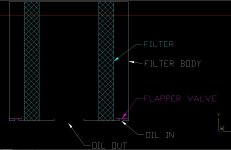
You're right, this isn't complicated. An anti-drainback valve is a piece of silicone rubber that fits over all the small holes in the filter. It usually is pressed against the holes via spring tension. Oil pressure overcomes this spring tension and allows oil to flow. Once oil pressure stops, spring tension causes the seal to hold the oil in the filter and not flow out of the small holes and back into the engine. Very simple and very effective. And that's exactly why I can remove my oil filter without spilling more than the few ounces that were in the very center of the filter.
If oil continues to drain from the filter in the time it takes to remove the filter (as some have claimed) then you either have a filter that doesn't have an anti-drainback valve, or you have a filter with an ineffective anti-drainback valve. I don't want my oil filter draining itself every night while my 4Runner is in the garage. Over time, that can cause accelerated engine wear.
If oil continues to drain from the filter in the time it takes to remove the filter (as some have claimed) then you either have a filter that doesn't have an anti-drainback valve, or you have a filter with an ineffective anti-drainback valve. I don't want my oil filter draining itself every night while my 4Runner is in the garage. Over time, that can cause accelerated engine wear.


