Voltage Drops Out.....

Did you test the battery at Sears with their CCA testing tool? It usually takes ~ 20+ mins and tells you a lot more than a voltage bench test.

I saw you mention you were going to take it over there.
 
Did you test the battery at Sears with their CCA testing tool? It usually takes ~ 20+ mins and tells you a lot more than a voltage bench test.

I saw you mention you were going to take it over there.

One because I'm not the original owner they want warranty my battery. And also because my local Sears does not carry this particular platinum diehard battery they're also not going to do anything because they can order them in anymore so their warranty is utterly worthless
 
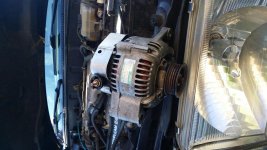
Going to try this until I can the other oe alt built up.
 

Attachments

  • 20151108_153601.jpg
    20151108_153601.jpg
    139.5 KB · Views: 262
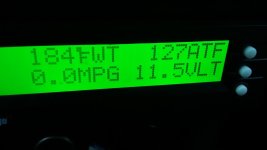
And after install.... same issue. Battery is going south. It was dropping out pretty quick. It leveled off for a min but then as more stuff was turned on it fell off.

Blue
 
And after install.... same issue. Battery is going south. It was dropping out pretty quick. It leveled off for a min but then as more stuff was turned on it fell off.

Blue

Disconnect the positive lead from the battery while the truck is running. The alternator should be able to supply enough power to run everything on the truck without the battery. It's possible you have a battery with an internal short, but that's very very uncommon. If the battery is disconnected and the voltage is still dropping that low, you have something else going on other than the battery.
 
Disconnect the positive lead from the battery while the truck is running. The alternator should be able to supply enough power to run everything on the truck without the battery. It's possible you have a battery with an internal short, but that's very very uncommon. If the battery is disconnected and the voltage is still dropping that low, you have something else going on other than the battery.

Please don't do that. The battery is an important safety valve in the vehicle's electrical system(even a dead one). Try a different battery if you want, but don't try that antiquated method.

Google it, here is just one results page

https://www.google.com/#q=disconnecting+battery+while+car+is+running
 
Disconnect the positive lead from the battery while the truck is running. The alternator should be able to supply enough power to run everything on the truck without the battery. It's possible you have a battery with an internal short, but that's very very uncommon. If the battery is disconnected and the voltage is still dropping that low, you have something else going on other than the battery.

Best way is just use multimeter on battery when off or bring in for testing.
 
Maybe a loose connection, bad cable, or ground. Seems like the ALT is trying to overcharge. I see 14.2 at initial start up, then as low as 13.4 but no lower.

Add any electronics lately?

This is good to know. I recently installed a Voltmeter Gauge, but never bothered to come here and ask what the average norm is.

Start-up and Idle my readings fluctuate between 13.8 to 14.2. Typically skirting the line between 13.9 and 14.0 most of the time. If I'm stopped at a light and put a blinker on or roll a window down, Voltage drops down momentarily into the 13.6 to 13.8 range.

At rest with just the ignition turned on, battery voltage seems to sit at 11.8
 
Disconnect the positive lead from the battery while the truck is running. The alternator should be able to supply enough power to run everything on the truck without the battery.

Yeah.. this is a big no-no. This might have worked back in the day, but today's vehicles have sensitive electronics that can potentially get fried from this kind of "test".

I'd simply not take the risk.
 
Yeah.. this is a big no-no. This might have worked back in the day, but today's vehicles have sensitive electronics that can potentially get fried from this kind of "test".

I'd simply not take the risk.

I'm an electrical engineer that works in automotive manufacturing. There's absolutely no reason pulling a battery lead will cause damage.
 
Please don't do that. The battery is an important safety valve in the vehicle's electrical system(even a dead one). Try a different battery if you want, but don't try that antiquated method.

Google it, here is just one results page

https://www.google.com/#q=disconnecting+battery+while+car+is+running

There's nothing in those results from anyone with any real knowledge of it. Electronics on a vehicle are designed with plenty of filtration and voltage clamping to protect them from a bad connection on the battery, a completely open circuit in a battery, or bad voltage regulator.

If the OP is nervous about it, he can swap it with another battery, but there's very little change that's the problem here anyway. An alternator that won't maintain at least 13V at idle without accessories running is very likely bad even if it's brand new.

As I said earlier, a battery failing in a way that will pull down voltage like that is pretty uncommon. If it's doing that the battery is going to be getting much hotter than it should be, and it needs to come out sooner rather than later because the plates are shorting out.
 
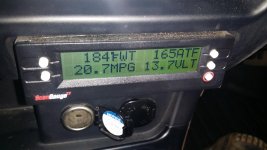
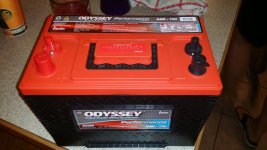
Well. The moral of the story do not use cheap parts.After wasting 8 hours at least multiple trips to parts houses all for junk alternators. I finally got a Denso! After putting it in immediately everything is as it should have been. battery is testing fine so I guess I'll have to return that nice Odyssey battery I just bought boo or maybe I could just keep it and run dual batteries this time hahaha I hope somebody can learn something from my misery. Sorry about the stupid auto type and its lack of grammer.....

Update... After to my financial planner she said I can keep the other battery too. Winning!!!!!
 

Attachments

  • 20151109_070104.jpg
    20151109_070104.jpg
    93 KB · Views: 264
  • 20151109_185639.jpg
    20151109_185639.jpg
    132.2 KB · Views: 265
  • 20151109_193712.jpg
    20151109_193712.jpg
    135.2 KB · Views: 267
Last edited:
There's nothing in those results from anyone with any real knowledge of it. Electronics on a vehicle are designed with plenty of filtration and voltage clamping to protect them from a bad connection on the battery, a completely open circuit in a battery, or bad voltage regulator.

.

Right, we bow down to the all knowing.

I went to school too, I had people teaching me about cars, that was 30 some years ago so maybe they didn't know anything at the Chrysler training center back then, or the trade school, dog knows they are just washed up mechanics teaching there. Oh yeah, and the Toyota TTC in Torrance, CA(that's technical training center), those guys didn't know anything either. Nope, no real knowledge there.

In the 90's I used to watch the Toyota Master technician contest as the tool rep. One year one of the bugs in the car was a no charge condition. I didn't see any of those guys pull the positive terminal on those Rav4's, but I'm sure they didn't know how to test things either.

Next week I'm going to probe my airbags with a test light!
 
Your battery got the terminals in wrong side

Well. The moral of the story do not use cheap parts.After wasting 8 hours at least multiple trips to parts houses all for junk alternators. I finally got a Denso! After putting it in immediately everything is as it should have been. battery is testing fine so I guess I'll have to return that nice Odyssey battery I just bought boo or maybe I could just keep it and run dual batteries this time hahaha I hope somebody can learn something from my misery. Sorry about the stupid auto type and its lack of grammer.....

Update... After to my financial planner she said I can keep the other battery too. Winning!!!!!

Have you noticed the battery posts are in the wrong side?

Glad you solved the mystery. I have a spare denso alternator just in case. Never auto part store items.
 
Right, we bow down to the all knowing.

I went to school too, I had people teaching me about cars, that was 30 some years ago so maybe they didn't know anything at the Chrysler training center back then, or the trade school, dog knows they are just washed up mechanics teaching there. Oh yeah, and the Toyota TTC in Torrance, CA(that's technical training center), those guys didn't know anything either. Nope, no real knowledge there.

In the 90's I used to watch the Toyota Master technician contest as the tool rep. One year one of the bugs in the car was a no charge condition. I didn't see any of those guys pull the positive terminal on those Rav4's, but I'm sure they didn't know how to test things either.

Next week I'm going to probe my airbags with a test light!

Not all knowing, but this is one area where I work on the other side of the fence. When you design electronics for an automotive environment you do so knowing that you're working with an extremely variable environment, where lots of things go wrong with the supply on a regular basis.

Electronics in cars aren't "sensitive". They're hardened. They have to deal with operating temperature swings of hundreds of degrees over the course of a few minutes. Constantly variable voltages. High frequency noise from the ignition system. Batteries go bad. Connections go bad. Diodes go bad. Voltage regulators go bad. If cars suffered damage to the electronics every time something like that happened it would cost the manufacturers a FORTUNE in warranty costs. A car will take a direct lightning strike and keep running!

You know what you've been taught, and that's fine, but I know the design requirements that have to be met for an electronic module to be approved for use on a car because I've been working in that arena for the last 10 years. You can throw out all the courses you like, but I can guarantee you that none of those guys have any damned idea what's behind the design process for the electronics and the requirements that have to be met.

So settle down and stop ranting because someone doesn't subscribe to the same bunch of old mechanics tales that are repeated with no basis all over the internet. You can continue to repeat that crap, or you can stop and think about if for a few minutes and you'll know I'm telling you the truth.

The notion that stuff on a car is going to start blowing up because you disconnect the battery is just absurd.
 
Not all knowing, but this is one area where I work on the other side of the fence. When you design electronics for an automotive environment you do so knowing that you're working with an extremely variable environment, where lots of things go wrong with the supply on a regular basis.

Electronics in cars aren't "sensitive". They're hardened. They have to deal with operating temperature swings of hundreds of degrees over the course of a few minutes. Constantly variable voltages. High frequency noise from the ignition system. Batteries go bad. Connections go bad. Diodes go bad. Voltage regulators go bad. If cars suffered damage to the electronics every time something like that happened it would cost the manufacturers a FORTUNE in warranty costs. A car will take a direct lightning strike and keep running!

You know what you've been taught, and that's fine, but I know the design requirements that have to be met for an electronic module to be approved for use on a car because I've been working in that arena for the last 10 years. You can throw out all the courses you like, but I can guarantee you that none of those guys have any damned idea what's behind the design process for the electronics and the requirements that have to be met.

So settle down and stop ranting because someone doesn't subscribe to the same bunch of old mechanics tales that are repeated with no basis all over the internet. You can continue to repeat that crap, or you can stop and think about if for a few minutes and you'll know I'm telling you the truth.

The notion that stuff on a car is going to start blowing up because you disconnect the battery is just absurd
.

First off, I never said things would blow up, but if you want me to tell you what operation has the highest degree of potential blow up in the engine bay, it's disconnecting a battery. Surely you know that.

Second of all, you think disconnecting the battery, while a car is running, is less of an old mechanics tale, than me saying it's not the right thing to do? Well I disagree, and that's not just because I was taught something, it's because I did work on cars, most of my life. And I still do, shops call me to solve their electrical gremlins, and I solve them. The fact that you know more about resistors than I do does not mean you have more practical experience repairing them.

I agree that mfg's try very hard to mitigate failures, but that doesn't mean abuse is the right thing to do. BMW doesn't even want you to jump start their cars. And I've had failures with reverse polarity, bad grounds, and even welding. All preventable!

I've never had a failure due to disconnecting the battery while the vehicle is running. Know why? Because I've never done it, and I never will.

My post said "please don't do that", you made your electrical engineer statement, who is really ranting?

We've disagreed before, when you were an electrical engineer designing solar inverters, we'll disagree again, but I won't quote you ever again, since what I say is "crap" according to you. I'll keep my opinion of what you say to myself.

Good day sir

 
There's nothing in those results from anyone with any real knowledge of it. .

Right, we bow down to the all knowing.

!

We've disagreed before, when you were an electrical engineer designing solar inverters, we'll disagree again, but I won't quote you ever again, since what I say is "crap" according to you. I'll keep my opinion of what you say to myself.

Good day sir

I never said what you say is "crap", I said those search results were. There isn't ONE SINGLE ONE from a design engineer. Not one.

I could tell you in detail what it takes to get a module through the testing process before it goes on a car, but you seem like you'd rather just toss out internet postings rather than hear it, so I won't waste my time. Just know that from start to finish it takes almost three years, and the test criteria includes all sorts of things like A/C ripple resistance, noise immunity, and voltages on both high and low extremes, across the entire temperature range.

When you're shooting for a defect rate of one in 5 million you can't afford to have your numbers screwed up because an owner did something unexpected, like disconnect the battery.
 
I never said what you say is "crap", I said those search results were. There isn't ONE SINGLE ONE from a design engineer. Not one.

I could tell you in detail what it takes to get a module through the testing process before it goes on a car, but you seem like you'd rather just toss out internet postings rather than hear it, so I won't waste my time. Just know that from start to finish it takes almost three years, and the test criteria includes all sorts of things like A/C ripple resistance, noise immunity, and voltages on both high and low extremes, across the entire temperature range.

When you're shooting for a defect rate of one in 5 million you can't afford to have your numbers screwed up because an owner did something unexpected, like disconnect the battery.

Shit I've connected battery terminals backwards without any damage. Lol
 

Forum statistics

Threads
278,307
Messages
3,554,053
Members
248,016
Latest member
Advally Service

Trending content

Back
Top