Steve Theodore
New member
Although I already know for a FACT that this will not be a popular topic here whatsoever, please excuse my intrusion as I drop just a few tidbits of information here. I made these posts somewhat accidentally on the 5th generation sub-forum as they have a thread about it, and I could not easily find a corresponding thread here in the 4th generation section, so I'll start one.
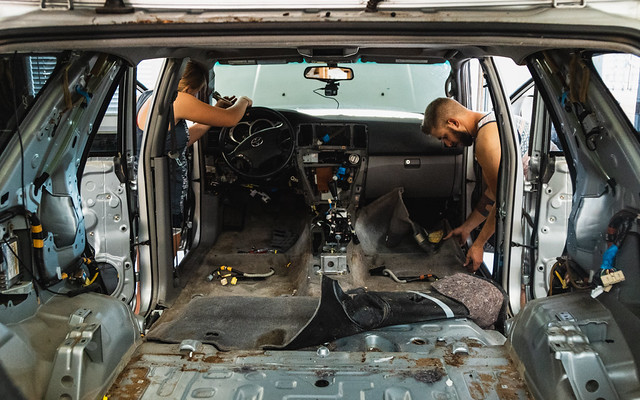
With my 2008 4Runner getting older, I feel like it could get a bit more pep in it's step. Mine has over 170k and I'm the original owner (4.0L V6), but it just doesn't pull highway grades the way it used to and feels a bit tired overall. A little targeted weight reduction could possibly go a long way, but I fully appreciate that most people with these great trucks just don't think that way at all.
I do happen to think that way, but I haven't really devoted much time/effort to my 4Runner over the years to work on these ideas. Here are a few tricks that I have thought of, which may or may not be helpful to others in a similar frame of mind.
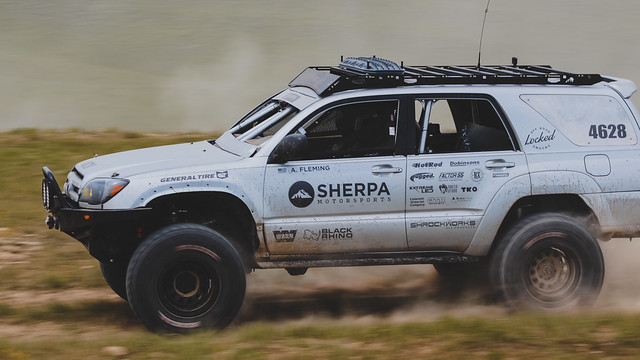
Remove OEM roof rack (if it suits your use case)
Remove OEM running boards (if it suits your use case)
Remove OEM tow hitch (if it suits your use case)
Lightweight battery (warning...this can be expensive)
Aftermarket wheels/tires (stock must be reasonably heavy, but this will likely be $$$ too)
Aftermarket lug nuts for wheels
I'm less clear what the stock equivalent parts weigh on this vehicle though, so it's much harder to just declare victory on anything without knowing what it weighs. Even though I'm a weight weenie when it comes to performance, I'll also be the first to tell you that some things are just not worth it.
One thing I've personally noticed is that I've fed my 4Runner 87 octane (always top tier) fuel for nearly it's entire life. It seemed to do fine on this grade of fuel, and some early experiments I ran many years ago seemed to demonstrate no noticeable differences when run on 92. However, just this year I tried again and I feel that even running 89 is helping the vehicle perform much better. This is only based on my own butt dyno and not quantifiable verified, but my butt dyno has 170k of miles of experience and it seems to be a lot happier on 89 octane now. Your mileage may vary (figuratively and literally), but that may be a way to unlock a bit more performance if your vehicle is getting older like mine.
Spare a little humor for a guy like me! :dance:
With my 2008 4Runner getting older, I feel like it could get a bit more pep in it's step. Mine has over 170k and I'm the original owner (4.0L V6), but it just doesn't pull highway grades the way it used to and feels a bit tired overall. A little targeted weight reduction could possibly go a long way, but I fully appreciate that most people with these great trucks just don't think that way at all.
I do happen to think that way, but I haven't really devoted much time/effort to my 4Runner over the years to work on these ideas. Here are a few tricks that I have thought of, which may or may not be helpful to others in a similar frame of mind.
Remove OEM roof rack (if it suits your use case)
Remove OEM running boards (if it suits your use case)
Remove OEM tow hitch (if it suits your use case)
Lightweight battery (warning...this can be expensive)
Aftermarket wheels/tires (stock must be reasonably heavy, but this will likely be $$$ too)
Aftermarket lug nuts for wheels
I'm less clear what the stock equivalent parts weigh on this vehicle though, so it's much harder to just declare victory on anything without knowing what it weighs. Even though I'm a weight weenie when it comes to performance, I'll also be the first to tell you that some things are just not worth it.
One thing I've personally noticed is that I've fed my 4Runner 87 octane (always top tier) fuel for nearly it's entire life. It seemed to do fine on this grade of fuel, and some early experiments I ran many years ago seemed to demonstrate no noticeable differences when run on 92. However, just this year I tried again and I feel that even running 89 is helping the vehicle perform much better. This is only based on my own butt dyno and not quantifiable verified, but my butt dyno has 170k of miles of experience and it seems to be a lot happier on 89 octane now. Your mileage may vary (figuratively and literally), but that may be a way to unlock a bit more performance if your vehicle is getting older like mine.
Spare a little humor for a guy like me! :dance:
 lane:
lane: