What do Toyota owners want?

Which notional 4runner setup would you buy?

  • Gas Engine, IFS, Rear Solid Axle

    Votes: 31 21.5%
  • Gas Engine, Solid Front and Rear Axle

    Votes: 14 9.7%
  • Diesel Engine, IFS, Rear Solid Axle

    Votes: 59 41.0%
  • Diesel Engine, Solid Front and Rear Axle

    Votes: 32 22.2%
  • None of the Above

    Votes: 8 5.6%

  • Total voters
    144
Seems an over reaction...

First off, the first generation GMC/Chevy "Hybrid" trucks/SUVs were a very loose definition of a hybrid (at least as the public has been led to believe.) The reason they got to call themselves a "hybrid" is because the alternator & starter were replaced with a combination generator/alternator/starter "hybrid" unit. The entire system was so the vehicle could stop/start at red lights and save fuel idling. The second generation was closer to a traditional hybrid with motors and a battery pack; but from what I read they weren't that great in real life. They tended to be only slightly quicker than non-hybrid units (if that), and shifting and power delivery was inconsistent and undesirably finicky at times.

There's a couple points in here, it all feels very exaggerated:
The 2nd gen Tahoe was a hybrid. completely a hybrid. You are correct about the weird start stop system.

It got dinged for price but every review I read was only disappointed that it didn't have more power at its ridiculous price point. Neighbor had one and he had no complaints. Towed a boat and a travel trailer couple times a year. Never read a review or spoke with a single person that disliked the driveability of the true hybrid although everyone seemed to hate the stop/start version, crazy lag off the line and hill starts you'd roll back especially with a trailer :lookout:. I almost got one... Just not up for such a huge vehicle.

All that being said, I would not want a hybrid SUV for off-roading period. With all the issues I see with the Prius line and other hybrids from other brands over the years; I would not want a failure on the trail (granted they don't have issue regularly and it's not like they're fragile) because it'll be a logistic nightmare. Something you need to realize about hybrids is that they can't be towed like a normal vehicle, when the 12v power supply goes, the ENTIRE vehicle is dead, and god forbid the HV battery pack runs out because the 12v was run down and you pushed it too long; then you're SOL until you get to the dealer (thankfully Toyota is starting to make HV chargers mandatory at every dealer). But that still leaves the question of how you are going to transport a giant brick that can't and isn't supposed to roll without damaging the hybrid system to the dealer to get charged up anyways.

Honestly, I'd rather have an EV off-roader that's been designed and equipped with virtually bulletproof EV drivetrain components that are modular and easy to swap/repair in the field. Unfortunately we're easily a decade or two out from that because while EV technology is nice; it isn't reliable enough to trust out on the trail (highway sure, just call a flatbed and have it taken to the dealer if it has an issue.)

I agree about reliability, outside the of the CVT most hybrids kill on reliability.

If the 12V battery dies the car is done? What? I just jumped my buddies Prius, started back up just like every other car. That's not specific to a hybrid at all.

The current gen Prius won't run down the HV to compensate for the 12V, not sure where you heard that one. It just won't start. Like I said, jumped my buddies Prius the other day.

But seriously if both those things were true it would be a pretty simple design around. Obviously if they offer a hybrid it would need to be specific to an SUV. Same thing with making the HV battery be field removable. Not exactly the biggest design challenge.

Towing is relative to the cooling system and the transmission. The Prius can't be towed because of the CVT and the electric motors overheat at speeds over about 15 miles an hour. You absolutely can pull a non CVT hybrid without a flatbed as long as you do it at a crawl, you only have to go slow enough to not overheat the electric motor since the cooling system requires power. So winching out = great, getting pulled wheels down<15MPH = OK, going down the freeway= flatbed. Or remove the hub-motor axles and do whatever you want. Takes 30-40 minutes on a hybrid utility truck with socket driver.

Try changing your fuel pump in the field on a 4runner with more than a 10 gallons in the tank and you'll wish you were putting in a battery pack. The access hatch on the 4th gen is smaller than the fuel pump assy so I'm not even sure what it's there for. :noidea: Although I think you own a shop? So you've probably already seen this craziness. The instructions for a battery swap on a Prius don't look much more extensive and most of the trouble spots could be designed out. I mean aftermarket battery packs are being installed onsite for about $1K inc parts and labor with a 50k mile warranty... How hard can it be?

I think you missed the only real problems with a hybrid system which is cost and weight. It would cost out the ass, just like the Tahoe... I'd guess it'd be a 60k truck if they made it today.

I agree about the Land Cruiser, that's a sad part of being in the US. I just wish I could justify buying an fj70 like this: Land Cruisers Direct - 1989 Toyota Land Cruiser BJ71 LX #1208
 
Granted, that's how they market it, but regardless, I sure know which sex I see driving 75% of them. The demographic of this forum is in no way indicative of the real world 4R driver.

We really need to give your old self a tutorial on how to edit a quote...... :wave:
 
V8. There is no comparison in daily driving between the two. Torque delivery, smoothness, and refinement are unmatched. I will never consider a 5th gen or later because of it.
 
I feel like people should buy the vehicle that has the features they want, instead of trying to change the 4runner to be what they want. The diesel option is an extra $5k on the Cherokee, but you have to go up to at least the limited trim to get it, so it's an extra $10k over the lowest trim level 4x4 to get a diesel Cherokee. Their diesel also has less horsepower than our 4.0L and their own V6. A diesel 4runner would be expensive.
 
There's a couple points in here, it all feels very exaggerated:
The 2nd gen Tahoe was a hybrid. completely a hybrid. You are correct about the weird start stop system.

It got dinged for price but every review I read was only disappointed that it didn't have more power at its ridiculous price point. Neighbor had one and he had no complaints. Towed a boat and a travel trailer couple times a year. Never read a review or spoke with a single person that disliked the driveability of the true hybrid although everyone seemed to hate the stop/start version, crazy lag off the line and hill starts you'd roll back especially with a trailer :lookout:. I almost got one... Just not up for such a huge vehicle.


I agree about reliability, outside the of the CVT most hybrids kill on reliability.

If the 12V battery dies the car is done? What? I just jumped my buddies Prius, started back up just like every other car. That's not specific to a hybrid at all.

The current gen Prius won't run down the HV to compensate for the 12V, not sure where you heard that one. It just won't start. Like I said, jumped my buddies Prius the other day.

But seriously if both those things were true it would be a pretty simple design around. Obviously if they offer a hybrid it would need to be specific to an SUV. Same thing with making the HV battery be field removable. Not exactly the biggest design challenge.

Towing is relative to the cooling system and the transmission. The Prius can't be towed because of the CVT and the electric motors overheat at speeds over about 15 miles an hour. You absolutely can pull a non CVT hybrid without a flatbed as long as you do it at a crawl, you only have to go slow enough to not overheat the electric motor since the cooling system requires power. So winching out = great, getting pulled wheels down<15MPH = OK, going down the freeway= flatbed. Or remove the hub-motor axles and do whatever you want. Takes 30-40 minutes on a hybrid utility truck with socket driver.

Try changing your fuel pump in the field on a 4runner with more than a 10 gallons in the tank and you'll wish you were putting in a battery pack. The access hatch on the 4th gen is smaller than the fuel pump assy so I'm not even sure what it's there for. :noidea: Although I think you own a shop? So you've probably already seen this craziness. The instructions for a battery swap on a Prius don't look much more extensive and most of the trouble spots could be designed out. I mean aftermarket battery packs are being installed onsite for about $1K inc parts and labor with a 50k mile warranty... How hard can it be?

I think you missed the only real problems with a hybrid system which is cost and weight. It would cost out the ass, just like the Tahoe... I'd guess it'd be a 60k truck if they made it today.

I agree about the Land Cruiser, that's a sad part of being in the US. I just wish I could justify buying an fj70 like this: Land Cruisers Direct - 1989 Toyota Land Cruiser BJ71 LX #1208

Again, just going by what I heard about the hybrid GM trucks/SUVs. They weren't bad, but mostly what I heard was that the power delivery and cost didn't justify the mpg gain for most people who I asked about it.

As for the Prius, I'd be willing to believe that the 3rd Gen Prius and current gen V & C do not run down the HV battery when the 12v unit dies (I never bothered to check it to be honest, but I do know that we now have an HV charger at work because Toyota warned us that such a thing can occur.) We saw a lot of 2nd gens draining those HV batteries very low and in some cases so low we needed the "special" Toyota HV charger to get them back up. I've heard the same thing about a few hybrids and not just the Toyota; it's mostly because the HV system is what charges the 12v system through the inverter.

Not saying you can't jump start a Prius, just that if you need to jump start it in the first place that's not a good sign; so if that battery has been weak/dead for a while and you're not paying attention you can run that HV battery down (keep in mind that most Toyota Prius operate within roughly 60~80% of the HV pack's available power for best performance and longevity.) I'm just saying that I have seen weird power issues and electrical gremlins that basically take down the whole system and they aren't usually as easy as replacing a fuel pump or relay (unless you have spare battery packs, inverters or motor assemblies in your hypothetical hybrid rig.)

It's not just the CVT Overheating, it has to do with the way the hybrid system in the Toyota (and most smaller car hybrids) is designed. They use two motor generators for driving and regenerative braking, if you're turning the wheel you're generating power to the system which it has to handle, if the vehicle is off the system cannot work correctly and it could damage the HV circuits. It's the main reason why the hybrids are supposed to be towed on a flatbed. Now probably some of those "add-on" units that are placed on the output shaft the transmission may work differently (I haven't looked into those that much), but the Prius does not have "neutral" when the vehicle is turned off (because it can't engage it with no power.)

Also while I love the Tesla and applaud it for being ahead of it's time and leader in EV technology. Those vehicles too are fraught with problems before they even leave the factory and seeing much of that technology in the Rav4 EV (granted it was mainly hand-me downs and so on as far as I understand from chats with the Tesla "engineers") those had notoriously finicky batteries, inverters, and motors (I saw two personally that failed PDI or weren't even test driven off the lot before they threw error codes and needed a new battery pack or inverter.) That EV technology is still too new and too cutting edge to trust on a trail.

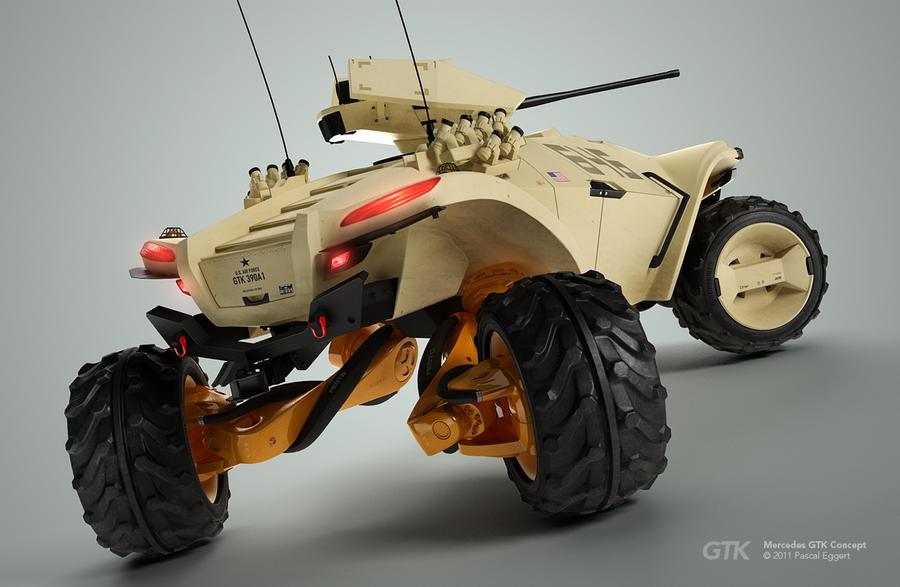
Bottom line, I wouldn't want a hybrid SUV for off-roading unless it was some mythical multi-fuel/EV combination drivetrain with individual wheel motors, independent torsion beam style supports (i.e. the motor is mounted on a swing arm and the wheel can move independently of the other similar to some military vehicles and one-offs), and some other features. But that's something that won't be ready for another decade or two if we're lucky and then I'd want to see how many the military fields on the front lines without issues before I'd be confident to take it out in the middle of no where.

I'm not looking for a soccer mom mobile to occasionally throw on a gravel road and then Tweet how I conquered the Rockies; I'm looking for a dependable, rugged, and robust platform that I can trust in when I'm on the side of a mountain wondering why I didn't buy that damn satelite phone and referencing my topographical map with my GPS coordinates to locate the "road" I'm on. If my 4Runner can handle that with a spare axle or two and some other parts, then I'm happy taking it out to something as mild as the Hollister SVRA or where ever I get the feeling to. As it stands, I don't entirely trust a hybrid to be that reliable or rugged overland at this time. By the time they make it stout enough and reliable enough to be worth it, I might as well skip the mostly limited and outdated hybrid and go for that mythical EV that will be about ready.

Hybrids are old news and old hat, they do little besides create an overly complex and environmentally neutral/unfriendly way for manufacturers to try and meet ridiculously insulting environmental regulations. Everything a hybrid offers can be better done by an EV with proper infrastructure, which is where the world should be wasting it's money; not on a stop gap measure that ran it's course years ago. That's why I've never understood the desire for a hybrid vehicle, they are more often than not more trouble than their worth, environmentally neutral, and often beat by a more efficient gasoline/diesel engine or a better designed EV.

The only exception I can see to a hybrid as I stated above would be something that can efficiently run a multi-fuel engine combined with an EV drivetrain, and at that point you're just using the multi-fuel engine as a generator to charge the battery and not drive the vehicle at all.
 
Last edited:
just want the option...

Not saying you can't jump start a Prius, just that if you need to jump start it in the first place that's not a good sign; so if that battery has been weak/dead for a while and you're not paying attention you can run that HV battery down (keep in mind that most Toyota Prius operate within roughly 60~80% of the HV pack's available power for best performance and longevity.) I'm just saying that I have seen weird power issues and electrical gremlins that basically take down the whole system and they aren't usually as easy as replacing a fuel pump or relay (unless you have spare battery packs, inverters or motor assemblies in your hypothetical hybrid rig.)

if the vehicle is off the system cannot work correctly and it could damage the HV circuits.

That's why I've never understood the desire for a hybrid vehicle, they are more often than not more trouble than their worth, environmentally neutral, and often beat by a more efficient gasoline/diesel engine or a better designed EV.

The only exception I can see to a hybrid as I stated above would be something that can efficiently run a multi-fuel engine combined with an EV drivetrain, and at that point you're just using the multi-fuel engine as a generator to charge the battery and not drive the vehicle at all.

Yeah my only problem with the Chevy was the price and size.

It's never a good sign when you need to jump a car. Something has gone wrong!:yuck:

Again, agree to disagree but the problems with current hybrid batteries is usually rare and shows up long before it's a driving issue. The "too many things to go wrong/ more trouble than they are worth" argument goes out the door when the hybrids consistently across the board beat almost every gas and diesel vehicle in reliability.We know hybrid failure rates and they are mostly transmission related. Do you have a spare transmission in your hypothetical rig? That question sounds dramatic but is a non starter, there's always something you can't carry. Also I've changed that fuel pump and I'd take electrical problems any day of the week.

The HV power boards on the Prius may be set up that way but that's still an easy design fix (electrical disconnect so the energy stays as heat in the motor) and still allows for axle disconnect as an option. I know the larger Hybrid utility vans you can tow flat at low speeds with the axles engaged and at any (reasonable) speed once disengaged. No reason to assume the design for an SUV wouldn't incorporate such a basic design. And our trucks share the same towing issue right now. All I need is to have the transmission/transfer case lock up and I have to disconnect the axles before I move it. close to the same likelihood statistically as a hybrid-electrical failure but neither is at all likely enough to keep parts in my car for.


I get what you are saying about over all environmental affects of battery production...It's not a save the environment choice for me.
I'd like to see a hybrid largely because I disagree that the MPGs are beat by any gas/diesel engine at the same HP/torque levels that meets US environmental controls and I want the range that the efficiency gets me. Most diesels are a mess that not even battery production can compete with, although they can compete on an MPG basis. Also that low end electric motor torque...:bluejump:

Not saying all 4runners should go hybrid, just want the option. and think a clever company could come up with something pretty sweet.

Battery EVs are not a realistic offroad/overlanding choice. I didn't buy a 4runner to stay around infrastructure. I would agree that an EV highlander/sienna would be perfect for my family hauler though. Unfortunately with how much Toyota wants for just the hybrid I'd guess that an EV highlander would be in Tesla price territory.

I would definitely take a "range extended" EV like you described where the gas engine just charges the battery but again... pipe dreams. Gets rid of most of the drivetrain and transmission issues and makes room for the batteries. Such a simpler design than transmisions. transfer cases and difs... Too bad it'd take a CEO paycheck to afford one.:crybaby:
 
...

I would definitely take a "range extended" EV like you described where the gas engine just charges the battery but again... pipe dreams. Gets rid of most of the drivetrain and transmission issues and makes room for the batteries. Such a simpler design than transmisions. transfer cases and difs... Too bad it'd take a CEO paycheck to afford one.:crybaby:

Well the nice thing is that the Military is interested in that type of technology as it would allow them more flexibility and it is being looked at in various forms (I haven't heard of a new multi-fuel engine being developed for them though, mostly extended diesel EV units.)

But the good news is that theoretically by the time EVs get established enough, it wouldn't be all that difficult to just build a "rugged" EV (since for the most part an EV is much simpler to build and design once you get away from the very rigid design restrictions a traditional engine, transmission, and differentials require) and tack on the Multi-Fuel Engine as an extended EV charger.

If anything I am a little dissapointed in Tesla with how "tame" their overall vehicle design has been when you consider that things like this could be achievable with an EV based vehicle.

mercedes_gtk_concept_by_ipeg-d37s6bk.jpg

mercedes_gtk_concept_us_editio_by_ipeg-d3814ac.jpg

Futuristic-mazda-car-concept-newupdate.co_1.jpg
 
Last edited:
Makes me see red a little.

Well the nice thing is that the Military is interested in that type of technology as it would allow them more flexibility and it is being looked at in various forms (I haven't heard of a new multi-fuel engine being developed for them though, mostly extended diesel EV units.)

But the good news is that theoretically by the time EVs get established enough, it wouldn't be all that difficult to just build a "rugged" EV (since for the most part an EV is much simpler to build and design once you get away from the very rigid design restrictions a traditional engine, transmission, and differentials require) and tack on the Multi-Fuel Engine as an extended EV charger.

If anything I am a little dissapointed in Tesla with how "tame" their overall vehicle design has been when you consider that things like this could be achievable with an EV based vehicle.

Those are bad ass and I'd love those come to real world. Unfortunately my experience working F35 makes me think the government doesn't have a good grasp of the terms "budget" or "realistic price".

Tesla knows who they are selling to... Old people got money.

I do feel like punching someone every time I hear a Model X referred to as an SUV... It's station wagon. No ground clearance. No suspension travel. Can't tow a trailer over a mountain cause of range issues. seating for all the kids. very safe. Station wagon.

Normally I enjoy Elon Musk's hijinks. The Model X being an SUV makes me want to slap him. Open handed. Maybe a back hand just for affect. That acronym has finally hit complete meaninglessness.
 
A few things: Swarty do a bit of research on various power densities of gas vs battery. You have to dig but you will learn something. I did several years ago.

One thing that we do with our machines in various applications is, for example, to use motors with retractable shafts. That's just one solution and there many others out there.
 
Um... OK

A few things: Swarty do a bit of research on various power densities of gas vs battery. You have to dig but you will learn something. I did several years ago.

One thing that we do with our machines in various applications is, for example, to use motors with retractable shafts. That's just one solution and there many others out there.

What's your point dude? I'm pretty solid on battery tech and power densities and you don't have to dig. One google search for power density will bring up a load of data. Got something more specific?

Agree there are a lot of solutions. Most of the more simple ones like bolt together setups are already road proven.
 
What's your point dude? I'm pretty solid on battery tech and power densities and you don't have to dig. One google search for power density will bring up a load of data. Got something more specific?

Agree there are a lot of solutions. Most of the more simple ones like bolt together setups are already road proven.

Sorry was not clear. Comparisons between battery and gas power densities. It was based on your comment above. My comment was not meant to imply anything.
 

Members online

Forum statistics

Threads
278,316
Messages
3,554,113
Members
248,016
Latest member
Advally Service

Trending content

Back
Top