All vehicles that I know of can adjust camber, caster, and toe in the front.
Not all passenger vehicles can adjust all three X:Y:Z dimensions of caster:camber:toe, but maybe you mean all Toyota 4Runner vehicles?
NOTE: My sedan is a very common make and model and it definitely only has three alignment adjustments that are intended by the factory to be adjusted, which are rear camber, rear toe, and front toe (after setting ride height with 500 pounds of weight). Nothing else is adjustable on my sedan without adding non-OEM hacks like camber plates.
The rear on our truck is a solid axle so it is non adjustable.
Thank you for clarifying that the camber and toe are non adjustable in the rear.
Certainly that makes things simpler when I replace all four tires (which I'm doing this weekend).
I had to look up what "LCA" means; apparently it means "Lower Control Arm".
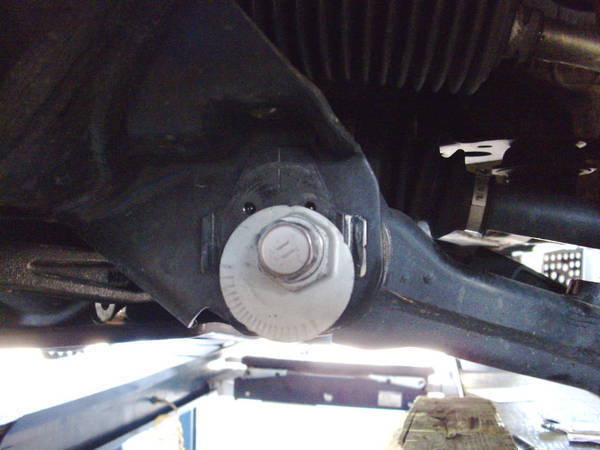
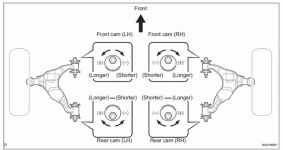
The LCA cams (2 on each side) adjust camber/caster and toe.
Thank you for summarizing that there are 4 lower-control-arm cams to adjust, and that they adjust the front caster, camber, and toe (to be adjusted in that order).
To correctly do the front alignment, you would adjust the cams to get the proper camber/caster then do a caster sweep, re check the caster camber then set the toe - one side at a time, using the tie rods, keeping the other side where it is at, meaning don't go from one side to the other than back to the other side back and forth. that's how you get a crooked steering wheel.
I'll need to look up some terms you used above (such as a caster sweep) but I do understand that the order is caster first, then camber, and then toe.
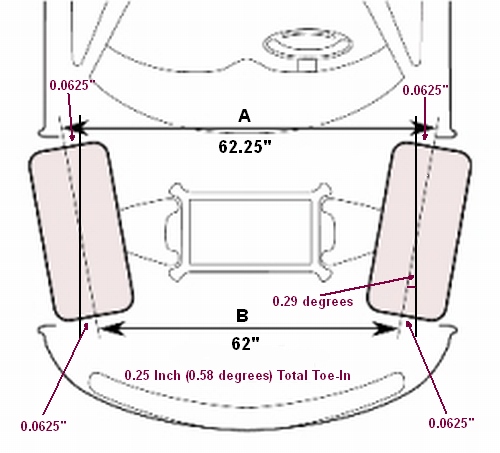
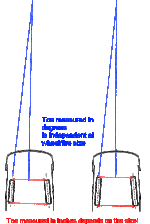
The problem I always have with toe is that it's easiest to measure linear distance (which depends on the size of the tires & wheels but luckily the one I'm working on has the stock 15 inch wheels with the stock P225/75R15 102T tires) while most toe tables seem to be in degrees (which is independent on the tire and wheel size).
So, for me, toe is harder because we measure in inches but the spec is in degrees.
Camber is easier because we measure in degrees and the spec is in degrees.
Specs are out there and should be the same for a 2WD as a 4WD.
Thank you for stating that the alignment specs are the same for the 2WD as for the 4WD as that's not intuitive to me that it would be the case (and the 4WD is vastly more prevalent).
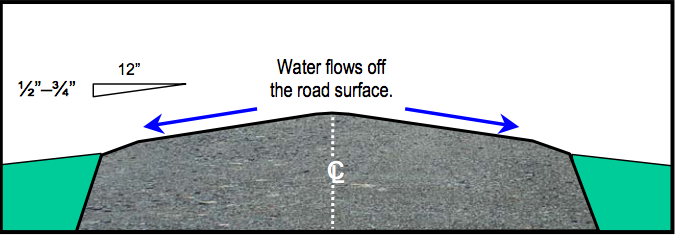
caster 1.7 to 3.4 degrees with cross caster no more than .5 degrees maybe a little more caster on passenger side for road crown
Road crown is sort of a "camber" in and of itself.
So, I can imagine camber being different to account for road crown, but, caster?
Interesting. I had to look that up because I thought caster was to adjust wander tendencies on uneven (aka bumpy) road surfaces - but not to handle crowns.
But apparently
caster handles crowns, just like you said!
camber spec is something like -.9 to + .9 degrees with the same cross camber as caster
This is good to know that there isn't much camber on these SUVs.
A tenth of a degree is pretty close to zero degrees for me.
The nice thing about zero degrees is that it's easier to measure than any other angle.
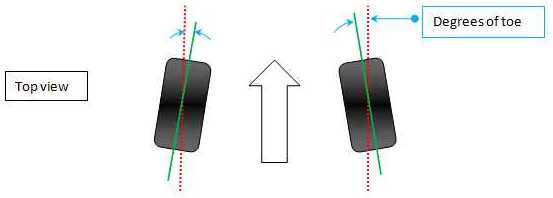
toe spec is -.1 to 0 but basically 0 degrees on either side
I hate toe specs in degrees!
I really do.
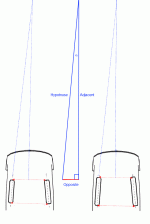
I understand why toe is specified in degrees to the centerline; but I don't measure degrees of toe at home.
I have to measure inches from a point on the wheel or tire to the centerline of the vehicle.
I haven't done this, but a quick search just now shows that
I might be able to measure in inches and then convert to degrees:
BTW, what do we use as our centerline reference point in the 2WD 4Runner?