
You are using an out of date browser. It may not display this or other websites correctly.
You should upgrade or use an alternative browser.
You should upgrade or use an alternative browser.
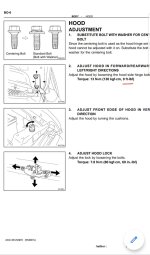
What is the torque for the hood bolts?
- Thread starter jross20
- Start date
Register to hide this ad

brillo_76
Elite Member
I honestly don't see them being 69 ft lbs. 9 ft lbs sounds better. I just tighten and loosen them with standard 3/8 ratchet as they are not super tight at all.I keep finding 9 ft lbs and then 69 ft lbs which is an insane jump.
I don't wanna break my hood haha.
Specially, I need to know the torque for the bolts that thread into the hood.

Sent from my SM-J337V using Tapatalk

mtbtim
Elite Member
Is the exact torquing of hood bolts something to worry about? OP, I suggest you liberate yourself from the torque wrench for applications like this and learn to trust yourself to properly tighten a fastener without under-tightening or over-tightening and either stripping or breaking it.
Torque wrenches definitely have their place but they are not really needed for non-critical things like hood bolts. You can go very far with common sense and understanding mechanical advantage. With small fasteners, like 10mm headed bolts, you use smaller ratchets, maybe 1/4", so you won't have as much leverage and thus will apply less force to the bolt. When you have larger fasteners, that's when you break out the bigger ratchets and wrenches because you need more mechanical advantage.
OP, I'm not trying to be a dick here. I'm just trying to make your life easier. Instead of hunting down a torque spec for a non-critical item, just use your best judgement and start learning how to properly tighten things without relying on a torque wrench for everything. There have been times that I decided to use a torque wrench to tighten something like a transmission drain pan bolt and decided to stop when I reached a level of tightness that I felt was sufficient and I hadn't reached the torque spec yet. Torque wrenches can get out of calibration and be off and you can't just blindly use them. You have to know when the force you're applying feels like too much for the spec.
FSMs quite often have misprints and you need to be able to recognize these. I've seen many in my Toyota FSM. An example of one of the worst ones is the FSM showed a torque value of something like 64 foot pounds for the transmission pan bolts when it was suppose to be 64 inch pounds.
So, using a World War II analogy, I'm the US, you're France and the Torque Wrench is Germany. I just liberated you from German occupation. Go celebrate in the streets by doing some drinking and maybe go bang a few French girls.
Torque wrenches definitely have their place but they are not really needed for non-critical things like hood bolts. You can go very far with common sense and understanding mechanical advantage. With small fasteners, like 10mm headed bolts, you use smaller ratchets, maybe 1/4", so you won't have as much leverage and thus will apply less force to the bolt. When you have larger fasteners, that's when you break out the bigger ratchets and wrenches because you need more mechanical advantage.
OP, I'm not trying to be a dick here. I'm just trying to make your life easier. Instead of hunting down a torque spec for a non-critical item, just use your best judgement and start learning how to properly tighten things without relying on a torque wrench for everything. There have been times that I decided to use a torque wrench to tighten something like a transmission drain pan bolt and decided to stop when I reached a level of tightness that I felt was sufficient and I hadn't reached the torque spec yet. Torque wrenches can get out of calibration and be off and you can't just blindly use them. You have to know when the force you're applying feels like too much for the spec.
FSMs quite often have misprints and you need to be able to recognize these. I've seen many in my Toyota FSM. An example of one of the worst ones is the FSM showed a torque value of something like 64 foot pounds for the transmission pan bolts when it was suppose to be 64 inch pounds.
So, using a World War II analogy, I'm the US, you're France and the Torque Wrench is Germany. I just liberated you from German occupation. Go celebrate in the streets by doing some drinking and maybe go bang a few French girls.
Last edited:

Ripper238
Senior Member
Is the exact torquing of hood bolts something to worry about? OP, I suggest you liberate yourself from the torque wrench for applications like this and learn to trust yourself to properly tighten a fastener without under-tightening or over-tightening and either stripping or breaking it.
Torque wrenches definitely have their place but they are not really needed for non-critical things like hood bolts. You can go very far with common sense and understanding mechanical advantage. With small fasteners, like 10mm headed bolts, you use smaller ratchets, maybe 1/4", so you won't have as much leverage and thus will apply less force to the bolt. When you have larger fasteners, that's when you break out the bigger ratchets and wrenches because you need more mechanical advantage.
OP, I'm not trying to be a dick here. I'm just trying to make your life easier. Instead of hunting down a torque spec for a non-critical item, just use your best judgement and start learning how to properly tighten things without relying on a torque wrench for everything. There have been times that I decided to use a torque wrench to tighten something like a transmission drain pan bolt and decided to stop when I reached a level of tightness that I felt was sufficient and I hadn't reached the torque spec yet. Torque wrenches can get out of calibration and be off and you can't just blindly use them. You have to know when the force you're applying feels like too much for the spec.
FSMs quite often have misprints and you need to be able to recognize these. I've seen many in my Toyota FSM. An example of one of the worst ones is the FSM showed a torque value of something like 64 foot pounds for the transmission pan bolts when it was suppose to be 64 inch pounds.
So, using a World War II analogy, I'm the US, you're France and the Torque Wrench is Germany. I just liberated you from German occupation. Go celebrate in the streets by doing some drinking and maybe go bang a few French girls.
I was thinking the same thing. I personally never have used a torque wrench for any work i have done on my cars, the basic stuff like starter replacement, body work, wheels ect.. Never an issue.
mtbtim
Elite Member
I was thinking the same thing. I personally never have used a torque wrench for any work i have done on my cars, the basic stuff like starter replacement, body work, wheels ect.. Never an issue.
I didn't own torque wrenches for most of my wrenching life, but since I started running a YouTube channel with [MENTION=102606]infamousRNR[/MENTION], I decided to invest in them. I bought ones made by CDI which I understand are made by Snap-on. I find I use them a fair amount but I'd never bother to break one out and look up a torque spec for something as non-critical as a hood support bolt. I learned at a very young age how to properly tighten things without stripping or breaking them just by using some common sense and understanding mechanical advantage.
For anyone interested, here's the 3 CDI torque wrenches I own.
*CDI 1/2" Drive 30-250 Foot Pound Torque Wrench
https://amzn.to/2UPhyjK
*CDI 3/8" Drive 10-100 Foot Pound Torque Wrench
https://amzn.to/2U2vUA4
*CDI 3/8" Drive 30-250 Inch Pound Torque Wrench
https://amzn.to/2J8W8Kz
Ripper238
Senior Member
I didn't own torque wrenches for most of my wrenching life, but since I started running a YouTube channel with [MENTION=102606]infamousRNR[/MENTION], I decided to invest in them. I bought ones made by CDI which I understand are made by Snap-on. I find I use them a fair amount but I'd never bother to break one out and look up a torque spec for something as non-critical as a hood support bolt. I learned at a very young age how to properly tighten things without stripping or breaking them just by using some common sense and understanding mechanical advantage.
For anyone interested, here's the 3 CDI torque wrenches I own.
*CDI 1/2" Drive 30-250 Foot Pound Torque Wrench
https://amzn.to/2UPhyjK
*CDI 3/8" Drive 10-100 Foot Pound Torque Wrench
https://amzn.to/2U2vUA4
*CDI 3/8" Drive 30-250 Inch Pound Torque Wrench
https://amzn.to/2J8W8Kz
I'm planing on getting one since its discussed so much and i plan on keeping my 4R for a long time and doing some more of the work my self.
I find much of my mechanic work goes by feel and the willingness to try. Its like when i was helping my Son work on his 80's Jeep GC and we had to replace a part tucked under the distributor cap where it cant be seen. I told him to reach down and close his eyes to help with removing it since he could not see it anyway. Peace of cake after he did that.

fourfive
Senior Member
I put a torque wrench on just about any fastener going into metal I can reach. I've over & under tightened nuts/bolts enough times to where it makes sense for me to double check my work with a torque wrench. Like any tool, torque wrenches can fail too. There have been a handful of times I either increased or decreased the recommended torque value using a torque wrench based on feel but for me it's helpful to use as a gauge for consistency of work. That's one of my many OCD areas & yes as with most things common sense does go a long way. I just don't always have it until after the fact.
brillo_76
Elite Member
I look at it this way. If the person wrenching feels better torquing every nut or bolt so be it. It's not like they are forcing others to do that. Everyone skill set is different and can do as they wish.
Just double verify the torque especially if it dosent add up like a small bolt and a high torque spec.
As well as ft/lbs and in /lbs.
Much below 10ft /lbs will switch to in/lbs
I am just happy seeing people learning to do it themselves and learning new skills.
Nobody born with a wrench in their mouths and like everything else in life these skills need to be learned.
Sent from my SM-J337V using Tapatalk
Just double verify the torque especially if it dosent add up like a small bolt and a high torque spec.
As well as ft/lbs and in /lbs.
Much below 10ft /lbs will switch to in/lbs
I am just happy seeing people learning to do it themselves and learning new skills.
Nobody born with a wrench in their mouths and like everything else in life these skills need to be learned.
Sent from my SM-J337V using Tapatalk
Yeah, after a while you kind of get a feel for how much force to apply. Small bolts don't need as much torque as big ones! duh!
Lately I have been using the Torque wrench and have compared it to my learned torquing. I have determined I have 3 natural torque settings:
1 ugga dugga = about 10ft lbs
2 ugga duggas = about 20ft lbs
4 ugga duggas = about 40-50 ft lbs
I've wrenched on a ton of junkers over the years. When I was in NY, rust was a given and I can just about tell you exactly when a bolt is going to snap off just by feel.
The only time I really feel I need a Torque wrench is when a gasket is involved or the bolt is super sized. BUT I did learn that when doing the front end of my 4Runner that torquing the ball joints to the exact torque spec brought the castle nut EXACTLY in line for the cotter pin. It was like magic. Going farther to the next position or prior position would have been way over/under torqued.
-Mike
Lately I have been using the Torque wrench and have compared it to my learned torquing. I have determined I have 3 natural torque settings:
1 ugga dugga = about 10ft lbs
2 ugga duggas = about 20ft lbs
4 ugga duggas = about 40-50 ft lbs
I've wrenched on a ton of junkers over the years. When I was in NY, rust was a given and I can just about tell you exactly when a bolt is going to snap off just by feel.
The only time I really feel I need a Torque wrench is when a gasket is involved or the bolt is super sized. BUT I did learn that when doing the front end of my 4Runner that torquing the ball joints to the exact torque spec brought the castle nut EXACTLY in line for the cotter pin. It was like magic. Going farther to the next position or prior position would have been way over/under torqued.
-Mike
mtbtim
Elite Member
I look at it this way. If the person wrenching feels better torquing every nut or bolt so be it. It's not like they are forcing others to do that. Everyone skill set is different and can do as they wish.
Just double verify the torque especially if it dosent add up like a small bolt and a high torque spec.
As well as ft/lbs and in /lbs.
Much below 10ft /lbs will switch to in/lbs
I am just happy seeing people learning to do it themselves and learning new skills.
Nobody born with a wrench in their mouths and like everything else in life these skills need to be learned.
Sent from my SM-J337V using Tapatalk
Damn, I just liberated the guy from German Occupation and now you want to send him to the Russian Front. I know, I know, to each his own, blah blah blah. I'm just trying to let the poor guy know he doesn't need to live and die by the torque spec. Basically, I'm trying to inspire the guy to up his game when it comes to turning wrenches.
It's time to take the training wheels off and trust you can keep your balance on 2 wheels alone.
brillo_76
Elite Member
Damn, I just liberated the guy from German Occupation and now you want to send him to the Russian Front. I know, I know, to each his own, blah blah blah. I'm just trying to let the poor guy know he doesn't need to live and die by the torque spec. Basically, I'm trying to inspire the guy to up his game when it comes to turning wrenches.
It's time to take the training wheels off and trust you can keep your balance on 2 wheels alone.
LOL..... Sorry. Sometimes it takes people awhile to learn how tight things are. For those who turned wrenches for years we can pretty much know what is what just by feel.
Just like you can't trust the electric impacts with Torque sticks. They DO NOT Torque properly. { Found that out when my wheels kept coming loose}
Yet the air impacts work properly with the torque sticks.
I rather have a fellow torque his lug nuts then nut and not loose a wheel going down the highway. ;-)
It is just our opinions anyhow. I am sure a lot of people on here use a torque wrench on every nut and bolt. I personally do not but been working on things for 30 years.

In the Rust belt, the Rust Chrome likes to keep my bolts and nuts really tight.
{On a side note: }
I would just love to see Tim and the crew work on one of my Tetanus rides or heavily rusted 3rd gen. I just think that video would be great. When they start snapping bolts, rounding the heads off etc. After they edited all the swearing out of it. When they have to drill and retap threads along with welding nuts back onto the chassis and frame, engine block etc. Would make for a great Rust belt Chrome video. I am sure all subscribers would love to see this one too..
 opcorn:
 Does anyone else agree that just one video dedicated to the rust belt would be super sweet..
I can think of a few things that will really capture what we deal with on a constant basis.. :dancin:

jross20
New member
Oh man I didn't expect this thread to get crazy.. Haha.
I've just seen way, way to many incidents from not using a torque wrench. Things breaking or coming loose. Torque wrenches were a big thing when I sent to auto shop class a long time ago, the professor expired that the torque spec was a specific amount that would cause the right amount of stretch for both parts that they would becomes nigh-permanently locked together. Both are ant to return to rest and force against each other. To little and the lock isn't achieved, too much and you could/will fatigue and damage the metal.
So anyway yeah I like torquing things to spec, and my body sucks from years of low testosterone so what feels "enough" to me may be practically nothing to someone else. Haha
:jump:
I've just seen way, way to many incidents from not using a torque wrench. Things breaking or coming loose. Torque wrenches were a big thing when I sent to auto shop class a long time ago, the professor expired that the torque spec was a specific amount that would cause the right amount of stretch for both parts that they would becomes nigh-permanently locked together. Both are ant to return to rest and force against each other. To little and the lock isn't achieved, too much and you could/will fatigue and damage the metal.
So anyway yeah I like torquing things to spec, and my body sucks from years of low testosterone so what feels "enough" to me may be practically nothing to someone else. Haha
:jump:
mtbtim
Elite Member
LOL..... Sorry. Sometimes it takes people awhile to learn how tight things are. For those who turned wrenches for years we can pretty much know what is what just by feel.
Just like you can't trust the electric impacts with Torque sticks. They DO NOT Torque properly. { Found that out when my wheels kept coming loose}
Yet the air impacts work properly with the torque sticks.
I rather have a fellow torque his lug nuts then nut and not loose a wheel going down the highway. ;-)
It is just our opinions anyhow. I am sure a lot of people on here use a torque wrench on every nut and bolt. I personally do not but been working on things for 30 years.
In the Rust belt, the Rust Chrome likes to keep my bolts and nuts really tight.
{On a side note: }
I would just love to see Tim and the crew work on one of my Tetanus rides or heavily rusted 3rd gen. I just think that video would be great. When they start snapping bolts, rounding the heads off etc. After they edited all the swearing out of it. When they have to drill and retap threads along with welding nuts back onto the chassis and frame, engine block etc. Would make for a great Rust belt Chrome video. I am sure all subscribers would love to see this one too..
Does anyone else agree that just one video dedicated to the rust belt would be super sweet..
I can think of a few things that will really capture what we deal with on a constant basis.. :dancin:
No F'ing Way this video will happen. I swear enough as it is doing these videos. [MENTION=102606]infamousRNR[/MENTION] will attest to that. I've got enough frustrations in my life so working on rusted rigs isn't something I would seek out.
We've had things strip and break on us so drilling and tapping isn't 100% foreign to us. I like our non-rusty California rigs just fine. You can keep your rusted out salt belt rigs. Honestly, working on rusted out rigs would take a lot of the fun out of wrenching for me and I probably wouldn't have started a YouTube channel because of that. I feel for you guys that have to fight every freaking fastener you take off. So, thanks but no thanks. How about this, you make the video and Sean and I will break out the popcorn and listen to all your cursing wrenching on a rusted out rig? That sounds must better to me.
You can keep your rusted out salt belt rigs. Honestly, working on rusted out rigs would take a lot of the fun out of wrenching for me...
Yeah, surfing in the midwest is more of a challenge, also.


brillo_76
Elite Member
No F'ing Way this video will happen. I swear enough as it is doing these videos. [MENTION=102606]infamousRNR[/MENTION] will attest to that. I've got enough frustrations in my life so working on rusted rigs isn't something I would seek out.
We've had things strip and break on us so drilling and tapping isn't 100% foreign to us. I like our non-rusty California rigs just fine. You can keep your rusted out salt belt rigs. Honestly, working on rusted out rigs would take a lot of the fun out of wrenching for me and I probably wouldn't have started a YouTube channel because of that. I feel for you guys that have to fight every freaking fastener you take off. So, thanks but no thanks. How about this, you make the video and Sean and I will break out the popcorn and listen to all your cursing wrenching on a rusted out rig? That sounds must better to me.
I don't do videos. However, you hit the nail why so many people don't work on vehicles in the rust belts.
I guess I cant count on you guys to help me pull an Engine? Bummer.
Even changing a front fender could involve tap, dies and wielding.
I am trying to remember that lots of our members are in rust free environments and others are in rust full environments.
So I put if in the rust belt in my posts so all users can realize plan accordingly to the condition of the rig.
What gets us is the PO neglect. In my particular case, it's a hobby. So the forum benefits from seeing what I have done on how to repair chassis and frames. The other members including your videos have just about everything covered now.
Good group of people on this forum and we can even tease each other. That's one of the things I love about it...
Sent from my SM-J337V using Tapatalk

TheDurk
Elite Member
I was wondering how this thread got this long so I took a peek. I wrenched for decades with no torque wrenches. I learned on tractors, and except for head bolts and mower blades, I don't think they ever had torque values on the old iron.
Things changed when they started making stuff out of aluminum. The margin for error is much smaller, and 'too tight' is a real concern. So anything threaded into aluminum gets the torque wrench. I just don't trust my cast-iron trained strength. I also like it for anything secured with a lot of bolts, like valve covers, diff 3rds, oil pans, lug bolts, etc. Uniform tightening fights leaks and misalignment. Uniform is more important than just getting inside of too tight and too loose and hard to do by hand. Also gaskets, like the man said above.
Otherwise, steel on steel, no torquy for me.
Things changed when they started making stuff out of aluminum. The margin for error is much smaller, and 'too tight' is a real concern. So anything threaded into aluminum gets the torque wrench. I just don't trust my cast-iron trained strength. I also like it for anything secured with a lot of bolts, like valve covers, diff 3rds, oil pans, lug bolts, etc. Uniform tightening fights leaks and misalignment. Uniform is more important than just getting inside of too tight and too loose and hard to do by hand. Also gaskets, like the man said above.
Otherwise, steel on steel, no torquy for me.
brillo_76
Elite Member
Lots of us wrenched that way. Just tighted and moved on.
I mostly still do wrench this way. I guess everyone just has their way of doing it.
I agree with the aluminum changes and other factors I do torque my aluminum rims. Unless I am using a torque stick and air impact.
Sent from my SM-J337V using Tapatalk
I mostly still do wrench this way. I guess everyone just has their way of doing it.
I agree with the aluminum changes and other factors I do torque my aluminum rims. Unless I am using a torque stick and air impact.
Sent from my SM-J337V using Tapatalk


