20 inch wheels on LIMITED

i like my sr5 rims, but man, this makes me want to trade with someone!

regarding the 7 inch vs 7.5 inch width of the 20" rims, i saw this spec sheet from toyota and it lists the 20" rims as 7.5 x 20, but idk since someone who has the 20's said 7 x 20...

http://pressroom.toyota.com/pr/tms/toyota/document/2010_4Runner_Product_Info.pdf

Yep, it was my understanding that the rims are 7.5. I don't think the tire shop would've put em on otherwise due to liability issues.
 
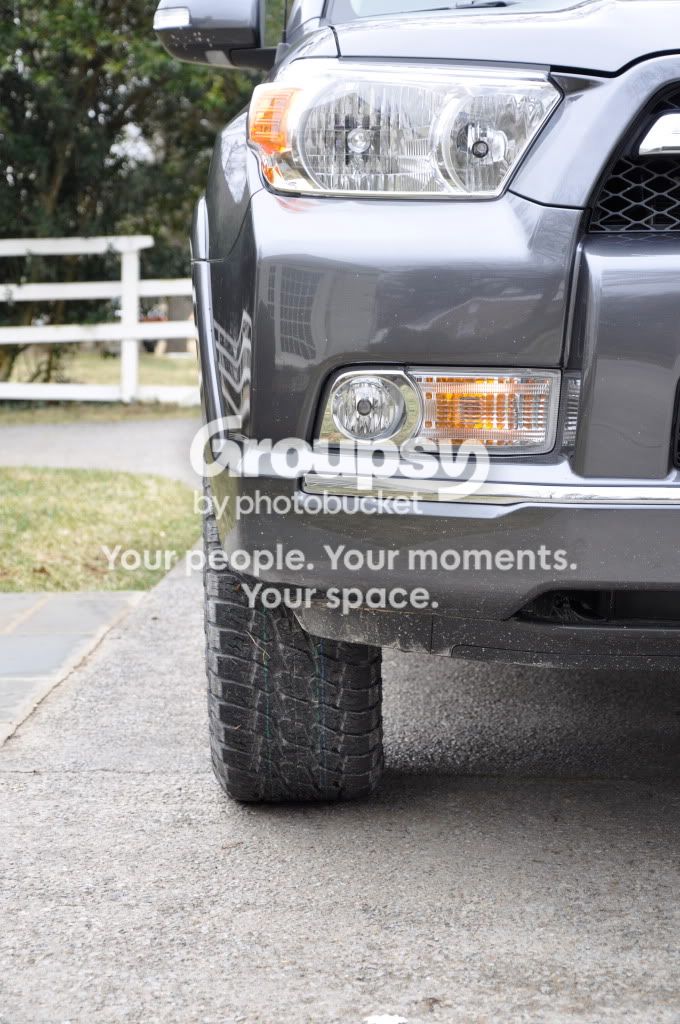
Looks great with the wider tire. Can't believe Toyota chose whimpy 245's for the stock width.
 
Thanks Shooter. One more thing. Any difference in stopping power while applying the brakes with the heavier tires?

Maybe a slight change. Its been hard for me to tell since we've had a mix of rain and snow ever since I had them installed. When the wet stuff dries up I'll be able to give you a better idea.
 
The 20 inch wheels are only 7 inches in width according to the specs. See attached.

Good find dcon..... I told everyone that in post #4 but was not sure what the "J" meant after the 20x7. The FJ wheels I just sold had 17x7.5J cast into them. I actually measured them as no tires were on them and they were 7.5 inches across.

As far as the repercussions of putting too wide a tire on too narrow a rim,I don't know or would not advise anybody on it.I have never done it. I'm sure there will be conflicting answers and obviously they do fit.

Here is a pic I just took of the backside of my Limited spare....Somebody let us know if yours differs.
<a href="http://s420.photobucket.com/albums/pp282/gharper60/?action=view&current=Picture020.jpg" target="_blank"><img src="http://i420.photobucket.com/albums/pp282/gharper60/Picture020.jpg" border="0" alt="Photobucket"></a>
 
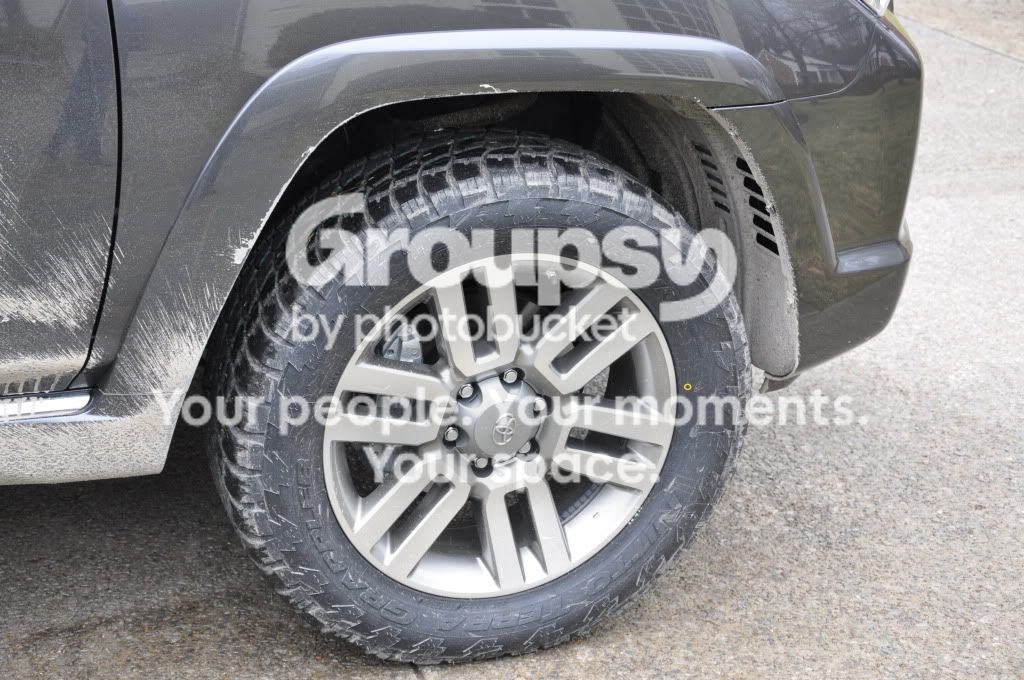
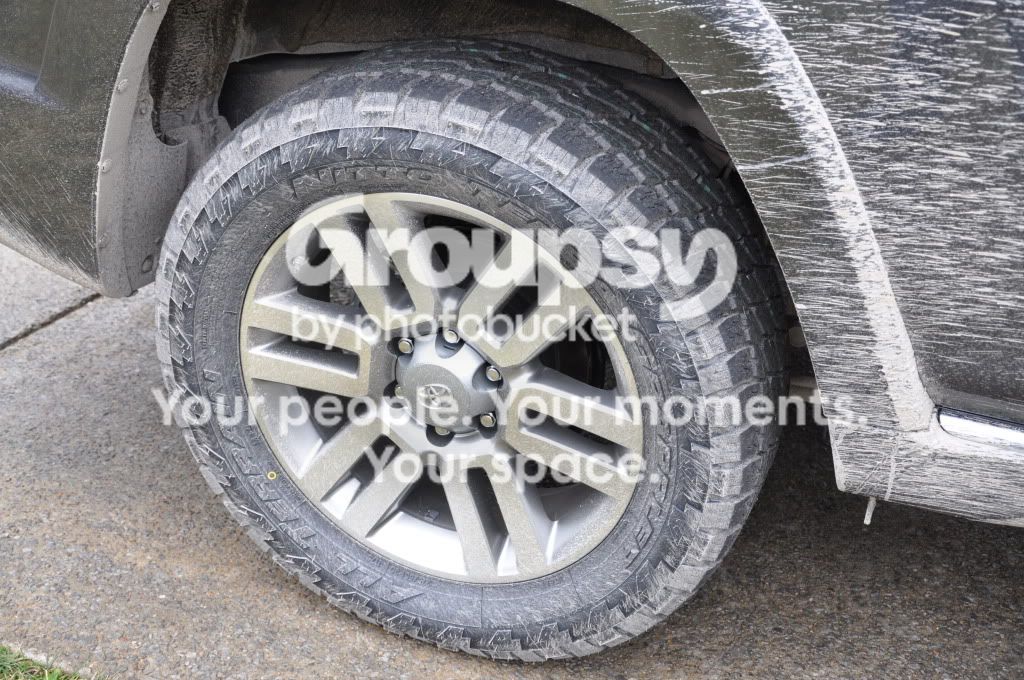
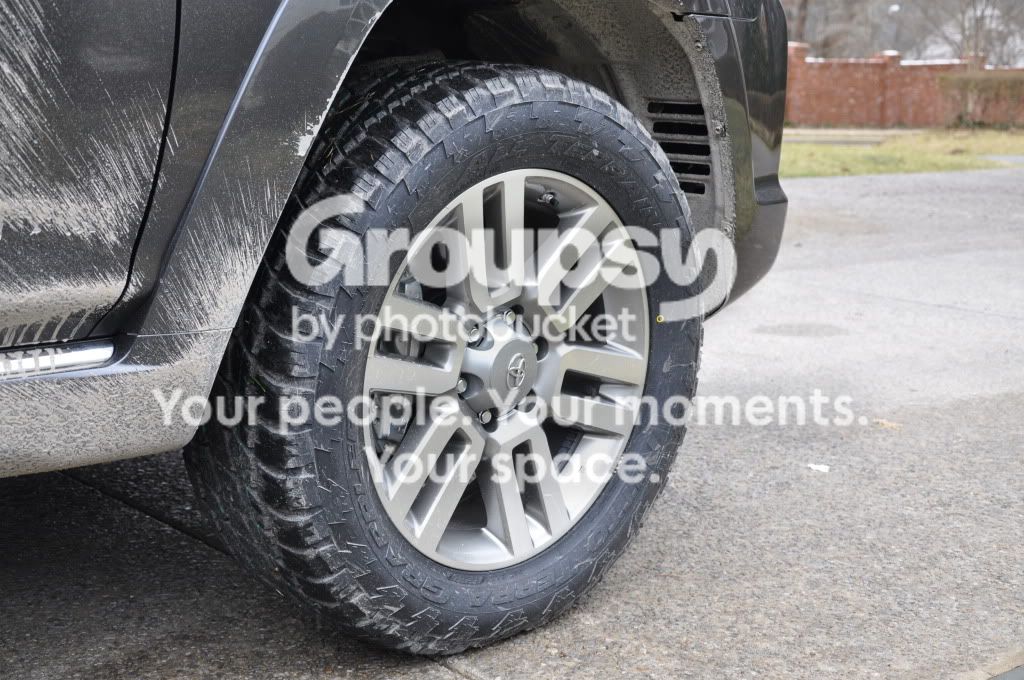
Here are some shots from the front and back.

DSC_0101-1.jpg~original


DSC_0102-1.jpg~original


DSC_0100-2.jpg~original

I know this is off topic, but why do dealers feel they need to brand this much!!! :uzi: A license plate frame is enough. This dealership had to put their name on an adhesive plate and tow hitch. You should charge them for advertising:banana:
 
I would say that the Limited got 245 tires due to fuel economy. Narrower tires = less drag = better fuel economy. Since the Limited has full time 4WD, they probably chose to go w/ narrower tires to keep the same fuel economy numbers as the 4WD SR5 and TE.

I've owned vehicles w/ full time 4WD and you certainly see a fuel economy penalty considering the size and performance of the vehicle.
 
Just installed some Nitto's in 275/55/20 on my limited 20's and they look great! No rubbing!

DSC_0100-1.jpg~original


DSC_0101.jpg~original


DSC_0102.jpg~original


DSC_0103.jpg~original

WOW!! That looks sooooooooo much better! Good job shooter!!


As far as rim width goes, when comparing a 7.5 inch wide rim to a 7 inch wide rim, when you think about it, the difference is only .25" on each side of the tire. The minimum recommended width is 7.5 inches. Keyword recommended. It doesn't mean you can't go any more or less in either direction. Its just not recommended. In other words, use common sense. I believe that a half inch (or quarter inch on each side) is still within the common sense borders. Just look at speed limits.
 
As far as rim width goes, when comparing a 7.5 inch wide rim to a 7 inch wide rim, when you think about it, the difference is only .25" on each side of the tire. The minimum recommended width is 7.5 inches. Keyword recommended. It doesn't mean you can't go any more or less in either direction. Its just not recommended. In other words, use common sense. I believe that a half inch (or quarter inch on each side) is still within the common sense borders. Just look at speed limits.

I agree....25" either side is not going to make any difference. But from the pictures the tire pressures look a little low, and that little yellow dot is supposed to be lined up with your tpms valve stem.
 
ContiCrossContact LX 275/55/20 approved rim width 7.0-9.0 might be something to consider for highway driving.:driving:
 
I agree....25" either side is not going to make any difference. But from the pictures the tire pressures look a little low, and that little yellow dot is supposed to be lined up with your tpms valve stem.

that just shows those tires were improperly installed. i hope this guy goes back to that tire store and gets the job done properly:lookout:
 
what is the significance of the yellow dot lining up with the valve stem?

The yellow dot represents the lightest spot in the tire. aligning it with the valve stem (which should be the heaviest part a rim) helps to balance the tires when mounted, so fewer weights have to be added to the rim.
 
The yellow dot represents the lightest spot in the tire. aligning it with the valve stem (which should be the heaviest part a rim) helps to balance the tires when mounted, so fewer weights have to be added to the rim.

learned something new! thanks, man...
 
The yellow dot represents the lightest spot in the tire. aligning it with the valve stem (which should be the heaviest part a rim) helps to balance the tires when mounted, so fewer weights have to be added to the rim.

interesting..mine look like they are lined up with a red/rust colored dot instead of the yellow one. whats the red one for?
 
interesting..mine look like they are lined up with a red/rust colored dot instead of the yellow one. whats the red one for?

If the stems are lined up with the red dots they are probably mounted correctly according to this article.

Tire Business - Log In

Link doesn't translate. So here some of the article

f you are staring at paint dots on truck tires, you should know that they were installed to assist you in correcting tire balance and radial runout conditions.

Manufacturers of commercial truck radial tires may apply a variety of colored dots on the lower sidewall for customer or factory purposes. Not all tires have markings and even the paint dots on those tires that do are temporary and can be scuffed off during normal shipping, handling and use. That’s why you don’t usually see them on used tires.

The dots on new tires that have them are not critical but are intended to guide technicians when positioning the tire on the rim during the mounting process.

Since it is very hard to make a tire that is perfectly balanced, some tire manufacturers apply yellow dots that indicate the tire’s light balance point and serve to help you balance the assembly while mounting the tire. The yellow dots should be aligned with the valve stem on both steel and aluminum wheels since this is the wheel’s heavy balance point. This will help minimize the amount of weight needed to balance a tire and wheel assembly. So usually, whenever you see a yellow dot, match it up with the valve stem.

This is always true except in cases where a red dot also appears in the lower sidewall. The red dot indicates the high point for both radial runout and radial force variation. As I’m sure you know, not only is it hard for tire manufacturers to make a perfectly balanced tire, it also is very difficult to make a perfectly round tire.

Tires tend to have high spots and low spots. The difference between the high and the low is called radial runout. Radial runout changes the radius of the rotating assembly, causing it to raise and lower the vehicle as it rolls along. That gives the perception that the tire is “hopping” or “bouncing” down the road and ends up delivering a rough ride to the driver and irregular wear to the tread.

Radial force variation is similar to radial runout and is a result of a heavy or thicker area being manufactured into the tire due to variations in component thickness, placement and overlapping. Radial force variation applies more force against the road at the tire’s thicker spot as the tire runs, which causes one sidewall to flex differently than the other. The result is tire/wheel assembly vibration and irregular tread wear.

To avoid or minimize these problems, whenever you see a red spot, match this up with the valve stem—unless you happen to have a steel wheel that has a dimple on the exterior side of the rim area. The dimple indicates the wheels’ low spot and is spec’ed by some original equipment manufacturers so that they can match mount tires and wheels installed on new trucks at the factory.

If you see both a red as well as a yellow dot on the tire, the red dot takes priority. An easy way to remember this is the phrase “Red Rules.” Ignore the yellow dot and match the red dot to the wheel low point dimple as some vehicle manufacturers do or, if no dimple is marked on the wheel, align the red dot with the valve stem.

 

Members online

Forum statistics

Threads
278,312
Messages
3,554,085
Members
248,016
Latest member
Advally Service

Trending content

Back
Top