2014 Sr5 4x4 Hydroplaning in H2

Coming from someone who's used to driving in torrential downpours, this is why you spun out. Not having any tread on your tires while driving in the rain is dangerous as hell.

When there is a light rain, Californians like [MENTION=115572]DesertCanyons[/MENTION] and myself, we call in sick, stay home and sleep in.... due to the road hazards and other drivers who can't drive.... plus the roads will be grid-locked anyways.... :whoo:
 
Hi Rigtec,

'...When I started moving left across lanes and accelerating I hit a thicker film of water and immediately, uncontrollably went into a sideways spin. It's amazing I didn't hit anyone or take out 4 other cars as I spun and slid over to the center divider barrier..."

I've had the same thing happen to me doing 65mph, 'SCARY'; ...but don't it make you glad that someone's watchin' over us... :pray:

Best!
 
Interesting thing happened to me today in this same vein. I was driving on a completely dry road and the right side wheels crossed a pavement seam, not a drop off but one of those gaps that have the filler in them. At the same time a strong gust of wind hit the truck broadside and the Trac Control/ Stability lamp came on for an instant. Felt pretty strange like the truck was hydroplaning on dry pavement. This has never happened before to my recollection and it really didn't seem to hurt anything, just felt a bit wonky.
 
You should feel the truck correcting it's 'slipping wheel / traction' as the tire begins to slide. I suggest this because it'll help you become familiar with some of your new truck's sophisticated 'Tracking & Braking Controls' and may dismiss the hydro-plane theory all together, Best!

Do those corrections always indicate with a dash light?

Also, how come the T4R sometimes indicates with just a light and other times with both a light and an audible alarm?

Finally, I'll throw one more idea out there not mentioned yet: tire pressure. Maybe someone way over-inflated them.
 
1) Do those corrections always indicate with a dash light?

2) Also, how come the T4R sometimes indicates with just a light and other times with both a light and an audible alarm?

3) Finally, I'll throw one more idea out there not mentioned yet: tire pressure. Maybe someone way over-inflated them.

#1 I don't know about this one.

#2 This is your wife screaming when you go into a sideways slide. I want to die like my grandfather did - in his sleep. Not like the passengers in his car, screaming to the bitter end. :lmao:

#3 would cause uneven tire wear at the center of the tread and a hard ride.
 
Do those corrections always indicate with a dash light?

I believe it does but usually happens way too fast to look at it.

Also, how come the T4R sometimes indicates with just a light and other times with both a light and an audible alarm?

Can't tell... mine has only done that about one or two times so I have no pattern to refer to.

Finally, I'll throw one more idea out there not mentioned yet: tire pressure. Maybe someone way over-inflated them.

I'm sorry I missed your question... Rgds
 
It is not normal to hydroplane at 30 mph if your stock tires were properly inflated. The speed at which any vehicle with pneumatic tires will hydroplane depends upon the tire pressure, not tread or whether it is in 2wd or 4wd. The generally accepted formula is 7.5 times the square root of the tire pressure is the speed at which a vehicle with pneumatic tires will hydroplane. So say your tp is 36 psi (to make it simple). Sqrt of 36 is 6. 6x7.5=45 mph. My T4R has 32 psi in the tires for road use, so that means it will hydroplane at 42 mph. To hydroplane at 30 mph, my math says your tp would have had to be around 16 psi.

NASA uses a formula that is 10xsq rt of the tp, which would mean you would have your tp down at 9 psi - which would destroy your tires on the road if you drove very far at that tp. Semi trucks which I'm told run as high as 100 psi in their tires, should not hydroplane at "normal" highway speeds.
 
Last edited:
It is not normal to hydroplane at 30 mph if your stock tires were properly inflated. The speed at which any vehicle with pneumatic tires will hydroplane depends upon the tire pressure, not tread or whether it is in 2wd or 4wd. The generally accepted formula is 7.5 times the square root of the tire pressure is the speed at which a vehicle with pneumatic tires will hydroplane. So say your tp is 36 psi (to make it simple). Sqrt of 36 is 6. 6x7.5=45 mph. My T4R has 32 psi in the tires for road use, so that means it will hydroplane at 42 mph. To hydroplane at 30 mph, my math says your tp would have had to be around 16 psi.

NASA uses a formula that is 10xsq rt of the tp, which would mean you would have your tp down at 9 psi - which would destroy your tires on the road if you drove very far at that tp. Semi trucks which I'm told run as high as 100 psi in their tires, should not hydroplane at "normal" highway speeds.

Alright guy.
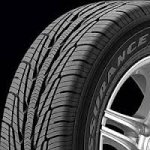
You and I go out on the road with identical cars with identical sized tires and all the tires have 36 psi. The only difference is YOUR TIRES ARE BALD and I have a brand new set of GOODYEAR ASSURANCE TRIPLETREDS. We wait until there is around a 1/10 of an inch of standing water and we take off like a bat out of hell up to 60 mph through the water. You are telling me we are both going to hydroplane at 45 mph? !???? !!!!????????

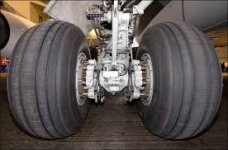
After I go back and help you out of the ditch we will talk about the differences between an aircraft tire and a modern radial designed to evacuate the water wedge from beneath the tire. We will also talk about the differences in ground pressure air pressure will cause in a torus shaped tire. Here is my reference documentation: http://docs.trb.org/prp/10-1086.pdf

Moral of the story? Post it right or don't post at all.
 
Of course tread has something to do with hydroplaning, but tire pressure still has more to do with the speed at which you will hydroplane than does tread design. Also the depth of the water, and multiple other factors. The generally accepted formula is simply a rule of thumb, and yes, even with your spiffy off road tires, with an aggressive tread, can still hydroplane at 45 mph or less, if the water is deep enough to separate the tread from the paving surface, and if your tires are inflated at 36 psi or less. There is plenty of information on this topic available.
 
...The speed at which any vehicle with pneumatic tires will hydroplane depends upon the tire pressure, not tread or whether it is in 2wd or 4wd...

This is what you said...

Of course tread has something to do with hydroplaning, but tire pressure still has more to do with the speed at which you will hydroplane than does tread design. Also the depth of the water, and multiple other factors....

Now THIS is what you said. Which is right?

BTW did you read the dissertation I posted the link to? That will answer all your questions and unfortunately automobile tire pressure is NOT more important than tread depth and type to keep from hydroplaning. NASA is right... for a specific type and construction of tire. Here, let me give you a pic or two:
 

Attachments

  • airplane tire.jpg
    airplane tire.jpg
    8.9 KB · Views: 520
  • tripletred.jpg
    tripletred.jpg
    9.7 KB · Views: 256

Members online

Forum statistics

Threads
278,316
Messages
3,554,107
Members
248,016
Latest member
Advally Service

Trending content

Back
Top