[MENTION=63060]rickashay[/MENTION]
I agree with most everything that linked posts says except for one thing.
He fails to realize that the gusset is not a simple flat plate, which changes it's load/strength characteristics as well as how it's welded to the spindle.
A few people have seen the spindles "bow" over time due to very heavy set-ups (i.e. vehicle and unsprung weight) and typically repeated abuse such as dropping the vehicle on a tire (like coming off a large obstacle) and/or faster off-roading driving (i.e. moguls, baja-style driving conditions). This isn't a typical or normal thing, so I'd say gusseting is more of an insurance/preventative thing than a requirement.
For example, I recently had a run in with a log at about 30mph right into the passenger tire (an atypical impact/force to the suspension) and obviously I bent the crap out of that spindle (exactly where a lot of people have been seeing them bent, the thin section bowed).
Factory spindle for reference (sorry for the large photo, it's not mine)
The spindles both curve inwards and slightly backwards in design, so certain forces if imparted enough could "tweak" the spindle out of designed curvature. In many cases you may not have as catastrophic a misalignment as mine (I borrowed a member's 1.5" spacer to space the wheel away from the UCA enough to limp it down the trail). But you will notice alignment that is way off and/or that can't be brought within desired measurements, SAI that's very off (depending on your suspension set-up SAI will be out of whack anyways), and/or rubbing/handling characteristics because the suspension geometry has changed.
Which brings me to why I disagree with one point that was mentioned in the linked post. The poster fails to realize that the 1/8" plate is not just a flat thing tacked onto the side. It's a pre-bent and strategically welded section of reinforcement taking advantage of that specific design. The fact that it's bent provides a partial "boxing" effect to the spindle vs. just a flat plate, the additional ribs (as in the sway-bar TC ones) provide a bit better spread for the forces that would "bow" the spindle. This is very common in many applications as using bent gussets or structures of thinner material to reinforce thicker main assemblies is a great way to reduce weight while retaining similar or in some cases better strength characteristics.
It won't prevent the hub bore from cracking as he mentioned before, but it will help prevent the long, thin spindle section from "bowing" under certain inpacts/repetitive forces.
I would say that if you are overhauling the suspension and you know a good welder, for $60 it's not a bad idea to just beef them up pre-preemptively if you know you're gonna abuse your vehicle.
Post Note-
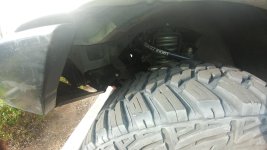
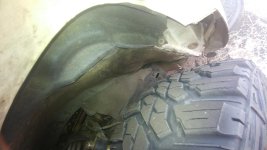
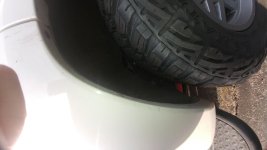
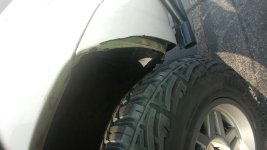
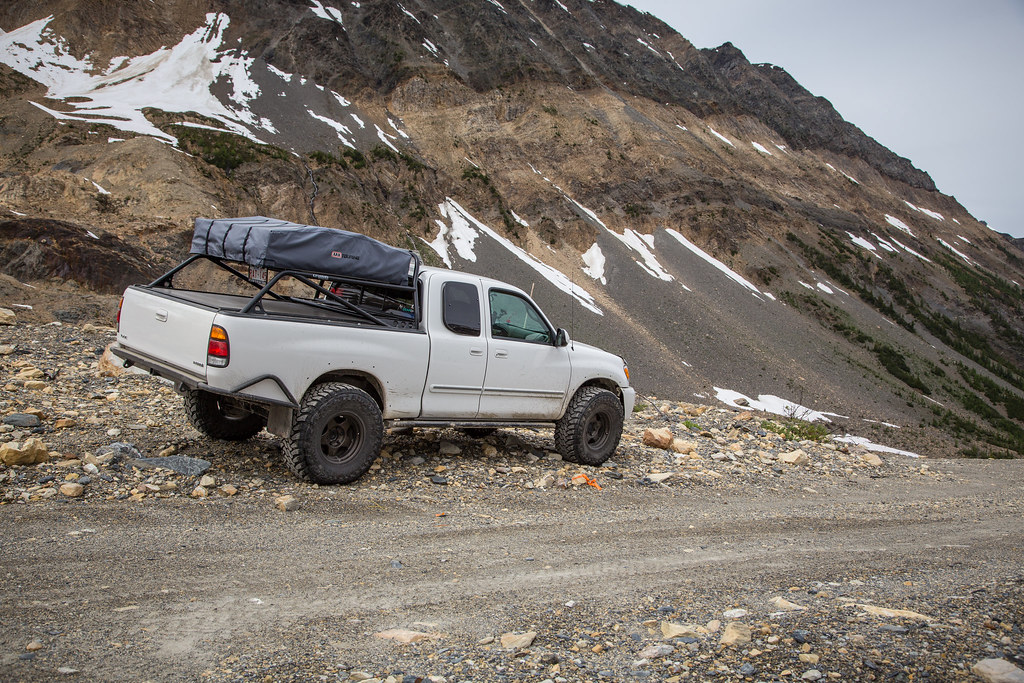
I'm not against trimming or cutting up the body for clearance, Body Lifts are just easier to work with (I highly recommend anyone doing a body lift invest in new body mounts); cutting up the body and fenders to fit the tires (harder to do in the rear of the 4th gens because the rear door is part of the rear fender well itself and means relocating the rear axle backwards and extending the back wheel well backwards and modifying the body to accommodate that) is a bit more work than trying to get by with a 1~1.5" Body Lift. Yes it raises the center of gravity some, but that's why a lot of use went with a 1 or 1.5" vs. a 2"+ body lift, to maintain a lower CoG while trying to clear 35's. Realistically you can just hack the fenders up, throw spacers on there, and then extend the bump-stops to where you have basically no up-travel and now you can run 35's. But that falls under "mall-crawler", to really make them functional without resorting to a body lift requires more fabrication than most people are willing to do at that point in their build.
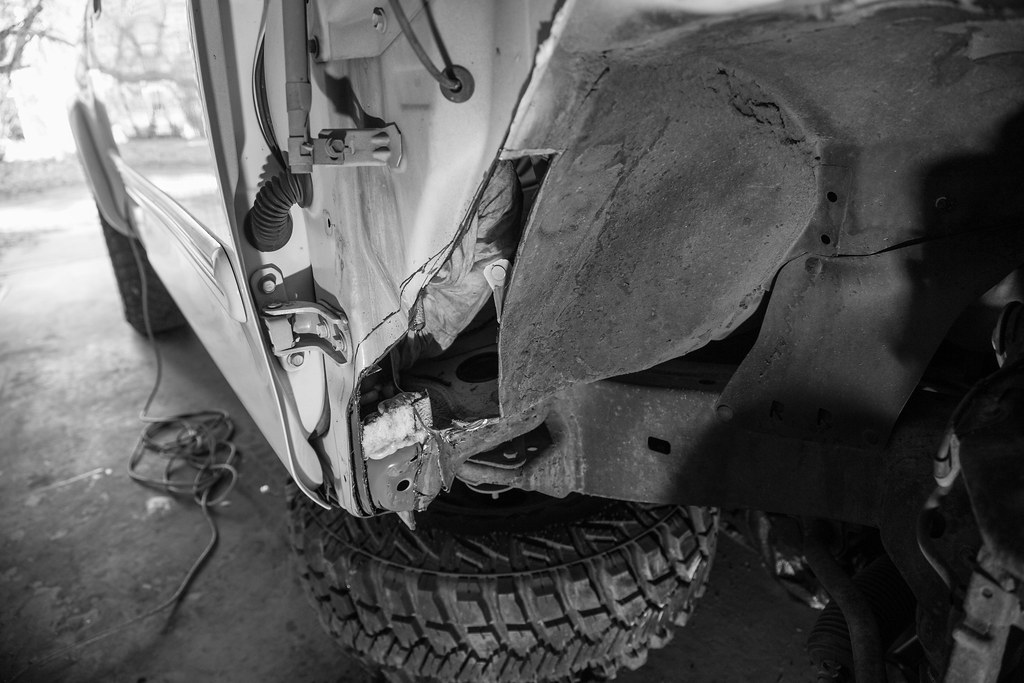
Side note, did you have the body panels restitched and then capped after you trimmed it? Those pinch welds are there because it's where about 4~6 (at least on the 4th gens) structural panels of the body meet and tie to the firewall. Just hacking them off and slapping a plate over the hole might work, but it could also introduce un-predictable forces on the body in that section. I eventually will probably trim that spot on my vehicle as well, but I will probably have one or two plates laser cut with slots so that I can tie all the body panels together to the new plate (so it will act similarly to the purpose of the original pinch weld) and then cap that plate; ideally retaining some semblance of structural integrity. (I'm not trying to put you on the spot, I'm just trying to explain my reasoning should anyone reading this thread not understand why I am saying to not just cap it.

)
I get a lot of people have done it and "nothing's happened so it must be fine", but what you're essentially doing is cutting up a uni-body (that's basically how the body is built) and not reinforcing what you've cut out if you just cap it. The "well nothing bad has happened yet" excuse (not that I am accusing you of that, but it's the most common thing I hear) tends to make me cringe when I see stuff being done incorrectly, because it's the same kind of excuse you get from drunk drivers on why they keep driving piss drunk...




 )
)