5th Gen Oil Recommendation? New Owner!

What’s your go to oil?


  • Total voters
    541
I have not seen a thermostat colder than 192 in an emissions controlled vehicle in 30 years!......and a 180 would certainly cost some mpg! Engine must get over 160 just to go into closed loop on the ECU! Maybe the slow rise to temp is part of the reason We all are disappointed in the MPG? It would be running very rich until it gets up to running temp and that needs to be around 200 for efficiency.

I own a 2011 Chevy HHR Flexfuel with a 2.2L Ecotech engine which came oem with a 180° tstat.
It has a digital display as well as a gauge. The digital reads between 180 and 185 with the a/c on in S Florida.
Sitting at a lite it will climb up to over 210 simply because GM in their infinite wisdom decided not to turn on the radiator fan until 217°.
I'm not complaining about the temp so much as the 30+ temp swing.
Once warmed up, an engine should remain pretty constant in temperature.
I thought everyone knew that.:biggrin2:
 
a follow up on this - just did a full oil change with QSUD 5W-30, then immediately drove 1400 miles up and down the east coast for Christmas vacation.

fully loaded with luggage and 4 passengers, AND a full Thule Sonic XL cargo box on the roof. still running the factory Dunlop AT20 highway tires. cruise set between 72-75 most of the trip. temps bounced between 65 and 35.

19.5 MPG average according to the trip computer. if we didn't have the cargo box on the roof i'm 100% sure we could have matched or bettered the 20 MPG highway rating. i'm not as concerned about city ratings since that can vary so much based on traffic and driving habits whereas highway driving is more steady state.

i know its not a direct comparison to running 20wt in the sump on the same route, but i think its fair to say you can get so close to (or in some cases, as good as) factory highway ratings running a 30 weight, that it hardly matters.

It is my understanding that a primary reason for the 20weight is for the vvt system to work properly.
I use Mobil 1 0w40 in all my vehicles, but since Toyota specced this 0w20, I was leary of using the 0w40 for that reason alone. It's what came factory for Porsche, Mercedes and Corvette, pretty decent oil with a better add package.
 
It is my understanding that a primary reason for the 20weight is for the vvt system to work properly.
I use Mobil 1 0w40 in all my vehicles, but since Toyota specced this 0w20, I was leary of using the 0w40 for that reason alone. It's what came factory for Porsche, Mercedes and Corvette, pretty decent oil with a better add package.

Mobile 1 0w40 is the old school Super Oil; still one of the best. I really like 40 weight oils, they are less regulated and typically have a robust add pack.
Just as an FYI my manual says you can run a thicker oil if you operate the vehicle at high speed. Not sure what Toyotas definition of high-speed is but I think 30 weigh oil will be fine. If you do run the 40 please let us know how it goes; the manual also recommends 40 weight oil for Central America region.
 
Mobile 1 0w40 is the old school Super Oil; still one of the best. I really like 40 weight oils, they are less regulated and typically have a robust add pack.

Just as an FYI my manual says you can run a thicker oil if you operate the vehicle at high speed. Not sure what Toyotas definition of high-speed is but I think 30 weigh oil will be fine. If you do run the 40 please let us know how it goes; the manual also recommends 40 weight oil for Central America region.
I wonder what would work well here in Arizona. The part I live in sees over 120° for months at a time.

Sent from my SM-G955U using Tapatalk
 
Mobile 1 0w40 is the old school Super Oil; still one of the best. I really like 40 weight oils, they are less regulated and typically have a robust add pack.
Just as an FYI my manual says you can run a thicker oil if you operate the vehicle at high speed. Not sure what Toyotas definition of high-speed is but I think 30 weigh oil will be fine. If you do run the 40 please let us know how it goes; the manual also recommends 40 weight oil for Central America region.

If it were staying here in hot S Florida yes, but unfortunately it will be going to northern Michigan this coming Sunday with my 20 year old daughter to college. She needs a 4x4 and that HHR didn't cut it with only about 4" ground clearance.
I just bought this 4Runner a week ago so I have a lot to learn.

I had her buy the 0w40 last year for an oil change and the mechanics up there threw a fit since GM specced 5w30 :)

The only thing that really concerns me is the operation of the VVT system and what weight oil it could handle. I'm about the same weather wise as Central America here, but Michigan.........
 
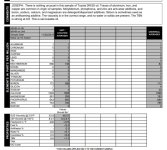
I am pretty active on BITOG and I posted the VOA on the new Toyota 0W-20 SN Plus blend - my sample was taken from a bottle with a blend date code of Oct 2019 - VOA below.

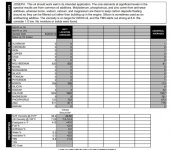
I also like Eneos Racing Street 0W-20 SN oil. This oil is not any cheaper but it's another option. It has higher moly and zinc than the Toyota oil. VOA below.

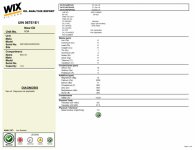
Idemitsu Eco Medalist Advanced Moly 0W-20 Engine Oil is also high in moly and zinc. VOA below. Amazon has a good price on this oil at $37.00 for 5 quarts - Amazon.com: ZEPRO 30010095-95300C020 Eco Medalist Advanced Moly 0W-20 Engine Oil (5 Quart), 160. Fluid_Ounces: Automotive

All three also have healthy doses of Boron:

Moly Content
Toyota - 656ppm
Eneos - 835ppm
Idemitsu - 668ppm

Zinc Content
Toyota - 753ppm
Eneos - 811ppm
Idemitsu - 804ppm

Boron Content
Toyota - 173ppm
Eneos - 358ppm
Idemitsu - 264ppm

I run 5k OCI, use Amsoil or Toyota TRD oil filters (they are the same), switched all my 4Runners to the aluminium filter housings and replaced the factory drain plug with Gold Plug magnetic plugs.

Most Japaneses auto manufacturers use high moly, high zinc oils - Toyota, Mazda and Subaru.
 

Attachments

  • Annotation 2019-12-31 001740.jpg
    Annotation 2019-12-31 001740.jpg
    136.5 KB · Views: 1,768
  • Annotation 2019-12-31 001851.jpg
    Annotation 2019-12-31 001851.jpg
    134.2 KB · Views: 1,749
  • full-82059-25909-voa_idemitsu_zepro_em_advmoly.jpg
    full-82059-25909-voa_idemitsu_zepro_em_advmoly.jpg
    65.1 KB · Views: 1,822
Last edited:
If it were staying here in hot S Florida yes, but unfortunately it will be going to northern Michigan this coming Sunday with my 20 year old daughter to college. She needs a 4x4 and that HHR didn't cut it with only about 4" ground clearance.
I just bought this 4Runner a week ago so I have a lot to learn.

I had her buy the 0w40 last year for an oil change and the mechanics up there threw a fit since GM specced 5w30 :)

The only thing that really concerns me is the operation of the VVT system and what weight oil it could handle. I'm about the same weather wise as Central America here, but Michigan.........

Climate is something I always consider when choosing oil viscosity. Norther Michigan I would be running a 0w20 or a 0w30 at the most during the winter.
 
I am pretty active on BITOG and I posted the VOA on the new Toyota 0W-20 SN Plus blend - my sample was taken from a bottle with a blend date code of Oct 2019 - VOA below.

I also like Eneos Racing Street 0W-20 SN oil. This oil is not any cheaper but it's another option. It has higher moly and zinc than the Toyota oil. VOA below.

Idemitsu Eco Medalist Advanced Moly 0W-20 Engine Oil is also high in moly and zinc. VOA below. Amazon has a good price on this oil at $37.00 for 5 quarts - Amazon.com: ZEPRO 30010095-95300C020 Eco Medalist Advanced Moly 0W-20 Engine Oil (5 Quart), 160. Fluid_Ounces: Automotive

All three also have healthy doses of Boron:

Moly Content
Toyota - 656ppm
Eneos - 835ppm
Idemitsu - 668ppm

Zinc Content
Toyota - 753ppm
Eneos - 811ppm
Idemitsu - 804ppm

Boron Content
Toyota - 173ppm
Eneos - 358ppm
Idemitsu - 264ppm

I run 5k OCI, use Amsoil or Toyota TRD oil filters (they are the same), switched all my 4Runners to the aluminium filter housings and replaced the factory drain plug with Gold Plug magnetic plugs.

Most Japaneses auto manufacturers use high moly, high zinc oils - Toyota, Mazda and Subaru.

Wow those 0w20’s are loaded with additives! Do you know anything about the base oil used in those?
 
Yes all have big additive packages. Plus a lot of calcium in the ENEOS and Idemitsu oils as well. All are Group 3+ base oils.

The anti-wear package in the ENEOS oil is the highest Moly & Zinc package I have seen in an API spec oil. When I use this oil I do get slightly better MPG's. It's an interesting oil.

ENEOS is manufactured and sold by JX Nippon Oil & Energy Corp., the largest oil company in Japan. They manufactures/blend for the US market in Schaumburg, IL

Idemitsu oil is the factory fill in Mazda's. Idemitsu manufactures/blend for the US market in Jeffersonville, Indiana. They are the eighth largest lubricant manufacturer globally.

As noted in the United States - Toyota's oil is a special blend done by ExxonMobil. It's a good stout oil - at ~$6.50 a quart it's very reasonably priced for the additive package.

The 4Runner's 1GR-FE 4.0L engine is "fairly" easy on oil, no real known issues with the "possible" exception of higher mileage engines having timing chain stretch, code P0016. The anti-wear packages in all these oils will certainly help with any possible timing chain stretch over the life of the engine. This one of the the reasons the Toyota factory oil has such high moly and zinc.

Since the engine is still port injected there are none of the GDI carbon build-up problems. I don't over read into the NOACK percentages. They are very important for GDI's but much less important for port injected vehicles, especially with 5k OCI's.
 

Attachments

Last edited:
How did you like the 5w30 overall? Gas mileage looks like minimal differences between the 30 and 20 weight oils. How was the cold starts? Any sluggishness?

thanks, and no, no discernable difference at all. on the coldest morning while we were in MD, i saw 26 degrees on the dash when getting the engine started. cranked up with the flick of the key and i noticed no unusual noises. i drive all cold engines pretty gingerly for the first 10-15 mins until the oil comes up to temp, but in that time i didn't notice any hesitation or sluggishness.

i will absolutely do a UOA once this oil is changed out. take it with a grain of salt though, as the engine only has 6k miles on it right now and it'll still show higher than normal wear metals as it continues to break in. but...it'll at least make a good baseline for future comparison.

It is my understanding that a primary reason for the 20weight is for the vvt system to work properly.
I use Mobil 1 0w40 in all my vehicles, but since Toyota specced this 0w20, I was leary of using the 0w40 for that reason alone. It's what came factory for Porsche, Mercedes and Corvette, pretty decent oil with a better add package.

not directed at you personally but i generally disagree with the assertion its required for correct VVT operation - if that was the case they would not allow higher viscosities for high speed/severe use as stated in the manual, or the higher viscosities that Toyota specifically calls for in markets outside the US in other 1GR equipped models. just my opinion anyway.

interesting you bring up M1 0W-40...one of my favorite oils! cheap, easy to find, good shear stability, and the add pack. i've actually been running this oil in my old civic Si, a car specced for a 30 weight domestically but calls for up to a 40 weight in other markets. so far i have 2 blackstone oil analysis on it (6600 and 8200 mile runs) using the 0W-40 and the results have been outstanding. that's on a 100k mile engine that regularly sees its 8000 RPM redline btw. i think a 40 weight is likely overkill for the 1GR so i don't intend to use it in our engine though, but my point is that it pays to look at what oil's specced for other markets and that will help to discern just how much our CAFE compliance dictates oil viscosities for JUST our market while the rest of the globe uses something else.

Just as an FYI my manual says you can run a thicker oil if you operate the vehicle at high speed. Not sure what Toyotas definition of high-speed is but I think 30 weigh oil will be fine. If you do run the 40 please let us know how it goes; the manual also recommends 40 weight oil for Central America region.

my take on it is that its Toyota legal-speak for "if you're going to run the engine under heavy load, and get it real hot, it needs a thicker viscosity". i think comparable use would be hard crawling, towing, extended grade climbing and use in high temps. seems to me they have to dance around the issue with vague descriptions to ensure customers feel compelled to stick with the thinner 20 weight so as to keep Toyota's fleet MPG high enough to maintain their CAFE compliance. again, could be wrong on that, but it makes sense to me.

I wonder what would work well here in Arizona. The part I live in sees over 120° for months at a time.

personally, i would definitely use something thicker than a 20wt for your area...maybe not a 40, but a good 30 weight. in the manual it calls out thicker viscosities for Puerto Rico, up to a 15W-40 in fact - but as far as i can tell, no part of PR gets hotter than AZ! i think its another example of Toyota's legal team having to step around the "mainland US" viscosity to give a hint at what they really want you to use for use in high temps. i mean think about it - its not like PR gets so much hotter, or is vastly more extreme terrain than many places we all venture here in the US, and they can clearly get 20wt oil out there if they want it. i'd go so far as to say most of the western US is a more extreme terrain than PR.

Climate is something I always consider when choosing oil viscosity.

absolutely. here in GA we saw a 100 degree day in early October this year! it gets sweltering in the summer, and stays that way 24hrs a day. that's part of the reason i stepped up to a 30 from a 20. equip your car for your conditions and patterns of use.

The 4Runner's 1GR-FE 4.0L engine is "fairly" easy on oil, no real known issues with the "possible" exception of higher mileage engines having timing chain stretch, code P0016. The anti-wear packages in all these oils will certainly help with any possible timing chain stretch over the life of the engine. This one of the the reasons the Toyota factory oil has such high moly and zinc.

outstanding info and lots of good details there to mull over. thanks for that.

i've noticed the 1GR seems, at least to me, to shed more FE than the typical 1PPM per 1000 miles average you see on most engines. i always wondered if that was maybe due to timing chain wear.

 
Last edited:
Mobile 1 0w40 is the old school Super Oil; still one of the best. I really like 40 weight oils, they are less regulated and typically have a robust add pack.
Just as an FYI my manual says you can run a thicker oil if you operate the vehicle at high speed. Not sure what Toyotas definition of high-speed is but I think 30 weigh oil will be fine. If you do run the 40 please let us know how it goes; the manual also recommends 40 weight oil for Central America region.

I need to correct the Central America comment. Manual States Puerto Rico not Panama. I do apologize for my confusion.

Interesting enough the following oils are approved for Puerto Rico:

0w20
5w20
5w30
10w30
15w40

SEE PIC!
 

Attachments

  • D8490349-0BE1-414B-8390-C7C85A1DBD27.jpg
    D8490349-0BE1-414B-8390-C7C85A1DBD27.jpg
    131.6 KB · Views: 1,708
Ambient air temp is not the issue, it's the water temp that dictates the engine's temp in the end. The engine oil isn't going to care if its 120 out so much as what the coolant temp is. If the temp is 200 degrees on the dash it can be 60 or 120 out, oil doesn't care. Engine temp runs between 180 and 220 roughly, and that is no problem for even a 20W as a Synth is stable to around 425. Engine oil will never see 400+ as the engine will have blown before it gets there.
 
You're the only one I have seen with fitment issues using the OEM aluminum housing. I put one on my 2016 4Runner, 2019 Highlander, and I bought one for my Dad for his 2019 4Runner. All of them fit like a glove with zero issues. Not sure what's going on with yours but there is more to the story. As for the gear oil, good call. I swapped mine front and rear at 11K and there was A LOT of speckle in the rear diff fluid. Front looked brand new but I was still happy to get it out of there. Engine oil every 5k, gear oil every 30k, transmission and transfer case every 50k Absolutely no one will convince me otherwise either. It is literally impossible to over maintain a vehicle. I challenge the people that say "you're overthinking it" to prove me wrong.


I just changed my oil & filter, giving the Toyota oil a shot to see if it's worth the extra change and I picked up an aluminum housing as well. Noticed that it spun on much easier than stock plastic and I was actually able to fully seat the housing metal to metal. Same with the drain plug. I double checked the new o-rings and all. I ran the truck to see if any leaks appeared and it looked OK after a few minutes of idle. Did you have the same experience with the new housing or did it fit very snug like the stock plastic?


Sent from my iPhone using Tapatalk
 
I just changed my oil & filter, giving the Toyota oil a shot to see if it's worth the extra change and I picked up an aluminum housing as well. Noticed that it spun on much easier than stock plastic and I was actually able to fully seat the housing metal to metal. Same with the drain plug. I double checked the new o-rings and all. I ran the truck to see if any leaks appeared and it looked OK after a few minutes of idle. Did you have the same experience with the new housing or did it fit very snug like the stock plastic?

I changed out the oil housing to the aluminum version on all three of my 4Runners and I have had the same experience that you described. I was able to easily spin the metal housing all the way up to the mounting base. I have not experienced any leaking to date.
 
I changed out the oil housing to the aluminum version on all three of my 4Runners and I have had the same experience that you described. I was able to easily spin the metal housing all the way up to the mounting base. I have not experienced any leaking to date.


Thanks for the feedback! I'm hoping the new housing works as yours have; it looks better if nothing else (until the unruly skid plate covers it up).


Sent from my iPhone using Tapatalk
 
Ambient air temp is not the issue

you're gonna want to fill in Toyota's engineers on that then (ambient temp/viscosity chart on page 337). this is for the FJ sold down under between Feb 2011-Aug 2016.

every car i've owned shows a similar chart in the owners manual. sure, oil temps settle close to water temps just putzing around town but they'll rise independently if you run the engine hard, regardless of water temp. the hotter the ambient temps, the harder it is the for the oil circuit to shed the heat and come back down to normal temps unless you take the load/RPMs off the engine or add a cooler. a good example would be towing a heavy trailer up a long grade in desert heat...extended high RPMs and constant high load.

a Synth is stable to around 425.

i could be wrong but this sounds like you're talking flashpoint, not viscosity. the flashpoint of most synths is between 400-430F. that's where the oil gets so hot that the vapor around it will literally catch on fire if exposed to an ignition source. you're absolutely right though, by that temp you've turned your engine into slag anyway.

oil at 220 is ideal. at 250 degrees the viscosity of an oil will start to dive. by 280F a 20wt is at about half its designated viscosity (using this approximate calculator and this report on TGMO's 40/100C values...start the chart at 100c). bad news for oil pressure.

an extreme example for sure but shows how viscosity dips at higher oil temps in hotter climates.
 
I just changed my oil & filter, giving the Toyota oil a shot to see if it's worth the extra change and I picked up an aluminum housing as well. Noticed that it spun on much easier than stock plastic and I was actually able to fully seat the housing metal to metal. Same with the drain plug. I double checked the new o-rings and all. I ran the truck to see if any leaks appeared and it looked OK after a few minutes of idle. Did you have the same experience with the new housing or did it fit very snug like the stock plastic?


Sent from my iPhone using Tapatalk

Metal housing is much smoother. Spins all the way down until the o ring seats and then I snug it. Much nicer install than the plastic housing.
 
you're gonna want to fill in Toyota's engineers on that then (ambient temp/viscosity chart on page 337). this is for the FJ sold down under between Feb 2011-Aug 2016.

every car i've owned shows a similar chart in the owners manual. sure, oil temps settle close to water temps just putzing around town but they'll rise independently if you run the engine hard, regardless of water temp. the hotter the ambient temps, the harder it is the for the oil circuit to shed the heat and come back down to normal temps unless you take the load/RPMs off the engine or add a cooler. a good example would be towing a heavy trailer up a long grade in desert heat...extended high RPMs and constant high load.


i could be wrong but this sounds like you're talking flashpoint, not viscosity. the flashpoint of most synths is between 400-430F. that's where the oil gets so hot that the vapor around it will literally catch on fire if exposed to an ignition source. you're absolutely right though, by that temp you've turned your engine into slag anyway.

oil at 220 is ideal. at 250 degrees the viscosity of an oil will start to dive. by 280F a 20wt is at about half its designated viscosity (using this approximate calculator and this report on TGMO's 40/100C values...start the chart at 100c). bad news for oil pressure.

an extreme example for sure but shows how viscosity dips at higher oil temps in hotter climates.
All technically true, but in practice, if you have a functional cooling system you will overheat that before your oil temp ever gets to a damaging temp. I agree that oil temps will fluctuate independently for brief periods, but in normal driving I find that the coolant will keep that range within tolerance for any modern oil. All this being dependent on a cooling system with enough reserve to cover the range......4Runner seems to do that nicely as I live in one of the hottest places cars are used and can't raise the temp more than a tick over the middle of the gauge in 120+ here. Yes, air temp adds a increased load to the system, but it is sized appropriately and can shed the extra heat effectively from my experience.
 

Members online

Forum statistics

Threads
278,316
Messages
3,554,120
Members
248,016
Latest member
Advally Service

Trending content

Back
Top