foo
Banned
Advice requested from those of you who have mounted tires & balanced wheels at home
Advice requested from those of you who dismount, patch, and mount your own tires & (static) balance your own wheels at home.
If you have never dimounted, patched, mounted or balanced your own tires at home, you probably won't be able to add much practical value to this thread; however if you have actually dismounted, patched, mounted and balanced SUV tires at home, you almost certainly can add valuable pragmatic hints to this thread (such that we'll all learn from your experience).
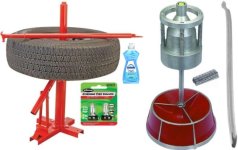
At a rough cost of around $200 (which pays for itself after about the 10th mounted tire), I already bought or will buy the following tools from Harbor Freight:
I will need to securely mount the tire changing tool, either to a large pallet, or to the concrete of my driveway or sidewalk (or maybe on the ground in the dirt somehow, temporarily).
I'll need four new tire valve stems so a basic question is which ones you recommend (e.g., Pep Boys, Kragen/O'Reilly, Autozone).
Other than tire valves, I'm hoping the tools I bought today are adequate, because I already have:
Here's the background:
A relative of mine owns the 2WD '97 4Runner Base Model (4cyl), and all four tires are worn well past the wear bars.
She has never once driven off road (not even on the shoulder of a road!), and she just ordered, online, the Nexen N'Priz AH5 P225/75R15 tires (load range 102S, Treadwear 460, Traction A, Temperature (aka Speed) A for about $60 each.
When the tires arrive in a few days, I plan on mounting and static balancing them for her and just want to ask for tactical advice from those of you who have done the task yourself.
I'm well aware of the difference between dynamic road-force balancing and static balancing.
Therefore, my plan is simple:
a. Drive the vehicle to determine if there is any pre-existing vibration,
b. Break the beads, and remove the old tires and wheel-balance weights,
c. Mount the new tires & new valve stems & pressurize to spec,
d. Balance the wheels statically,
e. Test drive at highway speeds for noticeable vibration,
f. If there is any wheel-related vibration, then (and only then) would I simply take the wheels in for dynamic road force balancing.
Note that I am aware that tire manufacturers use different paint dot schemes for match mounting:
I have a few questions about the stock Toyota 15-inch wheels because where I mount the red spot (if the tires have a red spot, which takes priority over the yellow spot) depends on whether Toyota put a dimple in the steel rim to indicate the steel wheel's low spot.
All I'm asking for is practical advice and hints and helpful suggestions for how to do the job best from those of you who have actually mounted their own tires and balanced them yourself at home with standard home equipment.
a. Did I miss anything that I'll need to do the job right?
b. Do you have any tricks or hints to make the job easier, simpler, or better?
Advice requested from those of you who dismount, patch, and mount your own tires & (static) balance your own wheels at home.
If you have never dimounted, patched, mounted or balanced your own tires at home, you probably won't be able to add much practical value to this thread; however if you have actually dismounted, patched, mounted and balanced SUV tires at home, you almost certainly can add valuable pragmatic hints to this thread (such that we'll all learn from your experience).
At a rough cost of around $200 (which pays for itself after about the 10th mounted tire), I already bought or will buy the following tools from Harbor Freight:
- $50 Pittsburgh Manual Tire Changer HF #62317
- $80 Pittsburgh Portable Wheel Balancer HF #39741
- $10 1/4 oz. Wheel Weights HF #67225
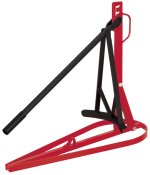
- $20 Tire Bead Breaker with Swan Neck HF #67403
- $10 Pittsburgh 24 in. General Purpose Tire Irons
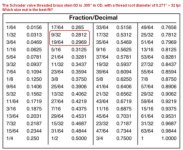
- $10 Shrader valves (in hindsight, I needed 1.5-inch long, all rubber, sized for a 0.453-inch rim-hole diameter)
I will need to securely mount the tire changing tool, either to a large pallet, or to the concrete of my driveway or sidewalk (or maybe on the ground in the dirt somehow, temporarily).
I'll need four new tire valve stems so a basic question is which ones you recommend (e.g., Pep Boys, Kragen/O'Reilly, Autozone).
Other than tire valves, I'm hoping the tools I bought today are adequate, because I already have:
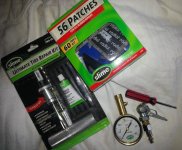
- Air compressor, hose, air chuck, and tire pressure gauge
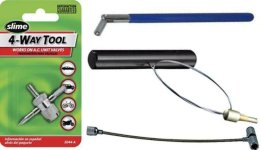
- Shrader valve removal tool
- Lots of dish detergent & water
- Assorted pliers, wrenches, ratchets, and sockets
- White greasy marking stick for marking tires
Here's the background:
A relative of mine owns the 2WD '97 4Runner Base Model (4cyl), and all four tires are worn well past the wear bars.
She has never once driven off road (not even on the shoulder of a road!), and she just ordered, online, the Nexen N'Priz AH5 P225/75R15 tires (load range 102S, Treadwear 460, Traction A, Temperature (aka Speed) A for about $60 each.
When the tires arrive in a few days, I plan on mounting and static balancing them for her and just want to ask for tactical advice from those of you who have done the task yourself.
I'm well aware of the difference between dynamic road-force balancing and static balancing.
Therefore, my plan is simple:
a. Drive the vehicle to determine if there is any pre-existing vibration,
b. Break the beads, and remove the old tires and wheel-balance weights,
c. Mount the new tires & new valve stems & pressurize to spec,
d. Balance the wheels statically,
e. Test drive at highway speeds for noticeable vibration,
f. If there is any wheel-related vibration, then (and only then) would I simply take the wheels in for dynamic road force balancing.
Note that I am aware that tire manufacturers use different paint dot schemes for match mounting:
- Usually they paint a yellow dot at the tire's light spot which is paired with the valve stem on the wheel which is the wheel's heavy spot, and/or,
- They paint a red dot at the tire's high point for radial runout and radial force variation.
- But this applies mostly to match mounting on new factory wheels, and, in any case, is completely up to the tire manufacturer.
I have a few questions about the stock Toyota 15-inch wheels because where I mount the red spot (if the tires have a red spot, which takes priority over the yellow spot) depends on whether Toyota put a dimple in the steel rim to indicate the steel wheel's low spot.
All I'm asking for is practical advice and hints and helpful suggestions for how to do the job best from those of you who have actually mounted their own tires and balanced them yourself at home with standard home equipment.
a. Did I miss anything that I'll need to do the job right?
b. Do you have any tricks or hints to make the job easier, simpler, or better?
Attachments
Last edited: