Aftermarket caliper upgrade interest

AFAIK the exposed steel body has no bearing on the caliper piston seizing so that is a moot point for me. Brakes to me are for function, cosmetic surface rust is secondary.

Eh? That's EXACTLY what causes the pistons to sieze. I'm not talking about "cosmetic surface rust," I'm referring to the raw machined piston bores corroding to the very thinly zinc plated pistons (or they're sometimes raw steel to save a few pennies). It's a recipe that will always cause a siezed caliper given enough time.

I've gone through too many calipers for my liking and this is a pet peeve of mine considering I thought I was buying into Toyota reliability. Luckily I can change them myself to keep the cost down or I would be really peeved...

So on to your question. No interest here. I would still not be able to justify the initial outlay through the cost avoidance of multiple future caliper changes on an older vehicle, even without life-time replacement on the remans here in Canada.

Fair enough. Some people don't mind wrenching on their ride often, others place more value on having that time and annoyance freed up and eliminated.


So if I designed these around 4th Gen Sport rotors and maybe tried to get things down to around $450-500, is there interest at that price point? Or still too much money? That's me ordering calipers in a huge quantity, so I'd probably be a group buy type situation. Even then I'm basically giving away the lines and pads for free (and they're not free for me).


Oh well... Maybe I'll try to get a few sets made in the future and see if they sell. Kinda surprised guys on here are willing to just keep on doing the siezed OEM caliper route over and over.
 
Eh? That's EXACTLY what causes the pistons to sieze. I'm not talking about "cosmetic surface rust," I'm referring to the raw machined piston bores corroding to the very thinly zinc plated pistons (or they're sometimes raw steel to save a few pennies). It's a recipe that will always cause a siezed caliper given enough time.

...

Now I understand. It's not just the quality of the piston surface but also the interference from a rusted bore. I'll make sure to check that when I need to do my own reman. As I said: AFAIK. Now I know different and better. Thanks for the info.
 
In addition, the cheaper o-ring material used in OEM calipers tends to deteriorate to a point to where it can almost melt and fuse to the piston, effectively holding it in place.

But I just changed the pads on my pistons, and while they didn't move very freely, they didn't seem to be siezed. I was very surprised at the amount of corrosion inside the pistons, and this is a TX car its whole life that has never seen road salt as far as I know. So obviously corrosion was not a major consideration in the design of these calipers.
 
I too am surprised that there wasn't a more enthusiastic response for a reasonably cost effective solution to the frozen caliper issue. Here's a link to my experiences as posted on "the other" forum:

Pulling to Right Under Braking - Toyota 120 Platforms Forum

The brake issue, it would seem, is prevalent enough that someone should have come out with better replacement option than a reman of an already subpar component on an otherwise dependable and reliable vehicle. The price point for this proposed solution would seem to be a great alternative to the StopTech BBK option. I'm interested to see a prototype.
 
I would be interested! People really forget to upgrade their brake system when they install lifts, heavier wheels and tires, more power, etc. I think this would be a great system and thats a cheap deal for what you are getting! Especially if you had the kit compiled with all of the necessary pieces! Definitely count me in and thanks for going through the trouble of gathering all of the info, pieces and everything. It looks very complete.

Mike
 
I'll be getting a 3d printer later this year. So once that comes in I'll design a bracket and show a mock up. It would be a complete kit with everything you need to bolt it on and go.
 
I had to mull this over in my mind the last few days before responding as there are a few things that I think detract or at least don't exite me about Wilwood calipers as a replacement options as that is really what they are just a replacement option.

Mostly I'm not crazy about alum brackets even if it is a mil spec hard coat as I've seen them fail on a lot of BBKs for Audi's back when I had a S4 and was involved in the Audi community. Typically you use heilcoils to help improve the load capacity into the braket on radial mounted calipers and the SS helicoil cuts into the anodize and then start galvanic corrosion. Living in the salt belt just accelerates the failure rate. When I put a set of Porsche 996 calipers on my Audi I made SS brackets.

One things I don't like is Alum brake calipers in general be it with SS pistons or the composite ones that are in some of the brembo calipers. They just don't hold up in the salt belt states. I can't tell you how many alum calipers I've worked on that I've had to warm up the pins with a torch and still have bleeders or brake pins come out with the calipers alum treads attached to them.

Yes the OEMs have thin protective coatings and probably crappy low carbon steel pistons but they are a pretty strong caliper for the intented use. How many American brands put 4 piston calipers on there trucks and fill the rim with a good size rotor. So to me putting Wilwoods or Brembos or any other alum multipiston caliper on the 4runner is just a change in how they will fail later in time.

For those that think it's a performance improvement they need to rethink what a BBK is... It's generally a larger rotor combined with better pads and a light caliper (good to reduce weight and helps with suspension action). Our trucks have a good sized rotor and strong calipers we just need to replace the pads with something better to improve braking performance.

If you want to improve the longevity of the toyota's medium sized chassis I would suggest an exchange program on remains and improve the coatings and seal material. A nice mil spec zinc coating on pistons and calipers and some viton orings might solve the problem.

For those that want to run bigger tires and all the rock crawling gear I suggest looking at something like Hawk LTS pads and better brake fluid. Add some SS lines if you want better pedal feel and the stock stuff apart from having poor corrosion potection would perform well.

This is of course just my opinion and my experience with BBKs on Audis and Subaru's coupled with my 15 years working as a mechanical engineer for a large jet engine manufacturer.

Also don't think I'm poo-pooing your idea its just not for me and I've explained why.
 
Last edited:
I could make the brackets out of plated mild steel, or even stainless, but it just drives the price up and isn't the best choice. I've not found helicoils necessary as long as you get enough thread engagement, and the zinc on the bolts has more galvanic potential than the aluminum or aluminum oxide, so it will corrode first (and not bond with the bracket material). Most stainless steel alloys are generally a poor choice in a structural application, even if you do want high corrosion resistance. And besides, there don't have to be threads in the aluminum bracket.

I'm also not sure of what "pins" you're talking about pulling threads out of the caliper. No serviceable fasteners thread into aluminum on the calipers I linked to. So I've got to ask, with all your "experience," do you actually have experience with these calipers?

I didn't advertise this as a BBK, I advertised it as an aftermarket caliper upgrade. I'd like to make it so a thicker rotor can be used as well, but that's a design want. So I'm not entirely sure what your "you don't know what a BBK is" rant is aiming at. Surely a claim that wasn't made in this thread...


Sorry if I'm a bit terse here, but it seems you brought up a great deal of points which just aren't applicable, and are easily designed around.
 
RPS,

I think I would be interested in a set. I've read through this thread a few times and not sure I understand the issues that are coming up. Can you expand on how these calipers solve the corrosion issue (do they permanently fix it) and any downsides compared with buying/rebuilding stock calipers?

Also, you might want to post on IH8Mud and the 120 forum. Sure others would be interested.
 
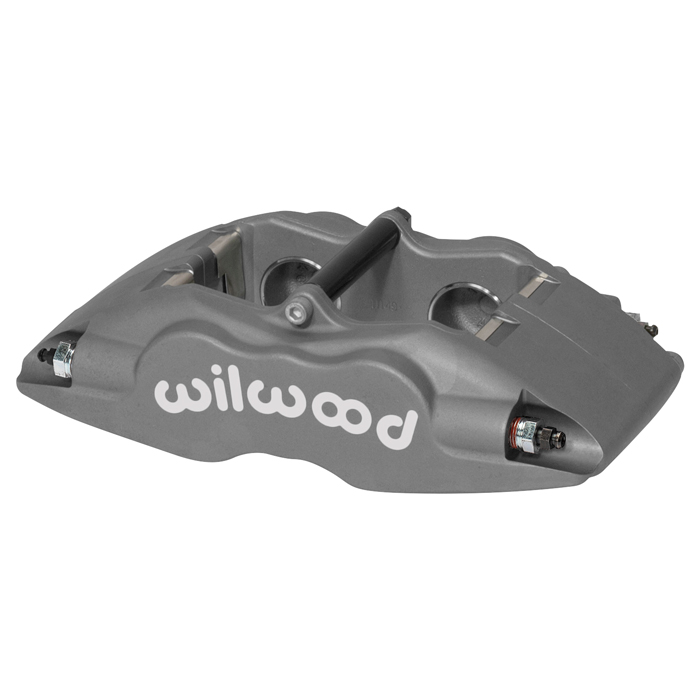
For one, these calipers use stainless steel pistons, which are typically found only on very high end calipers from OEMs. The hard anodized aluminum body + the stainless steel pistons virtually eliminates piston siezing issues. The only requirement is to clean the pistons before retracting them back in the bores since there are no dust boots.

The calipers also have stainless steel wear plates for the pads to ride on, so they won't gall the caliper bodies and hang up (like most Stoptech calipers).

The pads are changed via undoing one central bridge bolt at the top of the caliper, and this bolt also gives good rigidity to the caliper body itself by tying the top of it together.


I'll look into it in greater detail towards the end of this year, as there isn't exactly a storming amount of interest thus far to make it a big priority. I've got a mountain of Nissan brake kits to sell through first. :)
 
I could make the brackets out of plated mild steel, or even stainless, but it just drives the price up and isn't the best choice. I've not found helicoils necessary as long as you get enough thread engagement, and the zinc on the bolts has more galvanic potential than the aluminum or aluminum oxide, so it will corrode first (and not bond with the bracket material). Most stainless steel alloys are generally a poor choice in a structural application, even if you do want high corrosion resistance. And besides, there don't have to be threads in the aluminum bracket.

I probably didn't articulate it very well in my post but I've just seen Alum caliper brackets fail at the threaded interface and bolts/brackets were coated to fight corrosion. If you have room to put a nut and bolt then great. Yes the easy to get 3 series SS are 1/2 the strenght of most aircraft grade T6 or T7 aluminium but 17-4 and 15-5 SS are over twice the strength of the nicest alum and do well in corrosive enviroments. Yes it will cost more but it also eliminates any possibility of failure.

I'm also not sure of what "pins" you're talking about pulling threads out of the caliper. No serviceable fasteners thread into aluminum on the calipers I linked to. So I've got to ask, with all your "experience," do you actually have experience with these calipers?

Brembo calipers and stock Audi calipers use pins that are threaded at one end to hold the pads in and nearly every Alum caliper I've seen has a steel bleeder bolt. Anything that i've touched with 5 years or more on them have given me problems with removing threads during dissassembly. You are correct though I have no experience with Wilwood calipers.

I didn't advertise this as a BBK, I advertised it as an aftermarket caliper upgrade. I'd like to make it so a thicker rotor can be used as well, but that's a design want. So I'm not entirely sure what your "you don't know what a BBK is" rant is aiming at. Surely a claim that wasn't made in this thread...

This was directed at a few posts that talked about brake upgrades and how people over look doing this, one even called it a BBK and it had nothing to do with your posts.

Sorry if I'm a bit terse here, but it seems you brought up a great deal of points which just aren't applicable, and are easily designed around.

No need to apologize as I challenged the design based on the limited information given. If anything I hope I helped you with your designs both for the 4runner and any other applications by giving you some of my perspective with some of the failures I've seen with brake upgrades on other applications.
 
For one, these calipers use stainless steel pistons, which are typically found only on very high end calipers from OEMs. The hard anodized aluminum body + the stainless steel pistons virtually eliminates piston siezing issues. The only requirement is to clean the pistons before retracting them back in the bores since there are no dust boots.

The calipers also have stainless steel wear plates for the pads to ride on, so they won't gall the caliper bodies and hang up (like most Stoptech calipers).

The pads are changed via undoing one central bridge bolt at the top of the caliper, and this bolt also gives good rigidity to the caliper body itself by tying the top of it together.


I'll look into it in greater detail towards the end of this year, as there isn't exactly a storming amount of interest thus far to make it a big priority. I've got a mountain of Nissan brake kits to sell through first. :)

Put me down on the interest list for whenever you develop these
 
I probably didn't articulate it very well in my post but I've just seen Alum caliper brackets fail at the threaded interface and bolts/brackets were coated to fight corrosion. If you have room to put a nut and bolt then great. Yes the easy to get 3 series SS are 1/2 the strenght of most aircraft grade T6 or T7 aluminium but 17-4 and 15-5 SS are over twice the strength of the nicest alum and do well in corrosive enviroments. Yes it will cost more but it also eliminates any possibility of failure.

17-4 and 15-5 PH are both nice alloys, but they're an order of magnitude more expensive than aluminum. And the important point is that all this stuff is bolted to a lightly painted cast steel upright. It's just overkill beyond overkill, and few people will pay for that level of overkill. For reference, the cost of the brackets would go from somewhere in the ~$150ish range to ~$350ish when made out of 17-4 PH, because not only is the material way more expensive, but it's much tougher on cutting tools and slower to machine than the usual 2024-T3 I use when I have a choice.


Brembo calipers and stock Audi calipers use pins that are threaded at one end to hold the pads in and nearly every Alum caliper I've seen has a steel bleeder bolt. Anything that i've touched with 5 years or more on them have given me problems with removing threads during dissassembly. You are correct though I have no experience with Wilwood calipers.

The bridge bolt goes through an anodized aluminum tube that retains the pads, and the pads ride on stainless steel wear shims. The bridge bolt is held with a steel nut, and it's all replaceable, but I don't see how it can ever have a problem.

The bleeder screw is threaded into a brass housing that threads into the caliper, so no corrosion issues whatsoever there. Both of those pieces are user replaceable as well, but the brass essentially kills the potential for galvanic corrosion.

In many ways they're nicer than many OEM calipers, but still affordable.

Pic for reference:

Forged_Superlite_Internal-lg.jpg


This was directed at a few posts that talked about brake upgrades and how people over look doing this, one even called it a BBK and it had nothing to do with your posts.

I think it's a common term for a brake upgrade, but I'm pretty sure everybody here knows what I'm proposing. The stock rotor diameter is sufficient IMO, and I'd like to make it easy to go between 4th gen and 5th gen rotors for those that feel they need a little more rotor heat capacity.


No need to apologize as I challenged the design based on the limited information given. If anything I hope I helped you with your designs both for the 4runner and any other applications by giving you some of my perspective with some of the failures I've seen with brake upgrades on other applications.

I don't mind some friendly discussion, but I am an engineer as well (worked in aerospace myself for many years), and I do non-linear FEA and structural design for subsea equipment now. So I'm familiar with how to make a successful mechanical design, as well as reasonably prevent corrosion.

Most of your concerns are the very things I don't like about using OEM based calipers, so I agree with you on those points. The Wilwoods solve them all in my experience, and I've never had any issues at all with mine.
 
Sounds like Wilwood has a nice caliper. No steel treaded into alum and using a soft material interface when threading is required. I'll keep that in mind if I have to replace the brembos on my wife's TL Type S at the next brake job.
 

Members online

Forum statistics

Threads
278,316
Messages
3,554,111
Members
248,016
Latest member
Advally Service

Trending content

Back
Top