Any tricks to get them to hold alignment under heavy use.

wfo9

New member
My truck seems to gradually lose caster as I wheel it... Seems to last about 4-5 long days of wheeling then I notice my tires rubbing again.

I've never checked the torque after... I know there are gussets for the tabs.. but that would not make it hold the alignment any better....

Anyone have any tricks...

My guess is this just comes with the territory... Sure gets old though...
 
Register to hide this ad
Well, first off, depending on where your cams are (if they are pointing more downwards/not contacting the sides as much) they may want to move a bit under enough flex.

But what I found is to make sure the bolts are all tightened to spec (129ft.lbs for the lower control arm Cam Bolts) as when most people do an alignment they'll snug them with a wrench or ratchet and not really tighten it down to spec. I thought I was tightening them down properly, but when I checked them with a torque wrench long time go I found I was about 20~30ft.lbs lower than the spec (4th gens are 100ft.lbs).

Edit-

Sorry forgot yours is a 5th gen, corrected the specs.
 
Since you wheel yours the tab gussets would help. Mine are bent to hell but I am waiting till the LT goes in to tear it all down. If you can tabs are straight you could run a bead to support them. My alignment always gets out of whack because there is nothing to hold them in place. Although they only move a little.
 
Since you wheel yours the tab gussets would help. Mine are bent to hell but I am waiting till the LT goes in to tear it all down. If you can tabs are straight you could run a bead to support them. My alignment always gets out of whack because there is nothing to hold them in place. Although they only move a little.


My tabs look perfectly straight to me as they have never contacted anything that i know of. I wheel pretty hard, but never seem to hit my LCAs or the tab area. Running a bead would not be a bad idea, but I never really got the point of the gussets there since it feels like a spot you should almost never hit unless you are just hammering through stuff with no scouting...

I'm afraid my main issue is the fact that I may have a bent spindle on the passenger side (at least I think I do), That side just won't align well and keeps me from getting a significant amount of room for movement. Unfortunately, I don't know of a way to verify that it is the spindle... My rear cam is already all the way out on that side... But it seems like many of these trucks are like that on the passenger side, so I'm just not sure I should invest in one.
 
Well, first off, depending on where your cams are (if they are pointing more downwards/not contacting the sides as much) they may want to move a bit under enough flex.

But what I found is to make sure the bolts are all tightened to spec (129ft.lbs for the lower control arm Cam Bolts) as when most people do an alignment they'll snug them with a wrench or ratchet and not really tighten it down to spec. I thought I was tightening them down properly, but when I checked them with a torque wrench long time go I found I was about 20~30ft.lbs lower than the spec (4th gens are 100ft.lbs).

Edit-

Sorry forgot yours is a 5th gen, corrected the specs.

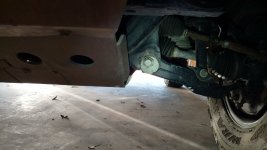
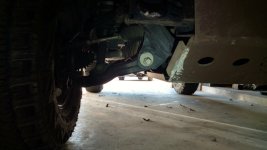
Humm, I just noticed something... Someone seemed to flip one of mine down. They are both suppose to be pointing up right?
 

Attachments

  • camtab01.jpg
    camtab01.jpg
    118.6 KB · Views: 1,043
  • camtab11.jpg
    camtab11.jpg
    86.4 KB · Views: 997
Last edited:
It's not that you will hit something. It's the force of the arm that will push or pull on the tabs and bend them. I have never hit anything with mine.

And the flipped tab I have had too n
 
It depends on how they got the alignment numbers you wanted. After playing with my alignment so much and noticing the tendency for them to "Slip" under heavy use when they were a bit under torqued I started trying to get my cams pointing upwards so that they will encounter more resistance when/if they slip (though this means more stress is imparted onto the tabs vs. the cam just slipping out of place). It's not inherently bad, but it does mean the cams may have a bit more tendency to default to "downward" if they are loose. But as I said earlier, the biggest thing I noticed is that after an alignment most guys are probably cranking the cams down to about 60~80ft.lbs of pressure (as most people do alignments with wrenches and maybe a 1/2" ratchet and/or breaker bar) where in reality they should be 129ft.lbs on J150 (5th Gen 4Runners, FJ's, ect.) and 100ft.lbs on J120 (4th gen, early FJ cruiser, ect.) which gives them more clamping force and less incentive to move.

The reality is that the tabs shouldn't really flex as much as they seem to do, this is probably a combination of under torqued cam bolts and poor "strategy" when aligning the vehicles. It's not entirely the technician's fault (though to be fair [we] should be torquing things to spec) as when we do an alignment we're not really thinking of the best way to put cams to fight against the physics of off-roading; we're more interested in getting your alignment within specifications. So if the cams can wiggle/shift then they will impart pressure on the tabs which will cause them to open up and lose alignment. There's a certain point at which torquing the cams to the proper specification will not be enough (particularly if your tabs are already belled out badly), but it should take up most of that loosening effort unless you're doing seriously hardcore desert running/rock crawling; though I do believe beefier alignment tabs will help in the long run (planning on doing this to the 4th gen when I replace the LCAs)

 
Last edited:
It depends on how they got the alignment numbers you wanted. After playing with my alignment so much and noticing the tendency for them to "Slip" under heavy use when they were a bit under torqued I started trying to get my cams pointing upwards so that they will encounter more resistance when/if they slip (though this means more stress is imparted onto the tabs vs. the cam just slipping out of place). It's not inherently bad, but it does mean the cams may have a bit more tendency to default to "downward" if they are loose. But as I said earlier, the biggest thing I noticed is that after an alignment most guys are probably cranking the cams down to about 60~80ft.lbs of pressure (as most people do alignments with wrenches and maybe a 1/2" ratchet and/or breaker bar) where in reality they should be 129ft.lbs on J150 (5th Gen 4Runners, FJ's, ect.) and 100ft.lbs on J120 (4th gen, early FJ cruiser, ect.) which gives them more clamping force and less incentive to move.

The reality is that the tabs shouldn't really flex as much as they seem to do, this is probably a combination of under torqued cam bolts and poor "strategy" when aligning the vehicles. It's not entirely the technician's fault (though to be fair [we] should be torquing things to spec) as when we do an alignment we're not really thinking of the best way to put cams to fight against the physics of off-roading; we're more interested in getting your alignment within specifications. So if the cams can wiggle/shift then they will impart pressure on the tabs which will cause them to open up and lose alignment. There's a certain point at which torquing the cams to the proper specification will not be enough (particularly if your tabs are already belled out badly), but it should take up most of that loosening effort unless you're doing seriously hardcore desert running/rock crawling; though I do believe beefier alignment tabs will help in the long run (planning on doing this to the 4th gen when I replace the LCAs)


Not sure I follow 100%. When you say cams pointing upward... Are you talking about the second picture above. The Tab has an index mark on the top and the cam also has one (on what I consider the top). They come from the factory with the cam index towards to top, right?
 
@WFO9

Yup, I mean the index mark on the cam pointing upwards, that way the cam has more resistance to fight to move out of spec.
 
@WFO9

Yup, I mean the index mark on the cam pointing upwards, that way the cam has more resistance to fight to move out of spec.

Cool, my plan at this point is to try a used spindle on the passenger side (I found one for $140) and also flipping the tab over on the drivers side. Hopefully that will allow me to get the caster up near 5 then I will have some room for it to move around a bit if that still happens. I will also verify TQ to spec at my next alignment.

I guess it is time to pay for a lifetime one somewhere. I wish I knew someone with an alignment rack I could use...

If that all works, I'm also going to get the weld on spindle gussets. I'm not worried about the tabs moving myself. I just can't imagine enough force to bend those, But I will keep an eye on them, So far, they still look true.
 
Last edited:
After getting your alignment dialed in and confirming it drives exactly like you want, you could always tack weld the cams in place. I had to do just that on a number of border patrol, oil field and forest service trucks back in the day.
 
After getting your alignment dialed in and confirming it drives exactly like you want, you could always tack weld the cams in place. I had to do just that on a number of border patrol, oil field and forest service trucks back in the day.

Thought about that but would make future adjustment a PITA. I also considered roughing the surface of the tab to create more friction.

I have no issues with the way it drives.. It just starts to rub more off-road in full compression scenarios as it slowly loses caster. Just after alignment I get no rubbing at all, then it slowly increases in frequency until I align again. This is only in full compression off-road situations (it never comes close to rub on the road)

I think steep decents slowly push things rearward over time. All the weight is up front and the force is trying to push the LCAs back. When climbing all the weight is in the rear...and the forward pull on the LCAs is not nearly as much. Just guessing here, but I doubt alignments ever drift towards more caster.
 
Last edited:
True, it would make future adjustments a little more time consuming because you would have to grind off the tack weld. With the cams on the LCA, I don't think it would be too much of an issue though.

I wonder if going with poly bushings or even an aftermarket LCA with poly bushings would help retain caster?
 
Following. I have the same issue with maintaining alignment after wheeling. (...and wfo9 and I wheel together quite a bit).
 

Members online

Forum statistics

Threads
278,316
Messages
3,554,107
Members
248,016
Latest member
Advally Service

Trending content

Back
Top