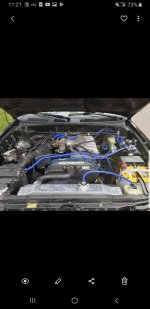
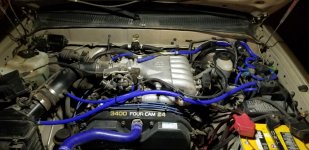
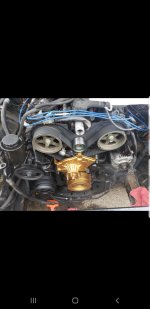
Complete Silicone Hose Swap.

VernySanders

New member
All the rubber hoses were cracked. I was concerned about trying silicone hoses because they wouldnt be pre shaped however I've had no issues whatsoever. I've got coolant hose kit with prevent hoses that cover every coolant hose on the vehicle even the ones behind the engine. In addition more length of the blue silicone hoses to finish 100% of the lines. Looks great and will last forever with no cracking. Honestly not that expensive. Coolant hose kit was $145 which was expensive but the actual bulk hose was only $60 and I'll have a ton left over.
 

Attachments

  • Screenshot_20191014-112104_Gallery.jpg
    Screenshot_20191014-112104_Gallery.jpg
    131.6 KB · Views: 4,391
Register to hide this ad
I think its safe to assume that when anyone buys a 3rd gen 4R that all of the coolant and vacuum hoses have hardened. There's a lot of maintenance work to be done on these things if you buy one without a lot of service records now.
 
Looks great OP. Nice work.


Second that about needing to replace hoses. Leaks and overheating are a great way to get stranded. I wound up catching an oil-soaked oil cooler hose that probably wasn't far from letting go (267k). Valve cover leaks are common from what I hear and will soften and swell hoses. Have replaced all heater hoses with a decent silicone hose kit plus OEM for: upper and lower rad hoses, the 2 oil cooler hoses, heater valve, and my rear heater hardlines for peace of mind. Back to OEM red coolant and spring clamps too. The way it should be.
 
Looks like you changed the radiator to an all aluminum one. Does it still have a atf cooler in it or you completely bypass the atf liquid cooler in the rad?

Sent from my SM-J337V using Tapatalk
 
I used a Mr. Gasket kit in silver that I got off e-Bay for $15.00 which allowed me to do those same hoses with a few others like the ones going to throttle body and even the ones for the windshield squirters.
 
I did this to my Tacoma and have the kit for the 4runner as well.
 

Attachments

  • 20190917_194157.jpg
    20190917_194157.jpg
    136.1 KB · Views: 5,834
Looks like you changed the radiator to an all aluminum one. Does it still have a atf cooler in it or you completely bypass the atf liquid cooler in the rad?

Sent from my SM-J337V using Tapatalk

It has an atf cooler in it but still plan on running an inline trans cooler as well. It's a champion cooling systems all aluminum radiator that's made for 3rd gen 4runners. It's a 3 core instead of two. I installed it when I did my timing job with new water pump etc
 
Last edited:
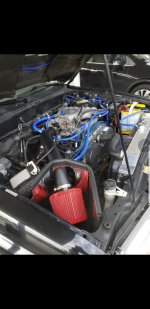
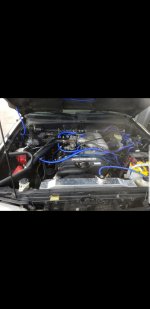
Installed the rest of vacuum hoses. Also cold air intake with prefilter and even more recently than this pic. most of those hps rear coolant preshaped hoses.
 

Attachments

  • Screenshot_20191023-214155_Gallery.jpg
    Screenshot_20191023-214155_Gallery.jpg
    135.6 KB · Views: 4,231
  • Screenshot_20191023-214202_Gallery.jpg
    Screenshot_20191023-214202_Gallery.jpg
    128 KB · Views: 3,913
Looks great OP. Nice work.


Second that about needing to replace hoses. Leaks and overheating are a great way to get stranded. I wound up catching an oil-soaked oil cooler hose that probably wasn't far from letting go (267k). Valve cover leaks are common from what I hear and will soften and swell hoses. Have replaced all heater hoses with a decent silicone hose kit plus OEM for: upper and lower rad hoses, the 2 oil cooler hoses, heater valve, and my rear heater hardlines for peace of mind. Back to OEM red coolant and spring clamps too. The way it should be.

Yeah these engines tend to last so long and be so reliable that valve cover gaskets get notorious for leaking hahaha
 
I think the blue looks rather cool, too. That's just one more reason why I always look forward to replacing OEM plug wires with NGK ones.
 
I think the blue looks rather cool, too. That's just one more reason why I always look forward to replacing OEM plug wires with NGK ones.

The ngk wires are the reason I went with the blue hoses. And I'm going to soring for king suspension this upcoming spring which is blue as well
 
I would recommend against using silicone for radiator hoses. Its 15 times more permeable than rubber which makes them unsuitable for daily driving.

taken from another website:

"I can remember several occasions when people would tell me something like, “Dude I was driving the other day and my car started to boil over! I added 4 quarts of water to it! Did I lose a head gasket? Where the hell did the water go?” I would ask them if they had silicone radiator hoses and of course they would. So I told them, add water regularly or stop your *****ing and get some rubber hoses on the car. While silicone radiator hoses are great because they are capable of carrying much higher temperature fluids (max 350°F/177°C) than a standard EPDM rubber radiator hose (max 257°F/125°C), they are really only ideal for race cars. Here's a fun fact: silicone's water permeation rate is 15 times greater than EPDM rubber. What does that mean to you? It means with the daily heat cycling of a street driven car, that you will lose water from your cooling system over time. According to a Gates Corporation report, “Testing by Gates engineers shows that a Class 8 truck, operating at a temperature of 210°F with a two shift per day driving cycle, would lose nearly five gallons of water each year if it was equipped with silicone hose.” FYI, Gates makes both rubber and silicone coolant hoses so hold off on the forum bullshit line of, “Well of course Gates made that report. They sell rubber hoses!” If you want to read some more on this, check out a PDF pamphlet from Carquest here."

 
I would recommend against using silicone for radiator hoses. Its 15 times more permeable than rubber which makes them unsuitable for daily driving.

taken from another website:

"I can remember several occasions when people would tell me something like, “Dude I was driving the other day and my car started to boil over! I added 4 quarts of water to it! Did I lose a head gasket? Where the hell did the water go?” I would ask them if they had silicone radiator hoses and of course they would. So I told them, add water regularly or stop your *****ing and get some rubber hoses on the car. While silicone radiator hoses are great because they are capable of carrying much higher temperature fluids (max 350°F/177°C) than a standard EPDM rubber radiator hose (max 257°F/125°C), they are really only ideal for race cars. Here's a fun fact: silicone's water permeation rate is 15 times greater than EPDM rubber. What does that mean to you? It means with the daily heat cycling of a street driven car, that you will lose water from your cooling system over time. According to a Gates Corporation report, “Testing by Gates engineers shows that a Class 8 truck, operating at a temperature of 210°F with a two shift per day driving cycle, would lose nearly five gallons of water each year if it was equipped with silicone hose.” FYI, Gates makes both rubber and silicone coolant hoses so hold off on the forum bullshit line of, “Well of course Gates made that report. They sell rubber hoses!” If you want to read some more on this, check out a PDF pamphlet from Carquest here."

I've read this as well, not this exact article referenced though. I'm wondering if the hps 3 ply design prevents this? Im not entirely sure. The inner lining of these hoses is seemingly different than the outer lining. However I'm not sure about the materials used in the inner ply. I'll do some research on it!
 

Members online

Forum statistics

Threads
278,309
Messages
3,554,071
Members
248,016
Latest member
Advally Service

Trending content

Back
Top