Finding custom PID info for Torque app, how???

flyinhawaiian01

New member
(WARNING! Super-techie-geeky stuff follows!)

Hey all,

So, I have been running the Torque app for 3½ years now and love it! Its worked for 4 vehicles I've owned and a few of my friends vehicles too!

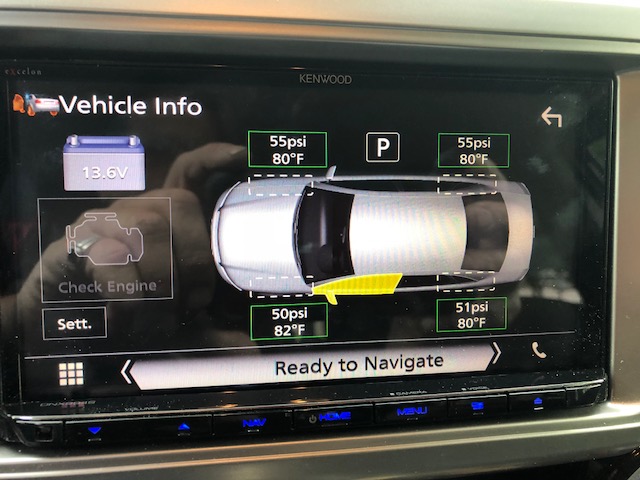
I've recently downloaded the csv file for adding in the extra custom PIDs and they work quite well, but I can't seem to find a custom PID for the tire sensors anywhere! I'd like to see the tire pressure and temps of each wheel like it shows in the Techstream program when hooked to the obd ii connector.

I have the Techstream software and cable, and I can pull that info from it, so its safe to assume the info is being transmitted through the OBDii connector, all I need to do now is figure out how to create a custom pid for each of the 4 wheels (X2 for both temp and pressure).

Does anyone here know how to get the custom PID data, and are they getting this data from Techstream or some other gadget? This is a sample PID entry to give you an idea what I'm looking for so I can enter it into my custom PID spreadsheet file for Torque:

Example of Transmission converter temp:

Name:Transmission Temp (Converter)
Shortname: Converter Temp
Mode and PID: 2182
Equation: ((((C * 256) + D ) * (7/100)-400)/10)
Min Value: -40
Max Value: 325
Units: F
Header:


It would be nice to add another frame onto my torque app for tire info! Right now I have 6 screens, which includes the custom PID's for trans stuff I found on our forum:

Screenshot001.jpg


This is my "sandbox" screen, just using it to see what data comes out and how each of the PID's work.

If anyone has any info on the tire pressure/temp PID info, I'd greatly appreciate it!
 
Register to hide this ad
That's a great question. Subscribed.

I just started using this app and haven't even got my water temp to work. Need to start researching...
 
[MENTION=9341]Lex[/MENTION]us, thanks, but someone else did all the work, I just downloaded their PID file and stuck it in the Torque app's directory, then loaded it from the app itself!
:thumb3:

[MENTION=74034]Reid[/MENTION], to get the coolant temp working correctly, you'll need to download the CSV file somewhere on here that has the extra PID settings, copy it to your phone's internal memory, then "load" the extra PID's from within Torque.

Its actually really easy to do once you know where to put the file on your phone so Torque can find it, then you get another 20+ items to read from your car!
 
you could try the Tacoma forums (stay out of the 3rd gen section), or the tundra talk forums.

that's where I got my TT pids for torque.

and pids for most Toyota's are universal. the pid for TT worked for the 12 Tacoma and the 14 runner.
 
I've recently downloaded the csv file for adding in the extra custom PIDs and they work quite well, but I can't seem to find a custom PID for the tire sensors anywhere! I'd like to see the tire pressure and temps of each wheel like it shows in the Techstream program when hooked to the obd ii connector.

As I understand it, TPMS uses a different protocol not supported by current dongles. So, no dice. Techstream is the only way to get them.
 
Nodak, yep, been to their forums and searched hi and low for anything on tpms, tire pressure and tire temps, but nobody's posted anything on them. And many of the manufacturers have their own "private" section within their obd/canbus systems, its where they put the extra stuff that's more specific to the vehicle and/or brand.

Which brings me to Jeremy's post, I think you're absolutely right on this one! Unfortunately, after hours of searching around for ANY manufacturer's PID for tpms-related stuff is non-existent! This must be one of those things that are proprietary (according to Wiki's OBDii info).

I think we're outta luck on finding a PID to use for the tires, unless someone knows how to tap into the techstream software and either decode the program to see how it pulls the tpms info, or somehow monitor the canbus data as its being accessed from the program.

I sure wish I could just find a mode and PID# for it, as I'm sure its in there somewhere, but there's way too many combinations of "21XX" numbers to go through to see if any correlate to the tpms system!

Oh well, I'll keep looking around when I have a chance, maybe someday someone will find something somewhere that will get us closer to it. It sure would be nice to be able to monitor tire temps and pressures alongside each one's wheelspeed (which we already have the PID for!), that would be a nice page to have in Torque!
 
OP:

You mentioned Torque App - I assume the pro/paid for vrsn.

Wonder if the ScanGauge/UltraGauge folks can capture TPMS data?
 
Nope, unfortunately. The scangauge is similar in using PID info as the torque app, the info is sort of interchangeable, I saw a website last night somewhere that showed how to use the PID info like I initially posted to work with the scangauge. Went through some of their list but didn't see anything for PID's and tpms stuff.
 
well the vehicle has to have a way to read the tpms sensor data stream being fed to it. and I imagine the sensor are not unique to the vehicle since you can get them at tire rack, etc installed when getting new tires.

the only way you can diy is to build something to read that data stream outside of the Toyota system.

I did find some android apps but not sure how they work.

https://play.google.com/store/apps/details?id=Atbs.iTpms&hl=en<O:p></O:p>
 
Welcome to the pain of attempting to reverse engineer PIDs. I have had some success with my Jeep and developing new PIDs for Torque based on the OBDII spec, but generally you are off in the weeds when doing this—especially if the sensor you want is not part of the J1979-DA spec.

To answer your question, the "real" way to find out this sensor PID information is to pay the $5k and sign the NDA for the automotive trade association compendium of these PIDs. Who is going to do that? So, barring that...

I have the Techstream software and cable, and I can pull that info from it, so its safe to assume the info is being transmitted through the OBDii connector, all I need to do now is figure out how to create a custom pid for each of the 4 wheels (X2 for both temp and pressure).

I would start by using a USB driver-level interceptor for that and dumping the raw USB traffic to the OBDii connection while you fetch the data, then reverse engineering from there. Think "WireShark for USB".

Anyway. I don't think you guys have CAN-BUS on your T4Rs yet, right? Regardless, before going off and playing willy-nilly with custom PID codes that you're developing on your own, make sure you can't cause any damage/only experiment with the vehicle in park/adhere to all other sanity rules.
 
Last edited:
Nvehicle and/or brand.

Which brings me to Jeremy's post, I think you're absolutely right on this one! Unfortunately, after hours of searching around for ANY manufacturer's PID for tpms-related stuff is non-existent! This must be one of those things that are proprietary (according to Wiki's OBDii info).

I sure wish I could just find a mode and PID# for it, as I'm sure its in there somewhere, but there's way too many combinations of "21XX" numbers to go through to see if any correlate to the tpms system!

When I looked into this, I found the TPMS uses a different protocol from the std one used for all the other PIDs. Toyota TPMS uses an oddball KWP protocol to send data. Per Priuschat, it's 9600 baud, where the standard is 10400 baud.

It seems as if the ELM adapters (all the cheap Chinese stuff) isn't compatible with this protocol. Not sure if the STN1110 adapters (OBDLink) are compatible or can be made compatible via firmware upgrdae.

See Reply 11. TPMS | PriusChat
OBDII codes | PriusChat

Trying to find TPMS PIDs from the 21XX PIDs isn't going to work. They don't exist on the ECM/PCM/etc protocol that Torque uses to talk to the vehicle.
 
Wow! I was hoping to find a simple solution to it, but with a speed change for just that data, and the fact that the elm327 units can't read or communicate at that baud rate, its really a no-win situation I guess!

I guess I can assume then, the techstream app changes baud rate to communicate with the ecu when you enter the screen that displays the tpms data. At this point, I think it would be easier to build a plugin for torque to access the data, rather than adding it into the system as a PID. I'm assuming that if you set the elm327 into a different baud rate it will communicate with the ecu, but even that's unclear at this point. One of the post's over at the prius forum states that the elm327 would need to be able to communicate as a J2534 device, which I'm pretty sure it will not.

Oh well, at least it was a good discussion, and I would say that at this time, there's no possible way to use Torque or Scangauge to read the tpms data. Doesn't mean that we'll never have it, but for me, I'm just not techie-enough to figure it out!

Maybe in time, guys.... :violin:
 
Ah thanks,

It miffs me a bit that you can get the PSI out of newer models, LC, and Lexus GX but not in late model 4Runners. I mean that info is there and being read with no way easy way to intercept it, seems ridiculous.
 
Oh well, at least it was a good discussion, and I would say that at this time, there's no possible way to use Torque or Scangauge to read the tpms data. Doesn't mean that we'll never have it, but for me, I'm just not techie-enough to figure it out!

This video shows scanguage reading toyota (a 4runner, I believe) tpms air pressure:

https://www.instagram.com/p/BrCHxjIBj0M/

And, here are the settings from the scanguage site:

https://www.scangauge.com/x-gauge-commands/toyota-lexus-scion-iso-tpms/
https://www.scangauge.com/x-gauge-commands/toyota-lexus-scion-can-tpms/

I played around with torque translations of the scanguage settings, but haven't had any success yet. I tend to agree with information in earlier posts; my elm adapter isn't compatible with the non-standard baud rate toyota kwp protocol.
 
Last edited:

Members online

Forum statistics

Threads
278,308
Messages
3,554,058
Members
248,016
Latest member
Advally Service

Trending content

Back
Top