Fog Light Electrical Problem

#1 & 2 are the bulb. #2 just shows the (male) connector on the bulb - which appears to be in good shape BTW. If you have continuity between the two terminals, the bulb is good since that is a single filament bulb.

#3 is the (female) connector end of the harness - which also looks to be in decent shape. If you have power and ground at #3, your bulb should illuminate. This of course assumes that you have enough tension in the female terminals to make contact with the male terminals in the bulb. If you do not have power and ground here. the problem is upstream.

I honestly didn't check for continuity between the two terminals of the bulbs. What I did instead was hook them up directly to the battery via alligator clips and they both lit up which indicated to me that both bulbs are good.

For #3 - Power and ground keeps randomly alternating between the passenger side and driver side plugs. I thought the same thing, maybe the terminals aren't making contact. So, I hooked up alligator clips to the male terminals of the bulbs and made sure the other ends of the alligator clips made contact with the female terminals of the plug. Still nothing which is the craziest part..

Then, I added the temporary ground like you suggested to one side, then the other, then both sides simultaneously and still nothing..
 
I'm starting to think the guys that replaced the engine messed something up when they did it. The most common problem there is knocking a connector loose, cutting through a wire or forgetting to hook something up. The "wiggle test" - which has already been suggested - can be invaluable here.
 
I'm starting to think the guys that replaced the engine messed something up when they did it. The most common problem there is knocking a connector loose, cutting through a wire or forgetting to hook something up. The "wiggle test" - which has already been suggested - can be invaluable here.

This is so messed up. I just jiggled all of the connectors and wires that I could see all the way back to the firewall and nothing.

If water got into the fuse box, I'm pretty sure I'd be having much more electrical problems than just fog lights don't you think?

All of the other lights have been working fine (low beams, high beams, turn signals, hazards, DRLs, parking, brakes, 3rd brake, tails, reverse, license plates).

Is the relay/driver side junction box assembly out of the question at this point?
 
Last edited:
This is so messed up. I just jiggled all of the connectors and wires that I could see all the way back to the firewall and nothing.

If water got into the fuse box, I'm pretty sure I'd be having much more electrical problems than just fog lights don't you think?

All of the other lights have been working fine (low beams, high beams, turn signals, hazards, DRLs, parking, brakes, 3rd brake, tails, reverse, license plates).

Is the relay/driver side junction box assembly out of the question at this point?

Before you attack the relay/driver side junction box assembly, which is the assembly that contains the interior fuse box, trace the continuity of the pins/wires from each fog light wiring harness socket (your pic 3).

Measure the resistance from (left fog) A18 pin 1 to GND, measure resistance from (right fog) A29 pin 1 to GND. Measure the resistance from A18 pin 1 to A29 pin 1. Each measurement should be less than 0.5 ohms.

Find the location of Junction Connector A40 (see pdfs below), and check it. Note whether this was properly connected (after the engine work) and seated. Hopefully this is the source of your problem. If all looks good disconnect it to make some measurements. Refer to the wiring diagram.
Measure the resistance from A18 pin 2 to Junction Connector A40 pin2. Measure the resistance from A29 pin 2 to A40 pin 1.
Measure A18 pin 2 to A29 pin 2. Each measurement also should be less than 0.5 ohms.

Do the wiggle test while checking continuity. Hopefully you will find a loose connector or intermittent wire.

See the enclosed pdf for the location of Junction Connector A40, A18, A29.

If you haven't found the problem by now you should check continuity between A40 pin 5 to the relay/driver side junction box assembly at connector 2D pin 9.
This will be more involved in order to access that connector.
 

Attachments

Before you attack the relay/driver side junction box assembly, which is the assembly that contains the interior fuse box, trace the continuity of the pins/wires from each fog light wiring harness socket (your pic 3).

Measure the resistance from (left fog) A18 pin 1 to GND, measure resistance from (right fog) A29 pin 1 to GND. Measure the resistance from A18 pin 1 to A29 pin 1. Each measurement should be less than 0.5 ohms.

Find the location of Junction Connector A40 (see pdfs below), and check it. Note whether this was properly connected (after the engine work) and seated. Hopefully this is the source of your problem. If all looks good disconnect it to make some measurements. Refer to the wiring diagram.
Measure the resistance from A18 pin 2 to Junction Connector A40 pin2. Measure the resistance from A29 pin 2 to A40 pin 1.
Measure A18 pin 2 to A29 pin 2. Each measurement also should be less than 0.5 ohms.

Do the wiggle test while checking continuity. Hopefully you will find a loose connector or intermittent wire.

See the enclosed pdf for the location of Junction Connector A40, A18, A29.

If you haven't found the problem by now you should check continuity between A40 pin 5 to the relay/driver side junction box assembly at connector 2D pin 9.
This will be more involved in order to access that connector.

Thanks for spelling this out for me because I am by no means an electrician. But, I can follow directions..lol

I will update you guys on the results when I have them.
 
A couple of thoughts: I'd check both the plug and socket sides of each bulb and it's connector to see they are in good shape and fit tightly together. Tug the wires and see if they are solidly connected. Take a meter on the ohms scale and measure the resistance of each bulb. The value should be close to a short (maybe 1-2 ohms). They should also be very close to the same value.

The type of bulb in your pic should be clean and free of fingerprints. Clean with alcohol if dirty and then don't touch the glass part. Use a lint free cloth for cleaning and handling. The reason is the oil from your hands and other places gets on the glass and creates hot spots when the bulb is on, shortening the life of the bulb.

As far as troubleshooting goes, I'd make a chart to record my actions and results, and values. This helps over time to keep things straight and allows you to compare left and right sides.
 
this is unlikely because it's not typically how bulbs burn out, but it is something that can happen - when you tested the bulb did you shake it?

it sounds silly, but before you spend time checking electrical make sure the bulb doesn't have a broken filament. on rare occasions the filament can break but be touching in a resting condition to turn on.

again, this is not likely, but i've seen it happen before and ever since i shake bulbs when i test them
 
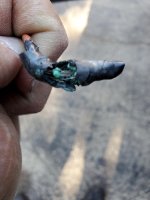
Found the culprit. I didn't get any continuity between A40 pin 5 to the relay/driver side junction box assembly at connector 2D pin 9. So, I started checking the wire and saw that it had been spliced into. When I looked at it more closely, I saw a ton of corrosion all over the wire (pictured below).

Here is why it was spliced into:

When I first bought the truck used. The previous owner did the DRL Fog Light Mod. I hated it and reversed it because I wanted to be able to turn them on and off at will. Apparently, moisture got into it somehow and corroded the crap out of it. I cut out the corroded part of the wire, installed a new wire, and now the fog lights work perfectly.

I really want to thank everyone for all of your help. I know this stuff is a pain in the ass to diagnose and even worse to diagnose over the internet. So, I really do appreciate all of your help. I most likely would not have come to this conclusion without you. I would have probably ended up wasting a lot of money having somebody else do it for me. Thanks again!
 

Attachments

  • 20210709_171519.jpg
    20210709_171519.jpg
    118.2 KB · Views: 462
Found the culprit. I didn't get any continuity between A40 pin 5 to the relay/driver side junction box assembly at connector 2D pin 9. So, I started checking the wire and saw that it had been spliced into. When I looked at it more closely, I saw a ton of corrosion all over the wire (pictured below).

Here is why it was spliced into:

When I first bought the truck used. The previous owner did the DRL Fog Light Mod. I hated it and reversed it because I wanted to be able to turn them on and off at will. Apparently, moisture got into it somehow and corroded the crap out of it. I cut out the corroded part of the wire, installed a new wire, and now the fog lights work perfectly.

I really want to thank everyone for all of your help. I know this stuff is a pain in the ass to diagnose and even worse to diagnose over the internet. So, I really do appreciate all of your help. I most likely would not have come to this conclusion without you. I would have probably ended up wasting a lot of money having somebody else do it for me. Thanks again!

Good job, you found the problem and repaired the corroded connection. You had a good start getting the wiring diagrams and figuring out some of the pertinent circuitry.

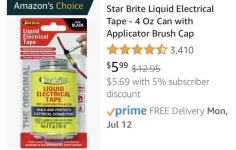
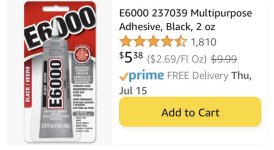
For a suggestion, whenever I make electrical mods I always solder connections, insulate with shrink tubing and overlay it with liquid electrical tape or black E6000 adhesive to keep it watertight.
Now enjoy your new fog lights!
 

Attachments

  • AD44746F-B4C4-4723-A65B-E23C1BB2FB6D.jpeg
    AD44746F-B4C4-4723-A65B-E23C1BB2FB6D.jpeg
    76.7 KB · Views: 459
  • B4EA63A7-D20E-46EF-8725-874954D7ACB3.jpeg
    B4EA63A7-D20E-46EF-8725-874954D7ACB3.jpeg
    79.4 KB · Views: 473
Good job, you found the problem and repaired the corroded connection. You had a good start getting the wiring diagrams and figuring out some of the pertinent circuitry.

For a suggestion, whenever I make electrical mods I always solder connections, insulate with shrink tubing and overlay it with liquid electrical tape or black E6000 adhesive to keep it watertight.
Now enjoy your new fog lights!

Thank you man! I will definitely be using that method. I'll probably redo it soon but I just wanted to make sure it worked and kept on working for now..lol. Thanks again!
 

Members online

Forum statistics

Threads
278,306
Messages
3,554,045
Members
248,016
Latest member
Advally Service

Trending content

Back
Top