This is a copy and paste from a former discussion on this:
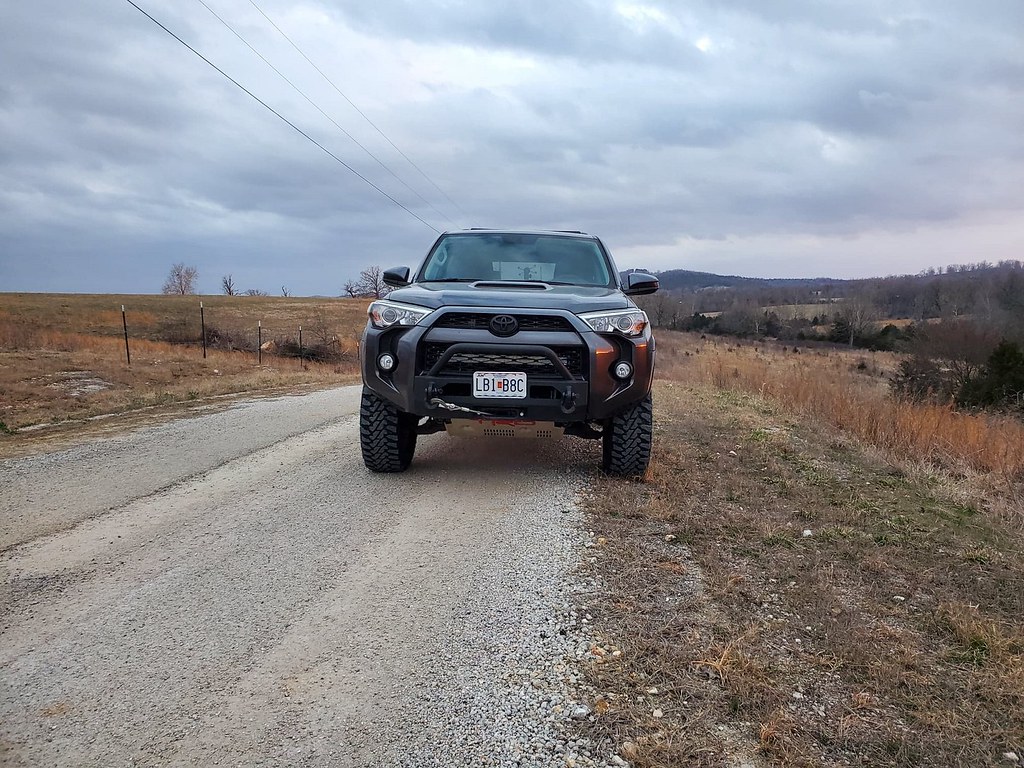
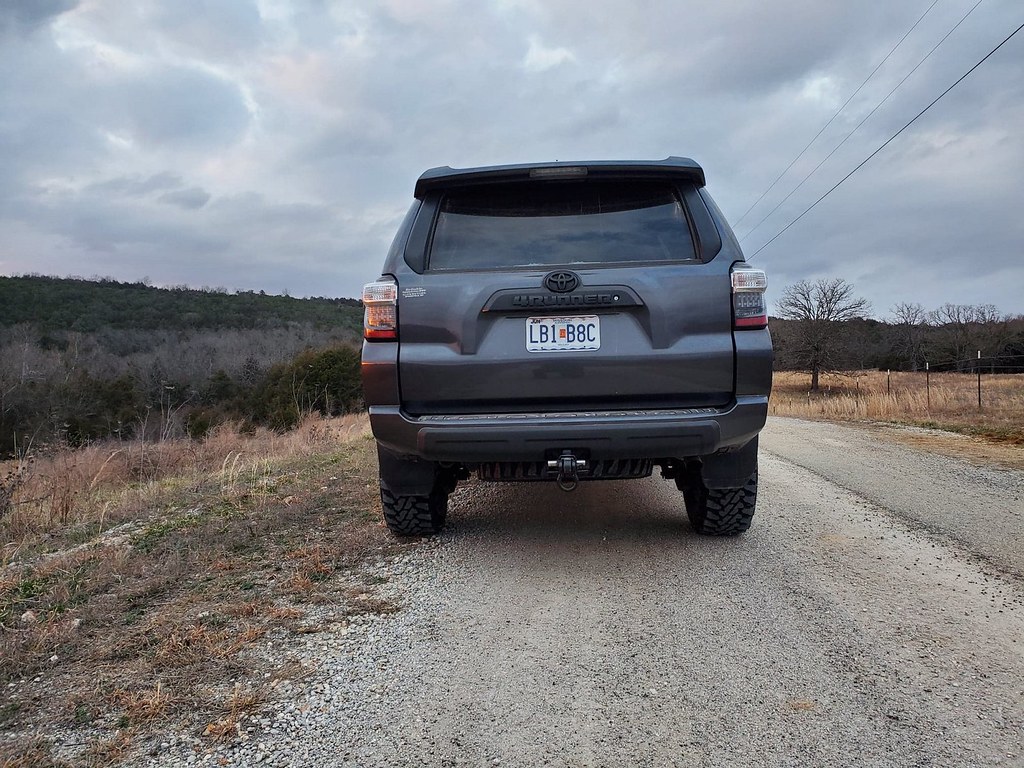
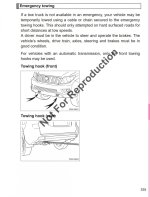
I think the front OEM recover points are strong enough for all but the most unusual and extreme scenarios. They are designed to withstand a more load than simply tying down the vehicle during transport. If you take a close look - they are set through both flanges of the frame bracket they are welded to - and welded from the backside. That's how they should be engineered to maximize tearout strength. To me they are clearly engineered as tow points, not simply tie downs.
As far as math goes - if they are 14mm dia rod each side would have a cross sectional area of just under 0.25 square inches. If they are made of basic mild steel typically known as "A36" (ultimate tensile strength of 58,000-80,000lbs) they have a tensile strength at the conservative end of 58,000 x 0.25 or 14,500lbs. That's for each side of the loop. When you pull on it, you spread the load to both sides evenly in a straight forward pull. So you're approximately 29,000lbs of ultimate tensile strength in a straight line pull. That's assuming mild steel. If they're any of the higher strength steel materials it could easily be double that. I have to assume low carbon steel given that I have no idea what it is.
It's very hard to model exactly what kind of force you'll actually apply with a tow strap. I don't love them because you rely on imprecise loads and rely heavily on shock loads that are often dangerous. That's why a winch is almost always my first choice.
Normally I'd like at least a safety factor of 2, but that's not always realistic in these situations. To put the loads into a little perspective -
* a loaded 4runner is rarely over 6000lbs.
*The synthetic rope on my 9500lb winch is rated for 17,500lbs.
*Most winch mounts are attached to the front frame flange by 8 8mm bolts. Each bolt has a rated thread tearout strength of about 16kn (3,597 lbs). The entire winch mount has a tearout strength of around 28,700lbs. About the same as one of those tie down hoops. (My winch has tie plates that also run back to the mounting points that the recovery points proposed in this thread use - so it's stronger than some, but it's probably overkill. I'm overly cautious.)
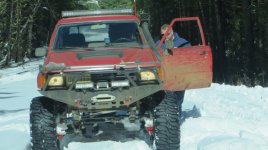
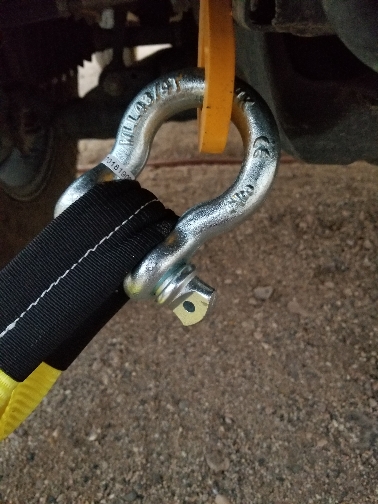
*if you hit the end of a tow strap at 20mph, depending on ton of factors including the strap its self, you could easily exceed 100,000lbs of force and break almost anything including the frame its self. There is no tow hook that would withstand some types of abuse. Use a snatch strap if possible to dampen the forces, and start small. If you need 3 or 5 attempts to get unstuck - that's totally fine. Go a little harder each time rather than just flooring it on the first shot. It's always easier to spend an extra 5 minutes to get safely unstuck than trying to figure out how to get unbroken.
The "rated" recovery points are usually made from 1/2" steel plate in some 50 series material. That material has a higher yield point (- it resists bending more) but basically the same (or sometimes lower) ultimate tensile strength (when it actually fractures). The cross sectional area of the final loop they make is usually 1/2x1/2 or... 0.25 square inches. Meaning they have relatively similar ultimate tensile strength and tearout properties as your OEM recovery point.
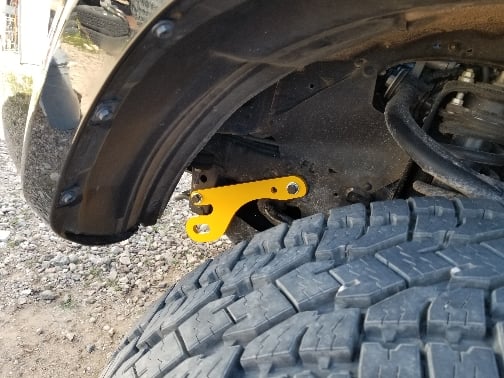
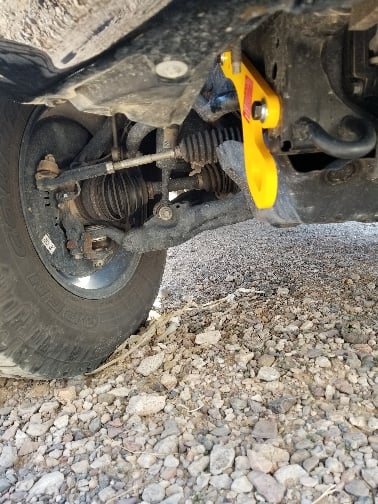
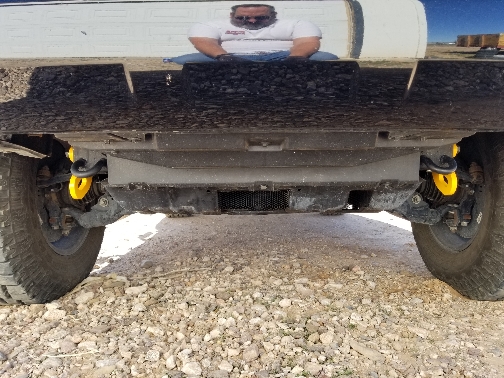
What they DONT have is a comparably strong connection to the frame. The OEM points are welded in 4 locations that spread the loading to the frame bracket. The aftermarket ones are bolted through only 2 or sometimes 3 points with relatively small weldnuts holding them in place. In a sideways pull on the front end - that's not uncommon in my experience - you now are putting significant leverage against the first bolt forward on that recovery point. There's a good chance it will fail. It's much weaker than the OEM recover point in that orientation. That's where you'll have potential to damage your vehicle or hurt someone.
I would love to see a heavily reinforced set of mounting points with a forged, rated, tow hook. We all would. But unfortunately we don't have that option. The OEM points are strong enough for me. I would save your pennies for a winch instead of spending a bunch of $ on something that is marginally stronger in a direct forward pull and significantly weaker in side loads.





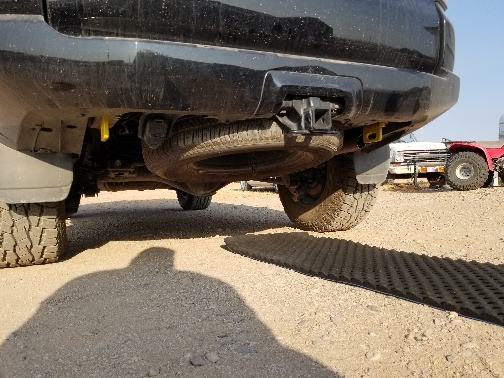

 eep:
eep: