Front recovery points

Hello, I got a new to me 2016 Trail Edition and I'm new to 4X4. I really appreciate all the great info in the sticky sections but I'm having trouble finding front recovery points for this 4Runner. The links I've tried either don't work or the firms don't have any stock. Can anyone recommend front recovery points. Or do I not need them and just rely on the OEM tie downs points. Yes, I've read many posts saying tie downs are not suitable etc.

Thanks
 
Register to hide this ad
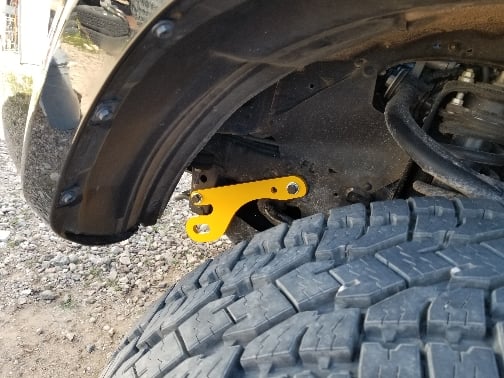
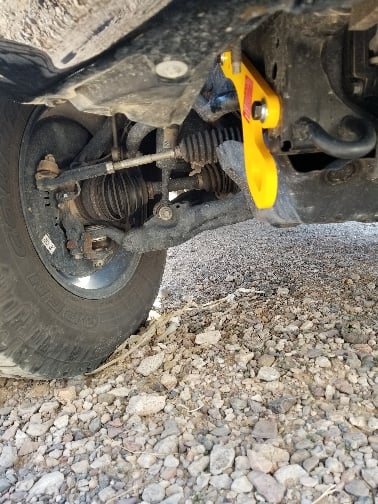
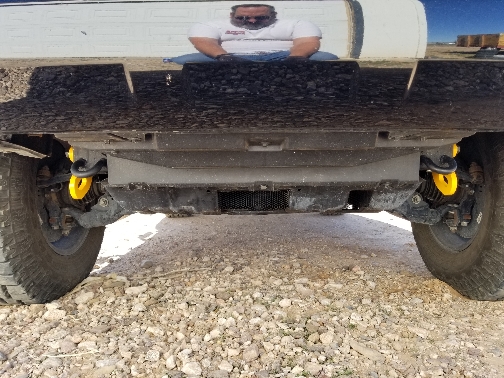
I have the Treaty Oak ones. They're good, but if I were to do it over again, I think I'd do the Apex Overland ones. The Treaty Oak ones have that weirdass bolt on a stick thing that I see being a pain in the ass down the line when I have to take them off.

Don't be surprised if something's not in stock. Odds are you have to place the order and wait for them to make it. This is common for a lot of accessories like this. Skid plates, sliders, crossbars, etc.
 
Hello, I got a new to me 2016 Trail Edition and I'm new to 4X4. I really appreciate all the great info in the sticky sections but I'm having trouble finding front recovery points for this 4Runner. The links I've tried either don't work or the firms don't have any stock. Can anyone recommend front recovery points. Or do I not need them and just rely on the OEM tie downs points. Yes, I've read many posts saying tie downs are not suitable etc.

Thanks

OEM tie-downs for me... welded to the chassis and are beefy direct load path into the frame. If you're not happy with the pull angles, or are concerned that they are 'not rated' (and you're going to trust someone else to 'rate' a piece of metal for you) or want something to bolt in, then two for it. Search for Prado 150 or lexus GX of 2010+ (maybe 2009?). If you have KDSS on your Trail, then make sure whatever you're bolting up is designed to accommodate. Lead times / availability will be up to the vendors, and I don't have a magic 8 ball, but I believe ARB makes some product that can be used if you're so inclined: ARB Recovery Point Addition on a 5th Gen 4Runner, Instllation Instructions

an alternative... your availability guess is as good as mine and you didn't say which vendors are out of stock.
KDSS: Shop | Apex Overland | Off-Road Part Accessories
non-KDSS: Shop | Apex Overland | Off-Road Part Accessories
 
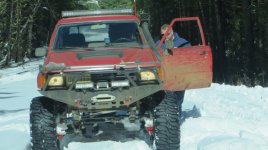
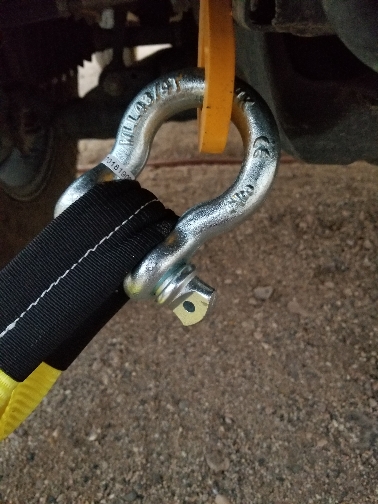
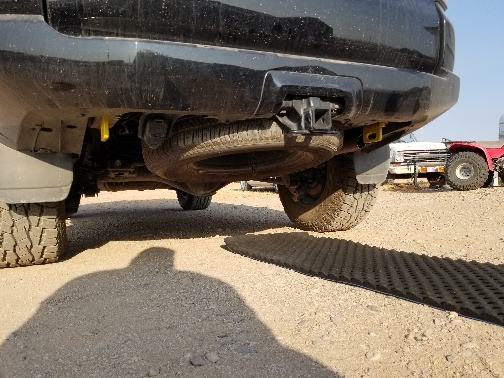
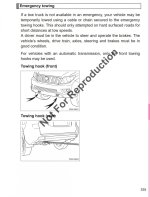
Don't need aftermarket. They are not tie downs, have a look under there to see the big iron. I would do a pull and not a yank unless needed. Photo is me getting winched out from one front loop by a 1984 4Runner.
 

Attachments

  • Drew3.jpg
    Drew3.jpg
    77.6 KB · Views: 4,582
I've used my factory recovery points 6 times now to get snatched and winched out. No issues and I feel totally safe using them.
 
Check to see if you have KDSS, some are not compatible. If I remember right one also messes with a sway bar bracket.

Ironman4x4 also has a set but I have no clue how to find them on their website.

Also if you're looking at $175 for recovery points, 'slimline' front bumpers start around $500 or so and usually include a winch mount and have recovery points
 
This is a copy and paste from a former discussion on this:

I think the front OEM recover points are strong enough for all but the most unusual and extreme scenarios. They are designed to withstand a more load than simply tying down the vehicle during transport. If you take a close look - they are set through both flanges of the frame bracket they are welded to - and welded from the backside. That's how they should be engineered to maximize tearout strength. To me they are clearly engineered as tow points, not simply tie downs.

As far as math goes - if they are 14mm dia rod each side would have a cross sectional area of just under 0.25 square inches. If they are made of basic mild steel typically known as "A36" (ultimate tensile strength of 58,000-80,000lbs) they have a tensile strength at the conservative end of 58,000 x 0.25 or 14,500lbs. That's for each side of the loop. When you pull on it, you spread the load to both sides evenly in a straight forward pull. So you're approximately 29,000lbs of ultimate tensile strength in a straight line pull. That's assuming mild steel. If they're any of the higher strength steel materials it could easily be double that. I have to assume low carbon steel given that I have no idea what it is.

It's very hard to model exactly what kind of force you'll actually apply with a tow strap. I don't love them because you rely on imprecise loads and rely heavily on shock loads that are often dangerous. That's why a winch is almost always my first choice.

Normally I'd like at least a safety factor of 2, but that's not always realistic in these situations. To put the loads into a little perspective -
* a loaded 4runner is rarely over 6000lbs.
*The synthetic rope on my 9500lb winch is rated for 17,500lbs.
*Most winch mounts are attached to the front frame flange by 8 8mm bolts. Each bolt has a rated thread tearout strength of about 16kn (3,597 lbs). The entire winch mount has a tearout strength of around 28,700lbs. About the same as one of those tie down hoops. (My winch has tie plates that also run back to the mounting points that the recovery points proposed in this thread use - so it's stronger than some, but it's probably overkill. I'm overly cautious.)
*if you hit the end of a tow strap at 20mph, depending on ton of factors including the strap its self, you could easily exceed 100,000lbs of force and break almost anything including the frame its self. There is no tow hook that would withstand some types of abuse. Use a snatch strap if possible to dampen the forces, and start small. If you need 3 or 5 attempts to get unstuck - that's totally fine. Go a little harder each time rather than just flooring it on the first shot. It's always easier to spend an extra 5 minutes to get safely unstuck than trying to figure out how to get unbroken.

The "rated" recovery points are usually made from 1/2" steel plate in some 50 series material. That material has a higher yield point (- it resists bending more) but basically the same (or sometimes lower) ultimate tensile strength (when it actually fractures). The cross sectional area of the final loop they make is usually 1/2x1/2 or... 0.25 square inches. Meaning they have relatively similar ultimate tensile strength and tearout properties as your OEM recovery point.

What they DONT have is a comparably strong connection to the frame. The OEM points are welded in 4 locations that spread the loading to the frame bracket. The aftermarket ones are bolted through only 2 or sometimes 3 points with relatively small weldnuts holding them in place. In a sideways pull on the front end - that's not uncommon in my experience - you now are putting significant leverage against the first bolt forward on that recovery point. There's a good chance it will fail. It's much weaker than the OEM recover point in that orientation. That's where you'll have potential to damage your vehicle or hurt someone.

I would love to see a heavily reinforced set of mounting points with a forged, rated, tow hook. We all would. But unfortunately we don't have that option. The OEM points are strong enough for me. I would save your pennies for a winch instead of spending a bunch of $ on something that is marginally stronger in a direct forward pull and significantly weaker in side loads.

 
Last edited:
I was waiting for [MENTION=118321]Jetboy[/MENTION] 's math to show up... :ranger:

No issues with the OEM Recovery points for me :peep:

I also haven't seen a documented case of the OEM recovery points failing on a 5th gen 4runner, at least not when used responsibly.
 
I was waiting for [MENTION=118321]Jetboy[/MENTION] 's math to show up... :ranger:

No issues with the OEM Recovery points for me :peep:

I also haven't seen a documented case of the OEM recovery points failing on a 5th gen 4runner, at least not when used responsibly.

I don't think I'll ever make any progress on this issue. But at least people should have the information if they wish to use it. From the Prado 150 owner's manual:
 

Attachments

  • Prado Tow Point.jpg
    Prado Tow Point.jpg
    118.7 KB · Views: 4,390
Jetboy's post deserves it's own subforum. I started looking into those tow hooks when I kept seeing posts that they are not for towing and only for tie downs.

those are at least 14mm thick (I thought they were 16mm but Jetboy probably has it right). they are 360 degree welded not simply tack welded. almost every single car has a front and rear tow hook/location. just because they aren't 'rated' that doesn't discredit their strength, it simply means they aren't rated. it serves toyota zero purpose to get their recovery points rated (which I'm sure comes with it's own legal challenges) to appease the offroad community, which let's face it, most 4runners don't see more than a dirt road

sure you will have those that only use rated tow points, and that's fine. but these are plenty strong, don't believe aftermarket companies saying you can't use these in a recovery. everything breaks if you do something stupid enough. you'll rip apart the chassis before you rip these hooks off. use a soft shackle, kinetic rope and some common sense and I'll bet my 4runner you will never break these off unless you've got some serious frame rust
 
what about a front hitch?

... with a receiver shackle?

Strong enough? Convenient enough?

Just a little more fuel for the fire...
 
... with a receiver shackle?

Strong enough? Convenient enough?

Just a little more fuel for the fire...

definitely more convenient and probably strong enough. I actually was looking at a front hitch for accessory use but never went ahead with it. I know curt makes a front hitch, I started looking at it again. 2 bolts onto the frame on each side but it also anchors itself on the factory tow hooks as well - which is interesting if you believe 'they aren't supposed to be used for anything but tie down points for transport' . sure the force isn't only applied to the tow hooks, but still something to think about. expensive if only to be used as a recovery point because you could just use a bridle to even out the force if that was someone's concern

but what do I know???
 
I was actually trying to finally install after a year of owning the APEX fronts yesterday for KDSS ‘16

They just released a video for the non KDSS, been asking them n others for help on KDSS forever
Nothing

Very bleak instructions on the site(forget to mention a lot)

I got a great deal when they were available n for peace of mind, why not…the attempted install now poses issues

Gotta figure out a way to sand down the drilled hole INSIDE of my frame…any suggestions?
Not something you can reach with a normal tool
 
^^^ what do you mean sand down the drilled hole in the frame? do the bolts not fit?

The bolt fits but I have to run a a metal plate with welded on nuts that has the wire to fish through an opening in frame(created by removing crush bar) to the drilled out hole
The drilled out hole on the inside is flared up so the metal plate doesn’t lay flush
The hole on the inside is basically flared
 

Members online

Forum statistics

Threads
278,307
Messages
3,554,054
Members
248,016
Latest member
Advally Service

Trending content

Back
Top