Fuel filter: how often to replace?

swampy_swimmer

New member
Did my inspection and mechanic recommended to change those every few years. I dont think my 2002 ever had replaced fuel filter. What do you think?
 
Register to hide this ad
Your "lifetime" fuel filter should be changed every 60,000 miles or 48 months. This is according to the uh hem...Haynes manual (OK don't throw stones at me). I don't have my FSM with me at work right now!! I had 15 years on my filter before I changed it this weekend. I should cut it open to see what it looks like inside. Piece of cake to change for you guys and only about $30. Can't go wrong.

EDIT: [MENTION=76520]swampy_swimmer[/MENTION] Being from NY, you my friend have the awful stuff to deal with called rust. Start blasting now with PB.
 
Last edited:
I have replaced them few times trying to fix issues in past and 99% of the time it was not the issue.

I ran e85 a lot in vehicles so we would cut into our gas and e85 filters to see what they looked like and on gas where always clean. But again I still like to change them out every few years if easy.
 
I left a parking lot, one of the first days of rain in a long time. Stabbed the throttle in first, threw it into second and POW! Truck right on it's face, down to idle rpm's in gear. Push in the clutch and it died.

I thought I snapped a timing belt, or something shat the bed hard. Hard time starting, you get the idea. Changed my fuel filter, truck felt great ever since. Rolls the tires through third gear now in the wet like a champion.

My truck has 214k on it. Each situation will differ, but they CAN make a difference. I always just make sure to buy a quality filter when I do it. No fram crap, I go to Orielly's and get a WIX filter or better.

 
I left a parking lot, one of the first days of rain in a long time. Stabbed the throttle in first, threw it into second and POW! Truck right on it's face, down to idle rpm's in gear. Push in the clutch and it died.

I thought I snapped a timing belt, or something shat the bed hard. Hard time starting, you get the idea. Changed my fuel filter, truck felt great ever since. Rolls the tires through third gear now in the wet like a champion.

My truck has 214k on it. Each situation will differ, but they CAN make a difference. I always just make sure to buy a quality filter when I do it. No fram crap, I go to Orielly's and get a WIX filter or better.

Thats like fuel cut off ina turbo car. When the maf is overflown the ecu will fuel cut and boom!!!!! Feels like you blew the motor. Crazy a fuel filter could be that dirty to cause that.
 
Yeah, I have a few boosted rigs, I know exactly what you mean. It went into limp mode hard. I had just done a complete front to back tune up a few days prior to that, except the fuel filter in the back seat haha.

Always the one thing you didn't do right?
 
They go a long time. The tanks at fuel stations these days are pretty clean, and there's filtration on the pumps themselves to keep crap out of the vehicles.

I have one on the shelf to put on mine (I may do it this afternoon) but given the fact that my truck had 210k miles on the original plugs, I'm guessing the filter is original also.

I would say the 60k mile interval mentioned above is probably plenty safe, and the filters aren't expensive so even if it's a little overkill it's not a lot of money over the life of the truck.
 
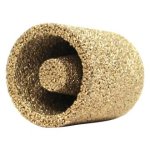
So I have to ask. Do they still use these anymore?
 

Attachments

  • fuel filter.jpg
    fuel filter.jpg
    25.4 KB · Views: 4,543
I did mine the first time at 80k, and I have one ready to put in as I just passed 160k. There is no science or authority to it, but the 80k interval feels right to me, so that's what you all should do.
 
They go a long time. The tanks at fuel stations these days are pretty clean, and there's filtration on the pumps themselves to keep crap out of the vehicles.

I have one on the shelf to put on mine (I may do it this afternoon) but given the fact that my truck had 210k miles on the original plugs, I'm guessing the filter is original also.

I would say the 60k mile interval mentioned above is probably plenty safe, and the filters aren't expensive so even if it's a little overkill it's not a lot of money over the life of the truck.

I believe my 260k mileage truck also is on its original because so far not one thing on my truck was replaced. Everything is OEM and looks like it has been there entire time.
 
Newer vehicles don't even have fuel filters anymore (not sure why).

That goes back to what I was saying about the pumps having filtration built in.

If you ever see a gas pump opened up you'll see a couple of large metal filters that look like oversized oil filters. I think as part of increased emissions requirements the gas companies have also been forced to maintain lower particulate levels at the pump so it doesn't mess with things like direct fuel injection. The automotive manufacturers are essentially shifting the cost for filtration to the pumps instead of putting it on the car.

The fact that the fuel filters on our trucks go 15 years without being changed probably means this is fine in the US, but if I were driving in a less developed/regulated place I think I'd want a filter just in case.
 
I was told the main reason cars and trucks don't have a fuel filter on the rail or on the firewall is because due to cost cutting measures. My friend is a bean counter at Ford and that is the reason he gave, though as Jeremy states the refinement and quality of gas has become better since the 3rd gen was introduced so they aren't as necessary today. Ford saves millions so I heard, to keep in the good graces of the shareholders I guess.

Regardless, I still like having one.
 
I was told the main reason cars and trucks don't have a fuel filter on the rail or on the firewall is because due to cost cutting measures. My friend is a bean counter at Ford and that is the reason he gave, though as Jeremy states the refinement and quality of gas has become better since the 3rd gen was introduced so they aren't as necessary today. Ford saves millions so I heard, to keep in the good graces of the shareholders I guess.

Regardless, I still like having one.

I can see the up front savings, but the first time they had to replace a high pressure fuel pump (I'm thinking about a direct injected engine like my BMW has in it), or set of injectors under warranty it would cost ten times as much as they saved. A service advisor would catch hell passing off bad fuel as a cause for warranty denial, and then they'd take a hit in the customer satisfaction rankings. The OEMs get the filters so cheap I'm not sure they'd take the risk of all that if they were still needed.

It would be interesting to know if they're still putting fuel filters on vehicles that are going to South America and Africa. I could see fuel quality there being much more of a concern.
 
I was told the main reason cars and trucks don't have a fuel filter on the rail or on the firewall is because due to cost cutting measures. My friend is a bean counter at Ford and that is the reason he gave, though as Jeremy states the refinement and quality of gas has become better since the 3rd gen was introduced so they aren't as necessary today. Ford saves millions so I heard, to keep in the good graces of the shareholders I guess.

Regardless, I still like having one.

Still, gas stations still keep gas in metal underground tanks and those still corrode and get old and you never know when the fill-up truck left fifteen minutes before you got there and stirred it all up. I like having one, and if I have one, I'm going to change it. People have to change injectors all the time on these trucks. If it saves me one injector change, a new filter is worth it.
 
I can see the up front savings, but the first time they had to replace a high pressure fuel pump (I'm thinking about a direct injected engine like my BMW has in it), or set of injectors under warranty it would cost ten times as much as they saved. A service advisor would catch hell passing off bad fuel as a cause for warranty denial, and then they'd take a hit in the customer satisfaction rankings. The OEMs get the filters so cheap I'm not sure they'd take the risk of all that if they were still needed.

It would be interesting to know if they're still putting fuel filters on vehicles that are going to South America and Africa. I could see fuel quality there being much more of a concern.

Um dealers are blaming poor fuel for injector damage left and right. And hpfp failure as well. It's a very common excuse for them to weasel out of a $10,000 repair for a complete fuel system replacement. It's even more prevalent in the diesel engines.
 
I was wondering if Toyota or any other manufacturer compensates for the poor gas quality by still using fuel filters. Next time I see my Ford buddy I will ask him.

My grandfather's friend worked for Texaco when they were still present here in the South. When I started driving in 1994 he told me if I ever saw a fuel tanker truck at a gas station to keep on going down the road to the next one unless I was in dire need of gas for filling up those underground metal tanks stirs up some nasty sediment. He showed me pictures of what is in the bottom of one of them. It wasn't pretty. Similar in color to a brown murky pond. I knew even at 16 that wasn't good for my car. I can't remember today what the new underground tanks are made of.
 
I can't speak to much for the gas world but the diesel world the oem's are using fuel and water filters and even then still denying warranty claims on poor fuel, mainly claiming water (and no it's not diesel fuel in general as I've bought hundreds of gallons of the stuff and between my family and I and friends have logged well over a million miles without a single issue). I know my ecoboost had one of those life time filters in the tank that was never meant to be replaced and I know ethanol has a tendency to have water in it which is a huge killer in lubricity.
 

Members online

Forum statistics

Threads
278,309
Messages
3,554,067
Members
248,016
Latest member
Advally Service

Trending content

Back
Top