pjbrownva
New member
http://content.valvoline.com/pdf/maxlife_atf.pdf
...if this is not enough evidence that it meets spec than I don't know what to say.
There is also an SAE published paper that tested different OEM fluids, and concluded that the fluids were different enough that you should use the OEM fluid, or at least a fluid that truly meets the OEM spec. (Not just fluid that Valvoline says they believe is "suitable"... but Fluid that truly has all of the properties that the OEM fluid is designed to have). More specifically, they measured a difference in properties of the different OEM fluids that were large enough that you can conclude that ONE FLUID CANNOT MEET ALL OF THOSE DIFFERENT PROPERTIES AT THE SAME TIME.
More isn't always better. For example, a fluid should have a certain friction at a given temp and pressure. Having more friction isn't necessarily good, and having less friction can also be bad. The transmission was designed with trade-offs in mind, and I would rather use the OEM fluid, so that I know that my transmission is operating with the choice of trade-offs that the engineers specified (for example, it might be performance under heavy loads vs. gas mileage). By using a multi-use fluid that claims to be "suitable" for such a wide range of OEM fluids, you will definitely be making different trade-offs than the ones that the engineers decided on when they designed your transmission and mated it with a particular engine. The multi-use fluid might not blow up your tranny, but as for me... I'll stick with having my tranny operate as it was designed by the engineers, making the same trade-offs that the engineers deliberately considered and chose.
With multi-use fluids, you will be altering those trade-offs, whether it is better or worse -- may be an opinion or may be a fact, but regardless of which it is, by using the multi-use fluid you are leaving those differences up to chance, because you don't know exactly how the multi-use fluid is different, and I would imagine that some of these trade-offs can be very specific.
For example in an older post by [MENTION=66389]BlackWorksInc[/MENTION], he included a story of a case where a "compatible" fluid caused premature failure in certain Nissan cars. It turned out that compatible fluid absorbed moisture, while the OEM fluid didn't, and parts of the friction pads in the tranny were adhered to metal plates using an adhesive that was weakened by moisture. So something that seems harmless enough, would cause those tranny's to fail sooner than they would have with OEM fluid.
Food for thought.
A quick search lead me to a post on a Honda forum, where the OP stated the case fairly well.
They wrote:
SAE Paper on OEM Automatic Transmission Fluids and Universal ATFs
Two automotive engineers from GM have published a paper with the SAE outlining the performance differences between the various OEM fluid specifications. After their study, they have concluded that the fluids are very unique to their recommended application. The idea of a single fluid that performs well in every application is impossible due to the huge differences between the various fluid specifications. So for those of you who use universal fluids such as Amsoil, please keep that in mind.
Also, while engineers from GM published this paper, SAE papers are unbiased. They have to go through a peer review process before they are published. If the paper is found to have a slant, it would be criticized and would not be published.
I'll be receiving my copy of the paper soon, but here are some excepts and a link to purchase the paper:
- "As a result of raised awareness regarding the proliferation of individual OEM-recommended ATFs, and discussion in various forums regarding the possibility of "universal" service fill fluids, it was decided to study how divergent individual OEM requirements actually are by comparing the fluids performance in industry standard tests."
- "A bench-mark study was carried out to compare the performance of various OEM automatic transmission fluids in selected industry standard tests. All of the fluids evaluated in the study are used by certain OEMs for both factory and service fill. The areas evaluated included friction durability, oxidation resistance, viscosity stability, aeration and foam control. The results of this study are discussed in this paper. Based on the results, one can conclude that each ATF is uniquely formulated to specific OEM requirements. In addition, the results show that a customer should not deviate from the automatic transmission fluid specified in the vehicle's owners manual."
Comparison of OEM Automatic Transmission Fluids in Industry Standard Tests
-------------------
I don't know if it's true to say that the report is unbiased, but I assume that it's true that the SAE papers are peer reviewed before publication, so that would lend some credibility. Also, I do believe that they found differences in the properties of different fluids.
Additionally, here's an article I found (from 2011) where the author makes his case for being skeptical of multi-use transmission fluids. Now, I'll agree that just because someone wrote an article, doesn't mean that everything they say is true, and I'll admit that the article doesn't talk about Valvoline's latest multi-vehicle fluid (maybe it wasn't out in 2011... I don't know), but at least think about what he says. I think he makes some good points, including about some prior valvoline multi-use ATF's, and to me it supports a trend... namely that Valvoline would like to sell ATF to you just as much as Honda, Toyota, Nissan, GM, Chrysler, Mercedes, Audi, and all of the other companies want to.
You don't need to change your transmission fluid *that* often. To me, it's not worth the risk, and I don't like the idea that my truck was designed to operate in one particular environment, and that I am likely changing that environment by using a multi-use fluid. If there was a fluid that claimed to be for a few different types of OEM use, I'd be more likely to buy it. The broader the claim, the less specific the fluid can match the true properties that the OEM designers intended.
He doesn't discuss the specific valvoline fluid you linked to, but his article does show a trend. I'd be suspicious of any company saying that their fluid is "suitable", and so they recommend it. What does suitable mean? The answer is, whatever they want it to mean.
Here's a quote from the article where the author lists information on different types of fluid. Note, for example, that Toyota Type T-V is a low viscosity synthetic ATF used in some Lexus vehicles, but that Toyota Type WS is an even newer transmission fluid.
At the end of the day, you will have to make your own decisions... and it sounds like you already have. Yes, the automakers make money buy using proprietary formulas in their transmission fluids, but that doesn't mean that the different fluids aren't different.
At least understand that if you choose to use a multi-vehicle fluid, and understand that it's probably "close" but not the same. Whether or not that makes a difference to you, is your call in the end.
Here's the excerpt from the article:
For example, Valvoline claims in its promotional materials that its DEX-MERC MaxLife ATF is "recommended for use in GM, Ford, Mazda, Toyota, Chrysler, and most import vehicles." Notice they omitted the word "all." If you put MaxLife into a vehicle that is supposed to be using Dexron VI or Mercon LV, you have voided the warranty on the transmission. Moreover, this Valvoline ATF is essentially a version of the old Dexron III and Mercon ATFs. Since 1998, Chrysler has been using a synthetic ATF, either ATF+4 or ATF+5, which Chrysler specifically says is not compatible with either Dexron or Mercon. Valvoline’s ads claim this fluid is “recommended” for Chrysler products. However, Valvoline’s own “product data sheet” (the data sheet produced for every motor oil and ATF giving its specifications, which can be found on the petroleum company’s website) says that this ATF is recommended for GM vehicles, (which use Dexron III), and Ford products (using Mercon) and does not claim this fluid is recommended for any Chrysler product, much less GM products using Dexron VI or Fords requiring Mercon LV.
Other petroleum companies also make overbroad claims for their multi-vehicle ATFs. Quaker State says their Multi-Vehicle ATF is "recommended" for Chrysler, Honda/Acura, Toyota, Nissan, VW/Audi, BMW, Hyundai, Mitsubishi, Mercedes-Benz, Saturn, and Jeep vehicles and "suitable" for many more, including GM vehicles and Ford vehicles. But the product data sheet for that ATF makes no mention of BMW, Volkswagen, Audi, or Mercedes-Benz, or Saturn. Instead, the product data sheet lists primarily applications that use either Dexron III or Mercon V. Most BMW, Mercedes-Benz, Volkswagen and Audi vehicles don’t use Dexron/Mercon type fluids. Believing the advertising could be a very expensive mistake.
Even product data sheets can provide questionable information. Fina’s product data sheet for its "Dexron-III/Mercon ATF" says it is recommended for "all late model GM...Chrysler and most imported car...automatic transmissions, as well as, (sic) those in Ford vehicles that call for a Mercon fluid." But, again, a fluid compatible with Dexron III or Mercon is not going to be compatible with Chrysler ATF+4 or ATF+5, nor will it be proper for either Dexron VI or Ford LV vehicles. The product data sheet is simply wrong.
Whenever a multi-vehicle ATF is advertised as suitable for a long list of vehicles, be suspicious. Most of these fluids are simply versions of Dexron III or Mercon. Unless your car was delivered new with Dexron III (or an earlier version of it), Mercon, or Mercon V fluid, you should be sure to check the product data sheet of any multi-vehicle ATF before using it. If you have any doubt that Dexron III or Mercon is suitable for your car, do not take the risk of using a multi-vehicle fluid.
There are a couple of other complications, too. Your GM car might take Toyota transmission fluid, or Honda transmission fluid. Your BMW might take the same ATF as your neighbor’s Audi. Heck, your new BMW might actually use Dexron VI. The Pontiac Vibe is actually equipped with a Toyota transmission, and the Saturn Vue has several models with Honda transmissions. BMW buys its newest automatic from General Motors. Audi, BMW, Jaguar, and Volkswagen all buy transmissions from ZF, a German transmission company.
So, to select the proper ATF for your car, start with the owner’s manual. The manual will state the recommended ATF, as of the time the car was new. With that starting point, here’s a list of transmission fluids that either are, or have been, on the market and what superseded what:
Type A and Type A, Suffix A—very old transmission fluids superseded by Dexron and Mercon. Equivalent to Mercedes-Benz Sheet 232.2.
Dexron, Dexron II, IID, and Dexron IIE—these are the original GM Dexron ATFs and are no longer licensed by the company, having been superseded by Dexron III, which has now itself been superseded by Dexron VI. The difference between Dexron, II, and IIE was mostly in the oxidation inhibitors.
Dexron III and IIIH—OE ATF at GM for many years and widely adopted by other manufacturers. General Motors nowconsiders all of them to be obsolete and discontinued licensing Dexron IIIH in 2006. Dexron IV was an upgraded version of Dexron III, which was used by GM only briefly.
Dexron III/Saturn—a version of Dexron III developed for certain Saturn models.
Dexron VI—the newest GM ATF, it was developed specifically for the new six-speed automatic and is a synthetic blend (meaning it has some conventional base stocks). That transmission has tighter internal tolerances and required a fluid that had higher shear strength that Dexron III.
It was introduced with the 2006 models. GM considers Dexron VI to be "backward compatible," meaning GM recommends it for use in any vehicle that originally used any earlier version of Dexron and that it can be mixed with them. However, GM specifically recommends against using Dexron VI in non-GM made vehicles that used Dexron III as original equipment. It is also the specified ATF in certain non-GM models that use GM transmissions, such as BMW. It is not, however, specified for GM brand vehicles that have non-GM transmissions, as mentioned above, or are imported to the United States.
NOTE: Dexron VI is not recommended for: Pontiac Vibe and Wave, Chevy Aveo, Epica, and Equinox, Saturn ION with CVT or AF23 transmission, Saturn Vue with CVT, AF33 or 5AT transmissions, or 1991–2002 Saturn S. These are vehicles with transmissions that were not manufactured by General Motors.
Ford Type F—an old ATF first introduced in 1967 and used in all Ford products prior to 1977, and in some until 1980; also used in various import vehicles of the period, including Mercury Capri, Jaguar, Mazda, Saab, Toyota, and Volvo. Type F is not compatible with any other ATF. Specifically, it is not compatible with Mercon ATFs.
Ford Type H—developed for the C5 Ford automatic transmission introduced in 1981, it has been superseded by Mercon. Type H is not compatible with Type F and should not be used in a transmission requiring Type F.
Ford Type CJ—originally designed for the Ford C6 automatic transmission, it also has been superseded by Mercon and also can be replaced with Mercon V, but should never be used in a transmission requiring Type F. Dexron II is an approved alternative to Type CJ.
Mercon—introduced in 1987 and similar to Dexron II. Ford ceased licensing Mercon in 2007 and now recommends Mercon V for all transmissions that previously used Mercon. Mercon is a suitable replacement for Type H and Type CJ fluid, but not for Type F.
Mercon V—the most common Ford ATF in late model Fords, it is very much like Dexron III. Should not be used in a transmission requiring Ford Type F.
Mercon LV—the latest Ford ATF, it is factory fill in 2008 and later Fords. The LV stands for "low viscosity." It is a fully synthetic ATF. It is not compatible with earlier Mercon fluids, so it should neither be mixed with Mercon or Mercon V used to replace those fluids. It is not compatible with any other fluid, either.
Mercon SP—a version of Mercon V with an enhanced additive package.
Mercon CVT—Ford ATF specifically developed it for models with continuously variable transmissions.
Chrysler 7176—now obsolete Chrysler fluid for front wheel drive vehicles.
Chrysler ATF+2, also called 7176 D—first used in 1997, added oxidation protection and better cold weather flow than 7176.
Chrysler ATF+3, also called 7176E—designed for four-speed automatics, uses better quality base oils to obtain higher strength than ATF+2. Should always be used in 1999 and earlier Chrysler manufactured minivans, rather than later versions of Chrysler ATFs.
Chrysler ATF+4, also called ATE—a synthetic ATF introduced in 1998, it should always be used in any vehicle in which ATF+4 is specified. It can be used in Chrysler vehicles manufactured in prior years, except for minivans from before 2000, which use the 41TE/AE transmission. It is not compatible with Dexron or Mercon fluids.
Chrysler ATF+5—synthetic ATF used in 2002 and newer models, it is not compatible with Dexron or Mercon fluids.
Audi—primarily uses automatic transmissions manufactured by ZF and in which ZF specifies Esso LT 71141, which is sold under a VW/Audi part number. It’s also used in certain BMW models.
BMW automatic transmissions are either made by General Motors or by ZF. Most of the GM automatic transmissions use Dexron III, though a few use Texaco ETL or Texaco ETL 7045. The newest GM built six-speed automatics use Dexron VI. Some of the ZF transmissions also use Dextron III, but most do not. These use, depending on model, Texaco ETL 7045E, Texaco ETL 8072B, Esso LT71141 or Shell LA2634. Each of these fluids are sold by BMW dealers.
Honda ATF-Z1—specified by Honda for their automatic transmissions, other than CVT models.
Honda Continuously Variable Transmission Fluid—Honda ATF for CVT vehicles. Introduced in 1996, Honda discontinued it for a time and instead recommended ATF-Z1. Later, Honda returned to this fluid for CVT applications.
Jaguar JLM 20238—this is Esso LT 71141, which is specified by the transmission manufacturer, ZF, and sold under a Jaguar part number. Also specified for certain VW, Audi, and BMW models.
Kia SP-II and SP-III—Kia fluid.
Mazda Type T-IV—recommended for some Mazda vehicles and available only at the dealer.
Mazda Type M5V—recommended for some Mazda vehicles and available only at the dealer.
Mercedes-Benz ATF no. A 001 989 2203—this is Esso LT 71141 specified for certain ZF-made automatic transmissions and sold under a Mercedes-Benz part number. Also sold under BMW, Audi, Volkswagen, & Jaguar part numbers.
Mercedes-Benz Sheet 236.2—a Mercedes-Benz specification for Type A, Suffix A ATF, superseded by Sheet 236.6.
Mercedes-Benz Sheet 236.6 and 236.7—Mercedes-Benz specifications for their version of Dexron II and IID. This is not a specific brand, but merely a manufacturer’s specification.
Mercedes-Benz Sheet 236.1 and 236.5—Mercedes-Benz’s specification for their version of Dexron III.
Mercedes-Benz Sheet 236.10—Mercedes-Benz synthetic fluid specification. Superseded by Sheet 236.12.
Mercedes-Benz Sheet 236.12—this is the Mercedes-Benz synthetic fluid designed for the new 7-speed automatic transmissions and is backward compatible for all Mercedes-Benz models. A specification, not a branded product. Mercedes-Benz does, however, carry their "Mercedes-Benz Synthetic Automatic Transmission Fluid" at a retail list of $10 per quart, which meets this specification.
Mercedes-Benz Sheet 236.20—this is the Mercedes-Benz specification ATF for vehicles with continuously variable transmissions. Suggested retail price is $10 per quart.
Mitsubishi Diamond SP-II and SP-III— Mitsubishi fluid.
Nissan Matic C—Nissan fluid, which is Dexron II, superseded by Nissan Matic D.
Nissan Matic D—a Nissan fluid, which is Dexron III.
Nissan Matic J—factory specified for certain Nissan models.
Nissan Matic K—factory specified for certain Nissan models.
Porsche ATF no. 999 917 547 00—again, Esso LT 71141, specified because a ZF transmission is used and sold under a Porsche part number.
Toyota Types T, T-II and T-III—Toyota ATFs, which have now been superseded by Type T-IV.
Toyota Type T-IV—Toyota fluid specified for Toyota and Lexus vehicles. Sold only at Toyota or Lexus dealers or online. Replaces Types I, II, and III. Also used in Pontiac Vibe (which has a Toyota powertrain).
Toyota Type T-V—synthetic low viscosity Toyota ATF, also used in Lexus vehicles.
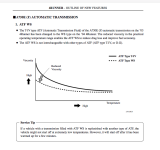
Toyota WS—this is the newest Toyota fluid and it is also a lower viscosity fluid than Type T-IV. The "WS" stands for "world standard." It is also used in Lexus vehicles.
Volkswagen—primarily uses automatic transmissions manufactured by ZF and that specify Esso LT 71141, that is sold under a VW/Audi part number. (It’s also used in certain BMW models.)
Volvo Automatic Transmission Fluid—used only on those models that state on the transmission dipstick “use Volvo fluid only.”
Last edited: