HELP....TRANS COOLER FOR 96 4runner LIMITED 4X4

bwade843

New member
hey guys,

I'm looking for some input for best trans cooler to put on my 96 limited 4x4 4runner....I was playing in the mud last week and the A/T TEMP light came on...so I'm wanting to add a trans cooler so i do not have to worry about it anymore...ANY ADVISE WOULD BE GREAT


THANKS!!!!
 
Register to hide this ad
First advice, time to put fresh fluid in your tranny.

Second Advice, replace your rad if you're unsure of its age and state.

Third advice, B&M 70268 or Tru Cool 4454

..and final piece of advice, which should have been the first... use the SEARCH feature.

There have been many discussions, at length, about trans cooling options for 3rd gens.
Use the search function and I'm sure you'll fall on something that contains some answers you're looking for.

..or, this can get you going: Let me Google that for you!

Also, be advised that if you're also looking at monitoring trans temps, an OBDII ScanGuage will not work on '96-'98 3rd gens for this specific reading. You'll need to install your own trans fluid temp sensor.
 
Last edited:
hey guys,

I'm looking for some input for best trans cooler to put on my 96 limited 4x4 4runner....I was playing in the mud last week and the A/T TEMP light came on...so I'm wanting to add a trans cooler so i do not have to worry about it anymore...ANY ADVISE WOULD BE GREAT


THANKS!!!!

When the dash light comes on for the transmission temp, that means your fluid is completely cooked. From what I've heard, the light comes on at 300 degrees. Reaching 300 degrees, your fluid has turned to varnish and is not effectively lubricating your automatic transmission's internal parts anymore. You would have been best to tow it home or to a shop and get your transmission fluid flushed. When the light comes on, it means stop and don't drive it anymore until you flush the fluid and figure out if there's something wrong that caused the overheating like a fluid leak.

Hate to say this but don't be surprised your transmission experiences an untimely death.
 
the original post was not that long ago, so maybe they did leave it before driving it.

good thing about the trans fluid is how cheap it is.
 
When the dash light comes on for the transmission temp, that means your fluid is completely cooked. From what I've heard, the light comes on at 300 degrees. Reaching 300 degrees, your fluid has turned to varnish and is not effectively lubricating your automatic transmission's internal parts anymore. You would have been best to tow it home or to a shop and get your transmission fluid flushed. When the light comes on, it means stop and don't drive it anymore until you flush the fluid and figure out if there's something wrong that caused the overheating like a fluid leak.

Hate to say this but don't be surprised your transmission experiences an untimely death.


so flushing the fluid when adding trans cooler i will still have problems since that light has already came on? guessing its already caused damage?
 
...so flushing the fluid when adding trans cooler i will still have problems since that light has already came on? guessing its already caused damage?

Not necessarily, if it's not acting up now it probably won't after flushing and new equipment.

You may want to add a transmission temp monitor, for you MY I think it requires something like Scanguage.

Make sure the area between the a/c condensor and engine radiator are clear, remove the front skidpan and look up in there. Use a long screwdrive or other similar tool to fish out the debris. I'll be you'll find all kinds of muck in there slowing the flow of air. Luck. :cowboy:
 
so flushing the fluid when adding trans cooler i will still have problems since that light has already came on? guessing its already caused damage?

Even if you had the vehicle towed after seeing the dash light come on, some damage occurred because you overheated the transmission but I don't know how much. But, if you drove a long distance after this happened, you could have done even more damage. Like I said above, when ATF reaches 300 degrees, the lubricating properties of the fluid have deteriorated greatly. Driving it in this condition is not the greatest for your transmission. But, hopefully the damage is minimal and you'll get a lot more life out of your transmission.

The key for you in the future is to follow the advice above and start monitoring your transmission temp. This way you'll prevent this from happening again.

Here's a quote from the linked article:
Transmission Fluid Flush Tips | Aljets Automotive

"At elevated operating temperatures, ATF oxidizes, turns brown and takes on a smell like burnt toast. As heat destroys the fluid's lubricating qualities and friction characteristics, varnish begins to form on internal parts (such as the valve body) which interferes with the operation of the transmission. If the temperature gets above 250 degrees F., rubber seals begin to harden, which leads to leaks and pressure losses. At higher temperatures the transmission begins to slip, which only aggravates overheating even more. Eventually the clutches burn out and the transmission calls it quits. The only way to repair the damage now is with an overhaul -- a job which can easily run upwards of $1500 on a late model front-wheel drive car or minivan."
 
When the dash light comes on for the transmission temp, that means your fluid is completely cooked. From what I've heard, the light comes on at 300 degrees. Reaching 300 degrees, your fluid has turned to varnish and is not effectively lubricating your automatic transmission's internal parts anymore. You would have been best to tow it home or to a shop and get your transmission fluid flushed. When the light comes on, it means stop and don't drive it anymore until you flush the fluid and figure out if there's something wrong that caused the overheating like a fluid leak.

Hate to say this but don't be surprised your transmission experiences an untimely death.

I was just wondering that, since there's no temp sensor that you can pick up with a scan gauge. I was under the impression we didn't even have a sensor at all, since I've never heard of that light turning on for a 96-98.
 
I was just wondering that, since there's no temp sensor that you can pick up with a scan gauge. I was under the impression we didn't even have a sensor at all, since I've never heard of that light turning on for a 96-98.

I believe there's an overtemp light for those years but the actual temp can't be read by a scanner.
 
Yeah, there is a sensor, but the readings aren't reported to the vehicle's computer. So it can't be read via OBDII.
 
Last edited:
I was just wondering that, since there's no temp sensor that you can pick up with a scan gauge. I was under the impression we didn't even have a sensor at all, since I've never heard of that light turning on for a 96-98.

Yeah, the 96-98 just have an "Idiot" light letting you know to, STOP! Something is terribly wrong. I remember reading somewhere that the light comes on around 300 degrees which is way too late.
 
I was just wondering that, since there's no temp sensor that you can pick up with a scan gauge. I was under the impression we didn't even have a sensor at all, since I've never heard of that light turning on for a 96-98.
Every electronically controlled transmission will have a temp sensor - the shifting characteristics depend on knowing the fluid temp. That data just isn't put in a place that is readable by OBD-II on the pre-99 trucks, as others have said.

-Charlie
 
you want a trans cooler, go to the local pull it yard and get one. i bought one for my truck for $7, got it from a ford explorer.
 
Every electronically controlled transmission will have a temp sensor - the shifting characteristics depend on knowing the fluid temp. That data just isn't put in a place that is readable by OBD-II on the pre-99 trucks, as others have said.

-Charlie

Is it based on a temperature sensor or just the viscosity of the fluid? In my mind I always just wrote it off as warmer fluid will enter passageways quicker so that's how the shift points changed, but I would be lying if I said I knew anything about how automatic transmissions worked.
 
Is it based on a temperature sensor or just the viscosity of the fluid? In my mind I always just wrote it off as warmer fluid will enter passageways quicker so that's how the shift points changed, but I would be lying if I said I knew anything about how automatic transmissions worked.
Nope, there is sensor in the exact same place on the early and late transmissions... I haven't checked if it is the same part though. I have a '97 trans in my '99, but I swapped the sensor over from my '99 trans just in case.

So, you kinda have it backwards. The sensor is there to know the temp of the fluid so the computer can change shift points (delay coming out of 2nd when cold, etc.) and shift speed to correct for viscosity changes.

Oh, and I checked the wiring diagrams, the AT temp light comes on at 150*C (302*F) and goes back off below 120*C (248*F).

-Charlie
 
Here is a good 1:
Long Tru-Cool LPD Transmission Oil Cooler 4454 18,000 GVW
https://www.amazon.com/Long-Tru-Cool-Transmission-Cooler-4454/dp/B005XZXB1M

^^ Source: https://www.tacomaworld.com/threads...sions-write-up-your-4-speed-automatic.325531/
This is how Low Pressure Drop technology works:
When Automatic Transmission Fluid (ATF) is cold it is viscous. The unique Tru-Cool design allows the colder, thicker ATF to flow more efficiently through two open bypass channels positioned at the top of the cooler. As operating temperatures increase, the ATF becomes hotter and thinner, It's then directed through the core where it is cooled. Tru-Cool's highly efficient cooling technology combines improved protection against lube failure with optimal heat transfer.
http://www.amazon.com/Long-Tru-Cool-Transmission-Cooler-4454/dp/B005XZXB1M
Long Tru-Cool Oil Coolers offer advanced cooling protection for many towing applications. The advanced technology out performs TUBE & FIN Designs, Delivers up to 15 times less flow restrictions, 30% more cooling delivers maximum heat transfer, Self-Regulating for maximum lube flow protection through start-up, varied temperatures and driving conditions, heavy loads and towing.
Here is Toyotas fluid flow guide ...Look at page 8 on this PDF http://www.toyotatundraforum.com/pdf/A750E.pdf
And here is a guy who recently installed a cooler correctly http://www.tacomaworld.com/forum/1st...agram-pic.html

cooler and fan install http://www.tacomaworld.com/forum/2nd-gen-tacomas/352071-my-trans-cooler-fan-install.html
 
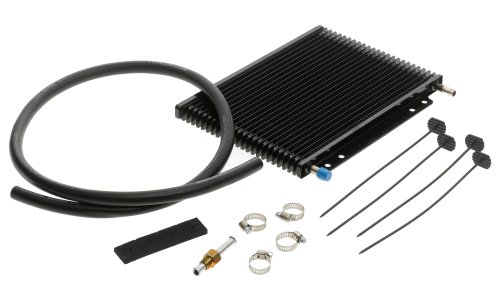
Anyone have any experience with this Hayden trans cooler kit?

41jHNBSTCTL.jpg


EDIT: after readng this post http://www.toyota-4runner.org/2822974-post18.html I am leaning towards the Tru-Cool LPD with the internal temp bypass feature
 
Last edited:

Members online

Forum statistics

Threads
278,316
Messages
3,554,112
Members
248,016
Latest member
Advally Service

Trending content

Back
Top