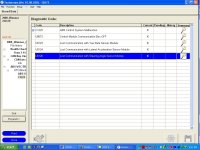
[TL: DR at the bottom]
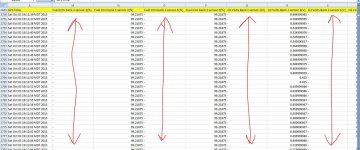
So the thing is that there is no "Barometric Pressure Sensor," in fact there isn't even a Barometric Pressure PID for this vehicle, the FSM lists a "Atmosphere Pressure" PID under the Data List/Active Tests section; that data is pulled from the "Atmosphere Pressure Sensor." I would email the scantool manufacturer and verify that their scantool is most likely converting the "Atmosphere Pressure" PID into "Barometric Pressure."
In the meantime, lets go ahead and run with the assumption that the data value is accurate and the name has simply been changed from "Atmosphere Pressure" to "Barometric Pressure" (for the rest of the post I will be referring to the measurement as "Atmosphere Pressure.) Now this is where things get a bit interesting...
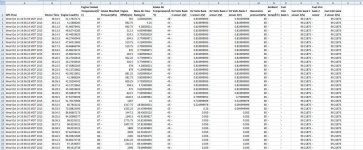
80kpa is the value we see consistently output by the Data List you posted, that strikes me immediately as an odd number because normal atmospheric pressure is considered 101kpa (14.7psi), this implies that the Atmosphere Pressure Sensor is seeing a vacuum (about 6.3inHg of vacuum when you convert it.) So the next question is where the hell is this pressure sensor and what is it supposed to be reading?
Well, it turns out that the only Atmosphere Pressure Sensor is located on the Air Switching Valve located under the intake manifold in the valley on 2005~2009 2UZ-FE equipped 4Runners.
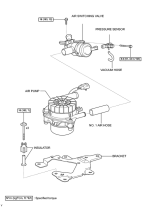
This sensor is watching the pressure from the switching valve to determine whether or not the pump and switching valve is functioning correctly. To simplify the explanation here (because there's no reason to delve too deep into how the monitor works right now), it's watching for fluctuations in pressure and pulsation in pressure as it operates the valve and pump to verify that it is in fact operating correctly when commanded. According to the FSM, the "normal range" for the sensor is 0kpa to 150kpa (or from perfect vacuum to 7.2psi over atmosphere,) there is a DTC P2431 [Secondary Air Injection System Air Flow / Pressure Sensor Circuit Range / Performance Bank 1] can set if pressure goes below 45kPa or higher than 135kPa. But since the sensor is seeing a consistent 80kpa, it wont set the only DTC related to the actual pressure sensor reading. Now that we understand the purpose and function of the Atmosphere Pressure Sensor, we should look at how the Secondary Air Injection System is set-up.
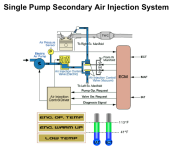
If you look at the above diagram you'll see that the Air Pump feeds air into the Air Switching Valve which then routes that air to both No.2 Air Switching Valves, which ultimately feeds into the exhaust manifolds at the manifold (before the Catalyst, AFR sensor, and O2 Sensor.)
Now by this point you're probably scratching your head like I am, which is fine; because it is very weird when you break it down this far. While air being injected before the catalyst and AFR sensors could confuse the vehicle into thinking it's running far too lean, leading the ECM to enrich the fuel mixture way too much and possibly cause it to bog down; I personally don't see how that could be happening since, if anything one would expect to see pressure (not vacuum) in the manifold and up to the exhaust ports of the No.2 Air Switching Valves. But the Atmosphere Pressure Sensor is seeing a slight vacuum, which means that there has to be a small leak of some kind after the sensor pulling a vacuum (this is because the Air Switching Valve is after the Atmosphere Pressure Sensor, possibly implying that the valve is not sealing correctly.)
So we have a vacuum in a system that should be seeing pressure if the Air Switching Valve and No.2 Air Switching Valves were leaking since exhaust pressure from the exhaust ports would shove pressure back up the lines. To me this implies that the only possible way for there to be a vacuum is that one or more of the membranes in the vacuum operated No.2 Air Switching Valves has failed as well as the Air Switching Valve is not sealing correctly. This would allow unmetered air to bypass the MAF and go into the intake manifold (of course, this also assumes that the vacuum switching valves at the manifold are leaking as well since they control the flow of vacuum to the No.2 Air Switching Valves) and cause the vehicle to run; but at only about 6inHg of Vacuum... that seems highly unlikely. Not to mention that you'd need at least 3 valves to be incorrectly sealing and even then I am not sure if the volume of air would be sufficient enough for the engine to have any serious drivability issues above idle to begin with.
TL: DR
Basically, while 80kpa seems like a very odd number (particularly how consistent it is); I cannot for the life of me understand how that sensor is reading a slight vacuum or how that would impact the engine in any real way... So I think that's a dead end.
Post Note-
...
My first plan of attack is to swap out all four O2 sensors with used ones from the shelf. These came out of my 80 series Land Cruiser so they should be compatible, including the connectors.
I could also swap out the cat pipes from my '03 sport V8 and see if the problem follows the cats. However, I hesitate to blame the cats due to the fact that unburned fuel is getting dumped into the cat and they're simply burning it as they're designed to do. One thing I'm going to do is for both of our vehicles to make the same trip and then compare the cat temps with a IR gun.
I forgot to mention, that your idea of swapping the Oxygen sensors from your LC80 won't work (I didn't think LC80's even came with a 2UZ-FE?) as the sensors are far too old in design (internal resistance of the oxygen sensors are probably different and I don't recall any of the LC80 engines ever having AFR sensors,) despite the connectors being similar. You may be able to swap your 2003's sensors with hers, I'm not sure off the top of my head.
Something else to mention is that I really suggest you get a cheap TIS Technstream cable; the Torque app is just not outputting enough information and some of it seems like it may not be accurately translating. For example, I would have liked to see the following in that chart :
-Short Term & Long Term Fuel Trims (yours only shows fuel trim in a percentage which is a very odd way to represent that...)
-Sensor Voltages
-Engine Coolant Temperature
-TPS Angle
-AFR Impedance (this is helpful for ruling out bad Air Fuel Ratio sensors)
-DTC Count (Basically this tells you if a DTC set, so you can get an idea where in the data the ECM saw a problem)
-Ignition Timing
-VVTi data (commanded angle, actual angle, ect.)
-Fuel Injector Pulse Width
-ect.
There's a ton of ancillary information that would be worth looking at before, during, and after the event occurs that we're missing here; not to mention that it's starting to look more and more like your scantool is not correctly representing data. I'd recommend getting one of those Chinese TIS Techstream Mini VCI, they're only like $20~30 and should work fine on most laptops, it's basically a bootleg factory scantool.
Update
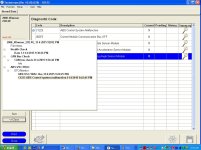
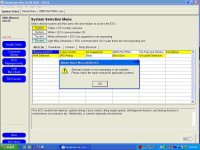
I just realized something (rather embarrassing it didn't occur to me earlier now that I think about it), the vehicle is probably going into "Fail Safe" mode and that's why it's bogging down and when you cycle the key it kind of works fine. Does it feel like it's not shifting above 2nd gear when this happens by any chance?