"Do not drive in excess of the speed limit. Even if the legal speed limit permits it, do not drive over 85 mph (140 km/h) unless your vehicle has high-speed capability tires. Driving over 85 mph (140 km/h) may result in tire failure, loss of control and possible injury. Be sure to consult a tire dealer to determine whether the tires on your vehicle are high-speed capability tires or not before driving at such speeds"
Straight line driving gives one a sense of confidence. The vehicle "feels" safe since it is such a smooth ride for an offroader. Not the same when trying an avoidance maneuver at 85 mph +.
:flamethrwoer2:
What a load of huey. I see this like those old cars that have the orange marker at 55mph, trying to convince you that anything more is unsafe. Your maximum speed is dependent upon the condition of your vehicle, driver ability, and road conditions. :driving:
For us the factory Dunflops (2014 Dueler HT 684 II P265/70R17) have an S speed rating, meaning thermal breakdown of the tire won't begin until you've been above 112mph for some time. Would I recommend this, absolutely not! For reference this manual is appropriate for any vehicle which ships with N speed rated tires. Most of us ditch the Dunflops for other (bigger/beefier/aggressive) tires anyway which usually results in lower speed ratings.
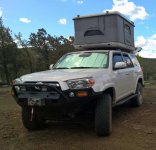
What concerns me most about speed in the 4Runner is the aerodynamics. Anyone from the plains can tell you that even a 15mph wind makes a huge difference in the handling of this truck, no matter which direction it comes across. Ensure you factor the surface wind into your speed calculations.
I agree with you, avoidance maneuvers above 70mph get interesting and can be very unsafe. You should be able to safely maneuver the vehicle to avoid collision with any unexpected object/vehicle/animal in the road. The more speed you have, the less deflection in steering you can use before the tires lose grip. Also the more quickly the vehicle will respond to your steering input so the yanking the wheel can land you in the ditch on the other side of the road very easily.
Obviously you need to see to avoid, so you shouldn't be going faster than you can react to what you see. In broad daylight on a dry long straight road you drive daily, you can safely drive faster than the same road wet, at night, or around a curve. Straight line, dry, with unlimited visibility on a road I drive daily, I've had the 4Runner up above 100 while passing other vehicles, obviously this speed was temporary and I didn't feel it unsafe. There's almost never a need for such speed, and it's rare to exceed 85mph even when passing.
Sidewall stress is also a factor in our vehicles. On a recent trip along our interstates I had an encounter with a rice burner muffler which bounced off the inside of my driver's front tire before going up into the armor. Nearly 800 miles later during an avoidance maneuver for something else in the road at 70mph the sidewall and the tire lost pressure rapidly. Proof that tires may not fail at the point of damage, but much later when you're not expecting it.
Know your vehicle, not matter what speed you drive. If you don't know the capabilities of your vehicle under a variety of conditions then you're not going to know how it will react when you encounter avoidance and emergency situations. Pilots frequently practice stalling their aircraft, engine failures, and other emergency procedures to maintain currency. Yet most of those who drive don't realize that a tire has too low of a pressure by looking at it, hence the advent of TPMS. When's the last time you checked six to make sure nobody was close and then did a panic stop/brake check? How about swerving to avoid an imaginary object in the road while still trying to keep in your lane? I think most of us on here take better care of our vehicles than most, and are more in tune to what's going on with the truck than needing TPMS. (It's just that the orange light is so

annoying!) If you know something is wrong with your vehicle, take it easy.
Chances are if you feel a speed is unsafe then let off the throttle, and gently apply the brakes. Panic braking and overreaction with too much steering input cause accidents on their own. The law sets a speed limit as the speed they feel maximum for the road under general conditions, drivers should use this as a guideline and reduce speed appropriate to their ability and conditions.



 Especially after jumping out of the 4Runner.