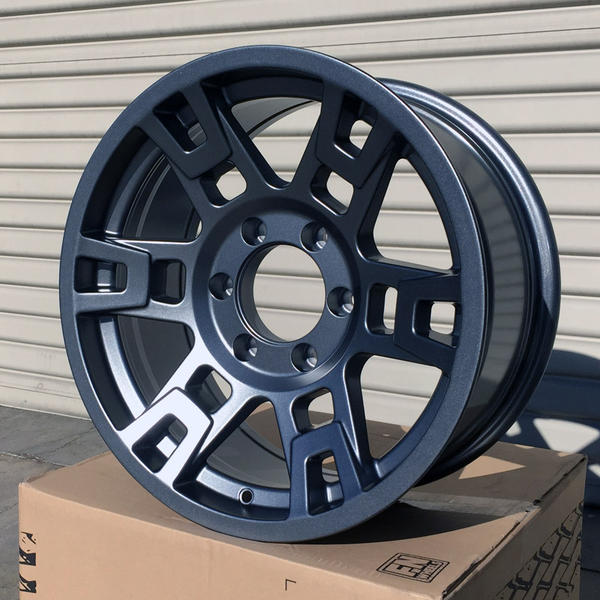
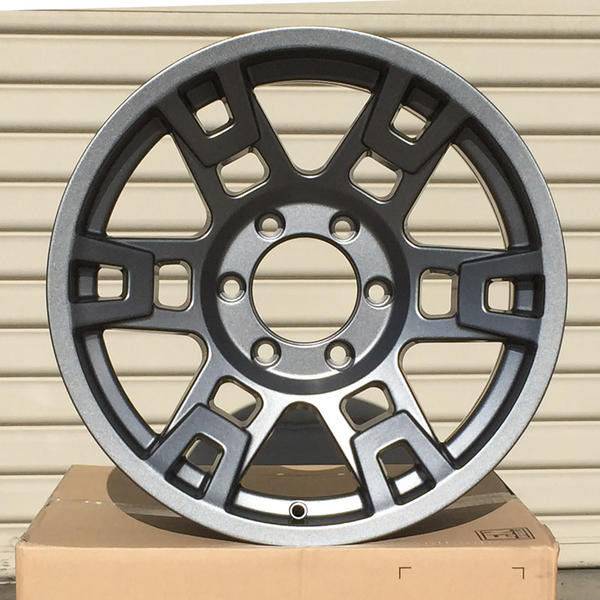
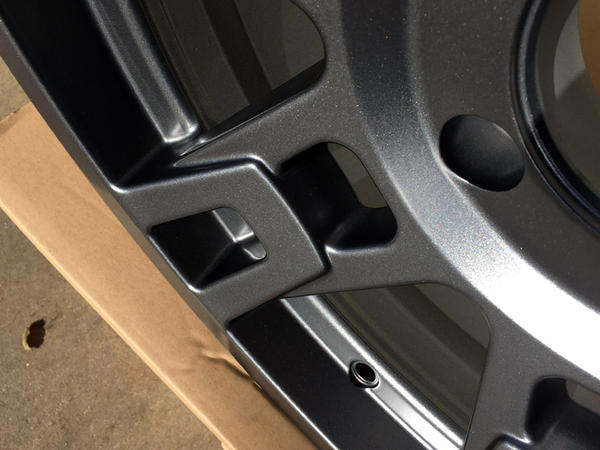
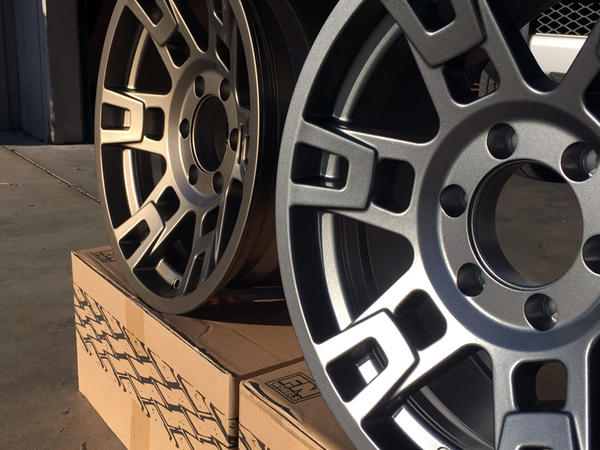
Thank you all for the orders, kind words, and compliments!
To answer the questions and comments from some members who've asked / commented on the cap for the 17x8" FN Wheels ƒ(x) Pro:
We use a flat cap for a few reasons.
We feel that a flush mounted, flat center cap gives the wheel a cleaner / sleaker look vs. a raised center cap with lug cut outs. This is definitely a subjective issue, but with our wheel we felt that the design looks better with concave / deep spokes and a flat cap that doesn't detract from the visual created by the angle of the spokes.
Also, a smaller, flatter cap such as ours is generally more durable than a raised, hollow cap such as the OEM cap. Hollow plastic caps tend to break very easily.
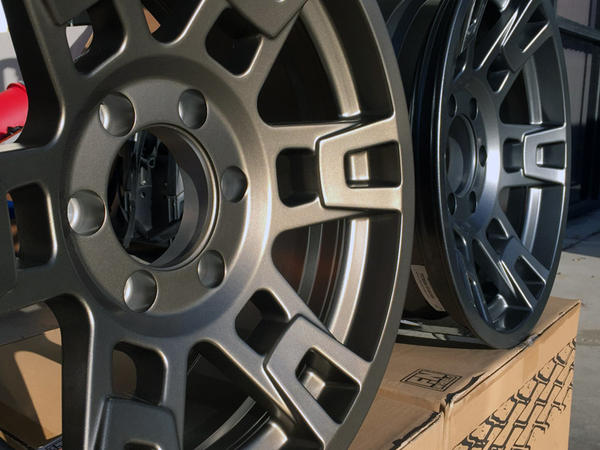
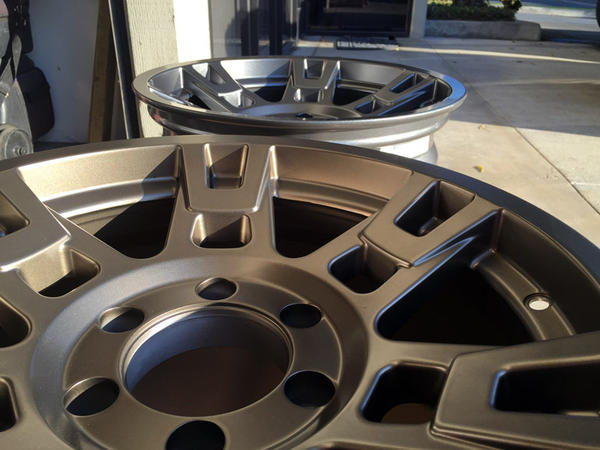
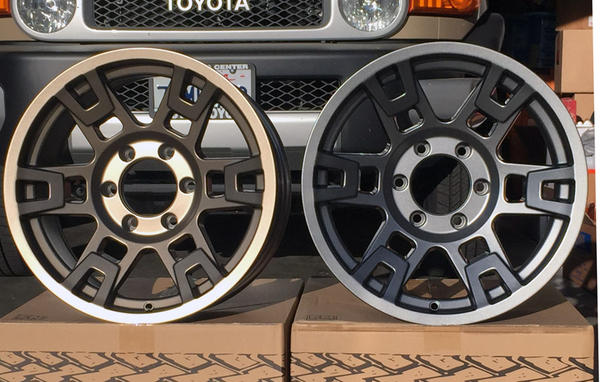
Regarding the new matte gunmetal color:
We have the new matte gunmetal finish in stock as of today. Here are a few photos that I took today (better photos will be available soon, and professional photos from our photographer will also be ready in a couple of weeks). As requested by a few members I also took photos in varying lighting situations and comparison photos with matte bronze:
Curious question: Does 1" increase in rim width really make a performance difference?
My assumption is no and it really just comes down to what looks better to most people.
I was checking the specs of tires and the difference in tire width between 265/70/17 and 285/70/17 is approximately 10.43" vs 11.22". This is a 0.79" increase in tire width. Excuse my ignorance in advance but my gut tells me 0.79" is not very significant to effect performance.
Thanks for the response, this makes a lot of sense.
This is an honest question and I'm not trolling. I'm trying to understand the hype of people going from a 265 to a 285 tire when the difference is minimal. Does going from 265 to 285 really make that much of a difference? Just trying to understand since a lot of folks on this board love the 285 and I just can't seem to grasp the idea of why (besides 10% performance gain and 90% looks of a wider tire/rim).
For example: I get why people want a supercharger since an increase of 40HP-60HP is pretty substantial. If I were to come up with an analogy for "Tire Width Increase" to "HP Increase", I'd compare the 265->285 upgrade to a Cold Air Intake. Very minimal? Again... just trying to understand: what is the benefit of trying to fit a larger tire that's about a 0.79" increase in width? I have a ruler in front of me, and I just ?_?
I can definitely help out with your questions. It was already touched on by [MENTION=103801]sn_85[/MENTION], but the 1" increase in wheel width allows you to safely installer wider tires.
Aesthetically wider tires might look better (however this is subjective, as some folks prefer narrower tires).
From a performance perspective wider wheels and tires will give a wider contact patch / footprint, which will give you better traction. In high powered sports cars this allows the truck to put more power down on the pavement so to speak vs. just spinning undersized tires and not getting traction. For our trucks, wider tires gives us better stability and particularly we get better traction when driving offroad (especially if you rock crawl).
The other thing to consider when comparing tire sizes, which [MENTION=103801]sn_85[/MENTION] mentioned, is to remember that when comparing a 265/70R17 vs. a 285/70R17 you are not just gaining 20mm of tire width. The middle number in the tire size (in this case 70) is an aspect ratio (also referred to as profile) of the width compared to overall diameter (height of the tire). As the width increases and the aspect ratio remains the same the tire will increase in height and vice versa. You can determine (roughly, because it varies slightly across makes and models of tires) the height of the tire with these numbers by using the following formula:
Example #1: 265/70R17
265mm x .70 = 185.5mm (sidewall height)
185.5mm x 2 (because you a wheel/tire is round and you have a sidewall on either side of the tire) = 371mm
371mm / 25.4mm (to convert to inches) = 14.6"
14.6" of sidewall + 17" of wheel =
31.6" overall diameter (which is the stock OD for 2010+ 4Runner +/- .05")
Example #2: 285/70R17
285mm x .70 = 199.5mm
199.5mm x 2 = 399mm
399mm / 25.4 = 15.7"
15.7" + 17" =
32.7" overall diameter
Example #3: Shortcut comparison
Both tires share the same aspect ratio (70) so you can simply subtract 265mm from 285mm, multiply by two, and convert to inches if you'd like.
285mm - 265mm = 20mm
20mm x 2 = 40mm
40mm / 25.4 = 1.1" (which is the difference between 32.7" and 32.6")
Again these overall diameters can generally vary by about +/- 1% depending on the exact tire.
Comparing these figures shows us that when going up to a 285/70R17 (from a 265/70R17) you not only gain 20mm (+/-) in width, but you also gain 40mm or 1.1" (+/-) in overall diameter (height).
Much like wider tires, taller tires also "look better" to a lot of people (this again is subjective). However, since you asked specifically about performance, there are a lot of performance benefits found with taller tires. Just a few examples would be that taller sidewalls tend to absorb impacts better, and increasing the height of the tires will also increase the overall height of the vehicle itself, which gives you better ground clearance (helpful when driving through rugged terrain).
I hope this helps explain the differences between 265/70R17 and 285/70R17 and why a lot of 4Runner (and other offroad capable SUV) owners tend to want to plus-size their tires.
I also just want to add that since statements on forums may sometimes be taken out of context, my explanations here are only to describe the benefits of taller and wider tires on 4Runners for specific purposes. For many 4Runner owners factory sized tires are more than sufficient or even better than plus sizing tires. This really comes down to personal preference and how the individual owner chooses to customize (or not customize) their driving experience. Even with your example of the supercharger increasing horsepower and torque (generally regarding as a "good thing") some might justifiably argue that the increased pressure in the cylinders created by the supercharger will lead to accelerated wear and tire resulting in an engine that fails sooner than a non-modified engine. There are always pros and cons to modifying anything from it's original state. It's up to the individual to decide if the pros out weigh the cons for their specific situation, and it's also our responsibility as aftermarket parts manufacturers to offer quality products in the proper specs to support the modifications that these individuals choose to make to their vehicles.