Jerod's Supercharged T[u]RD Build

Interesting result! I had someone comment on my Youtube channel that a 5VZFE couldn't' make more than 300rwhp. They were questioning my estimate after adding meth injection and zeroing out the timing map. On a true Dynojet dyno my 2002 auto made 240rwhp and 260rwtq on a 2.2 pulley and 7th injector. It hit the speed limiter or it might have done even better.

Went to a 2.1 pulley and water/meth and zero'd out the timing map which gives me about 7 more degrees of timing so I estimated I was around 300 to the tires now. I'm not sure how much each degree of timing is worth power wise, but I know for a fact on my Hellcat it's 12-14hp per degree. That's a supercharged V8 so probably less on the 4Runner but even if it's only 10 it adds up quick.
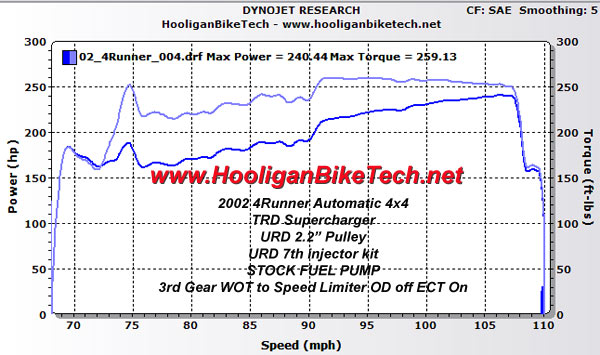
projectsportrunnerdyno.jpg

14HP per degree of timing is insane! I think for us it'd be closer to the 1% per degree rule, so around 3-4HP per degree of timing. I still have -3% on the upper ends of the boots range but it doesn't hurt power at all. It just gives the ECU more room to retard if needed. My reader will show 19 degrees of timing advance now, instead of 16 before I had retard so even though I've taken some out, the ECU puts it back in higher.

I also hit the speed limiter on my dyno run, I hit 229RWHP and 256RWTQ on a mustang dyno, that reads about 20% lower than a dynojet. The operator said it would have been closer to 270RWHP on a dynojet. Dyno numbers can be very subjective, it's the power difference on back to back runs that is always accurate. That's where the Virtual Dyno program really comes in handy. My actual power numbers may not be 100% accurate but the power gains after modifying are.

I hope to either remove the speed governor to more like 120 MPH or re-gear in the future to get it back on a dyno.
 
I think I have a speed limiter remover thing somewhere in my tool box that I never installed. I'll have to go look.

Agree on the dyno being subjective for sure. Dynojet is "supposed" to kind of be the standard and allow comparisons from various places but it's still a drum speed torque calculation in the end.

Yeah, on the Hellcat we can put one on the dyno and start tuning and see 750rwhp, add 3 deg of timing and see 790 just like that. They love timing advance, just have to be careful with the fuel being used and not get greedy.

You're using a different software for tuning that I am. I just have the old Split Second deal from URD. Yours appears much more sophisticated. I use HPTuners on the Hellcat and it's a dream by comparison. My former tuner trained me for about a year and now I can tune them on my own. Recently got it running Flex Fuel which is a whole new ball game. 800rwhp on 93 octane, drop in E85 and it's nearly 900 all on the fly. Very cool stuff.
 
I think I have a speed limiter remover thing somewhere in my tool box that I never installed. I'll have to go look.

Agree on the dyno being subjective for sure. Dynojet is "supposed" to kind of be the standard and allow comparisons from various places but it's still a drum speed torque calculation in the end.

Yeah, on the Hellcat we can put one on the dyno and start tuning and see 750rwhp, add 3 deg of timing and see 790 just like that. They love timing advance, just have to be careful with the fuel being used and not get greedy.

You're using a different software for tuning that I am. I just have the old Split Second deal from URD. Yours appears much more sophisticated. I use HPTuners on the Hellcat and it's a dream by comparison. My former tuner trained me for about a year and now I can tune them on my own. Recently got it running Flex Fuel which is a whole new ball game. 800rwhp on 93 octane, drop in E85 and it's nearly 900 all on the fly. Very cool stuff.

800+ RWHP is insane, and also not even practical! I think engine tech has outpaced tire tech, so many vehicles have launch control now just because if you don't use it and floor it the car doesn't actually move lol! My goal with the 4Runner is to make it traction limited, I'm guessing that's somewhere around 400RWHP.

Tuning isn't too bad once you get the hang of it. I think the biggest part is getting over the fear of breaking something if you get it wrong. It really becomes fun once you can put on a new part, gain power, then tune it for even more power.
 
Yeah, I really enjoy tuning but so many people are afraid of it. You can mess something up pretty quick if you A - don't pay attention and B - don't have an understanding of how what you're tuning actually works.

400HP in a 4Runner would be the sweet spot I think. I'd personally love an LS swap in mine but when I looked in to it 4WD was a problem and I think these things are becoming classics so I don't wanna get too crazy with it.

Yes it definitely takes finesse to manage 800+ rwhp. Stock tires were PZeros and a joke. I've got 305/45R20 Nitto 555R G2s on it now with custom adjustable suspension and it's way better, but they can still spin a bit if I just whack it, even at near 100MPH.

Stock tires using launch control LOL. I gave up when the speedo read 75 and the car was just creeping a long. The 11s were like 100 feet long :/

hc_pzeros.jpg
 
Port Job

I ventured into the unknown once again and did a simple porting job of my supercharger. I used a cheap steel carbide tip set from Amazon Amazon.com: Carbide Burr Set Rotary Tools – 10pcs 1/8’’ Shank Tungsten Carbide Drill Bits for Wood Carving, Metal Polishing, Engraving, Drilling by CIZTADA …: Home Improvement with my Dremel 3000 with a flex shaft https://www.homedepot.com/p/Dremel-...ded-Rotary-Tool-Kit-22501-30001-25H/311538527.

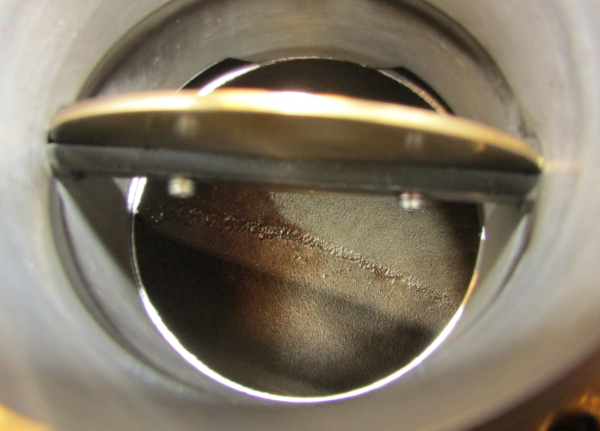
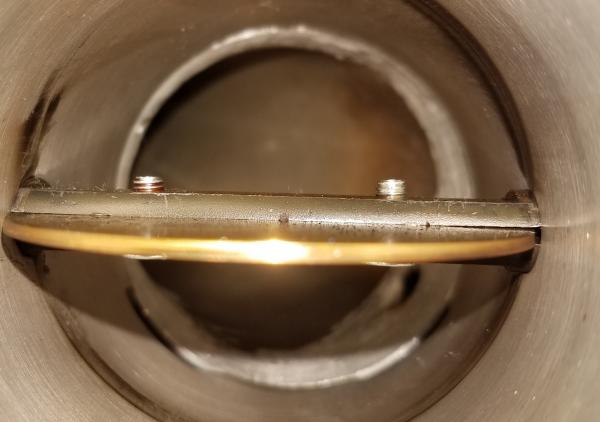
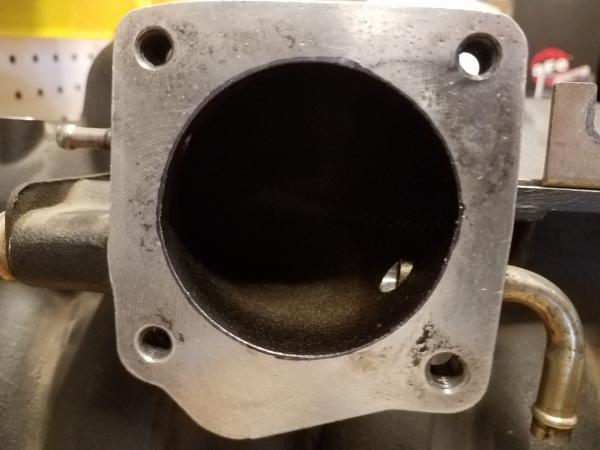
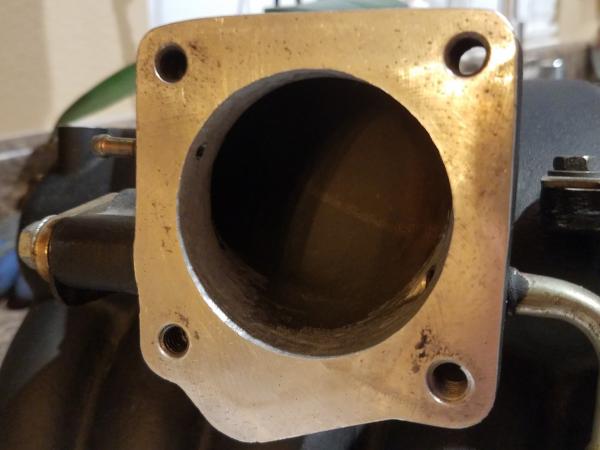
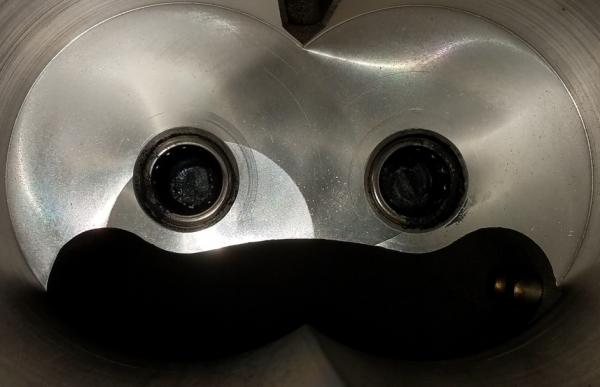
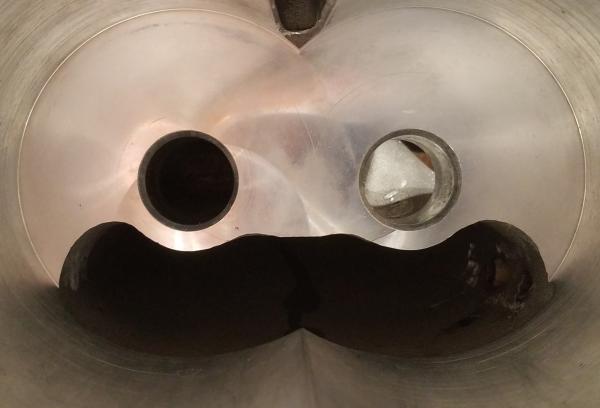
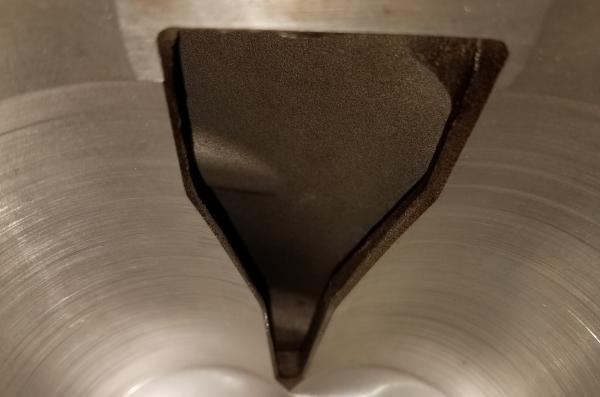
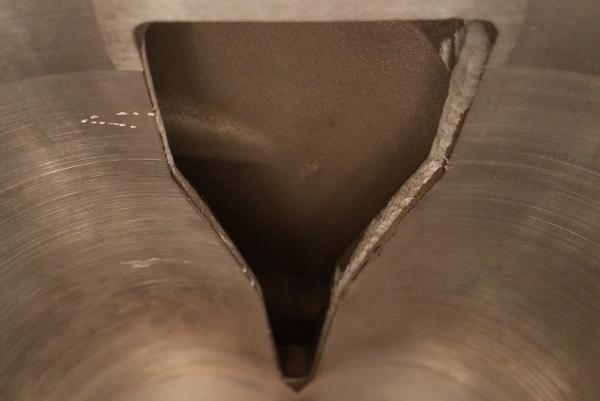
I focused on the mating surface to my ported throttle body as well as the supercharger inlet and outlet. I didn't plan on removing much as the photos are not all that different, just a slight bit more to allow more airflow in and out. I also shaved off all the protruding vacuum hose ports as some stuck out as much as 1/2 an inch into the intake.

Throttle body mating surface before (shiny ring is the part that needed to be ported):

gamefreakgc-albums-engine-performance-mods-picture59907-img-7379-jpg.png

After:

gamefreakgc-albums-engine-performance-mods-picture59903-20210216-105524-a.jpg

Without throttle body before:

gamefreakgc-albums-engine-performance-mods-picture59896-20210215-152507-a.jpg

After:

gamefreakgc-albums-engine-performance-mods-picture59897-20210215-210937-a.jpg

Supercharger inlet before:

gamefreakgc-albums-engine-performance-mods-picture59906-20210215-152557-a.jpg

After:

gamefreakgc-albums-engine-performance-mods-picture59905-20210215-210838-a.jpg

Supercharger outlet before:

gamefreakgc-albums-engine-performance-mods-picture59900-20210215-152548-a.jpg

My dremel walked a bit and scored the housing. I ended up stopping early porting the outlet and just focused on casting flaws (see the large flake of it in above photos, gone below):

gamefreakgc-albums-engine-performance-mods-picture59899-20210215-210831-a.jpg

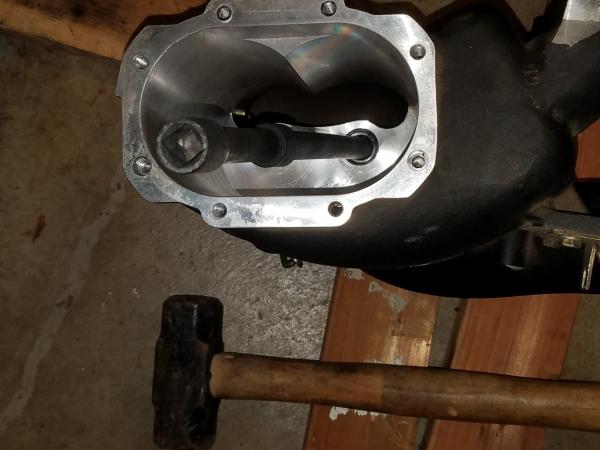
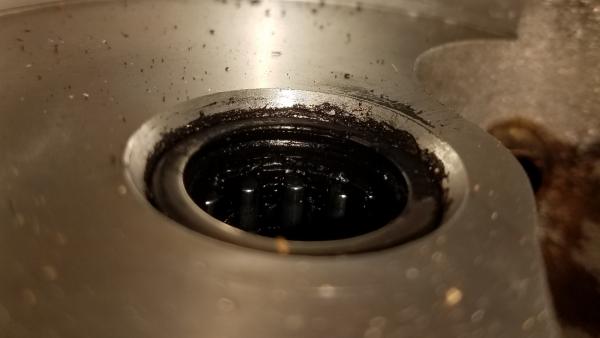
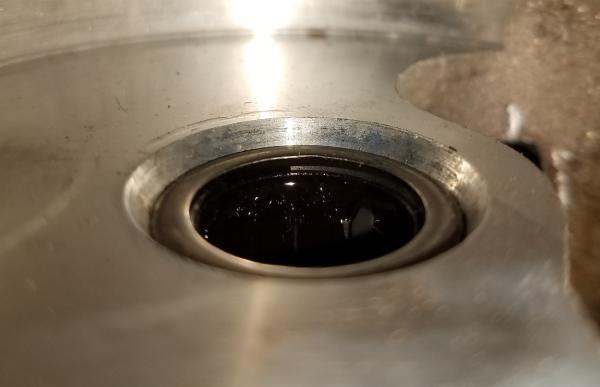
While I had the supercharger apart, I "coaxed" the rear needed bearings out and set the new ones in. Was actually easier that I thought it would be. I used some 1/4" drive socket extentions and it worked very well. One side broke about halfway through but I just used a 16mm socket I had to ride on the bearing case and push it out the rest of the way. Both bearings can be pressed out the back.

gamefreakgc-albums-engine-performance-mods-picture59898-20210215-154026-a.jpg

Old bearing before:

gamefreakgc-albums-engine-performance-mods-picture59901-20210215-154303-a.jpg

New bearing after:

gamefreakgc-albums-engine-performance-mods-picture59902-20210215-223927-a.jpg

I just had to be careful not to set the bearings too far in. If I did I'd have to pound them out and do it again. Putting the bearings in the freezer beforehand worked perfectly.
 
Last edited:
You're getting serious LOL. Porting on a Hellcat supercharger is like $2,000!
That better be CNC'd and *PERFECT* for that price...

I often do little things like shave down throttle body screws and the bar between the screws when I have one apart, even on less than full-out performance cars. When you get to porting near the valves, etc. things get more complicated.

-Charlie
 
Public Service Announcement: If you remove your supercharger's EGR block-off plate to port the intake, be sure you don't put it on upside down. Causes a massive vacuum leak :D
 
I took it out for a spin last night and tried to get some logs. I'm learning that the Virtual Dyno program is kind of picky as to how to get a good log run. Got some partial data but the rest was all messy and unreadable. However, my AEM log showed the AFR's on my tune were unchanged. If the port job had allowed in any significant increase of air it would have been shown as a partially lean AFR. Since I don't see that, I'll assume the power gain is minimal. Hoping that it helps with exhaust temps though.

Next of my list is:

  • Ruthenium spark plugs from NGK (made for forced induction engines)
  • Stainless steel brake lines
  • Put the 2.0" pulley back on and tune

I'm really REALLY hoping I can get more boost out of that 2.0" pulley. If you remember, I had it on a few years ago and it did diddly-squat. Made 0.5 PSI over the 2.1" and a whole lot of heat. Was not worth it by a long shot.
 
I can't recall if there's an efficiency map posted somewhere of the little blower, but if so it'd be worth referencing. We've found on the Hellcat anything more than about 17-18psi on the stock blower just builds heat and no power. They all have a limit.
 
I can't recall if there's an efficiency map posted somewhere of the little blower, but if so it'd be worth referencing. We've found on the Hellcat anything more than about 17-18psi on the stock blower just builds heat and no power. They all have a limit.

I've looked at this before, but I have no idea what it really means.

ct_128484.gif


Here's the RPM of each pulley size:

2.37"....................14,190rpm
2.2"....................15,286rpm
2.1"....................16,014rpm
2.0"....................16,815rpm
1.9"....................17,700rpm
1.8"....................18,683rpm

Eaton has said that the bearing won't hold up to spinning past 16K RPM. But if I'm reading this chart right, 16K RPM isn't even on the map! I have no idea if it is still efficient running at those speeds. You'll see it's not a huge RPM jump from the 2.1" pulley to the 2.0" pulley.
 
I really want to go supercharged but is it just more of a hassle than worth it..?

Don't let my build thread scare you. I've gone way beyond what any rational person would do to their engine. The Magnusen supercharger is a fool-proof and easy way to bolt on horsepower. Makes the 5VZ-FE engine how it should have been from the factory.

BUT a brand new supercharger isn't very cost efficient anymore. They cost $3500 + tax new, which is somewhere around $3800. I'll take a guess that you probably only paid a grand or two more for your entire 4Runner if you bought it used recently! I can't really recommend them new anymore because of that. Can find used superchargers on the low end around $2000 though and with a little elbow grease can be rebuilt and bearings replaced for a couple hundred bucks.
 
What Speedy said! Plus you'll love the whine. Until you get some headers. Then the spaceship roaring buzz will give you a little chubby. I don't plan on ever selling this truck. So for me it was well worth the cash and time.:sniper:
 
Yep, that's the efficiency map I was referencing. The inlet volume is a little confusing and that may be read as restriction, but the PRatio is another way of measuring boost. The formula is PRatio x 14.7 - 14.7 and the darker area in the map is where the supercharger is most efficient.

Looking at that map, I'd say it starts to lose efficiency over 10psi at sea level. It'll be less than that as elevation increases.

On the cost of these trucks vs cost of supercharger, I am a bit surprised how expensive the new superchargers are. I paid about half that brand new from a Toyota dealer for mine many years ago, so at current prices we know there's a ton of markup in them.

Having said that, I'm not seeing these 4Runner all that cheap anymore. I saw two nice examples go for almost $20K on bring a trailer a couple months ago. I probably get an offer three or four times a year from someone wanting to buy mine. The last offer I got was $14K I think.
 
I've looked at this before, but I have no idea what it really means.

ct_128484.gif


Here's the RPM of each pulley size:

2.37"....................14,190rpm
2.2"....................15,286rpm
2.1"....................16,014rpm
2.0"....................16,815rpm
1.9"....................17,700rpm
1.8"....................18,683rpm

Eaton has said that the bearing won't hold up to spinning past 16K RPM. But if I'm reading this chart right, 16K RPM isn't even on the map! I have no idea if it is still efficient running at those speeds. You'll see it's not a huge RPM jump from the 2.1" pulley to the 2.0" pulley.
I'm assuming those numbers are for supercharger RPM at peak engine RPM? If so, you can draw a theoretical line that maps where your engine is tracking through the RPM range (you would also need a pre-supercharger vacuum gauge to calculate the pressure ratio).

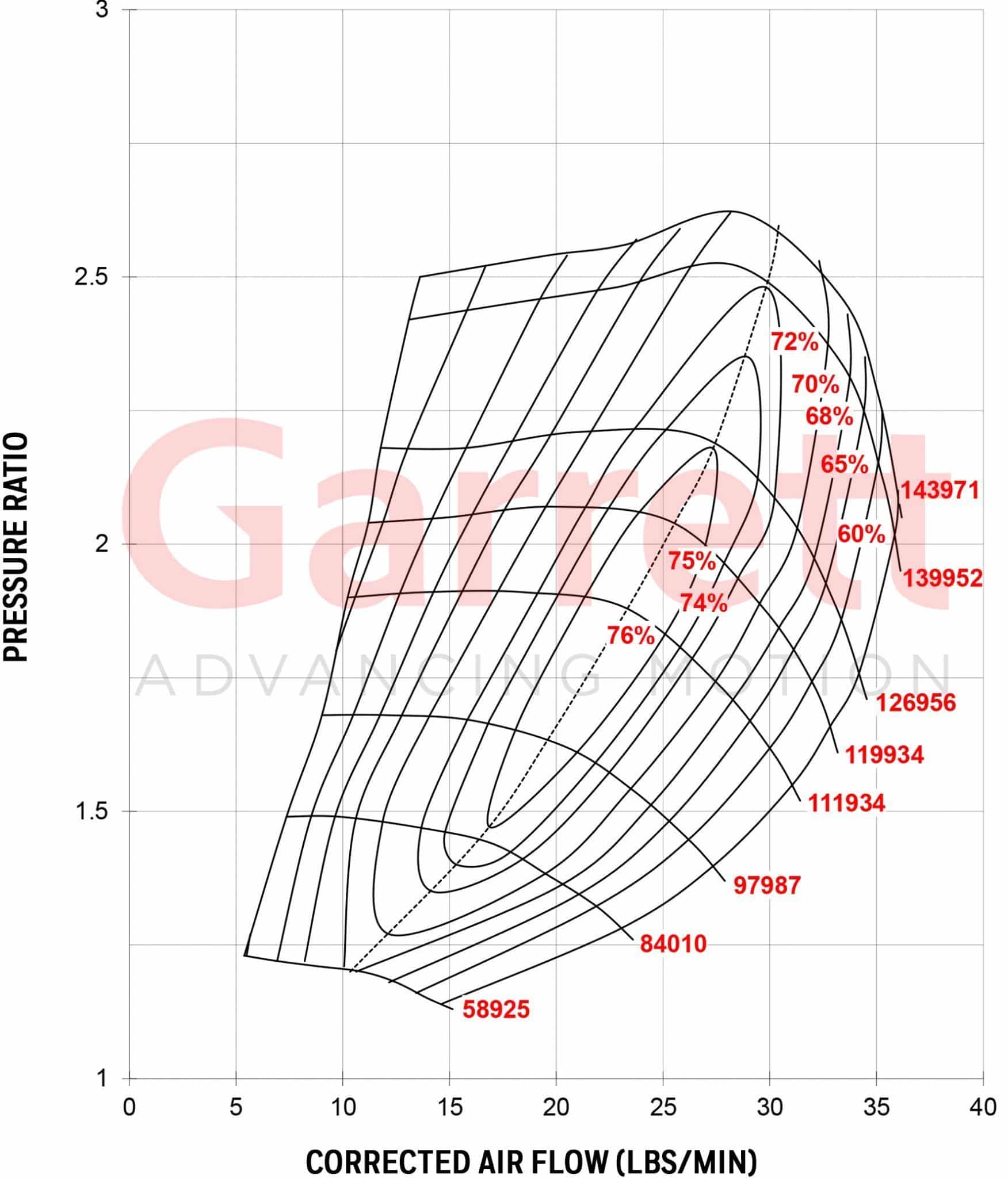
You can really see the challenge you have with a roots supercharger vs. a turbo when you can compare to a turbo compressor map:

Comp-Map-GT-2860RS.jpg


As you go up in pressure ratio, those lower efficiency numbers really start to matter...

The efficiency is a way to calculate the 'extra' heat created above and beyond what is required by the ideal gas law due to the compression of the air. At 50% efficiency, the increase in air temp will be twice what it would be if you had an ideal compressor. That inefficiency is doubly bad - it is extra drag on the motor to create the heat *and* worse for making power in the engine. That's why at the limits of a compressor, you stop making extra power with higher boost.

-Charlie
 
I appreciate the input all. It confirms what's I've seen in the real world with my testing. I'm hoping the recent modifications and porting I did on the supercharger can change that but we'll see.

I would have considered a turbo if I didn't live in CA. It'd be off-road only with no tags if I did a turbo build, which would be rather pointless for me. It's also been fun dispelling the myth that supercharged 5VZ-FE's can't top 300HP. I think I've debunked that one considerably. If I were to ever build up another one, it could be easily done with more boost, piggyback, bigger exhaust (headers back) and bigger intake.
 
I looked in to changing mine over to a turbo setup a couple years ago and had a hard time finding ones that were done successfully. Lots of problems with tuning, down pipe, etc so I abandoned the idea.

I also had a guy swear up and down the 3.4 couldn't break 300rwhp. I don't believe that at all on the right setup.

Anyone know how much power one of these 5VZ-FE engines can take before they start bending rods?
 

Members online

Forum statistics

Threads
278,312
Messages
3,554,085
Members
248,016
Latest member
Advally Service

Trending content

Back
Top