KDSS Long term reliability?

this has been posted here a bunch of times:

Four Wheeler: 2004 Four Wheeler of the Year
an almost 100 point difference on an RTI ramp is significant

Yep, I saw this, and read through the whole 12 something pages of that thread after your last comment to fact check myself before posting a reply. I ultimately didn't reference it because in that thread there was debate on the accuracy of the results, mostly with any potential differences between the Lexus and the 4Runner. As far as I know the systems are the same between the two models, but I wasn't going to cite or go with a source that had doubt on it's accuracy.
 
Last edited:
After reading a few pages of this, what I have learned about KDSS is most people don't understand what the purpose of an accumulator in a hydraulic system is, and why it's there.

I like the KDSS in my 4Runner. My '15 had it, and I stupidly traded it in on a '16 without (my '15 was bought gently used, but I got the bug to have a brand new one). Then I realized how much better the manners were with KDSS, and moved back into a brand new '18 (as in waited for it to get delivered with the options I wanted) with KDSS.

I will be lifting it, but I don't need over 3', so I'm happy with the KDSS.
If I feel the need to do rock crawling, I'll get a TJ and build it.
 
Last edited:
FYI, Jeep system 100% different. Not even similar.

Really can't compare anything about a jeep to a 5th gen. They are a worlds apart in many aspects and simply way more purpose built for technical off-road terrain.

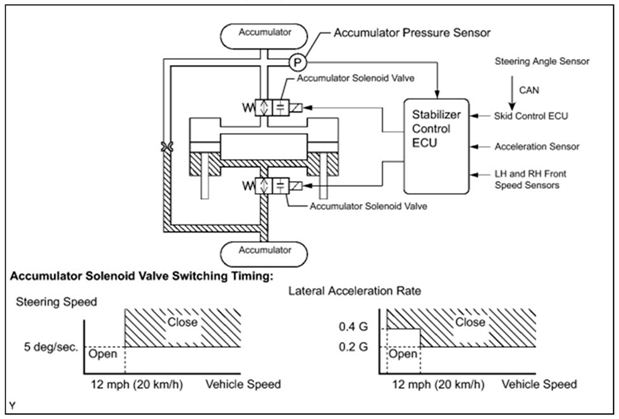
KDSS does not disconnect and has nothing to do with on/off road really. Just speed is the trigger. If you are going below 12mph the valves open up and things loosenup.

Also, KDSS seems a bit better on side hills as the cross width flow evens out on a side hill to some extent.

Ah... Well. OK. I'm still going to say that Jeep and an electronic sway bar disconnect for the same reasons. To allow for easier articulation of the front axle when off road with the sway bar disconnected and for the vehicle to be stable on the road at speed with the swaybar connected. The Jeep electronic sway disconnect allows for both a more stable on road and a better articulating truck while off road and going slow. It's the exact same general purpose as the KDDS system on a Toyota. It also allows for an even more stiff sway bar because you no longer have to compromise between street-ability and off road articulation, in stock form anyway. I didn't say the systems were the same, the reasoning behind them are the same. You don't really need a flat turning rig at 12 MPH as in when you're 4Wheeling.

On a side hill, the KDDS allows for the uphill tire to pull up some more and the the down hill tire to droop some which helps to keep the truck more level. With the swaybar attached it would want to pull the down hill wheel up and the truck would lean more.
 
KDSS sway bars force opposite corner articulation. So they prevent body roll on a side hill in the same way they prevent body roll in a corner on a highway. Additionally the same system also stabilizes the body between the axles when they flex, so on an off camber hill with flex, the body will have less lean toward the downhill side.

But the accumulators are open at low speed. So it does not seem quite the same action. There is still some biasing of some sort though for opposite corner compared to same side.
 
Ah... Well. OK. I'm still going to say that Jeep and an electronic sway bar disconnect for the same reasons. To allow for easier articulation of the front axle when off road with the sway bar disconnected and for the vehicle to be stable on the road at speed with the swaybar connected. The Jeep electronic sway disconnect allows for both a more stable on road and a better articulating truck while off road and going slow. It's the exact same general purpose as the KDDS system on a Toyota. It also allows for an even more stiff sway bar because you no longer have to compromise between street-ability and off road articulation, in stock form anyway. I didn't say the systems were the same, the reasoning behind them are the same. You don't really need a flat turning rig at 12 MPH as in when you're 4Wheeling.

On a side hill, the KDDS allows for the uphill tire to pull up some more and the the down hill tire to droop some which helps to keep the truck more level. With the swaybar attached it would want to pull the down hill wheel up and the truck would lean more.

Apples and Oranges if you ask me, but yes they have one identical goal.
 
But the accumulators are open at low speed. So it does not seem quite the same action. There is still some biasing of some sort though for opposite corner compared to same side.

Same action open or closed where the load is uniform on one side. If the valves were open at high speed, the cornering would be the same. The LC200 for example is always active. I don't know why they close the valves on the 4Runner other than to reduce wear somewhat or they think the system will overheat from fluid flow in the moguls at too much speed. There may be some additional effect in terms of removing the air springs from the system by closing the valves.

I need to see the inside valving in the accumulator assembly to really know. It may actually be possible that the only thing that's happening when closed is to eliminate the accumulator air spring effect and firm up the action, but not actually close flow between the cylinders. After learning more about how the LX570 system works that's what it does. It selectively eliminates various air chambers to adjust spring rates.

I have no idea how to actually test this other than video moguls at variable speeds.

Edit: I'm stupid. I didn't realize it until I looked at this diagram just now after learning more about the LX570. I don't think KDSS ever becomes inactive. It just firms up the motion by removing the air springs provided by the accumulators. I think visually looking at the outside of the valve manifold that the function of closing is to block the accumulator only. Not to stop fluid between the upper or lower chambers of the two pistons. Not sure why I had never recognized this, but it does not lock out the cylinders above 12mph. Not at all. It simply makes them a very firm direct hydraulic relationship rather than a softer one that adds some dampening by using accumulators. I'm embarrassed about how badly I missed something obvious.

167132d1268351767-does-the-gx-tilt-kdss3.jpg
 
Last edited:
Same action open or closed where the load is uniform on one side. If the valves were open at high speed, the cornering would be the same. The LC200 for example is always active. I don't know why they close the valves on the 4Runner other than to reduce wear somewhat or they think the system will overheat from fluid flow in the moguls at too much speed. There may be some additional effect in terms of removing the air springs from the system by closing the valves.

I need to see the inside valving in the accumulator assembly to really know. It may actually be possible that the only thing that's happening when closed is to eliminate the accumulator air spring effect and firm up the action, but not actually close flow between the cylinders. After learning more about how the LX570 system works that's what it does. It selectively eliminates various air chambers to adjust spring rates.

I have no idea how to actually test this other than video moguls at variable speeds.

Edit: I'm stupid. I didn't realize it until I looked at this diagram just now after learning more about the LX570. I don't think KDSS ever becomes inactive. It just firms up the motion by removing the air springs provided by the accumulators. I think visually looking at the outside of the valve manifold that the function of closing is to block the accumulator only. Not to stop fluid between the upper or lower chambers of the two pistons. Not sure why I had never recognized this, but it does not lock out the cylinders above 12mph. Not at all. It simply makes them a very firm direct hydraulic relationship rather than a softer one that adds some dampening by using accumulators. I'm embarrassed about how badly I missed something obvious.
167132d1268351767-does-the-gx-tilt-kdss3.jpg

That matches my understanding of it. The accumulators allow the piston to fully compress without really impacting the other axle much So the motion of the swaybar is absorbed vs transferred cross axle in open mode (below 12mph). I'm pretty sure they cannot handle high speed motion and will begin to fail if that is introduced for extended periods.

But there is still a bit more at play with the geometry... of it.

It could be really neat tuneable system with a more robust and adjustable implementation.
 
Last edited:
Same action open or closed where the load is uniform on one side. If the valves were open at high speed, the cornering would be the same. The LC200 for example is always active. I don't know why they close the valves on the 4Runner other than to reduce wear somewhat or they think the system will overheat from fluid flow in the moguls at too much speed. There may be some additional effect in terms of removing the air springs from the system by closing the valves.

I need to see the inside valving in the accumulator assembly to really know. It may actually be possible that the only thing that's happening when closed is to eliminate the accumulator air spring effect and firm up the action, but not actually close flow between the cylinders. After learning more about how the LX570 system works that's what it does. It selectively eliminates various air chambers to adjust spring rates.

I have no idea how to actually test this other than video moguls at variable speeds.

Edit: I'm stupid. I didn't realize it until I looked at this diagram just now after learning more about the LX570. I don't think KDSS ever becomes inactive. It just firms up the motion by removing the air springs provided by the accumulators. I think visually looking at the outside of the valve manifold that the function of closing is to block the accumulator only. Not to stop fluid between the upper or lower chambers of the two pistons. Not sure why I had never recognized this, but it does not lock out the cylinders above 12mph. Not at all. It simply makes them a very firm direct hydraulic relationship rather than a softer one that adds some dampening by using accumulators. I'm embarrassed about how badly I missed something obvious.
167132d1268351767-does-the-gx-tilt-kdss3.jpg

That matches my understanding of it. The accumulators allow the piston to fully compress without really impacting the other axle much So the motion of the swaybar is absorbed vs transferred cross axle in open mode (below 12mph). I'm pretty sure they cannot handle high speed motion and will begin to fail if that is introduced for extended periods.

But there is still a bit more at play with the geometry... of it.

It could be really neat tuneable system with a more robust and adjustable implementation.

That moment when something new and interesting comes out of a KDSS discussion :reddance:
 
Yep, I saw this, and read through the whole 12 something pages of that thread after your last comment to fact check myself before posting a reply. I ultimately didn't reference it because in that thread there was debate on the accuracy of the results, mostly with any potential differences between the Lexus and the 4Runner. As far as I know the systems are the same between the two models, but I wasn't going to cite or go with a source that had doubt on it's accuracy.

the numbers will be a lot different (the 4runner should have lower RTI scores), but the difference between KDSS and non-KDSS will be similar
 
the numbers will be a lot different (the 4runner should have lower RTI scores), but the difference between KDSS and non-KDSS will be similar

The 4Runner shares 100% of the suspension parts with the (edit: non-air spring version of) GX - so I think they should be the same. But keep in mind that's only a 20* ramp they were using. So those numbers are pretty high because of that.

The air spring version of the GX has air springs in the rear obviously - but also has different bump stops. They are longer and softer. I don't know how that would effect the RTI. Should be minimal, but could be a few points.
 
Last edited:
That matches my understanding of it. The accumulators allow the piston to fully compress without really impacting the other axle much So the motion of the swaybar is absorbed vs transferred cross axle in open mode (below 12mph). I'm pretty sure they cannot handle high speed motion and will begin to fail if that is introduced for extended periods.

But there is still a bit more at play with the geometry... of it.

It could be really neat tuneable system with a more robust and adjustable implementation.

I think the valves are pretty much entirely for firming it up. Not so much for dealing with cycling wear. The reason I think that is because the LC200 uses nearly identical accumulator system and pistons, but without the electronic valves to block off the accumulators. So it's open all the time. And they don't seem to have any higher failure rates. The only failures I seem to see is corrosion on the accumulator block that makes it hard to open the manual valves to re balance it. And the LX570 uses what I'd call a sort of cascading set of accumulators that they call air springs, but they're just versions of the same thing and uses valves that block them off in varying sequences to adjust the effective spring rates and also adjusts them side to side and front to back to level the suspension. The LX system uses various sizes, so by removing them sequentially what it's really doing is removing air volume and changing the ramp rate of the air springs - kinda like adding spacers in air shocks, but on the fly. It also uses a hydraulic pump to adjust overall height up or down. It's pretty neat - and also has potential to be a maintenance nightmare. Like KDSS x10. After learning a lot more about how that system operates - I think the goal here is mostly to firm them up rather than to change the functionality.

I think I'm going to put my own relay in the wiring to make a switch to open the valves at speed and see how it feels in medium speed stuff. I think Toyota missed the mark on the software side and they should have just had a "sport" mode that you select rather than speed driven.
 
Last edited:
the numbers will be a lot different (the 4runner should have lower RTI scores), but the difference between KDSS and non-KDSS will be similar

The 4Runner shares 100% of the suspension parts with the GX - so I think they should be the same. But keep in mind that's only a 20* ramp they were using. So those numbers are pretty high because of that.

Good to know for both. Yeah there was a lot of back and forth in that thread, so I didn't take that information as being entirely correct. My dad has a GX that I have crawled around underneath, and I didn't see any differences. Learned something new today regarding KDSS flex versus non-KDSS.

giphy.gif
 
I've misunderstood the high speed operation for years. :doh:

Is this a good place to ask about some basics--so are the accumulators* electrically activated at the speed indicator (12mph)?

I tried to ask a question like this relevant to the conversation on the guy who was going to "turn off his kdss" but never got anywhere and was gently eviscerated (all fair, of course).

*or valves or whatever turns the system "on"
 
I think I'm going to put my own relay in the wiring to make a switch to open the valves at speed and see how it feels in medium speed stuff. I think Toyota missed the mark on the software side and they should have just had a "sport" mode that you select rather than speed driven.
coolio. that's really awesome and i'd love to hear more.

there was a little follow-up with the guy who pulled the harness at the accumulator assembly but obviously the "right" way to do this would be to add a switch to enable and disable a "Sport Mode" as you say. :snacker:

here's to hoping some thoughtful KDSS DIY will forever displace the baseless KDSS FUD!
 
Is this a good place to ask about some basics--so are the accumulators* electrically activated at the speed indicator (12mph)?

I tried to ask a question like this relevant to the conversation on the guy who was going to "turn off his kdss" but never got anywhere and was gently eviscerated (all fair, of course).

*or valves or whatever turns the system "on"

Pretty sure the accumulators are Normally Open with no power.... Once over 12mph power is applied and they no longer absorb fluid energy.. only release.

I will mention this. Although I'm sure it will get lots of emotions involved... as people seem very emotional about KDSS for some reason (it's a mechanical device, so I don't get it) There was a guy who claimed to have knowledge of testing the TRD team did on KDSS. He claimed something along the lines that the accumulators failed via heat or cavitation in a test they did ( I can't remember the details). He got run off like many people do here and I have no idea if the information was factual or not. It did seem logical to me however.

It does seem unlikely to me the accumulators or pistons could handle high speed cycling for extended periods without that being part of the design criteria. But it would be very interesting to give it a try if you had the means to replace or trash it if it failed running open at speed. I am not trying to create FUD. Just using a little common sense. It would be an interesting test.. but it would take some time to get any verification of reliability in that mode.
 
Last edited:
Pretty sure the accumulators are Normally Open with no power.... Once over 12mph power is applied and they no longer absorb fluid energy.. only release.

I will mention this. Although I'm sure it will get lots of emotions involved... as people seem very emotional about KDSS for some reason (it's a mechanical device, so I don't get it) There was a guy who claimed to have knowledge of testing the TRD team did on KDSS. He claimed something along the lines that the accumulators failed via heat in a test they did. He got run off like many people do and I have no idea if the information was factual or not. It did seem logical to me however.

It does seem unlikely to me the accumulators or pistons could handle high speed cycling for extended periods without that being part of the design criteria. But it would be very interesting to give it a try if you had the means to replace or trash it if it failed running open at speed. I am not trying to create FUD. Just using a little common sense.

We just need someone who is on the LT train to commit to experimenting with their KDSS system. Looking at you [MENTION=166901]Bay_Runner[/MENTION]
 
Pretty sure the accumulators are Normally Open with no power.... Once over 12mph power is applied and they no longer absorb fluid energy.. only release.

I will mention this. Although I'm sure it will get lots of emotions involved... as people seem very emotional about KDSS for some reason (it's a mechanical device, so I don't get it) There was a guy who claimed to have knowledge of testing the TRD team did on KDSS. He claimed something along the lines that the accumulators failed via heat or cavitation in a test they did ( I can't remember the details). He got run off like many people do here and I have no idea if the information was factual or not. It did seem logical to me however.

It does seem unlikely to me the accumulators or pistons could handle high speed cycling for extended periods without that being part of the design criteria. But it would be very interesting to give it a try if you had the means to replace or trash it if it failed running open at speed. I am not trying to create FUD. Just using a little common sense. It would be an interesting test.. but it would take some time to get any verification of reliability in that mode.

My very little understanding of shocks is that they fail under heat, and so a smaller piston like described here will be at greater risk of failure trying to keep up in a "baja like" situation

Also, although a fascinating experiment, seems like it's a little over-engineered and so at greater risk of failure. I'm not trained in cars, but in other activities the benefit of systems is both redudancy and specificity. So KDSS with a smaller, better defined role will give it less chance of failure and greater chance of happiness. Can't have everything, at least not with the money I have available.
 
Last edited:

Members online

Forum statistics

Threads
278,307
Messages
3,554,048
Members
248,016
Latest member
Advally Service

Trending content

Back
Top