KDSS offroad behavior question

wfo9

New member
I've been a bit torn about the rear swaybar in general...

Here is what I have observed on my truck (I still need to do more testing). Having long travel and no rear sway offers a very noticeable improvement in off-road capability in most crawling situations. However, there is one situation where it is really uncomfortable. When the trail forces you to run off-camber (cross a slope...). Pretty rare, but it does happen. In that case the truck feels extremely top heavy and ready to roll over. It is downright scary (much scarier than with the sway bar on). The reasons for this are pretty obvious.

So it got me thinking about solutions and the possibility of an airbag system for trail use... Not really serious about doing it, but it would be a fun project. I'll probably just end up running with extended links in the rear. I had it that way before the LT and it was a nice middle ground.

Anyway, with KDSS. What are the triggers to open up the system in crawl mode. Is it simply open at low speeds or is there some situations where it stiffens up in crawl conditions. I know it is not even a possibility with LT... but I was curious how it worked in a cross slope crawl.

To clarify: When I say crawl conditions, I'm not talking about crawl control. Crawl = 4Lo, low speed 4 wheeling (as slow as possible as fast as necessary)
 
Last edited:
Register to hide this ad
I'm curious as well, or if it even does. My general understanding was that it was stiff when closed and loose when open (in 4lo), but that's it.

I'm just going off the limited info posted here, but you're setup sounds like a good candidate for an antirock, I believe they make universal/builders kits that could work in the back of our trucks. Have you looked at these?
 
The kdss is completely independent and a self contained hydraulic system with no electronic inputs. That said none of the other controls like crawl will have an impact on its operation.

There are some YouTube videos that demonstrate how it works.
 
The kdss is completely independent and a self contained hydraulic system with no electronic inputs. That said none of the other controls like crawl will have an impact on its operation.

There are some YouTube videos that demonstrate how it works.

You are thinking of the XREAS portion, the KDSS does have electrical valves.
 
KDSS doesn't slack the sway bars when driving off camber unless there's lots of articulation (cross corners) going on at the same time. A not quite apples-to-apples comparison is my friend who had LC coils and no rear sway bar on his 3rd gen. I'd watch him go through an obstacle and he'd look really tippy to the point where you start wondering why the hell you're going to follow him through the same thing. Then I'd go through and get nowhere near as tippy. So basically I think his high side suspension was being allowed to unload a lot more than mine because of the sway bar ie. KDSS was not slacking the sway bar in those situations.
 
The kdss is completely independent and a self contained hydraulic system with no electronic inputs. That said none of the other controls like crawl will have an impact on its operation.

There are some YouTube videos that demonstrate how it works.
It's absolutely controlled by electronics. BTW, I'm not talking about crawl control. I'm talking about crawling as a general term (moving slow in 4LO).
 
Last edited:
KDSS doesn't slack the sway bars when driving off camber unless there's lots of articulation (cross corners) going on at the same time. A not quite apples-to-apples comparison is my friend who had LC coils and no rear sway bar on his 3rd gen. I'd watch him go through an obstacle and he'd look really tippy to the point where you start wondering why the hell you're going to follow him through the same thing. Then I'd go through and get nowhere near as tippy. So basically I think his high side suspension was being allowed to unload a lot more than mine because of the sway bar ie. KDSS was not slacking the sway bar in those situations.
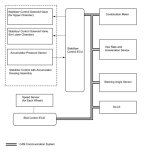
That would be nice. but the other diagram posted looks like it is full open below 12mph.
 
That would be nice. but the other diagram posted looks like it is full open below 12mph.

Pretty sure the Prado has a slightly different KDSS design than the 4Runner. There's a video from Toyota NZ that shows the system can be switched on or off, which is not present in the 4Runner.


The 4Runner KDSS to the best of my knowledge does not depend on speed or transfer case position.


And this article talks about the system "activating" when the pistons detect a wheel dropping, nothing about speed limitations or transfer case position.
 
It's absolutely electronically controlled. This is straight out of the 2010 4runner repair manual.... We all obviously know what craw control is... Back on topic I was talking about the behavior of the system in crawl conditions.
 

Attachments

  • diagram.jpg
    diagram.jpg
    41 KB · Views: 830
Last edited:
Bloody hell! :)

Looking at the manual you could derive by looking at what the ECU is reading what it is doing.

It accepts Yaw/Acceleration/steering angle/wheel spin. I would think that if you don't have multi-terrain select enabled it would be doing what it always does as it you were driving on the street.

Since from what I noticed, the amount of articulation I have seen in "Mogul" mode, I would guess to say that the thing is full open. From what I had read previously, I was under the impression that is was force driven, meaning the greater the pressure exerted on the system the greater the reaction, which it may be the case under normal driving. I guess the "disconnect" I see mentioned is actually the absolute electronic solenoids opening when using multi-terrain select? I imagine the amount of disconnect varies per mode? I guess the best is to hope the systems engineer drops in an explains.
 
Last edited:
Bloody hell! :)

Looking at the manual you could derive by looking at what the ECU is reading what it is doing.

It accepts Yaw/Acceleration/steering angle/wheel spin. I would think that if you don't have multi-terrain select enabled it would be doing what it always does as it you were driving on the street.

Since from what I noticed, the amount of articulation I have seen in "Mogul" mode, I would guess to say that the thing is full open. From what I had read previously, I was under the impression that is was force driven, meaning the greater the pressure exerted on the system the greater the reaction, which it may be the case under normal driving. I guess the "disconnect" I see mentioned is actually the absolute electronic solenoids opening when using multi-terrain select?

I don't think MTS has anything to do with it. MTS is just tuning the ATRAC/traction control. Look at the diagram posted earlier in post #4. That makes perfect sense to me. It runs open at low speeds allowing the sway bars to go completely loose...

The best way I know to verify this is to get confirmation from [MENTION=78273]Jeremy556[/MENTION] He seems to have lots of experience and knowledge with it and related things.
 
Last edited:
Pretty sure the Prado has a slightly different KDSS design than the 4Runner. There's a video from Toyota NZ that shows the system can be switched on or off, which is not present in the 4Runner.


The 4Runner KDSS to the best of my knowledge does not depend on speed or transfer case position.


And this article talks about the system "activating" when the pistons detect a wheel dropping, nothing about speed limitations or transfer case position.

I don't think they are talking about a manual switch. I got the impression that it just runs in some open mode allowing the accumulators to take all the fluid pressure at low speed.
 
So this mystery "disconnect/disengage" mentioned throughout the interwebz appears to be something done by a precalculated set of variables and not an actual user controlled switch? I was of course assuming that switch was within MTS again, wrong. Seems to be a completely passive system with the actuator run by the ECU by the info being dug through.
 
I don't think they are talking about a manual switch. I got the impression that it just runs in some open mode allowing the accumulators to take all the fluid pressure at low speed.

From what I've experienced, at low speeds the sway bars are fully engaged until the suspension starts to articulate a certain amount ie. one wheel drops like the video describes. Exactly how much it needs to articulate before KDSS kicks in and slacks them I couldn't say. I don't think that it runs fully slacked below 12mph, but it could be that the system won't allow KDSS to slack the sway bars above that speed. It isn't something you pay much attention to when you're driving, but I do know that I tend to stay "flatter" in relation to the ground over obstacles compared to trucks with sway bars due to my sway bars slacking. In off-camber situations like side hills I tend to stay flatter in relation to my wheels compared to trucks without sway bars due to my sway bars being engaged.
 
I don't think MTS has anything to do with it. MTS is just tuning the ATRAC/traction control. Look at the diagram posted earlier in post #4. That makes perfect sense to me. It runs open at low speeds allowing the sway bars to go completely loose...

The best way I know to verify this is to get confirmation from [MENTION=78273]Jeremy556[/MENTION] He seems to have lots of experience and knowledge with it and related things.
I know the system in the GX470 was stand alone, where the system in the 5th gen t4r and GX460 has electronics and input from the VSC module, I am guessing the 200 series is the same, but haven't looked into it.

I haven't really tinkered with KDSS much, but I love being able to fly around turns with the tires howling and 0 body roll, and it still flexes well enough off road. It works well enough that it has kept me from going long travel.
 
I know the system in the GX470 was stand alone, where the system in the 5th gen t4r and GX460 has electronics and input from the VSC module, I am guessing the 200 series is the same, but haven't looked into it.

I haven't really tinkered with KDSS much, but I love being able to fly around turns with the tires howling and 0 body roll, and it still flexes well enough off road. It works well enough that it has kept me from going long travel.

Have you also noticed it feeling like the swaybars are fully engaged when traversing a cross slope in 4lo... Not that I don't trust you Intruder, I just know it is different perceptions depending on how much travel you have....
 
It seems to me that, on a side slope, not having sway bars would be best for keeping the body level (one side of each axle compressing as the other side equally expands). I would guess that this same situation is what caused Toyota to alter the KDSS system to have electronic valves based on vehicle speed and yaw sensor, so that in a side slope the sway bars would be "released," where mechanically only, they would be rigid, eh.

As far as I'm concerned KDSS operation is transparent and I can't detect what it is doing, eh.

Canadians, in general, cannot be trusted.
 
Last edited:
It seems to me that, on a side slope, not having sway bars would be best for keeping the body level (one side of each axle compressing as the other side equally expands). I would guess that this same situation is what caused Toyota to alter the KDSS system to have electronic valves based on vehicle speed and yaw sensor, so that in a side slope the sway bars would be "released," where mechanically only, they would be rigid, eh.

As far as I'm concerned KDSS operation is transparent and I can't detect what it is doing, eh.

Canadians, in general, cannot be trusted.

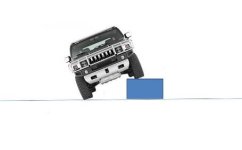
Not following, but I think we are talking about two different things. On a side slope (basically driving exactly the line you never want to take unless it is mandatory) The down slope wheels compress and the up slope wheels are un-weighted. Having swaybars connected is better in this situation since it helps compress and weight the up slope wheels to maintain a better center of gravity. A neat system to have, and what originally got me thinking about this thread would be the ability to increase the spring rate on the downslope wheels dynamically with some air bags.... Even if it was just in the back it would be effective and not that hard to setup with self leveling electronics...(probably been done before)

I try to avoid trails that have these features.. but there are a few I have ran into that just don't give you any other options. There is one in particular that makes me pucker every time because it is a long way down and that roll tipping point is something I just don't have a feel for yet. Maybe that rollmeover app would help ;-)

Here is what I consider a side slope line
2008-hummer-h2-side-slope.jpg


Jeremy, I think you are talking about an elevated obstacle with both wheels up on it, on relatively flat ground (or a slope parallel to the vehicle line). I'm not sure how to describe these things clearly. You would think it would be easy, but there seems to be no standard terminology I can think of. Attached picture describes what I think you are referring to better. In that case, no swaybars will help level out the vehicle, let the tires go more perpendicular to the ground. and provide better traction.

Another thing that is no bueno on a side slope eh, is really low tire pressure. Like I said, it is what you do everything to avoid but the trail might not give options. I was mainly just curious of KDSS was smart enough to adjust for both scenarios properly. I kind of doubt it does, but just guessing based on how hard it would be to detect the difference.
 

Attachments

  • camber.jpg
    camber.jpg
    8 KB · Views: 525
Last edited:

Members online

Forum statistics

Threads
278,308
Messages
3,554,060
Members
248,016
Latest member
Advally Service

Trending content

Back
Top