New CSF 3rd Gen Toyota 4Runner Heavy-Duty All-Aluminum Radiator


New CSF 3rd Gen Toyota 4Runner Heavy-Duty All-Aluminum Radiator


CSF #7210


​

The 3rd Gen Toyota 4Runner has been a long time favorite amongst off-road enthusiasts. Since its release, this generation of 4Runner has been regarded as one of the best off-road platform available. Even at over 20 years of age, you will still see countless of these SUVs both around town and on the trails.

Despite their legendary reliability and durability, as these SUVs age there is always room for improvement. While the engines will basically run forever, there are plenty of supporting systems that can use some shoring up. The OEM cooling system is fairly robust and can keep up with most daily driven 4Runners. However, this changes a bit once you start throwing bigger tires on them and pushing them to the limit. That’s why CSF developed the new Heavy-Duty All-Aluminum Radiator for the 96-02 Toyota 4Runner.

Design & Engineering​

CSF has a great track record with heavy duty, off-road grade radiators for Toyota trucks and SUVs. With most off-road vehicles, the factory cooling components can easily become over stressed. This can be due to a variety of things. The demanding stress on the engine while climbing or dirt clogging up some of the cooling fins are the most common culprits. The last thing you want or need is your 4Runner’s radiator to fail on you while you are off-road.

OEM vs CSF​

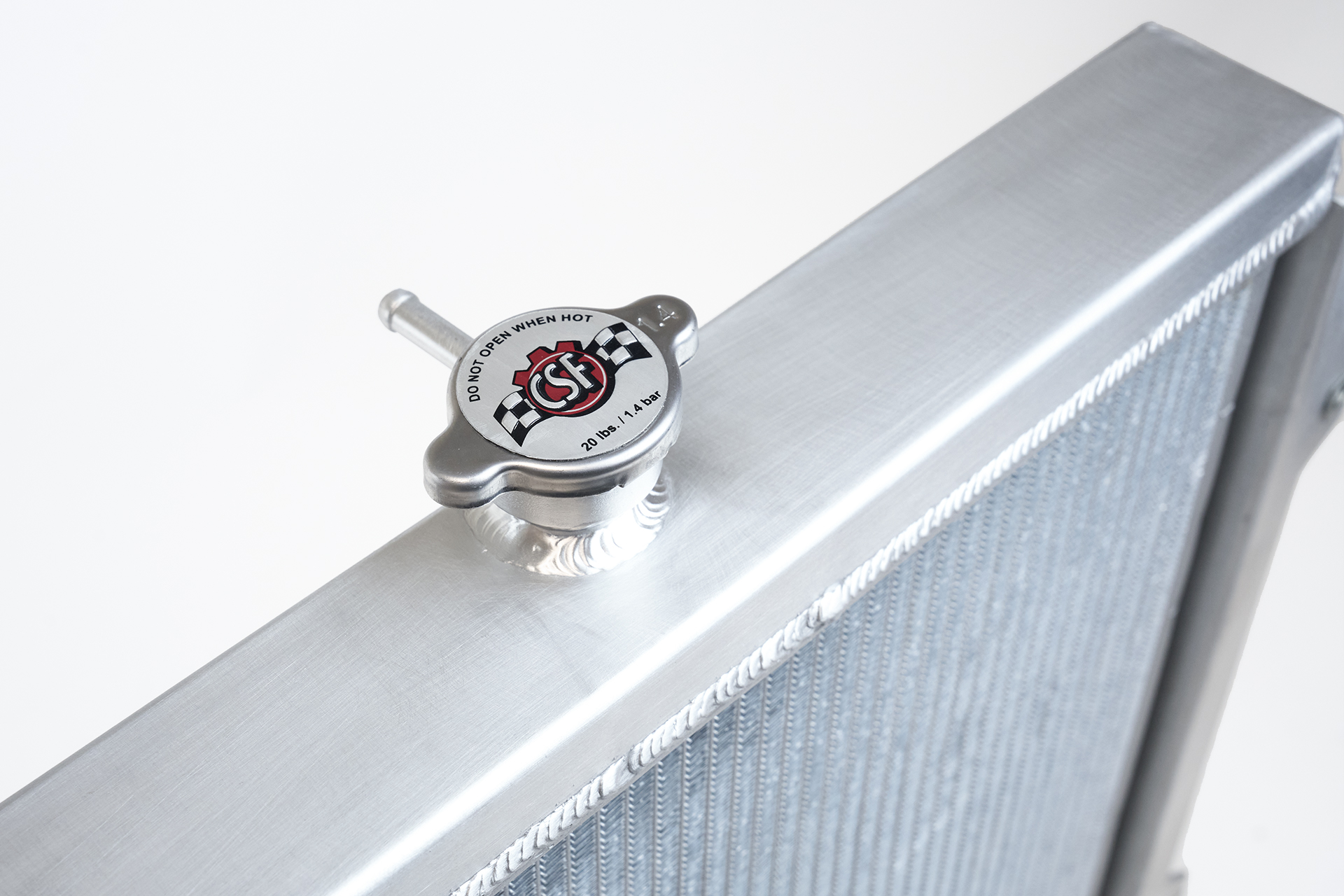
The 2-Row 42mm aluminum core not only increases the fluid capacity of the radiator, but also improves the cores ability to dissipate heat. CSF’s Exclusive B-Tube Technology increases the heat transfer by approximately 15% over regular oval welded tubes found on many other aluminum radiators. Additionally, the super-efficient multi-louvered fins maximize airflow through the core for the best possible performance.
​

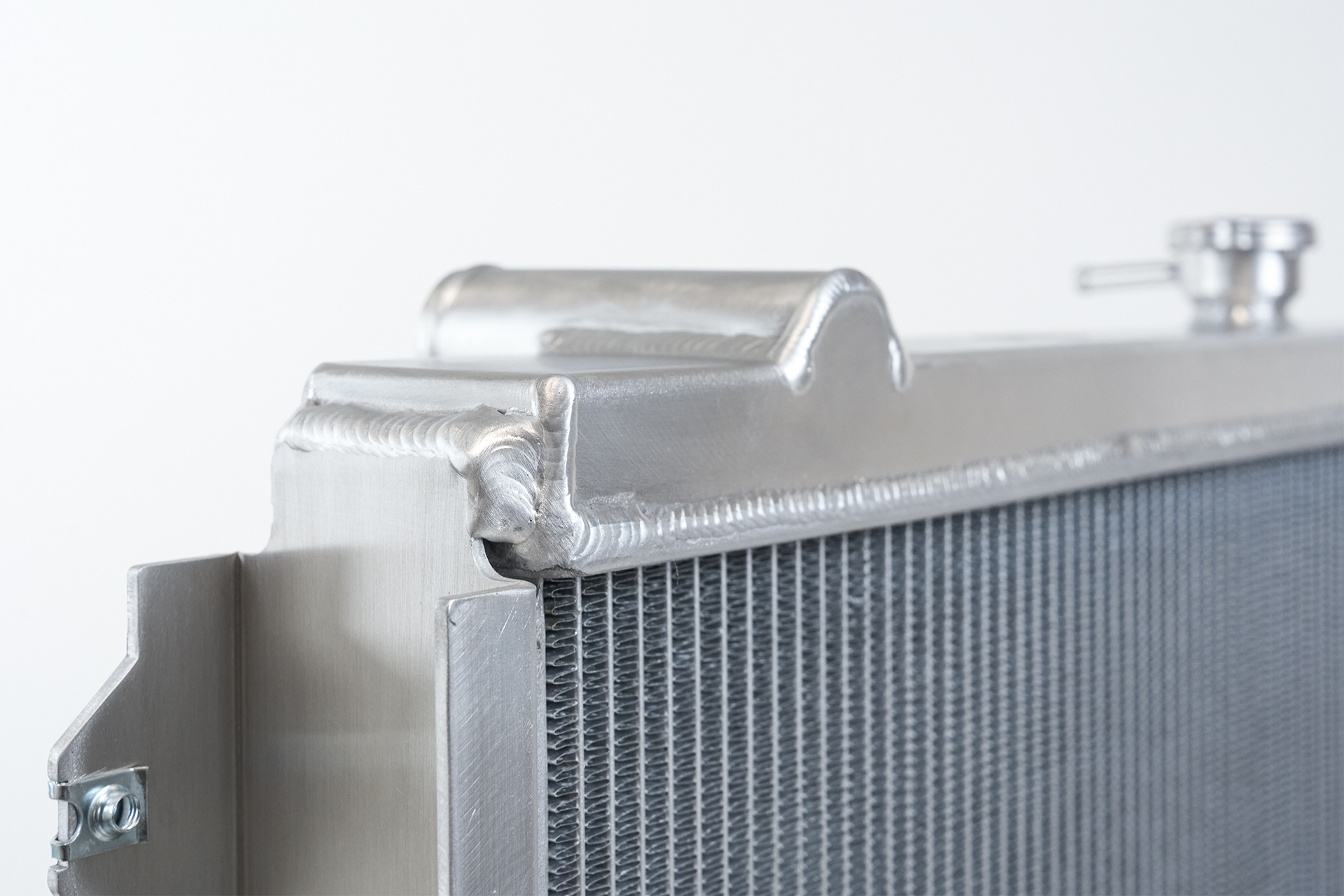
The end tanks are made from high grade aluminum and TIG welded to the core for extra strength. In contrast, the OEM crimped onto plastic end tank design is much weaker and creates a weak point where failure is more likely. Because the CSF radiator is designed as a true plug-and-play drop-in fit application, installation requires absolutely no modifications, trimming, or cutting. CSF even includes pre-cut double sided adhesive foam strips to help seal the fan shroud against the radiator. This improves airflow efficiency off the fan.
​

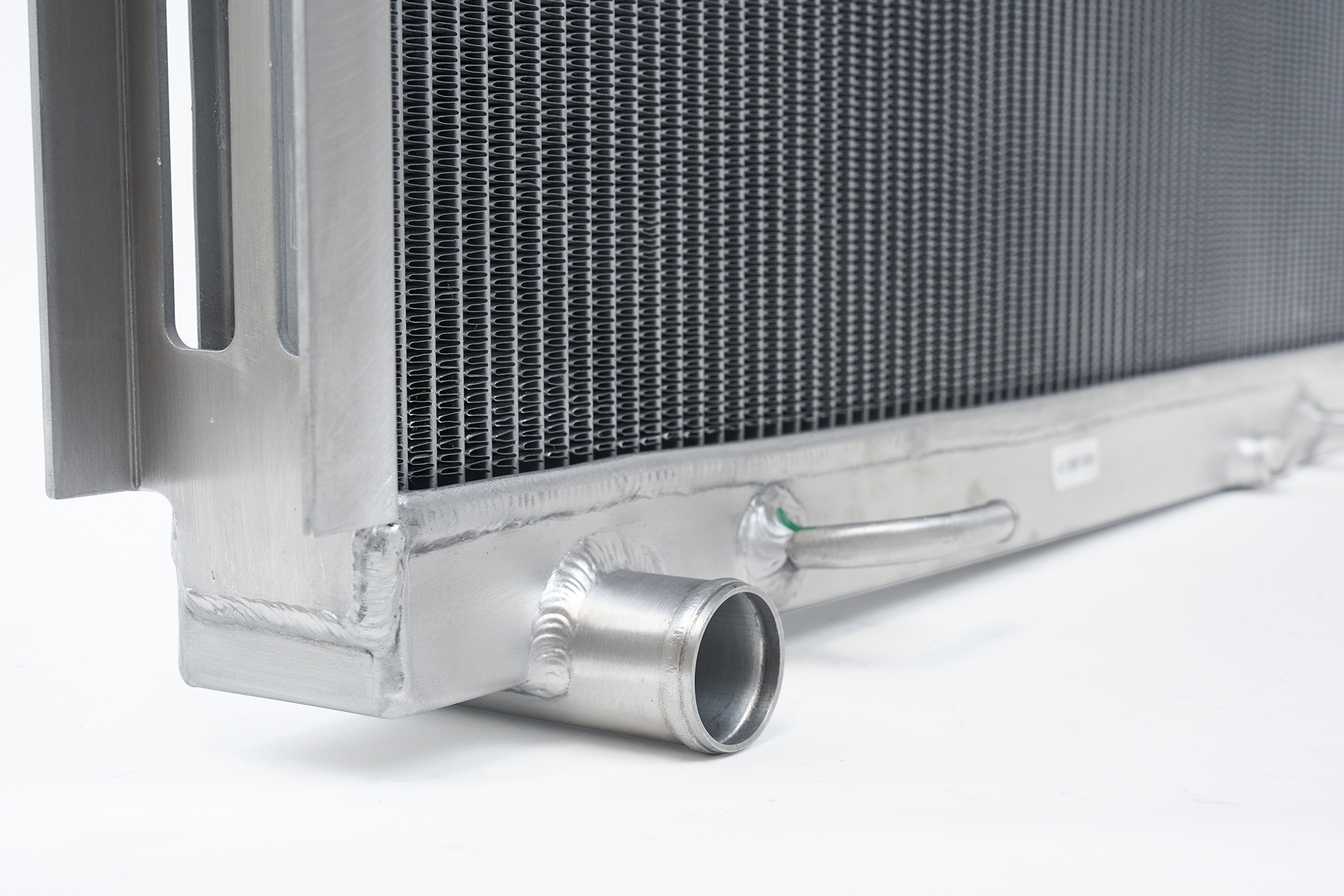
In addition, the CSF radiator features a built-in transmission fluid cooler. The transmission cooler is a heavy-duty high-performance 5 plate design that connects to the OEM hoses. This upgraded built in cooler is great dealing with the added heat and stress from towing, low gear crawling, and vehicles equipped with oversized tires. While plenty of people understand the impacts of oversized tires, it is always good to provide additional information. By increasing the diameter of your tires, you are reducing the effective gear ratio. This means the engine and transmission have to work harder to move the tires. Obviously this will end up generating excess heat, and the CSF radiator is designed to handle it.

3rd Gen Toyota 4Runner Heavy-Duty All-Aluminum Radiator Features (CSF #7210)

  • 2-Row, 42mm Heavy-Duty Ultra-High-Performance Dual Pass Core
  • Cooling Tubes with CSF’s Exclusive B-Tube Technology
  • 6.5mm Tall Ultra Efficient Fins with a Multi-Louvered Design for Maximum Surface Area Contact
  • Aluminum Mounting Brackets and OEM Style Inlet/Outlet
  • 100% All Aluminum TIG-Welded Construction
  • Built in Heavy-Duty High-Performance 5 Plate Transmission Oil Cooler in bottom tank
  • Smooth Satin Finish
  • True Plug-and-Play “Drop-in Fit” Installation Requires Absolutely No Modifications
  • Individually Leak and Pressure Tested
  • 2-Year Limited Warranty

Applications:
  • 1996-2002 Toyota 4Runner 3.4L
  • 1996-2000 Toyota 4Runner 2.7L

OEM Part Numbers:
Toyota: 16410-AZ011
Supersedes:
16400-75180
16400-75160
16410-YZZAJ

MSRP: $529.00 USD /MAP: $499.00 USD

 
Register to hide this ad
It would be cool if these had a fitting that actually allowed you to drain the coolant cleanly into a container. The OEM ones were designed this way and work well. The Denso replacements are not. This also has a basic plug which will suck when draining the coolant.
 
I know this is a drop in replacement but is it any wider than the original radiator? Was thinking of adding an electric fan at some point.

Really glad there is still a good aftermarket support for 3rd gens.
 
It would be cool if these had a fitting that actually allowed you to drain the coolant cleanly into a container. The OEM ones were designed this way and work well. The Denso replacements are not. This also has a basic plug which will suck when draining the coolant.

I wonder if that fitting size is something you could find an aftermarket petcock for.
 
Last edited:
Also one other thing I've wondered about in general is for us 5 speed owners. Can we/does it make sense to actually use the trancoolers in radiators to route our low pressure power steering line through this? I mean it's atf running through it still and I can't see any downside to cooling that off other than the potential of pink milkshaking our engine and power steering system which seems like a very remote chance with a new all aluminum radiator.
 
Last edited:
I know this is a drop in replacement but is it any wider than the original radiator? Was thinking of adding an electric fan at some point.

Really glad there is still a good aftermarket support for 3rd gens.

It is thicker, 42mm on the CSF vs 22-23mm on the stock core
 
Also one other thing I've wondered about in general is for us 5 speed owners. Can we/does it make sense to actually use the trancoolers in radiators to route our low pressure power steering line through this? I mean it's atf running through it still and I can't see any downside to cooling that off other than the potential of pink milkshaking our engine and power steering system which seems like a very remote chance with a new all aluminum radiator.

That doesnt seem like a bad idea, we do a lot of aftermarket PS coolers on Fords because its a common issue with them, I think it would make sense especially if you are wheeling and running larger tires. Possible to turn it into a front differential cooler, or a secondary blower cooler if supercharged. Lots of uses for it. I do run an aftermarket PS cooler on my Tundra as I have 37s.
 
I did this on our Wildcat XX Race Car, turned a drainplug into a cooling line that routes to an overfill tank. Im sure there is some ballvalve out there with the same thread pitch.
 
Also one other thing I've wondered about in general is for us 5 speed owners. Can we/does it make sense to actually use the trancoolers in radiators to route our low pressure power steering line through this? I mean it's atf running through it still and I can't see any downside to cooling that off other than the potential of pink milkshaking our engine and power steering system which seems like a very remote chance with a new all aluminum radiator.
Seems like a good idea, especially for the cost of some hose and a few extra clamps.

I've considered doing it on my AT now that I have a large enough AT cooler up front separate from the radiator...

-Charlie
 
To play devils advocate, it seems like this is just a much higher priced champion rad with minor tweaks...

Also, it's the champion 3 row?? and this is 2 row
 
Last edited:
PS cooling thru radiator why would you want to. Better served picking up ambient air in front of RAD than ECT.

Any new product should be looked at stink eyed if you wana survive.
 
To play devils advocate, it seems like this is just a much higher priced champion rad with minor tweaks...

Also, it's the champion 3 row?? and this is 2 row

Champion radiators, aka the China made leaker. The quality of the two isnt really comparable, hence the price difference. I havent seen Champion products being used on 6 second GTRs, Porsche cup cars, Trophy trucks, KOH crawlers, etc, but I do see CSF products being trusted on those vehicles. What I do see from champion is 100s of forum threads across all makes complaining of leaking and fitment issues. I am sure some people on this forum use them with good results, but again the build quality is lacking.

You get what you pay for, and if reliability is a concern I think most people would willingly spend the extra money. I run a CSF on my race car, because its mounted above my head and Id prefer not to get sprayed with coolant after bouncing around offroad for 10 hours at a time.

1171794d1496367151-csf-radiators-at-demon-speed-csf.jpg


IMG_20230207_105152_226_480x480.jpg
 
I understand where ur coming from but the issue ur going to run into is 99.5% of the people on this forum will never be in any of those situations, when one is I'm sure that where company's like this will come into play for custom to fit the design of the vehicle.

I've been running a champion for 5ish yrs and never had any leaking issues, had to replace my 1st with a other after I tried to use my fan as a propeller and said blow apart into my rad, the champion rad took the hit (luckily for me), and never leaked even with 3" of cooling tube bending.

As the targeted sales type of person, maybe u should take the feed back and look at said critically and not emotionally, the point I'm making is there is nothing setting ur product out side of what is already on the market and just what you say, that is going to make ur avg person say I should spend and extra $200 on "x" because of blank, most people on here just stay with plastic rad because of cost for even the champion... when the avg people looks at rad listing they look at cost and when cost is higher they look at images of said to see what diff about "x".

best wishes
 
As the targeted sales type of person, maybe u should take the feed back and look at said critically and not emotionally, the point I'm making is there is nothing setting ur product out side of what is already on the market and just what you say, that is going to make ur avg person say I should spend and extra $200 on "x" because of blank, most people on here just stay with plastic rad because of cost for even the champion... when the avg people looks at rad listing they look at cost and when cost is higher they look at images of said to see what diff about "x".

best wishes
I didn't see much emotion in the response. Horses for courses. There is a clear hierarchy of reliability and performance in radiators, and it is nice to have a 'best of the best' option for the 3rd gen 4Runner now.

My OEM lasted almost 20 years without leaking, my current replacement (plastic end tank Denso) is just fine ~5 years in. That's not saying much, since I also don't beat on my 4Runner very often.

-Charlie
 
No emotion, I sell all the brands and Im posting facts. If you want to buy a Champion Ive got no problems with that, but they are not on the same level of quality and to claim that is not helping the forum members here.

If you are considering a champion, they are equivalent to the ones sold on ebay under the brand names WK Radiator, "High Quality Radiator" and USA Radiator Factory for about $100 less. They probably work, weve installed several customer supplied units in the past, I know a few have had to be replaced in under 18 months, but we are also subject to 115deg heat here.

Let me if I can answer any other questions, we are here to help
 

Members online

Forum statistics

Threads
278,315
Messages
3,554,130
Members
248,016
Latest member
Advally Service

Trending content

Back
Top